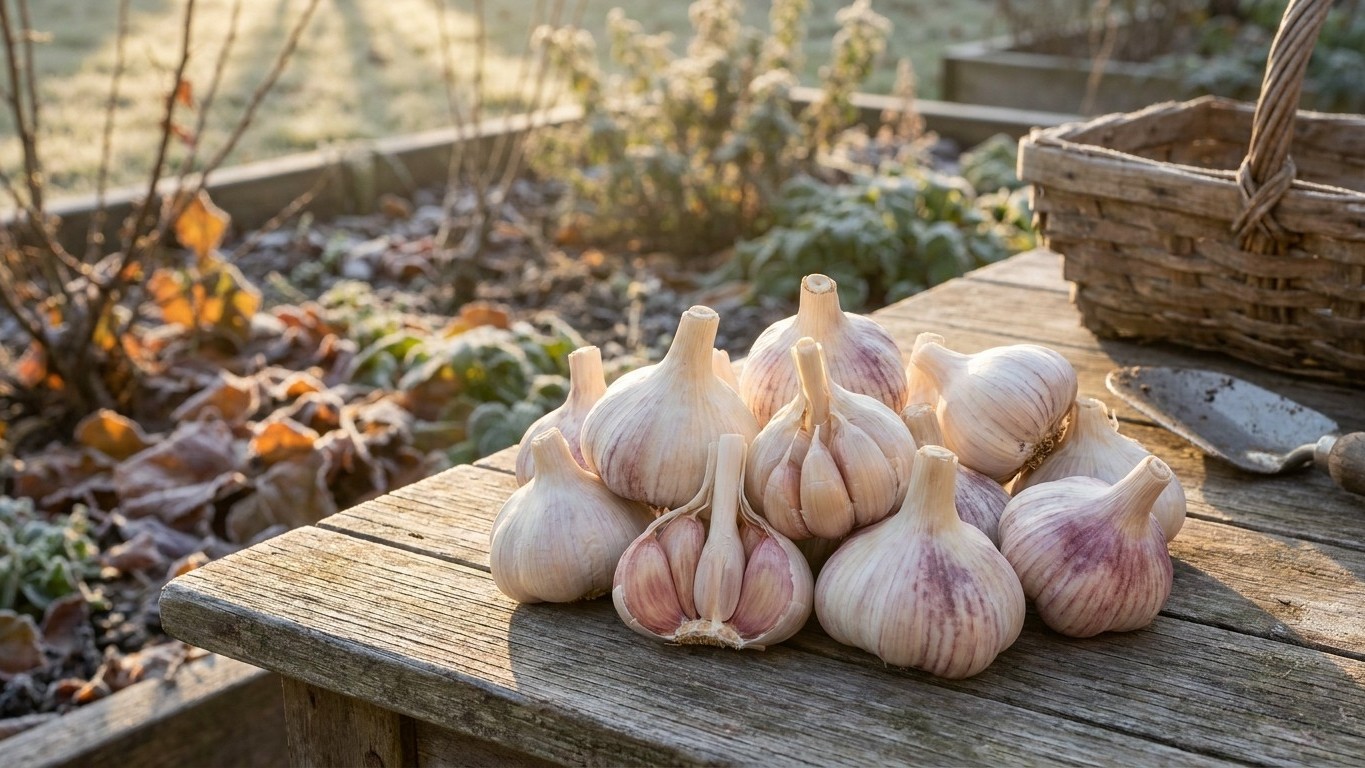

Garlic in British Columbia faces a short, specific list of feeders: onion maggot and onion thrips, wireworms, cutworms, aphids, and slugs. None of these show up year-round, each one has a window tied to when cloves go into cool fall soil and when the crop pushes new leaf growth the following spring. Here’s what actually targets the crop, and when to look for it.
Which pests attack garlic in British Columbia

British Columbia’s own agriculture ministry doesn’t publish a province-wide, garlic-specific pest list. The closest documented data covering pests in this growing region comes from University of Idaho Extension and WSU Extension, whose growing conditions and crop pests overlap closely with gardens from the Fraser Valley to the Okanagan. Between the two, they document twenty pests across vegetable crops generally, but only a handful of those have any business in a garlic bed.
Six are worth watching: onion maggot, onion maggot and onion thrips (a paired entry covering both feeders), wireworms, cutworms, aphids, and slugs. Onion maggot and thrips target alliums specifically, since garlic, onion, and leek share the same below-ground tissue and strap-like leaves these two feed on. Wireworms and cutworms are soil generalists that don’t care what’s planted above them; a buried clove or a fresh green shoot is just another food source. Aphids and slugs are broad feeders that colonize whatever soft leaf tissue is around, and garlic qualifies.
The rest of the documented list has nothing to do with garlic, and it’s worth saying why. Brown marmorated stink bug feeds on ripening fruit and fruiting vegetables, garlic never fruits, so it holds no interest. Cabbage maggot and imported cabbageworm (with loopers) are brassica specialists tied to cole-crop leaf chemistry that garlic doesn’t produce. Carrot rust fly needs umbellifer roots like carrot and parsley. Colorado potato beetle and tomato hornworm feed on nightshade foliage, potato, tomato, eggplant, not alliums. Corn earworm and earwigs, as documented, cluster around corn and soft fruit. Flea beetles favor brassica and nightshade seedlings. Grasshoppers, pea leaf weevil, spider mites, squash bug, and western spotted cucumber beetle are tied to legumes, cucurbits, or open pasture forage. Cutworms and armyworms, listed separately, lean toward grass and corn feeders rather than the general cutworm species that actually bother allium seedlings.
A clove planted too early into warm, insect-active soil is more exposed than one planted right before the ground cools — on this list, timing decides more than any treatment does.
When each one shows up, and what it does first
Garlic in this province goes into the ground in autumn and comes out the following summer, and that span is what schedules every pest on this list. The available frost data comes from the Vancouver Int’l A climate station, where the average first fall frost lands November 10. That’s a midpoint, not a safe date: in one year out of two, frost arrives later than that, and coastal gardens track closest to it while Interior and northern districts cool weeks earlier, pulling every pest’s fall window earlier with them.
Wireworms and cutworms get the earliest look at a newly planted clove, since both already live in the soil, wireworm larvae for up to several years before becoming click beetles. A clove going in weeks before that first frost is just another buried target. The first visible sign isn’t fall damage at all; it’s a clove that never sprouts, or a shoot that comes up stunted in spring, chewed through at the base.
Onion maggot follows a similar below-ground pattern on its own schedule, tied to when adult flies are active and laying eggs at the base of allium plants. The earliest sign is a yellowing shoot that pulls out of the soil with almost no resistance, because the roots or developing bulb are already destroyed. Onion thrips, grouped with onion maggot in the regional data, work above ground instead, leaving silvery, papery streaks along the leaf blade, worst during dry spring stretches once the crop is putting on real leaf growth.
Slugs track rainfall and cool temperatures rather than the frost date, chewing ragged holes in leaves any time the soil stays damp, both during fall planting and through wet spring weeks, when young shoots have little leaf tissue to spare. Aphids show up last, once there’s enough soft new growth to support a colony, and the giveaway is a cluster on the newest leaves paired with a sticky residue that draws ants, a sign the colony has already been established for a while.
Telling the damage apart from everything else
A wilted shoot or a chewed leaf doesn’t always mean a pest is involved, and guessing from the leaves alone is how misdiagnosis happens.
| Symptom | Likely pest cause | Common look-alike | What distinguishes it |
|---|---|---|---|
| Shoot wilts, pulls up with no resistance | Onion maggot in the roots or bulb | Waterlogged soil, bulb rot | Pest damage shows visible tunneling or larvae in the bulb; rot leaves a soft, foul-smelling bulb |
| Clove never sprouts | Wireworm or cutworm feeding below ground | Freeze damage to an unmatured clove | A chewed tunnel or hollow center points to insects; a mushy but intact clove points to cold injury |
| Silvery, papery streaks on leaves | Onion thrips feeding | Sunscald or drought stress | Thrips leave tiny dark specks (droppings) near the leaf base; drought stress runs uniform along the whole leaf |
| Ragged holes in leaf tissue | Slug feeding | Hail or tool damage | Slug damage comes with a slime trail and develops over several days; mechanical damage appears the day it happens |
| Cluster on new leaves, sticky film | Aphid colony | None reliable | The sticky residue (honeydew) itself is the tell |
Digging up one affected plant to look at the base, rather than judging by the leaves alone, is the single step that separates a pest problem from a soil or weather one. When the cause still isn’t clear, that’s the point to bring a sample or photo to a regional extension office rather than guess further.
What actually works here, and what is a waste of time
Physical barriers laid at the right moment do more than most treatments applied afterward. A floating row cover placed right after fall planting, and again as soon as spring shoots emerge, keeps onion maggot flies from laying eggs at the base of the plants and cuts down thrips numbers, but only if the edges are sealed; flies simply walk in under a loose cover.
Rotation matters just as much. Avoiding garlic, onion, or leek in the same bed for three to four years breaks the soil-borne cycle that lets wireworms and onion maggot pupae carry over from one season to the next. Sanitation helps too: pulling cull bulbs and thinnings out of the bed instead of leaving them to rot in place removes the scent that draws egg-laying flies in the first place.
For slugs, reducing damp hiding spots right at the base of the row, hand-picking after dark or following rain, and watering in the morning rather than evening so leaves dry before nightfall all cut activity without any product involved.
A row cover sealed at the soil line before maggot flies are active does more than any treatment applied after the damage already shows. Broadcasting a treatment across a whole bed without timing it to when insects are actually active is close to pointless, wireworms spend most of their life several inches down, so a surface application after a clove has already failed does nothing for that crop. Specific products and application rates aren’t something to work out from a general list; a regional extension office knows what’s registered for use in the province and when it’s actually effective.
Where to check this for your own county
British Columbia doesn’t organize horticulture support by county, but regional offices under the province’s Agriculture and Seafood program serve the same purpose, and they field far more location-specific questions than any general list can answer. A pest documented here doesn’t mean it’s active in every garden between the coast and the Rockies; conditions in the Fraser Valley, the Okanagan, and the province’s northern reaches differ enough that an outbreak in one region says nothing about a garden fifty miles away.
Since the frost figure behind this page’s calendar comes from a single station near Vancouver, any garden farther north or at higher elevation should treat that November date as several weeks too late, not as its own deadline.
The next useful step isn’t reading another list, it’s contacting the regional office nearest the garden, describing the symptom, and bringing in a sample or a clear photo of the affected plant’s base. That’s a faster route to a real answer than matching symptoms against a province-wide page.
Common questions
Does garlic in British Columbia Need pest treatment every year?
No. Most gardens go through a season without real damage from any pest on this list, since the species documented for this region skew toward soil generalists that only strike under specific conditions, poorly drained soil for wireworms, damp mulch for slugs. Treat symptoms as they appear rather than on a fixed schedule.
Can onion maggot move from an onion bed to a nearby garlic bed?
Yes. Onion maggot flies lay eggs at the base of any allium, so garlic, onion, and leek grown in rotation or side by side share the same risk window.
Is the November 10 frost date the same for planting garlic across British Columbia?
No. It’s an average drawn from a single climate station near Vancouver. Because it’s a mean date, frost arrives later in half of all years, and gardens away from the coast or at higher elevation see their first frost weeks earlier.
Should an unusual pest be reported to the extension service?
Yes. The documented list on this page comes from extension services in neighboring states rather than a province-wide British Columbia survey, so reporting an unfamiliar pest to a regional Agriculture and Seafood office helps build a clearer local picture over time.