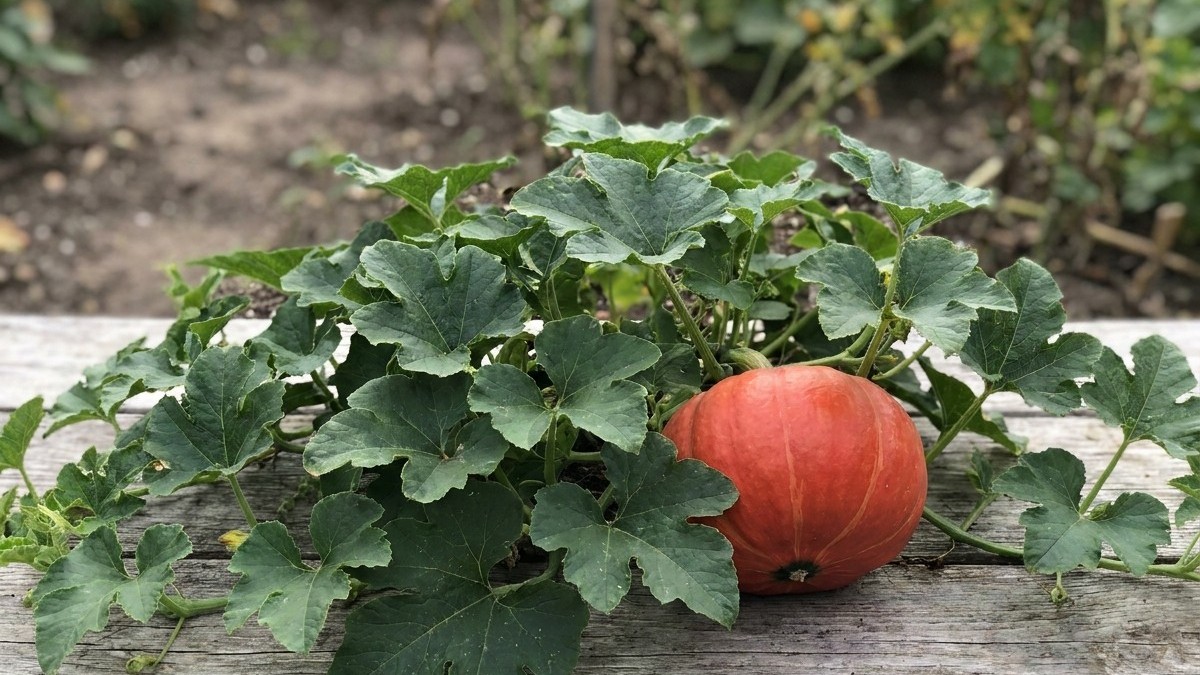

Cut pumpkins in British Columbia before the first fall frost, with the stem still attached. At the Vancouver airport weather station that frost arrives on average November 10, which puts the last useful flower date in mid to late September. Stored whole in a cool, dark spot between 45 and 50 F, a pumpkin keeps three to six months. The count that decides all of this starts at the flower, not at the seed.
The short answer
Counting back from the frost
Environment and Climate Change Canada puts the average first fall frost at November 10 for the Vancouver International Airport station (climate ID 1108447). The figures are on the agency’s climate normals service. Utah State University Extension says a pumpkin needs 45 to 55 days to mature after flowering. Work backwards from November 10 and the latest a flower can open and still give a ripe pumpkin is a window, not a day: roughly September 16 to September 26.
The two ends of that window come straight from the two ends of the ripening range. Forty-five days back from November 10 lands on September 26, and 55 days back lands on September 16. A flower that opens on the 26th needs a fast fruit and a late frost. A flower that opens on the 16th gives the fruit its full 55 days. Anything that opens after the 26th is, on an average year, a pumpkin that will not finish.
These are days after flowering. They are not days after seeding or transplanting. Seed sown in May still has to grow a vine, set a female flower and get it pollinated before the 45 to 55 days even begin. Count from the seed packet date and you will think you have six weeks you do not have.
Why November 10 is not a safe date
A mean is the midpoint, not a guarantee. In one year out of two the first frost falls later than November 10, which means in the other half it falls earlier. If you treat the date as a deadline you can plan to, you are betting on a coin flip. A flower that opens at the very end of the window is a flower you are hoping on. The ones that open earlier are the ones you can count on.
The number also comes from one station near sea level at Vancouver’s airport. British Columbia is not one climate. Northern and upland districts run weeks behind that frost date, and the Interior has its own pattern. If you garden outside the Lower Mainland, treat the window above as a method, not a result, and swap in the first frost date from the weather station nearest you. Canadian normals also use an older 30-year period than the US figures on this site, so do not set a Vancouver number beside a Washington one and expect a clean comparison.
Harvest itself is the simple part. Cut with the stem attached, before frost, and handle the fruit by the body, not the stem. For what to do when a fruit is still green as the window closes, see Will Pumpkins Ripen Before Frost in British Columbia?
When to sow here
Sowing date is a different calculation from the frost window, and mixing the two is the most common mistake. Pumpkin seed wants warm soil: Utah State University Extension gives 65 F as the sowing benchmark. In coastal British Columbia the soil reaches that number well after the last spring frost, which averages March 18 at the same Vancouver station. That is a mean too, so frost can still land after it in about half of years. The sequence below turns those facts into a sowing date.
- Start with the last spring frost. For the Vancouver airport station, that is March 18 on average. Use the date from your nearest station if you garden elsewhere in the province, since inland and northern districts run weeks behind.
- Add the soil lag. The soil trails the air by weeks. The day it reaches 65 F is March 18 plus those weeks, not March 18. Frost-free air and warm soil are two separate events, and a seed sown on the first does nothing useful in cold ground.
- Read the soil, not the calendar. A soil thermometer settles it. No published figure here says exactly when British Columbia soils cross 65 F, and it varies with exposure, drainage and the spring you had. Sow when the reading says 65 F.
- Subtract two weeks if you use row covers. Covers warm the soil underneath, and they buy about two weeks. Take the date from step 2 and move it two weeks earlier. That is the earliest covered sowing, and only if the cover goes on before sowing so the soil is already warming.
- Check the sowing date against the frost window. Sowing date, plus the time the vine takes to reach its first flower, plus 45 to 55 days, has to land before the first fall frost. How long a vine takes to flower is not published here, and it differs by variety, so read your seed packet. Earlier sowing leaves more room, and the window in the first section is the end of the line.
The extra two weeks from row covers matter more in British Columbia than they would somewhere with a long autumn. The frost window leaves little slack, and every week gained in spring is a week of margin in fall. The main guide, Growing Pumpkins in British Columbia, covers site, spacing and varieties; this page deals only with the clock.
What goes wrong here
A season this short fails in predictable ways. Most of them trace back to the same two numbers, 65 F in spring and 45 to 55 days after flowering. Here are the failures that show up, with the fix for each.
- Seed that stalls or rots in cold soil. Sowing when the air feels warm but the soil has not reached 65 F wastes the early start. Wait for the thermometer, or warm the bed under row covers first. A late sowing into warm soil beats an early one into cold.
- A late flower that never colors. A flower that opens after the September window cannot get its 45 to 55 days. The fruit stays green and small. Pinching off new flowers once the window closes sends the vine’s energy to fruit that can still finish, and the ripening guide covers what is worth saving.
- A fruit caught by frost. Harvest before frost, stem attached. Because November 10 is only a midpoint and half of years bring frost earlier, watch the forecast rather than the date. A pumpkin left out after a frost is a poor candidate for storage, so cut ahead of the cold and bring fruit indoors.
- A vine that dies back before the skin hardens. When the vine collapses early, the fruit loses its cover and its supply, and a soft rind keeps badly. Squash bugs and cucumber beetles are common causes, and What Eats Pumpkin in British Columbia, and When explains timing and control. Protect the vine early, since it cannot be repaired once it has gone.
- A stored pumpkin that ages early. University of Illinois Extension advises keeping whole pumpkins away from ripening fruit and vegetables such as apples, potatoes or tomatoes. Ripening produce gives off a gas that ages the pumpkin, so the porch beside the apple crate is the worst spot. Choose a cool, dark place at 45 to 50 F where nothing will freeze, and a pumpkin will keep three to six months.
Common questions
Should I wait for a frost before cutting pumpkins?
No. Cut before frost, with the stem attached. The vine can lose its leaves to cold, but the fruit should be off it before the first freeze reaches it.
Can I count the 45 to 55 days from seeding?
No, and this is the mistake that ruins the arithmetic. The 45 to 55 days run from flowering. Seeding comes earlier, and the time from sowing to first flower is added on top of it.
Is November 10 a date I can rely on?
It is the average first fall frost at the Vancouver airport station, so frost comes earlier in about half of years. Treat it as the midpoint of a window. Districts away from Vancouver, especially northern and upland ones, run weeks behind, so look up the date for your nearest station.
How long does a cut pumpkin keep?
A whole pumpkin keeps three to six months in a cool, dark place at 45 to 50 F, away from apples, potatoes and tomatoes. That range applies to whole, uncarved fruit. The extension sources used here give no keeping time for a carved pumpkin, and the Utah State guidance says only to store pumpkins where they will not freeze, so no storage temperature or duration is published for carved ones.