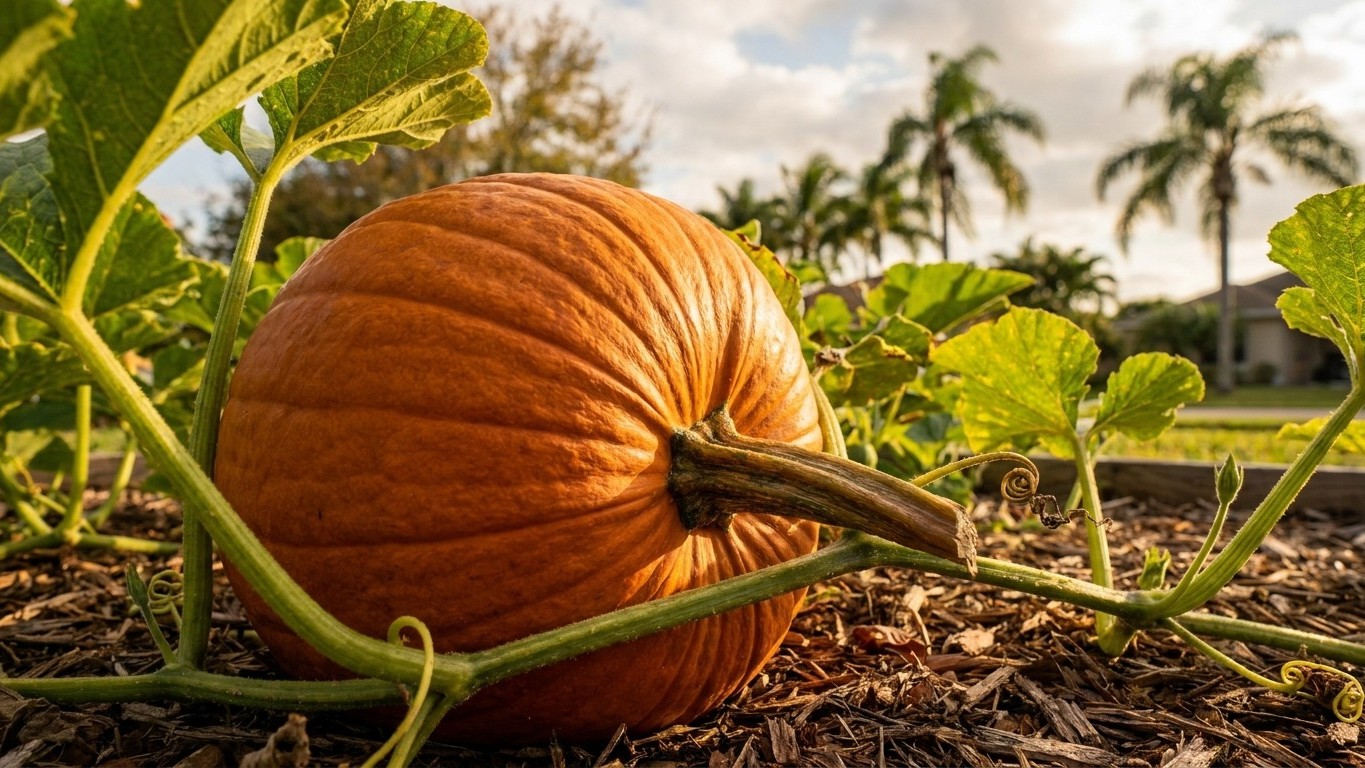

Nine pumpkin-feeding pests are documented for this region, and none of them wait for a calendar reminder. Squash bugs and cucumber beetles move in as soon as true leaves unfold, slugs and cutworms are already working on seedlings the week they emerge (usually a few weeks after British Columbia’s average last spring frost of March 18), and by the time flowers open, the 45-to-55-day clock to a ripe fruit is already running against the average November 10 fall frost.
Which pests attack pumpkin in British Columbia

University of Idaho Extension and WSU Extension, the two services behind this territory’s pest data, document twenty species across garden crops in the region: Aphids, Brown marmorated stink bug, Cabbage maggot, Carrot rust fly, Colorado potato beetle, Corn earworm and earwigs, Cutworms, Cutworms and armyworms, Flea beetles, Grasshoppers, Imported cabbageworm, Imported cabbageworm and loopers, Onion maggot, Onion maggot and onion thrips, Pea leaf weevil, Slugs, Spider mites, Squash bug, Tomato hornworm, Western spotted cucumber beetle, and Wireworms.
Most of that list has nothing to do with a pumpkin vine. A pest that is not documented for cucurbits does not belong on this page just because it shares a garden bed, so here is what gets cut and why:
- Cabbage maggot: feeds on brassica roots, not vine crops.
- Carrot rust fly: targets carrot-family roots, which pumpkin doesn’t have.
- Colorado potato beetle: a Solanaceae feeder (potato, eggplant), skips cucurbit foliage.
- Corn earworm and earwigs: this pairing tracks damage to corn ears, not squash vines.
- Flea beetles: chew brassica and potato leaves almost exclusively.
- Imported cabbageworm and Imported cabbageworm and loopers: brassica specialists.
- Onion maggot and Onion maggot and onion thrips: onion-family pests only.
- Pea leaf weevil: feeds on legumes.
- Tomato hornworm: another Solanaceae feeder.
- Brown marmorated stink bug: a broad host list of tree fruit and vegetables, but not one that shows up in cucurbit damage reports for this territory.
What’s left, and worth watching on an actual pumpkin patch, is a shorter list: Aphids, Cutworms, Cutworms and armyworms, Grasshoppers, Slugs, Spider mites, Squash bug, Western spotted cucumber beetle, and Wireworms. That’s nine names out of twenty, and every one of them has a documented reason to be near a squash-family plant, from chewing seedlings at the soil line to piercing leaf tissue for sap.
When each one shows up, and what it does first
Timing here runs off the growing window, not the month on a wall calendar. British Columbia’s average last spring frost lands March 18, and pumpkin seed goes into the ground once soil reaches 65 F, which is always later than that frost date because soil warms slower than air. Cutworms and slugs are the first threat, working on stems and cotyledons within days of emergence. A cutworm severs a seedling at the soil line overnight; a slug leaves ragged holes and a slime trail on the same young leaves. Wireworms strike even earlier, feeding underground on the seed itself before a seedling ever breaks the surface, which is why a patchy stand with no visible insect is often a wireworm problem, not a germination failure.
Once true leaves and runners develop, squash bugs move in to lay clusters of eggs on leaf undersides, and the western spotted cucumber beetle starts feeding on young leaves and later on open blossoms. Aphids build steadily through this stretch, clustering on new growth and the undersides of leaves where they’re easy to miss until a colony is dense enough to curl foliage. Grasshoppers become more of a factor as the season dries out, chewing ragged notches from leaf edges inward. Spider mites peak in the same hot, dry conditions, leaving fine stippling and webbing on leaf undersides well before a plant looks obviously stressed.
All of this pressure has a deadline. Flowering has to happen with enough runway left for the fruit to mature, since a pumpkin needs 45 to 55 days after its flower opens, and the average first fall frost of November 10 is only a mean date, not a guarantee. In one year out of two, frost actually arrives later than that average, but a gardener who counts on it does so at their own risk. Tracking pest pressure against your own sowing date matters more here than watching a specific week in July.
Telling the damage apart from everything else
Not every damaged pumpkin vine has an insect behind it, and treating for a pest that isn’t there wastes a growing season that’s already tight. The decisive move is checking the base of the plant and the underside of leaves before assuming anything, since most of these pests leave a specific sign that a nutrient problem or weather stress does not.
| What you see | Likely insect cause | What rules out other causes |
|---|---|---|
| Seedling severed at soil line overnight | Cutworms | Damping-off disease leaves a water-soaked, mushy stem lesion instead of a clean cut |
| Ragged holes in leaves, insect not visible by day | Slugs | A slime trail confirms slugs; hail or mechanical tearing leaves torn, not chewed, edges |
| Fine stippling and webbing under leaves | Spider mites | Magnesium deficiency yellows tissue between veins but produces no webbing |
| Single vine wilts though soil is moist | Squash bug feeding at the base | Drought stress wilts the whole planting evenly, not one runner |
| Row of seeds fails to sprout | Wireworms feeding underground | Cold, wet soil rot leaves a soft, discolored seed rather than a hollowed one |
| Scarred patches on blossoms or young fruit | Cucumber beetle feeding | Sunscald bleaches the rind smooth instead of scarring the surface |
None of this replaces a look from someone trained to identify what’s actually in a specific garden. If a symptom doesn’t match cleanly, that’s the point to send a photo or sample to your local office rather than guess from a table.
What actually works here, and what is a waste of time
On a growing season bounded by a March 18 average last frost and a November 10 average first frost, timing does more work than any treatment applied at the wrong moment. Physical barriers placed over young seedlings block cutworms and slugs during the vulnerable first weeks, but that cover has to come off once flowers open, because pumpkin fruit set depends on bees moving pollen between blossoms. Leaving a barrier on past flowering doesn’t protect the plant, it just prevents it from producing any fruit at all.
Hand-picking squash bug egg clusters off leaf undersides works if it’s done early and repeated, since a single female lays enough eggs to overwhelm the effort once nymphs hatch. Clearing garden debris in fall removes overwintering sites for squash bugs and cucumber beetles, which matters more here than any in-season spray, since both pests survive winter in plant litter, not in the soil. Rotating pumpkin and squash out of the same bed for a season or two reduces buildup of cucumber beetle and wireworm populations that persist in one spot.
What doesn’t help: spraying on a fixed schedule regardless of what stage the pest is actually in, since a treatment aimed at adult beetles does nothing to eggs already laid, and a treatment aimed at eggs does nothing once nymphs have dispersed. Assuming a pest from a general list without checking the plant wastes the short window this climate allows for correcting course. This page names no specific product or active ingredient, because what’s legal to apply changes by jurisdiction and by year. Your local extension office is the source for what’s currently approved, not this article.
Where to check this for your own county
Everything above comes from University of Idaho Extension and WSU Extension, and from a single Environment and Climate Change Canada weather station (Vancouver Int’l A) used to calculate the frost dates. A province is not one climate, and northern or upland districts in British Columbia run weeks behind what that one station records. Pest presence shifts just as much across a province as frost timing does, so a species documented at the state level in a neighboring region says nothing certain about what’s actually feeding on a vine in a specific yard.
The extension offices behind the pest list cover Idaho and Washington directly, and British Columbia gardeners without a matching provincial pest database of their own are working from the closest available regional data, not a local one. That’s a real limitation, not a technicality: it means a first sighting of any pest on this list is worth reporting to a local garden center, master gardener program, or agricultural office rather than treating as confirmed just because it’s written down here.
Before assuming any of this applies exactly to a specific plot, check the British Columbia pumpkin growing guide for how these frost and timing figures interact with planting decisions, and see the ripening timeline for what the 45-to-55-day window after flowering means for a harvest date this late in the calendar.
Field note: Extension pest lists are built at the state level in the U.S., and Idaho and Washington’s regional data is the closest documented match available for this page. British Columbia has no identical provincial equivalent in the facts behind this article, and the frost dates come from one Vancouver-area station using 1981-2010 climate normals, a different averaging period than the 1991-2020 normals used on this site’s U.S. pages. Treat every date and pest name here as a starting point for a local check, not a fixed answer for a specific garden.
Common questions
Does British Columbia have its own documented list of pumpkin pests?
Not in the facts behind this page. The pest species listed here come from University of Idaho Extension and WSU Extension, the nearest regional sources with documented cucurbit pest data, since no matching provincial list is cited in these facts.
When is it safe to plant pumpkin seed after the last frost?
The facts here don’t set a fixed safe date. British Columbia’s average last spring frost is March 18, but pumpkin seed goes in once soil temperature reaches 65 F, which typically happens weeks after that average frost date, not on it.
How many days does a pumpkin need to mature once it flowers?
Utah State University Extension documents 45 to 55 days from flowering to maturity, not from the sowing or transplanting date. That window has to fit before the average November 10 first fall frost for the fruit to ripen fully.
Should row cover stay on pumpkin plants all season to block pests?
No. Row cover protects seedlings from cutworms and slugs early on, but it has to come off once flowers open, since pumpkins need bees to move pollen between blossoms for fruit to set at all.