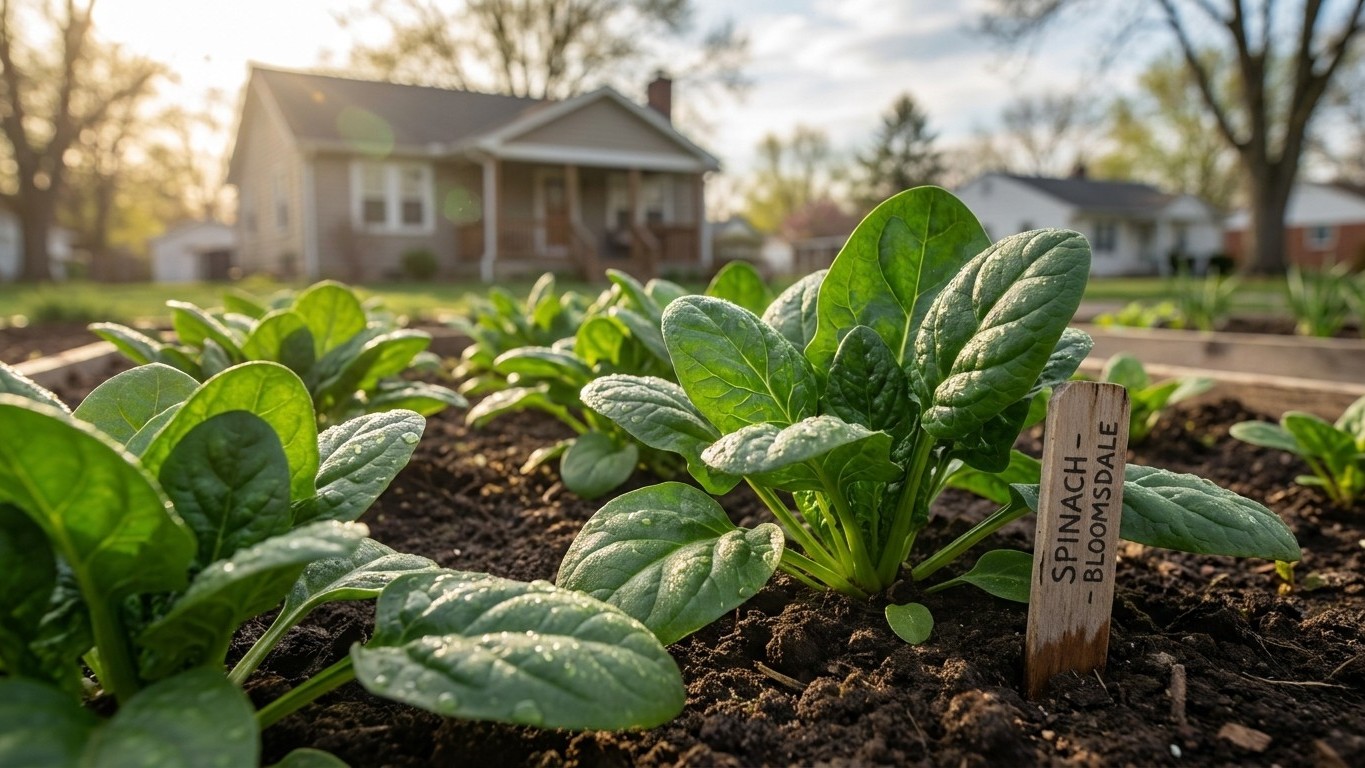

British Columbia’s spinach mostly bolts because of day length, not heat. At the reference station near Vancouver, the longest day of summer holds 16 hours and 1 minute of daylight, well past the point where spinach starts running to seed. The coastal climate rarely gets hot (0.0 days a year reach 90°F at that station), but the mild heat load doesn’t matter once daylight itself pushes the plant toward flowering. Here, day length is the limiting factor, and heat only adds pressure on top of it.
The short answer
Spinach doesn’t need a heat wave to bolt. It reads daylight, and once the days stretch far enough, the plant switches from producing leaves to throwing up a flower stalk, regardless of how cool the air feels. That single mechanism explains most of what happens to spinach in coastal British Columbia, a question explored further in Will Spinach Bolt Early in British Columbia?
Why day length outranks heat here
On the longest day of the year, the reference station near Vancouver logs 16 hours and 1 minute of daylight. That’s a lot of light exposure for a crop that starts flowering once daylight and warmth combine past its comfort zone. A gardener in a hot inland climate might blame bolting squarely on a heat wave, but along BC’s coast the daylight alone carries most of the weight. A string of cool, overcast June days won’t hold the plant back once the sun is up that long, because the trigger sits in the calendar as much as the thermometer.
What the heat numbers actually tell you
Heat still matters, just as a secondary push rather than the main driver. Spinach grows best where temperatures stay under 75°F, and once air and soil climb past that mark, leaves turn bitter even before the plant fully bolts. Vancouver’s climate record shows an average of 0.0 days a year reaching 90°F, so true heat stress is close to nonexistent at this station. That’s a real advantage for tender leaf texture and slower early growth, but it doesn’t cancel the daylight effect. A summer with essentially no 90°F days can still see spinach bolt right on schedule, because the switch flips on the sun’s angle, not the mercury.
The practical read for a BC garden: don’t build your planning around waiting out a heat wave that this climate rarely produces anyway. Build it around daylight. The productive window narrows as June’s long days approach, whether or not the temperature ever climbs uncomfortably high. That’s also why relying on a hot, dry stretch to “explain” bolting misses what’s really going on for coastal gardeners, and it’s why timing sowings around the calendar matters more here than chasing shade or extra water once the days get long. For a practical planting calendar built around this logic, see When to Sow Autumn Spinach in British Columbia.
How long the spring window really is
Working out the usable spring window means starting from a fixed point and moving forward in stages. Here’s how it breaks down for this region:
- Start from the average last frost. Environment and Climate Change Canada’s 1981-2010 normals for VANCOUVER INT’L A put the average last spring frost at March 18. That’s a mean date, not a guarantee, and in roughly half of all years the last frost lands later than that.
- Sow 2 to 3 weeks ahead of that date. That places a realistic sowing window somewhere around late February through the first days of March, since spinach seed tolerates cool soil far better than most vegetable seed.
- Track the 75°F growth ceiling. Because the reference station averages 0.0 days a year above 90°F, air temperatures generally stay comfortable well into late spring, so heat alone isn’t likely to shut the crop down early here.
- Track daylight climbing toward the June solstice. As the days lengthen toward that 16 hour, 1 minute peak, bolting risk rises steadily through May regardless of temperature, and it’s this daylight climb, not a heat spike, that ultimately closes the window.
- Add it up. A sowing in late February to early March, followed by a harvest push through roughly mid to late May before daylight length takes over, leaves a workable spring season of somewhere around two to two and a half months in most years.
That’s a shorter window than the calendar between the average last frost and the first hot days might suggest, because the clock that ends it isn’t heat at all.
The autumn crop, and when the soil lets you sow
Fall spinach in British Columbia runs into two separate obstacles, and they arrive in the opposite order from what most gardeners expect. Heat, not cold, is the first thing standing in the way.
Soil still too warm to germinate
Utah State University Extension notes that spinach seed germination drops off once soil temperatures climb above 80°F. Along the BC coast, where the reference station averages 0.0 days a year above 90°F for air temperature, soil rarely holds that kind of heat for long even at the height of summer. That means the fall sowing window here tends to open earlier than it would in a hotter inland or southern climate, where growers often have to wait out weeks of stubbornly warm ground before seed will germinate reliably.
The frost that ends the season
The other boundary is the season’s end. Environment and Climate Change Canada’s 1981-2010 normals put the average first fall frost at November 10 for the VANCOUVER INT’L A station, again a mean date rather than a hard line, since frost arrives later than that in roughly half of all years. Utah State University Extension recommends sowing a fall crop 50 to 75 days before the date you want to harvest. Counting back from a November 10 target puts the sowing window somewhere between late August and roughly the third week of September. Given how mild the soil stays here relative to hotter regions, gardeners along the coast generally have room to sow anywhere within that stretch without fighting overheated ground, though picking a date closer to late August gives more buffer against a frost that arrives earlier than the average.
Seed catalogs and Canadian garden centers commonly stock spinach varieties such as Bloomsdale, Melody, Teton, and Olympia for both spring and fall sowings. Utah State University Extension’s guidance doesn’t publish days-to-maturity figures or bolt-resistance ratings for any of them, so treat variety selection as a matter of leaf shape and texture preference rather than a guaranteed workaround for the day-length and heat limits described above.
Checking this against your own county
Vancouver’s climate station is a single point on a large and varied province. Coastal valleys, the Fraser Valley, Vancouver Island, and interior districts like the Okanagan can run weeks apart on both frost dates and summer heat load, and interior areas often see far more than 0.0 days above 90°F in a typical year. Before locking in a sowing date, check current conditions and local timing recommendations through the BC Ministry of Agriculture and Food, which tracks regional growing conditions across the province. Local advice will account for microclimate differences that a single reference station simply can’t capture, especially for gardeners well inland or at higher elevation.
Common questions
Can spinach be grown through a BC summer at all?
Not reliably. Once daylight climbs toward the mid-June peak of 16 hours and 1 minute, bolting risk rises regardless of how mild the temperatures stay, so most gardeners plan a spring crop and a separate fall crop rather than trying to carry one planting through summer.
Does choosing a specific variety prevent bolting?
Not according to the guidance behind this page. Common varieties like Bloomsdale, Melody, Teton, and Olympia show up in Canadian seed racks, but Utah State University Extension’s published material doesn’t include bolt-resistance data for any of them, so variety choice shouldn’t be relied on as a fix for the day-length trigger.
Why doesn’t BC’s mild summer buy extra growing time?
Because the trigger for bolting is daylight length as well as warmth, and daylight keeps climbing toward the solstice no matter how cool the air stays. A summer with 0.0 days above 90°F still delivers over 16 hours of daylight on the longest day, which is enough on its own to push spinach toward flowering.
Is it safe to sow right on the average frost dates?
No. Both the March 18 last-frost date and the November 10 first-frost date are means from Environment and Climate Change Canada’s 1981-2010 normals, and frost lands later than either date in roughly half of all years. Treat them as the middle of a range, and build in a buffer on both ends of the season.