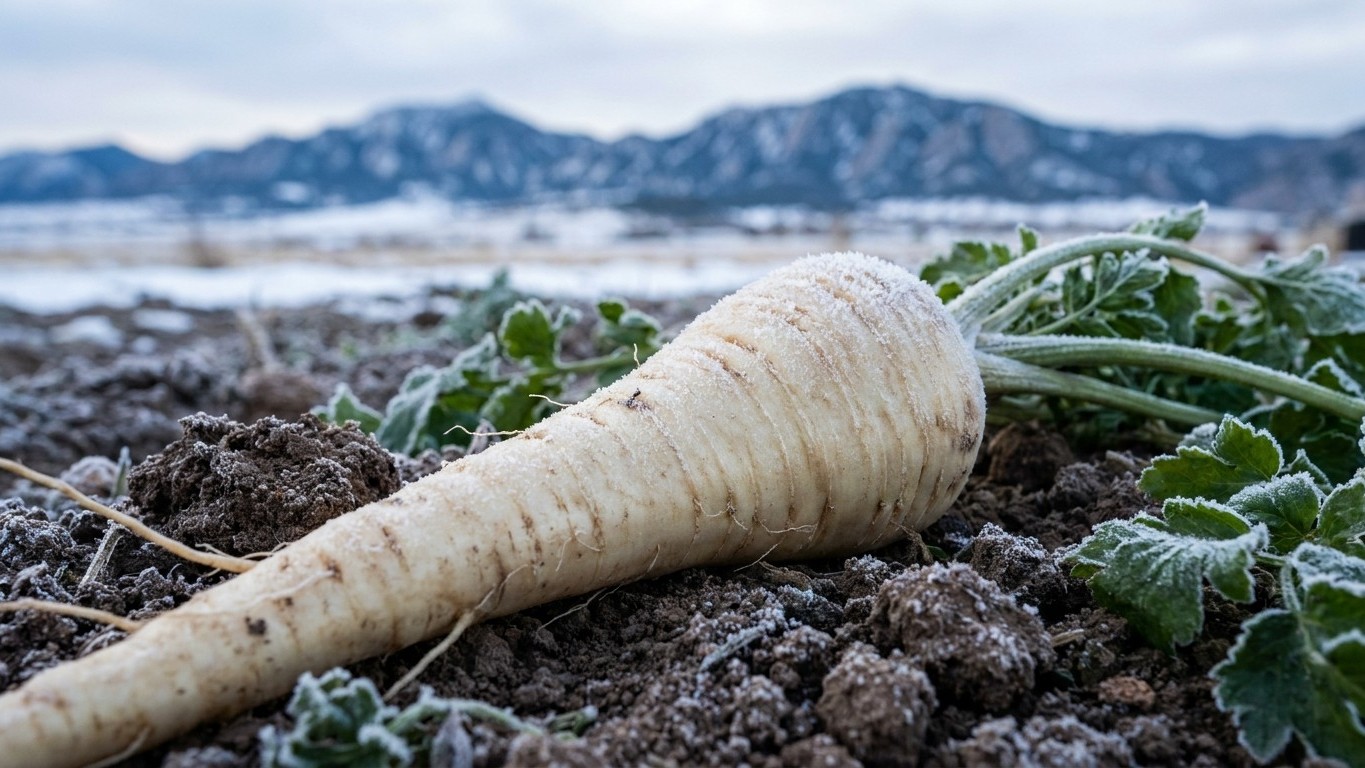

Six of the twelve pests California’s extension service documents for home gardens actually feed on parsnip: the rest specialize in tomatoes, squash, and other crops that don’t belong in the same bed. The ones that matter here go after the seedling’s tender top growth or, in one case, the root itself, and they show up on a schedule set by the plant’s own slow germination rather than by a calendar month.
Which pests attack parsnip in California

UC Agriculture and Natural Resources lists twelve garden pests documented for this territory: aphids including melon aphid, brown garden snail and slugs (Cornu aspersum), corn earworm, cucumber beetles, earwigs, harlequin bug, leaffooted bugs, root-knot nematodes, spider mites, stink bugs, tomato hornworm, and whiteflies. That’s the whole list this service publishes for the state. It isn’t a parsnip-specific list, and roughly half of it has no business on a root-crop bed.
Corn earworm targets corn ears and, as a secondary host, tomato fruit. It has no reason to touch a parsnip’s ferny top growth or its root. Cucumber beetles are cucurbit specialists, drawn to cucumbers, squash, and melons; a parsnip bed offers them nothing they want. Tomato hornworm feeds on nightshades (tomato, pepper, eggplant), leaving umbellifers like parsnip alone. Leaffooted bugs and stink bugs both go after developing fruit and seed pods, piercing them to feed on the seeds inside; a parsnip grown for its root never produces the kind of target these insects seek. Harlequin bug is a cole-crop specialist, built for cabbage, broccoli, and their relatives, and it doesn’t cross over to the carrot family.
That leaves aphids, brown garden snail and slugs, earwigs, root-knot nematodes, spider mites, and whiteflies as the pests actually worth watching on parsnip in this territory. Aphids and whiteflies are sap-suckers that colonize the underside of the ferny leaves, weakening growth and fouling foliage with honeydew. Brown garden snail, slugs, and earwigs go after tender seedlings and soft new leaves, doing the most damage while the plant is still small. Spider mites thrive in the hot, dry stretches this territory is known for, stippling foliage under stress. Root-knot nematodes are the one pest on this list that attacks the part you actually harvest, feeding inside the root and causing the forking and galling that ruins a parsnip’s shape long before the leaves show any sign of trouble.
When each one shows up, and what it does first
Parsnip seed is sown directly in the ground, and it’s slow to start: germination takes 14 to 21 days, so a bare-looking row at two weeks isn’t a failed sowing, it’s just parsnip being parsnip. That germination lag is exactly when brown garden snail, slugs, and earwigs do the most damage, because a seedling that hasn’t even broken the surface yet, or has just barely emerged, has no reserves to spare. Look for seed leaves nibbled to nothing or entire rows that seem to have never come up at all; check under a board or a piece of damp cardboard nearby, since that’s where snails and earwigs hide during the day.
Once true leaves appear and the plant is a few weeks past emergence, aphids and whiteflies move in. Aphids show up first as small, soft-bodied clusters on new growth and the undersides of leaves, often with ants tending them for the honeydew. Whiteflies scatter into a small cloud when a leaf is disturbed, a giveaway that’s hard to miss once a colony is established. Spider mites tend to appear later, during the hottest, driest stretch of the season, when foliage starts to show a fine stippled or bronzed look before webbing becomes visible on the underside of leaves.
Root-knot nematodes work on a different clock entirely. There’s no above-ground warning at first: foliage may simply look a little pale or stunted compared to the rest of the row, without the chewed edges or sticky residue that point to an insect. The real evidence is underground, and it isn’t visible until the root is pulled, by which point the damage is already done. Because coastal and Southern California log no freeze in an average year, none of these pests get the hard reset a real winter would give them; populations that build up in one season can carry straight into the next planting if the same bed is used again.
Telling the damage apart from everything else
Not every rough-looking parsnip is a pest problem, and treating a soil issue as an insect issue wastes a season. A forked or split root, for instance, has two separate possible causes here that shouldn’t be lumped together: heavy or stony ground that physically deflects the taproot, and overwatering or inconsistent irrigation that encourages secondary roots to branch off. Root-knot nematode damage looks similar from the outside but comes with small, bead-like galls or swellings along the root itself, not just a fork at the tip.
| Symptom | Possible cause | What tells them apart |
|---|---|---|
| Forked or split taproot, smooth surface | Heavy, stony, or shallow soil | Root deflects around an obstruction; no swelling or galls on the surface |
| Forked root with excess side roots | Overwatering or uneven irrigation | Happens across the whole row, not just where soil is rocky |
| Small beadlike swellings along the root | Root-knot nematode | Galls are attached to the root itself, not soil clinging to it |
| Chewed seed leaves, rows that never emerge | Snails, slugs, or earwigs | Slime trails or hiding pests found under nearby debris |
| Pale, stippled foliage, fine webbing | Spider mites | Worse during hot, dry spells; webbing visible under a hand lens |
| Yellowing foliage, no visible pest | Nutrient deficiency or drought stress | Even across the row, no honeydew, no chewing marks |
Pull one plant before deciding anything. A gall attached to living root tissue confirms nematodes; soil that just brushes off doesn’t. When the cause still isn’t obvious after a close look, that’s a job for a local expert rather than a guess, since a lab test or a trained eye can confirm what a photo can’t.
What actually works here, and what is a waste of time
Because this territory logs no freeze in an average year, pest pressure doesn’t reset itself over winter the way it would somewhere with a real frost season, which makes timing and rotation carry more weight than any single treatment. A physical barrier around the row, something that blocks snails, slugs, and earwigs from ever reaching the seedlings, does more good in the first three weeks after sowing than anything applied after the damage is already visible. That window matters because it lines up with the plant’s slow 14-to-21-day germination: seedlings are most vulnerable exactly when they’re least able to defend themselves.
For root-knot nematodes, rotating parsnip and other root crops out of a bed that’s shown galling, and giving it a season or two in something nematodes don’t favor, does more than any product applied mid-season, since the nematodes live in the soil rather than on the foliage where a spray could reach them. Spraying for aphids or whiteflies late in the season, after populations have already exploded, tends to waste effort too; catching colonies early on the undersides of leaves, before they spread, is far more effective than treating an established infestation.
What doesn’t work: guessing at a product without confirming the pest first, since a treatment aimed at chewing insects does nothing for sap-suckers or for a nematode living in the soil. This site doesn’t recommend specific products or active ingredients, because what’s legally labeled for home garden use changes and varies, and only the state’s extension service can confirm what’s currently approved for a given pest and crop.
Where to check this for your own county
The state-level list from UC Agriculture and Natural Resources says what’s documented across California, not what’s actually present in one particular yard. Pest pressure shifts within the state too: a coastal garden with cool, humid mornings favors slugs and snails in a way an inland, drier garden doesn’t, and a bed with a history of nematode galling behaves differently from one that’s never grown a root crop before.
The most useful next step is a call or visit to the UC Cooperative Extension office for the county** where the garden actually sits. County-level extension staff can confirm a suspected pest with a sample or a photo, and they know what’s currently approved for use in that county specifically, which a statewide list can’t tell you. If a root pulled from the ground shows suspicious galling, bringing it in, rather than guessing from a search result, is the fastest way to get a real answer.
Common questions
Does frost sweeten parsnip in coastal and Southern California?
Not reliably. Parsnip’s sweetness comes from several weeks of exposure to real frosty weather, which converts stored starch to sugar, according to Utah State University Extension. Since this territory logs no freeze in an average year, a parsnip grown here can turn out perfectly fine to eat without ever developing that deep, frost-sweetened flavor gardeners in colder regions expect.
How long from sowing to harvest?
Parsnip needs 100 to 120 days from seeding, per Utah State University Extension, and that clock starts at sowing since parsnip is grown from seed sown directly in place rather than transplanted. Add the 14-to-21-day germination window into that total when planning a harvest date.
Why did my parsnip seedlings disappear overnight?
Snails, slugs, and earwigs are the most likely cause during the vulnerable first few weeks after sowing. Check under nearby debris or boards for slime trails or hiding insects before assuming the seed simply failed to germinate.
Is a forked parsnip root safe to eat?
Yes, a forked root from heavy soil or overwatering is a cosmetic issue, not a food safety one. A root with small beadlike galls from nematodes is also generally still edible once the affected tissue is trimmed away, though a county extension office can confirm if there’s any doubt.