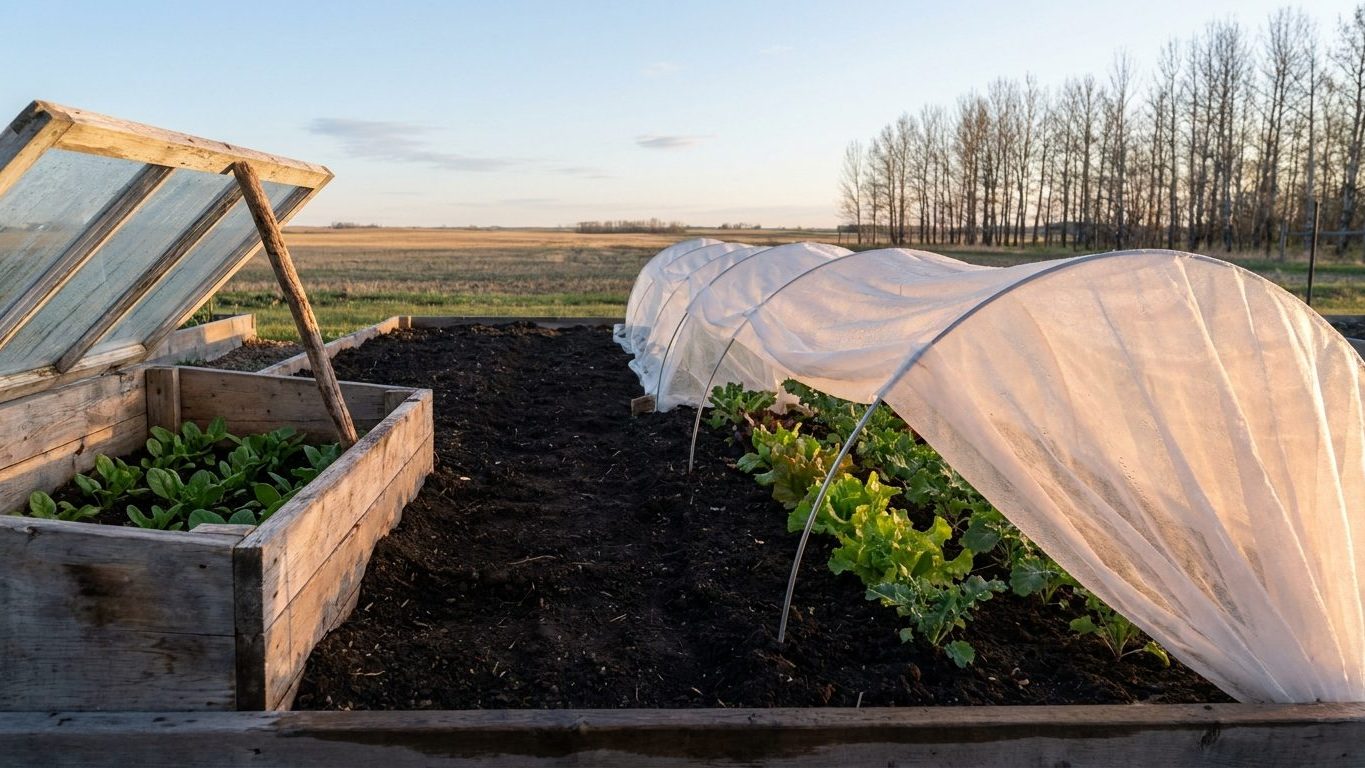

Along the coast and across Southern California, the best season extenders fight heat and dry air: shade cloth, deep mulch, and drip irrigation. Frost cloth, low tunnels, and cold frames belong in the Central Valley, the northern counties, and the Sierra, where freezes still happen. California is too big for one toolkit. The right choice depends on which side of the freeze line your garden sits.
The short answer for California
Use shade cloth, mulch, and drip irrigation where winters never freeze, and use frost cloth, low tunnels, and cold frames where they do. The line between the two runs through the state, so a Los Angeles gardener and a Sierra gardener need nearly opposite gear.
What should you use on the coast and in Southern California?
The Los Angeles reference station records no freeze in an average year. NOAA’s daily records show zero days at or below 32°F across 30 years, and the frost-free season is listed as 365 days. The mean daily minimum of the coldest month is 49.1°F. A garden like that has no winter shutdown to push back, so extending the season means keeping cool-season crops alive into warm weather and keeping warm-season crops productive through heat.
Shade cloth over lettuce, spinach, cilantro, and chard buys extra time before the plants bolt. A lighter weave suits fruiting crops such as peppers and tomatoes, which need plenty of sun. Mulch holds soil moisture and keeps roots cooler. Drip lines under that mulch put scarce water where the roots are instead of on the leaves and the path.
Near the coast, fog and cool nights can slow heat-lovers in late spring and early summer. A clear low tunnel or a cloche warms the soil and the air around young tomato, pepper, and squash plants. Take it off once sunny days arrive.
What should you use where freezes happen?
The Central Valley, the northern counties, and the Sierra all see freezes, so the standard tools apply. Frost cloth (floating row cover) over hoops protects tender crops on a light frost night. A cold frame keeps greens, carrots, and other cool-season crops growing through the coldest weeks. Water-filled cloches give tomato and pepper transplants a head start in spring.
Covers work best when they go on late in the afternoon, while the soil is still holding the day’s warmth, and come off the next morning so the bed can vent. The timing details are in When to Cover Your Garden in California. For the wider picture of how these tools fit together, see Extending the Growing Season in California.
Gardeners in the Central Valley often need both kits. Winter freezes call for frost cloth, and the long hot summer calls for shade cloth on anything leafy.
What will not work here

Why does a last-frost-date calendar fail on the coast?
Most season-extension advice starts from the average last spring frost. Along the coast and in Southern California, that date does not exist, because no freeze occurs in an average year. A calendar that says “plant two weeks after last frost” gives you nothing to count from. Sowing windows there follow heat, day length, and water instead. Buying frost cloth and hoops for a frost-free yard mostly gives you something to store.
The same logic applies in reverse. A summer garden in a hot, dry climate cannot be run on weekly watering. Soil under a hot sun loses moisture faster than a once-a-week soak can replace it, and shallow roots suffer between waterings. Local water restrictions often limit sprinkler days too, which makes overhead watering a poor bet. Drip lines on a timer, buried under mulch, are the setup that holds up.
Which covers backfire in warm weather?
Clear plastic tunnels are the clearest case. On a sunny winter afternoon in a frost-free area, a closed tunnel can climb well past what a plant tolerates. Even in zones that freeze at night, a sealed tunnel can cook seedlings by noon on a clear day. Tunnels need vented ends or removable sides, and someone has to open them.
Dense, dark shade cloth over tomatoes, peppers, or squash cuts the light the plants need to set fruit. It earns its place over lettuce and brassicas in summer, but fruiting crops need a lighter weave or only afternoon shade. Insect netting is a separate tool. It keeps out pests without trapping much heat, so it can stay on through summer.
In the cold regions, a single layer of frost cloth will not carry tender crops through a hard freeze. It adds only limited protection, so basil, tomatoes, and peppers can still die under it on a truly cold night. In the Sierra, snow load collapses light hoops, and a tunnel that worked in October can be flattened by January. Use sturdier frames there, and clear the snow when it piles up.
What changes across California
California is not one garden. The USDA Plant Hardiness Zone Map, which is built on a single variable, the average annual extreme minimum temperature, runs from zone 5a to 11a across the state. That is a spread wider than most entire regions of the country. There is no single answer for a Californian, only a set of answers sorted by where you live and how high up you are.
The table below shows how the main areas compare. Los Angeles is the reference city for the frost-free coast. The other rows describe areas where freezes do happen.
| Area | Freeze in an average year? | Main season problem | First extender to reach for |
|---|---|---|---|
| Coast and Southern California (Los Angeles as reference) | No | Heat, drought, water limits | Shade cloth, mulch, drip irrigation |
| Central Valley | Yes | Winter freezes and long hot summers | Frost cloth in winter, shade cloth in summer |
| Northern California | Yes | Cool springs, early fall frosts | Low tunnels, cold frames, cloches |
| Sierra and high elevation | Yes | Shortest season | Cold frames and sturdy hoop structures |
Latitude matters too, because day length is what tells an onion to stop making leaves and start making a bulb. The reference figure, 33.94 degrees north, belongs to Los Angeles. A gardener in the far north of the state sits several degrees higher and gets longer summer days, so onion types suited to Los Angeles will not behave the same way there. If you live near either end of the state, look up your own latitude before choosing a variety.
A reader in the north or at altitude should check their own latitude and local extension office. Put covers on sooner, expect cold frames to do more of the work, and treat any date from a coastal guide as too optimistic. To find your own zone, use the USDA Plant Hardiness Zone Map and look up your ZIP code. Do not assume the zone from a neighbor’s county.
Where to check this for your own county
The state’s extension service is University of California Agriculture and Natural Resources. It runs county offices across California, and each office knows its own local conditions. A county recommendation beats a statewide one every time, and what you are reading here is the statewide version. Two valleys can differ in when the last freeze comes or when summer heat arrives.
What should you look for on the extension site?
Start by finding your county’s office. Look for two things there: a local planting calendar and a list of varieties trialled in your county. A planting calendar written for your county tells you when to sow cool-season crops, when to set out transplants, and when heat shuts things down. A variety trial shows which cultivars actually performed in your soil and climate, which beats a seed catalog’s general claims.
Ask the office, or the county’s Master Gardener program if there is one, which season extenders local gardeners rely on. Ask when covers usually go on and come off, and whether fog, wind, or a particular microclimate in your area changes the usual advice. Local gardeners with years of experience in the same soil are often the best source for details no general guide can give.
Checking this against your own garden
Your own observations outrank every date and recommendation in a guide. Three things are worth watching, and none needs equipment.
- Soil warmth by feel. Push your hand a few inches into the bed on a cool morning. If it feels cold, warm-season seedlings will sit and wait. Compare a bed against a south-facing wall with one in the open, and a raised bed with a low spot. The difference shows you where cold air collects and where heat lingers.
- The first male flowers on squash and cucumbers. Male blooms open first. The date they appear tells you when your bed warmed enough for the plants to settle in. If they come noticeably later than a neighbor’s, your spot runs cooler, perhaps from fog, shade, or elevation.
- The first true leaves on seedlings. The first pair of leaves is the seed’s own. The true leaves come next. If they are slow to appear, the seedlings are cold, short on light, or both. Seedlings under a cover that grow true leaves faster than uncovered ones show the cover is doing its job.
Write the dates down for a season or two. A scribbled note on a calendar beats memory, and after a couple of years you will have a local record that no statewide guide can match. Gardeners who keep one often notice that a single bed is ahead of the one beside it, simply because of a wall or a slope.
Common questions
Do I need frost cloth in Los Angeles?
Usually not. The reference station records no freeze in an average year. An average is not every year, though, and gardeners in inland valleys or low pockets that collect cold air should still check the forecast before a clear, still night. If you live well away from the coast, ask your county extension office how often freezes occur locally.
Does shade cloth really extend the season?
Yes, for cool-season crops. Lettuce, spinach, and cilantro bolt when the weather turns hot, and shade cloth lowers the heat on the plant and slows that process. It also helps transplants get through the first hot weeks. It is less useful over tomatoes and peppers, which need strong light to set fruit.
When should I cover my garden for a freeze?
Cover on the afternoon before a forecast freeze, while the soil still holds the day’s warmth, and remove the covers the next morning. The full timing guidance is in When to Cover Your Garden in California.
Is a cold frame worth building in the Central Valley?
For greens, root crops, and early transplants, it is. Freezes do occur in the valley, and a cold frame protects crops and speeds growth through winter. Vent it on sunny days so it does not overheat, and remember that the long summer there calls for shade, not more cover.