
In coastal and Southern California, sweet corn sowing isn’t governed by frost dates at all: this zone runs frost-free in an average year, so the calendar question shifts entirely to soil warmth and summer heat. Sow once soil holds above 60°F, and count 60 to 90 days to harvest from there. With no autumn frost to race against, the window is wide, but heat load and neighboring corn varieties still decide whether the crop actually turns out sweet.
The short answer
Start with what the record actually shows: at the reference station for this territory, NOAA’s 30-year data finds zero days at or below 32°F, and the frost-free season is listed as a full 365 days. That’s not a rounding error or a mild winter fluke. It means gardeners here don’t have a “last spring frost” to plan around in the way growers in the Central Valley or the Sierra foothills do. Those regions do freeze, and treating Los Angeles-style coastal warmth as if it applied statewide would be a mistake worth avoiding.
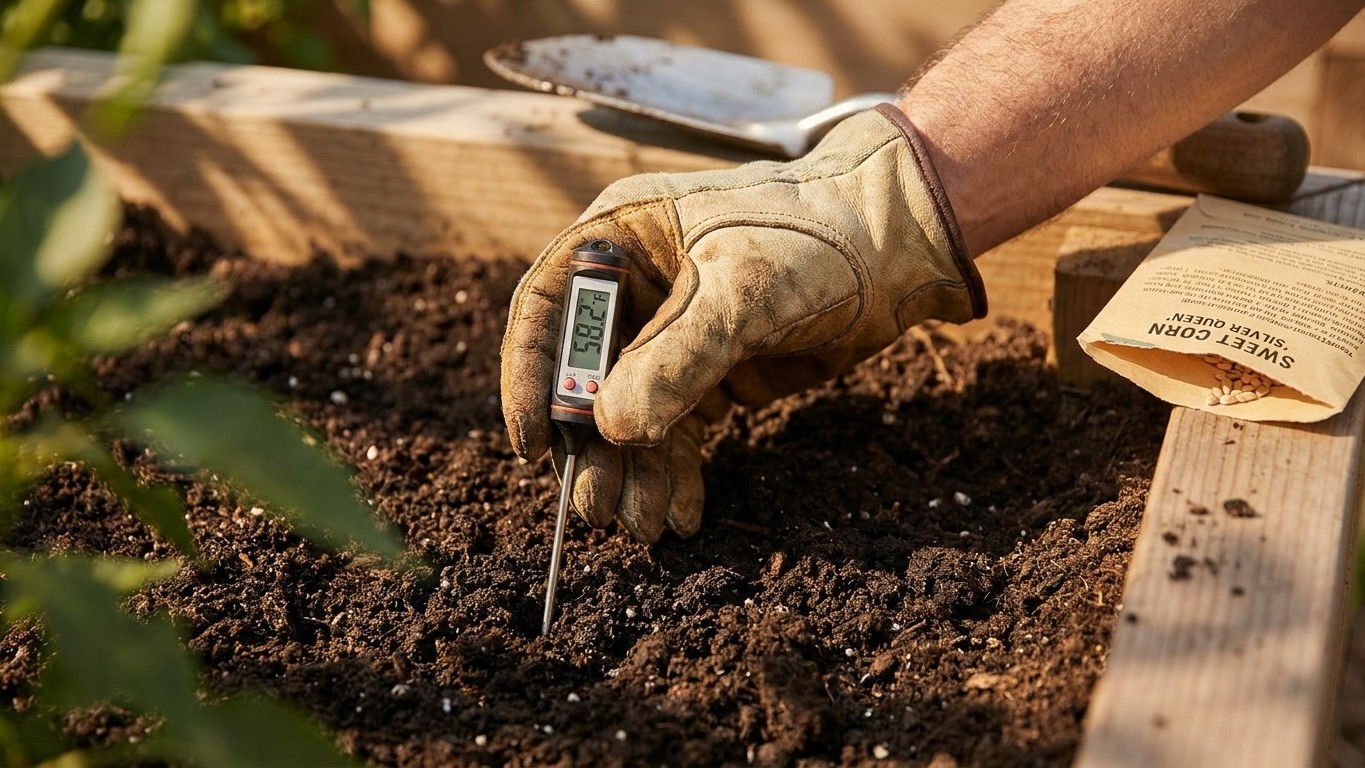
So what replaces the frost date as the trigger for sowing? Soil temperature. Sweet corn seed sits and rots in cold, wet ground; it needs the soil to hold above 60°F before germination odds turn in your favor. In a frost-free coastal or southern zone, that threshold arrives well into spring, driven less by any single freeze event and more by the steady climb of daytime warmth and lengthening daylight. There’s no published date here for exactly when that happens each year, and giving one would be inventing a precision the data doesn’t support. What can be said plainly: soil warmth, not frost risk, is the variable to track with a simple soil thermometer pushed a couple inches into the bed.
Once soil clears that 60°F mark, the next question is whether 60 to 90 days of growing time fit before conditions turn hostile again. Here, that’s rarely in doubt. A 365-day frost-free season leaves enormous room. The real constraint isn’t season length, it’s heat load in the middle of it. This reference station averages 2.4 days a year at 90°F or hotter. That’s a modest number as far as heat stress goes, but it matters at two specific moments: right after sowing, when soil that’s too hot can also hurt germination, and during tasseling and silk emergence, when extreme heat can interfere with pollination regardless of how many days are left on the calendar. The practical takeaway is that this territory gives you room to sow later than frost-bound regions ever could, but “later” still needs to dodge the hottest stretch of summer for the pollination window specifically, not because the season runs out, but because heat itself becomes the obstacle.
Does a late variety fit here?
The question isn’t really about season length once you’re frost-free. It’s about whether the maturity window lines up with manageable heat during pollination, and here the answer differs sharply by variety length.
The 60-day variety
A shorter-season type, maturing near 60 days from planting, fits comfortably into this climate almost any time from when soil clears 60°F through late summer. Because there’s no autumn frost cutoff to race against, a 60-day variety leaves wide margins on both ends. It also gives more flexibility for succession sowing, staggering plantings every couple of weeks to spread the harvest instead of getting one giant flush of ears all ripening at once. The main planning task is simply avoiding the very hottest stretch of the year for its tasseling stage, since that’s when heat, not calendar days, does the damage.
The 90-day variety
A longer-season type sitting near 90 days does fit here too, and that’s worth saying plainly, because in frost-prone parts of the state, a 90-day corn sown even slightly late risks running out of season before the first fall freeze. That risk simply doesn’t exist in a zone with a 365-day frost-free season. What a 90-day variety does ask for is more careful thought about when its roughly three-week pollination stretch falls, since a long-season crop sown in early summer may push tasseling into the period most likely to include those handful of 90°F-plus days. It’s not disqualifying, but it does mean choosing a sowing date with the pollination window in mind rather than sowing on autopilot.
What goes wrong here
Most sweet corn disappointments in this climate trace back to one of three specific mistakes, and only one of them has anything to do with weather at all.
- Sowing into soil that’s still too cold. Even in a frost-free zone, early spring soil can sit below 60°F for weeks while air temperatures feel deceptively warm. Seed sown too early germinates poorly or rots outright. The fix is simple: check soil temperature directly with a thermometer rather than trusting the calendar or the feel of the air, and wait for a consistent reading above 60°F before sowing.
- Choosing a variety whose maturity length doesn’t match the heat pattern. This isn’t a season-length problem here, since 60 to 90 days both fit inside the 365-day frost-free window. It’s a pollination-timing problem: a longer 90-day variety sown at the wrong point can end up tasseling right during the hottest stretch of summer, when the handful of 90°F-plus days concentrate. The remedy is timing the sowing date backward from an estimated pollination window, not simply trusting that a long season guarantees success.
- Losing sweetness because two corn types tasseled at the same time. This is the failure that has nothing to do with climate at all. Standard sweet corn (su), sugary-enhanced (se), and supersweet (sh2) types cross-pollinate if their tassels shed pollen during the same window, and the result is starchy, disappointing ears regardless of how well the plants otherwise grew. The published guidance from Utah State University Extension doesn’t set a distance requirement between plantings; it sets a timing rule. The types simply must not tassel together. Stagger sowing dates so tasseling windows don’t overlap, and grow each type in its own block of three or more rows rather than a single thin row, since corn pollinates by wind and a block shape improves fertilization regardless of variety.
Common questions
Does Southern California ever get a hard frost that would kill young corn seedlings?
Not in an average year at this reference station. The 30-year climate record shows zero days at or below 32°F and lists the frost-free season as a full 365 days. That’s specific to coastal and Southern California; the Central Valley and Sierra regions of the state do experience freezing temperatures and shouldn’t be planned around this same assumption.
If there’s no frost date, how do I know when to sow?
Track soil temperature directly rather than a calendar date. Sweet corn needs soil above 60°F to germinate reliably. A soil thermometer pushed a couple inches into the bed gives a far more useful answer than guessing from air temperature or a generic regional planting chart.
Can I plant sweet corn multiple times through the season here?
Yes, and the 365-day frost-free season makes succession sowing especially practical. Staggering plantings of a 60-day variety every couple of weeks spreads the harvest out instead of producing one large flush of ears, and it also helps separate tasseling windows between different corn types.
Do I need to isolate different corn types by a certain distance?
The published Utah State University Extension guidance doesn’t specify a distance. What it specifies is timing: su, se, and sh2 types must not tassel at the same time, or cross-pollination will dull the sweetness of the harvest. Plan sowing dates so tasseling windows are staggered, and grow each type in its own block of three or more rows for reliable pollination within that type.