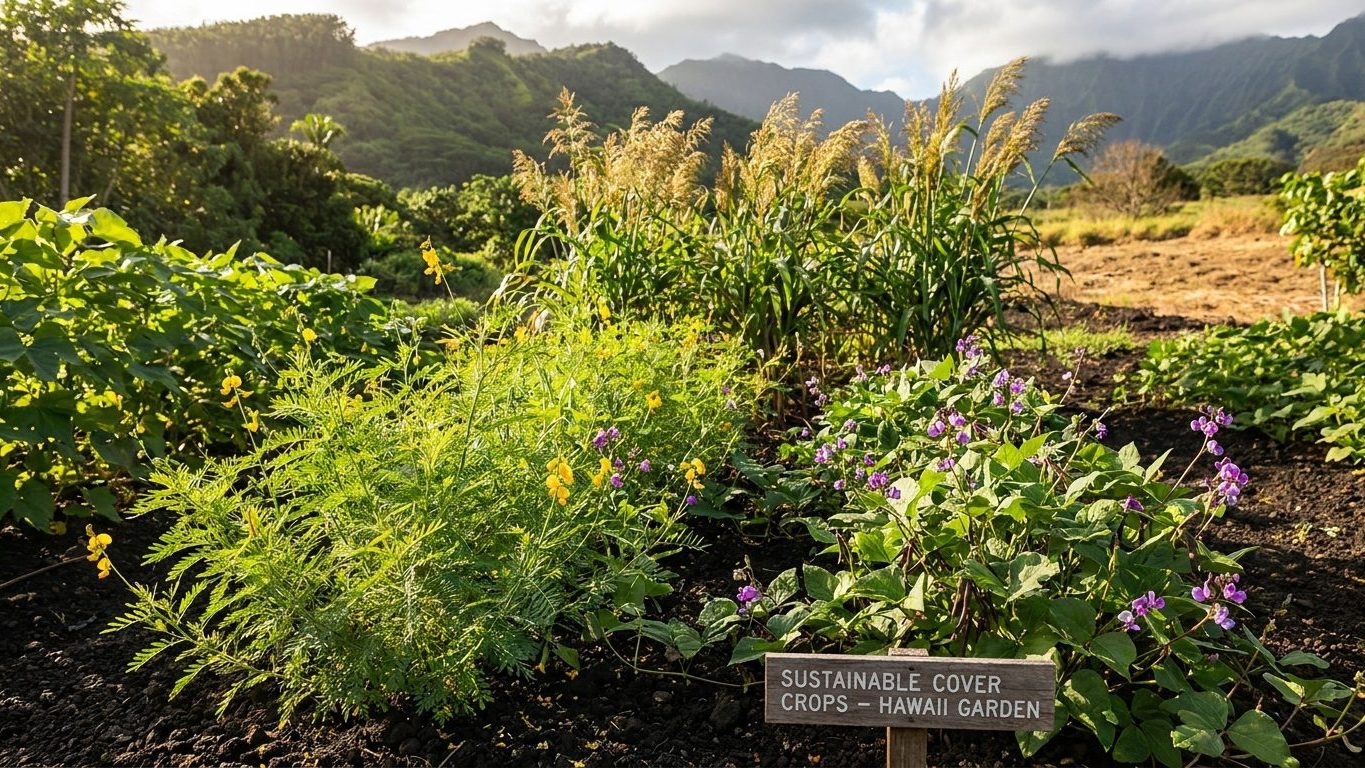

Cereal rye and hairy vetch top the list for most of Colorado, thanks to their tolerance for hard winters. Buckwheat fills the gap as a fast summer cover between plantings. Which one wins depends less on personal preference than on where in the state you garden and how long your frost-free stretch actually runs.
The short answer for Colorado
Start with the numbers that actually govern this decision. At the Denver reference station, the frost-free window runs from roughly May 1-11 in spring to September 30-October 12 in fall, a season of somewhere around five months on the plains. The coldest month averages a daily minimum of 18.4°F, and the state’s hardiness zones span 3b to 7b under the USDA system. That spread is the whole story: a cover crop that thrives in one part of Colorado can die outright in another.
For anyone gardening near the Front Range plains, cereal rye is the workhorse. It germinates in cool soil, keeps growing after most other plants have quit for the year, and survives winters far colder than the 18.4°F mean minimum recorded here. Pair it with hairy vetch for nitrogen fixation and you get a fall-seeded combination that holds soil through winter and terminates easily in spring.
Oats work differently and that’s useful. Seeded in early fall, oats grow fast, then winterkill reliably once temperatures drop hard, leaving a dead mulch mat on the surface by spring with no tillage required. That trait makes them a good fit for gardeners who want winter soil cover without spring cleanup.
Buckwheat is the summer answer, not a winter one. It matures in as little as 30 to 40 days, making it useful for the gap between an early vegetable harvest and a fall planting, but it dies at the first frost and was never meant to overwinter here.
| Cover crop | Season role | Winter behavior in Colorado |
|---|---|---|
| Cereal rye | Fall-seeded, overwinters | Survives well below 18.4°F mean minimum |
| Hairy vetch | Fall-seeded, overwinters | Winter hardy, pairs with rye for nitrogen |
| Oats | Fall-seeded, winterkills | Dies back before spring, leaves surface mulch |
| Buckwheat | Summer gap-filler | Killed by first fall frost, not a winter crop |
What will not work here
Crimson clover is the classic mismatch. It’s a popular cover crop recommendation nationally, but it needs winters milder than what most of Colorado delivers. A mean minimum of 18.4°F in the coldest month, combined with hardiness zones as cold as 3b across large stretches of the state, puts crimson clover at real risk of a total winter kill outside the warmest pockets near 7b. Gardeners who plant it expecting the reliable spring green-up they’ve read about elsewhere are often disappointed.
Warm-season legumes bred for long, hot growing seasons run into the opposite problem. Sunn hemp and cowpea varieties that need a full 200-plus frost-free days to reach useful biomass simply don’t have the runway. With the frost-free window closing by early October at the reference station, and considerably earlier at elevation, these species get cut short before they’ve done much of anything.
Annual ryegrass planted as a summer cover asks for something Colorado’s climate doesn’t hand out for free: steady moisture through hot months. The state’s high, dry summers mean this crop tends to struggle without frequent irrigation, and gardeners who try to compensate by watering on a rigid weekly schedule often end up with shallow-rooted, stressed plants rather than the lush stand they pictured.
Anything that depends on a long, humid summer to build density, the kind of cover crop program you’d see promoted for the Southeast, is fighting the wrong climate here. Colorado’s growing season is shorter and drier than that model assumes, and a planting plan borrowed wholesale from a humid state will underperform no matter how well it worked there.
What changes across Colorado
A hardiness range of 3b to 7b is not a rounding error. It’s the difference between a Denver-area garden that can reliably overwinter hairy vetch and a mountain valley where the same planting freezes out most years. The reference frost dates used above, May 1-11 for last spring frost and September 30-October 12 for first fall frost, describe the Denver station at 5,280 feet on the plains. They are not a promise for the rest of the state.
Mountain towns at higher elevation run a noticeably shorter season, and some can see frost even in July. A cover crop calendar built around a five-month frost-free window doesn’t hold up in a place where the safe planting stretch might be closer to two or three months. For those gardeners, fast-maturing summer covers like buckwheat make more sense than anything that assumes a long fall to establish before winter.
The western slope differs again, with its own pattern of frost timing and elevation effects that don’t track neatly with the Front Range numbers. There is no single planting date or single cover crop recommendation that fits both a Grand Junction valley and a high mountain community, even though both sit inside Colorado’s borders.
None of this means guessing. It means recognizing that a state-level answer, including everything in this article, is a starting point built on one reference station and one range of hardiness zones, not a substitute for knowing where a specific garden falls inside that range. The next section is where that gets sorted out.
Where to check this for your own county
Colorado State University Extension is the authority to check next, and it maintains a public presence at extension.colostate.edu. This page has laid out the state-wide picture: reference frost dates from one station, one coldest-month minimum, and a hardiness zone range that spans more than four full zones. A county-level source narrows all of that down to the specific conditions of one place, and that narrower answer should always take priority over the broader one given here.
Two things are worth looking for once there. First, a local planting calendar, if the county office publishes one, will reflect frost timing and elevation effects specific to that area rather than the Denver reference station used in this article. Second, look for any variety trial results or recommendations tied to that county. Extension offices often test which cover crop varieties actually perform well in their local soil and climate, and that kind of field-tested information carries more weight than a general statewide pick.
This is worth stating plainly: a page written at the state level, this one included, is describing Colorado as a whole, a territory that runs from low, dry plains to high mountain valleys. A recommendation built around one county’s actual growing conditions will fit that county far better than any statewide generalization can, no matter how carefully the statewide numbers are sourced.
Checking this against your own garden
Every date and temperature figure in this article describes averages and probability bands, not guarantees for a specific yard in a specific year. The most reliable check available to any gardener is direct observation of the soil and plants already there, and it outranks a calendar every time.
Soil warmth by feel is the first signal. Working a hand a few inches into the bed and finding it crumbly and no longer cold to the touch is a sign the ground has warmed enough for spring-seeded legumes to germinate, regardless of what the calendar date says.
Watching for a sudden flush of weed seedlings germinating together is a second useful cue. That kind of synchronized germination usually means soil temperatures have crossed a threshold that many cover crop seeds, not just the weeds, are also waiting on.
The first true leaves on any cover crop already growing in the yard, appearing after the initial rounded seed leaves, mark the point where that planting has moved past its most vulnerable stage. Watching how quickly that happens compared to what a seed packet or extension calendar predicts tells a gardener something specific about their own microclimate, whether it runs a little warmer or a little cooler than the county average, information no state-level page can supply.