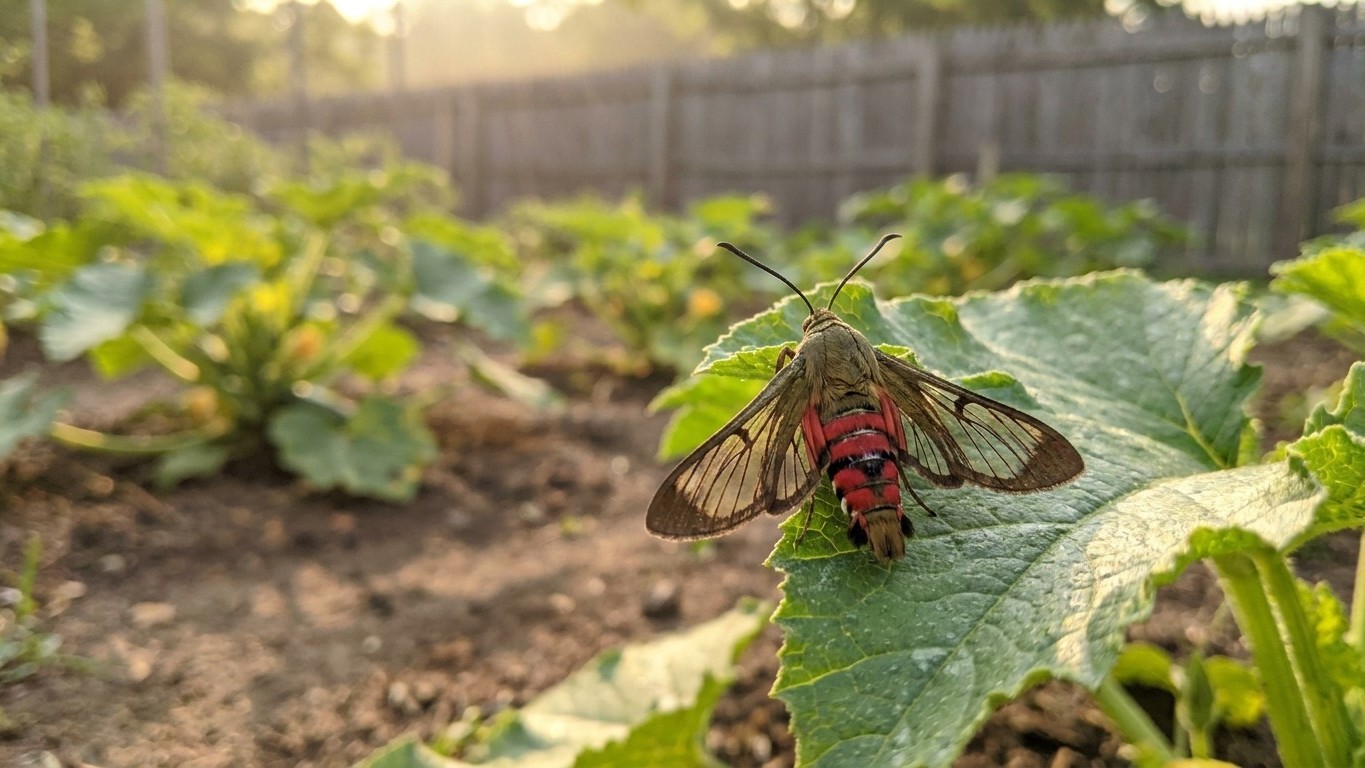

Adult squash vine borer moths start emerging in Connecticut gardens around the third week of June, with peak egg-laying activity running through mid-July. By the time most gardeners notice wilting leaves on their zucchini, the damage inside the stem is already weeks old. Timing your defense to this window, rather than reacting to visible symptoms, is the difference between a harvest and a compost pile.
Why Connecticut’s Climate Sets the Borer’s Calendar

Squash vine borer (Melittia cucurbitae) overwinters as a pupa buried two to six inches in the soil, right where last year’s squash or pumpkin patch stood. Connecticut’s frost-free growing season, typically from early May through mid-October depending on the county, gives the insect just enough warmth to complete one full generation and sometimes a partial second one in the state’s warmer river valleys, like the Connecticut River lowlands around Hartford County.
Soil temperature drives emergence more than the calendar date does. Once the top few inches of garden soil hold steady around 60°F, moths begin clawing their way out. In a typical year that lands in the third week of June across most of the state, but a warm spring can push it into the first week of June, especially in shoreline towns along Fairfield and New Haven counties where soil warms faster than in the Litchfield Hills.
What the Adult Moth Looks Like (And Why It’s Often Mistaken for a Wasp)
The adult is roughly an inch long, with an olive-brown front half and a bright orange-and-black striped abdomen fringed with hairy back legs. It flies during the day, unlike most moths, and its wasp-like coloring fools plenty of gardeners into ignoring it as “just a wasp near the flowers.” That mistake costs a squash plant its life. The moth lays tiny reddish-brown eggs, singly, at the base of stems near the soil line, and each female can produce well over a hundred eggs over her three- to four-week lifespan.
Signs of Infestation: What to Check Before the Wilt Sets In
By the time a squash or pumpkin vine shows sudden, dramatic wilting, especially on a day when the soil is plenty moist, the larva has already been tunneling for one to two weeks. The wilt happens because the borer chews through the stem’s vascular tissue, cutting off water flow to the leaves beyond the entry point.
A few earlier clues are worth checking weekly starting in mid-June:
- Small holes near the base of the stem, often oozing a wet, sawdust-like frass (the larva’s excrement mixed with plant material)
- A slight yellowing or drooping on just one side of the plant, before the whole vine collapses
- Tiny reddish eggs on the stem or on the undersides of leaves close to the soil, visible with a quick daily inspection
- Small entry holes that look freshly chewed, sometimes with a sticky residue around the rim
Summer squash and zucchini tend to show symptoms faster because their stems are hollow and more fragile. Winter squash varieties, including butternut and acorn, and pumpkins can sometimes tolerate a moderate infestation longer since their solid stems resist collapse, but the plant’s productivity still drops even when it doesn’t die outright.
What Actually Stops Squash vine borer in Connecticut Gardens
Timing beats chemistry here. Because the larva does its damage inside the stem, once it’s tunneled in, most treatments become far less effective. The real leverage point is the two- to three-week window when eggs are exposed on the stem’s surface, before they hatch.
Row Covers: The Single Most Reliable Physical Barrier
Floating row covers, installed at planting time and kept sealed at the edges with soil or landscape staples, physically block adult moths from reaching the stems to lay eggs. The catch is timing removal for pollination. Squash and pumpkins need bees to set fruit, so covers must come off once flowering starts, typically four to six weeks after planting, right around the point when moth pressure peaks in Connecticut. Some gardeners split the difference by hand-pollinating flowers each morning and keeping covers on longer, which sidesteps the tradeoff entirely for small home plantings.
Stem Wrapping and Aluminum Foil Collars
Wrapping the lower four to six inches of the main stem with aluminum foil or a strip of nylon stocking, applied at transplanting or when seedlings reach a few inches tall, denies the moth a soft surface to lay eggs on. It’s a low-cost technique that works well for gardeners with a handful of plants, though it becomes impractical for larger squash patches.
Timing Insecticide Applications to the Egg-Laying Window
For gardeners who choose to spray, the target is the base of the stems during the egg-laying period, not the foliage. University extension guidance from the region points to weekly applications starting when moths are first spotted, generally the last week of June into mid-July in Connecticut, and continuing for about three to four weeks. Products containing spinosad or permethrin, applied directly to the stem base in the early evening (when bees are less active), are the commonly recommended options for home gardeners who want a chemical option without heavy off-target impact on pollinators. Once frass and holes are visible, spraying no longer helps because the larva is already protected inside the stem.
Yellow pan traps filled with water, placed near the base of plants starting in mid-June, help gardeners confirm when adult moths are actively flying in their specific microclimate. This beats guessing from a generic calendar date, since a shaded backyard in the Litchfield hills can lag two weeks behind a sunny coastal garden in New London County.
The Surgical Removal Option
If a larva is already inside the stem, some gardeners slit the stem lengthwise with a sharp knife right at the entry hole, extract the borer by hand, and then mound moist soil over the wounded section to encourage new root growth from that point. It’s messy and doesn’t always save the plant, but it occasionally buys a few more weeks of production, particularly on vigorous winter squash varieties.
Breaking the Cycle: Why Fall and Spring Habits Matter as Much as Summer Sprays
Because the pupa spends the winter in the soil, what happens after harvest matters just as much as what happens during the growing season. Tilling or turning over the soil in fall, after vines are pulled, exposes overwintering pupae to Connecticut’s cold and to birds looking for an easy meal. Leaving old squash vines and root balls in place through winter is essentially banking next year’s infestation.
Crop rotation helps too, though it requires planning ahead in a typical suburban garden bed. Moving squash, pumpkins, and other cucurbits to a different section of the yard each year, ideally at least 30 feet from the previous year’s planting site, reduces the odds that emerging moths land right next to a fresh host plant. For gardeners with limited space, container growing on a deck or driveway, well away from any in-ground squash history, sidesteps the rotation problem entirely.
Some Connecticut gardeners also stagger planting dates, putting in a second round of squash seeds in early July as insurance. Because that later planting emerges after the first wave of moth activity has started to taper off, it sometimes escapes the worst of the pressure, especially useful for zucchini and summer squash, which mature quickly enough to still produce before frost.
Resistant and Less-Preferred Varieties Worth Growing in Connecticut
Not all cucurbits attract squash vine borer equally. Butternut squash, in particular, has a solid, less hollow stem that female moths seem to find less appealing for egg-laying compared to zucchini or yellow summer squash. Cucumbers and melons, both in the same plant family but different genus, are rarely targeted at all. Gardeners who’ve lost a season or two of zucchini to borers sometimes shift their main planting toward butternut and other winter squash, treating summer squash as a smaller, more closely monitored side crop protected by row covers from day one.
This kind of variety substitution doesn’t eliminate the pest from the yard, but it does reduce the odds of losing an entire squash harvest to a single insect that, ounce for ounce, does more damage to backyard gardens across New England than almost anything else that flies in on a June afternoon.
Related guides
- Squash vine borer in New York: When It Shows Up and What Stops It
- Squash vine borer in Massachusetts: When It Shows Up and What Stops It
- Squash vine borer in Delaware: When It Shows Up and What Stops It
- Squash vine borer in Georgia: When It Shows Up and What Stops It
- Squash vine borer in Nebraska: When It Shows Up and What Stops It
- Squash vine borer in New Brunswick: When It Shows Up and What Stops It