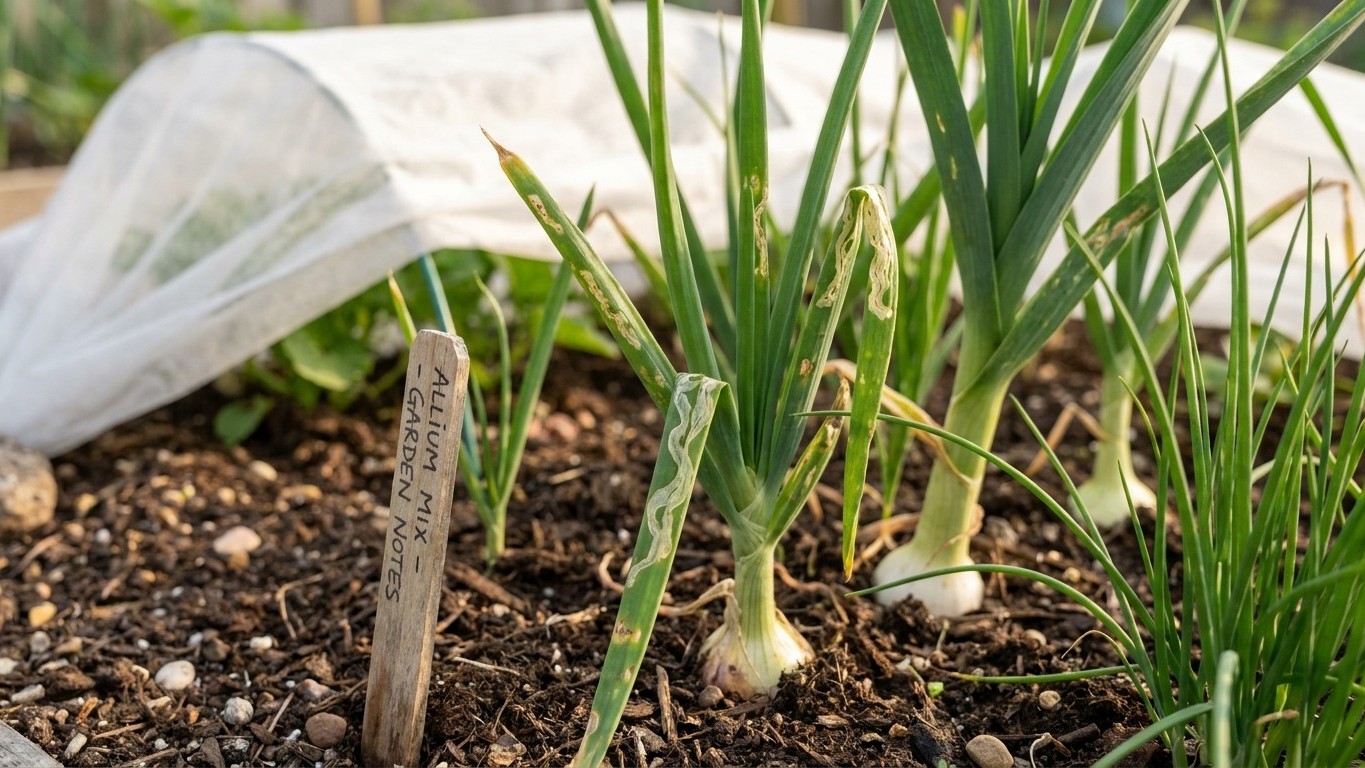

Allium leafminer shows up in Connecticut in two separate waves tied to spring warmth and fall cooling, not to a fixed date on the calendar. The insect targets onions, garlic, leeks, shallots and chives, tunneling through leaves and down into the bulb. Row covers timed to keep adults off the plants are the most reliable home defense once you know the flight windows.
The weeks to watch

UConn Extension’s published vegetable pest fact sheets, the same set that tracks striped cucumber beetle, squash vine borer, squash bug and Japanese beetle emergence for Connecticut growers, do not carry a specific Connecticut flight window for allium leafminer. That’s a gap in the local record, not a sign the pest is rare or absent here, it’s simply a species without its own dated entry in that resource yet. What growers rely on instead is the general life-cycle pattern documented for this insect across the Northeast since it arrived from Europe.
Two flights, not one
Allium leafminer runs on two generations a year. The first flight happens in early spring, as soil and air temperatures climb out of the cold, and adults lay eggs on young allium leaves. A second flight follows in fall, once temperatures drop back down from summer heat, hitting late-planted leeks and any garlic or onion sets still in the ground. Between those two windows, in the height of summer, the insect is essentially inactive, no adults flying, no new egg-laying. That summer lull is the one predictable break in an otherwise moving target.
Because Connecticut doesn’t have its own dated fact sheet for this species, the safest planning approach is to watch for the visible signs described further down rather than counting on a specific week.
Reading the calendar from your last frost

The one date most Connecticut gardeners actually track is the last spring frost, and NOAA’s 1991-2020 climate normals for the Bridgeport station put that window between April 2 and April 12. That station sits on Long Island Sound, in the mildest coastal strip of the state, so anyone gardening inland or in the northwest hills should expect frost to linger later in spring and arrive earlier in fall.
Allium leafminer doesn’t respond to a printed date any more than the frost itself does, it responds to soil warming up enough for adults to become active and start probing leaves. That means an early, mild spring can pull the first flight forward, and a cold, wet April can push it back, independent of what the calendar says.
- Start from your local last-frost normal (April 2 to April 12 near the coast, later inland).
- Treat that window as the earliest point soil warms enough to matter, and plan your row cover to go on before, not after, that stretch begins, since covers only work if they’re in place before adults arrive.
Covers typically stay on through the spring flight period and come off only once that first wave has passed and temperatures have stabilized, then go back on again ahead of the fall flight.
What it attacks, and what the damage looks like

The first thing a gardener usually notices isn’t an insect at all, it’s a row of small white or pale dots running in a line down a leaf, like stitching. Those marks are feeding and egg-laying punctures left by adult flies. Left alone, the leaf often twists, curls, or develops a distorted, crinkled look further down. Cut a stalk open and you may find slender white larvae or brown, capsule-shaped pupae packed near the base, right where the leaf meets the bulb.
Crops at risk belong to one plant family, and the fly doesn’t stray outside it:
- Onion
- Garlic
- Leek
- Shallot
- Chives
Which stage does the damage
The maggot, or larval stage, is responsible for the destructive tunneling, it’s the one that mines through leaf tissue and works its way down into the bulb or neck of the plant, hollowing out space as it feeds. Adult flies cause the surface stippling from feeding and egg-laying punctures, but that damage alone rarely threatens the crop. Once larvae have moved inside the stem, they’re physically shielded, which is exactly why prevention before egg-laying matters more than anything applied afterward.
How Connecticut sits in this pest’s range

This site currently documents allium leafminer in one territory, Connecticut. That narrow footprint doesn’t mean the insect stops at the state line, it’s an invasive species that has been expanding across the Northeast for years, and a single documented territory here reflects what’s been tracked and published locally rather than the true edge of its spread. Connecticut sits close to that documentation edge: it’s one of the states where the pest has been formally identified and where UConn Extension keeps it on the radar for home gardeners and commercial growers alike.
What that narrow range does tell a Connecticut gardener is that local guidance is still catching up to the pest’s actual behavior. Neighboring states have their own extension services tracking the same insect, but this page draws specifically on UConn Extension’s Connecticut-facing material, not on data borrowed from across a state line. If your allium bed shows the telltale stippling and tunneling described above, treat it as present and act on timing and covers rather than waiting for a more detailed local forecast.
What actually works against it

Home control for allium leafminer is almost entirely about keeping adults away from the plant before they lay eggs, because nothing applied after larvae are inside the stem reaches them.
Cheapest to most involved
- Time your planting around the two flight windows. Getting transplants in after the spring flight has passed, or harvesting before the fall flight begins, sidesteps the egg-laying period entirely.
- Use floating row covers. A lightweight cover placed over the bed before adults become active physically blocks flies from reaching leaves to feed or lay eggs. The mechanism is simple exclusion, and it stops working the moment the cover comes off during an active flight, or if edges aren’t sealed to the soil, letting flies crawl underneath.
- Rotate alliums to a new bed each season. Pupae overwinter in old plant debris near the soil line, so moving onions, garlic and leeks away from last year’s spot reduces the odds that emerging adults land right on a fresh crop.
- Clear and destroy plant debris after harvest. Pulling and disposing of leaves, stalks and bulb trimmings removes overwintering pupae before they can emerge the following spring. Leaving debris in the bed, or composting it on-site without heat, keeps the population cycling through your own garden.
- Hand-remove visibly mined leaves early. Once you spot the tell-tale white stippling in a line, cutting that leaf out before larvae migrate downward can reduce how much damage reaches the bulb, though it only helps if caught before tunneling advances.
Once maggots have moved into the bulb or stem base, no cover, rotation, or hand-picking recovers that plant, the practical response at that point is to remove and destroy the infested plant so it doesn’t seed the next generation.
Common questions
Does allium leafminer kill the whole plant? Not always. Light infestations often leave the bulb edible after trimming damaged tissue, but heavy tunneling that reaches the bulb core typically ruins it for storage and often for eating.
Can I still plant onions if I saw this pest last year? Yes, but rotate the bed to a different spot and clear out any leftover plant debris first, since pupae overwintering in old stalks are the most direct source of next season’s flies.
Are chives at real risk, or just the bulb alliums? Chives are on the host list along with onion, garlic, leek and shallot, so a bed of chives showing the same white-dotted leaf pattern should be checked and covered on the same schedule as the rest of the allium patch.