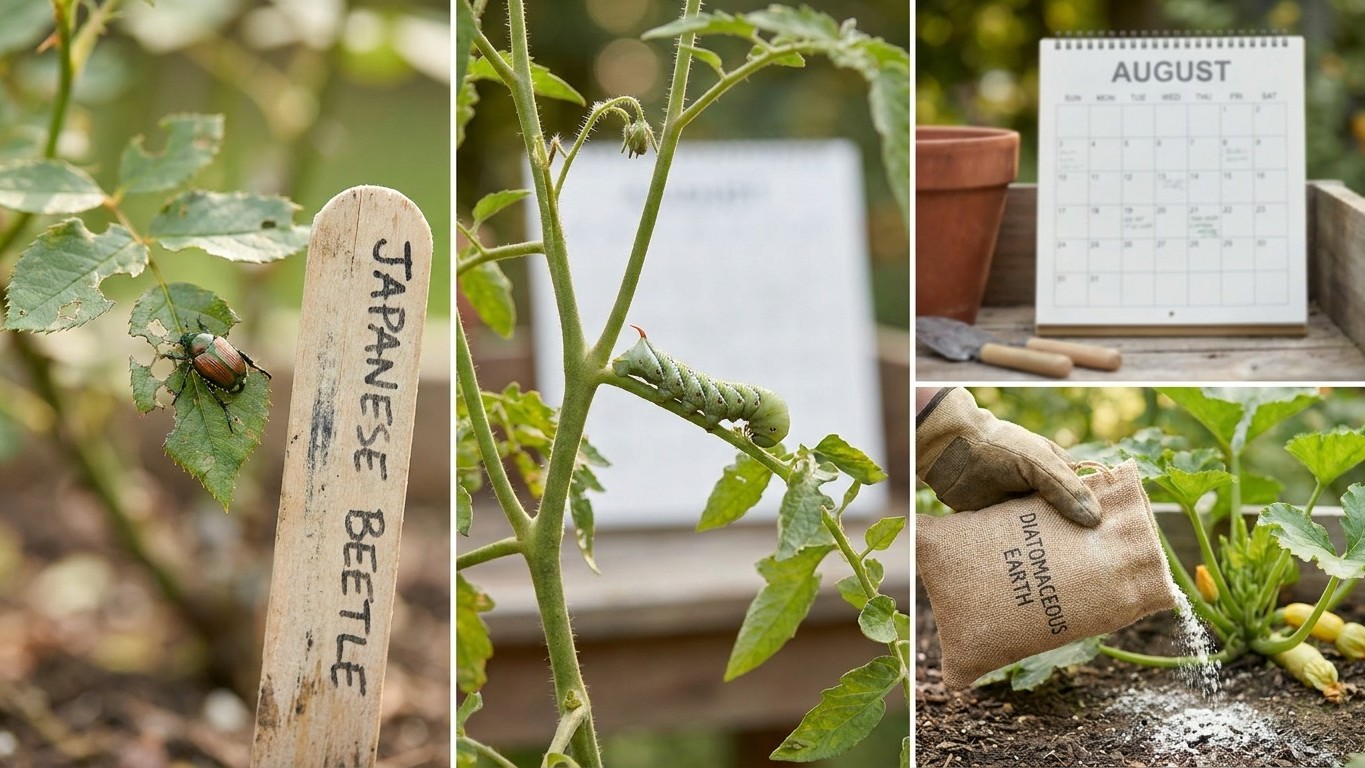

Cutworms, beetles, mines in the onion leaves — what’s actually eating your garden this year? Ten pests cause almost all of it, and each one has a season when it does the most damage. Right now, the single best move is to walk your cucurbit seedlings and check the base of the vines for adult beetles the moment true leaves appear, because that’s the window before the real trouble starts — Squash vine borer and Striped cucumber beetle populations are especially active during this stage in Connecticut. Know which pest you’re looking at, and the timing for stopping it gets a lot easier.
What Connecticut gardens actually deal with

Connecticut’s humid summers and short, wet springs suit insects that need moisture to survive their egg and larval stages, and the state’s home gardens are full of the exact host plants these pests specialize in: cucurbits, potatoes, alliums, roses and lilies. Potato growers in particular should keep an eye out for the Colorado potato beetle in Connecticut that gardeners commonly report once foliage fills in, while anyone growing roses should watch for the Japanese beetle in Connecticut, which gardeners often see skeletonizing leaves by midsummer, and lily growers should be on alert for the Lily leaf beetle Connecticut gardeners frequently spot chewing through emerging shoots each spring. A gardener in Maine, with a shorter and cooler growing season, sees slower buildup of the same beetle groups. A gardener in Arizona deals with an almost entirely different pest list built around heat and drought rather than humidity. For a broader look at what growing conditions across the state, see our Connecticut guides. The pests below are listed in the rough order they show up over a season, and only the pests UConn Extension names for home gardens are included here. If something on your plant doesn’t match one of these, your county extension office can identify it from a photo or sample.
Cutworms

Gardeners dealing with Cutworms in Connecticut find that these pests feed at night and hide in the soil by day, which is why a gardener often finds a toppled seedling with no visible insect anywhere near it. The caterpillar chews through the stem right at soil level, severing the plant cleanly rather than leaving chewed leaf edges. Paper or foil collars pushed an inch into the soil around transplants stop this cold, and tilling a bed in fall exposes overwintering larvae to birds. Later in the season, cucurbit growers should also watch for Squash bug in Connecticut, since it targets the same vines once the weather warms, and gardeners should also keep an eye out for the Brown marmorated stink bug in Connecticut, which is increasingly found on tomatoes and peppers around the same time.
Lily leaf beetle

Adults show up on lily shoots as soon as they emerge and start chewing irregular holes through new leaves. The larvae do the heavier damage later, stripping leaves down to the veins while wearing a coat of their own dark excrement as camouflage. Hand-picking adults in early spring, before they lay eggs, does more good than any later spray.
Colorado potato beetle

This beetle and its larvae can skeletonize potato and eggplant foliage within a couple of weeks if left alone. The adult beetle’s yellow-orange body with black stripes is easy to spot on the top of leaves, but check the undersides too, where clusters of small orange eggs give away an infestation before it starts. Rotating potatoes and eggplant away from last year’s bed breaks the cycle, since adults overwinter in the soil right where they fed.
Four-lined plant bug

The damage from this pest looks almost like a leaf disease: round, sunken brown spots scattered across mint, basil and other soft-leaved herbs. By the time the spots are noticed, the bug itself has often already moved to a new plant, which makes spray timing unreliable. Clearing garden debris in fall removes the eggs that overwinter there.
Allium leafminer

Look for pale, wandering trails or blotchy mines inside the leaves of onions, leeks and garlic, sometimes tunneling down toward the bulb where it invites rot. The adult fly is tiny and rarely seen. Row cover over the allium bed during the fly’s active period keeps it off the crop, and infested bulbs should go in the trash, not the compost pile.
Striped cucumber beetle

Adult beetles chew ragged holes in cucurbit seedling leaves and stems, and they carry bacterial wilt from plant to plant as they feed, which can kill a vine outright weeks after the beetles themselves are gone. UConn’s IPM Vegetable Pest Message puts the population peak near Bridgeport at about the third week of June. Floating row cover over young plants, removed once flowers open for pollination, is the most reliable defense.
Squash vine borer
A vine that wilts suddenly even though the soil is damp is the classic sign, along with sawdust-like frass piled at the base of the stem where the larva has bored in. UConn Extension notes that adult moths near Bridgeport emerge mid to late June, with wilting typically starting from late June onward. Slitting the stem to remove the borer, or planting a variety less prone to hollow stems like butternut squash, both help.
Squash bug
Nymphs cluster in tight groups on the undersides of leaves, and their feeding causes yellow speckling that turns into brown, wilted patches. UConn Extension notes that squash bug has only one generation per year in Connecticut, which means knocking back the first wave of adults and egg clusters in early summer controls the pest for the whole rest of the season.
Japanese beetle
Adults skeletonize leaves between the veins on roses, grapes and many ornamentals, leaving a lace-like pattern behind. UConn Extension notes that adults emerge the first week of July near Bridgeport and stay active for two to three months. Hand-picking into a jar of soapy water, done daily during that stretch, works. Beetle traps do not: they pull in more beetles from the surrounding area than they catch.
Brown marmorated stink bug
This one pierces rather than chews, leaving dimpled, cloudy scars called cat-facing on tomatoes and peppers. Adults seek shelter indoors and in garden debris as the weather cools in fall. Sealing gaps where they overwinter and covering ripening fruit with exclusion netting works better than spraying, since the bug tucks itself under foliage where sprays rarely reach.
Telling damage apart

The shape of the damage tells you more than the plant does. Chewed edges and ragged holes mean something with a mouth built for biting was there: a beetle, a caterpillar, a grasshopper. Clean round holes punched through a leaf, versus a leaf skeletonized down to its veins, point to different culprits even within that group. Stippling, a fine pale speckling on the leaf surface, comes from an insect that pierces and sucks rather than chews, like a four-lined plant bug or a spider mite.
Sudden wilting is the trickiest symptom because it has three unrelated causes. A vine that wilts overnight with sawdust-like frass at the base has a borer inside the stem. A vine that wilts gradually over several plants in a row, with no frass, may have bacterial wilt carried in by cucumber beetles. A single wilted plant in otherwise healthy soil, with no insect signs at all, is often just a watering fault, either too dry or roots sitting in standing water.
- Chewed leaf edges or holes: a chewing insect, check for the insect itself on the plant
- Fine pale stippling: a piercing-sucking insect, check leaf undersides
- Sticky residue or a black sooty coating: aphids or another honeydew-producing insect
- Sudden wilting with frass at the stem base: a borer inside the stem
- Gradual wilting across several plants with no visible insect: possible disease or a watering problem
Sticky residue on leaves, sometimes followed by a black sooty mold growing on top of it, is honeydew left behind by aphids or similar insects feeding higher up the plant. That residue is a strong tell because neither disease nor a watering problem produces it. When in doubt, take a photo of the damage next to a photo of any insect found on the plant. The two together are what an extension identification service actually needs.
When each one shows up
Spring into early summer
Cutworms are active as soon as soil warms enough for seedlings to go in, cutting down transplants before they’ve had a chance to establish. Lily leaf beetle adults appear right alongside the first lily shoots pushing through the soil, and Colorado potato beetle follows the same rhythm on potato foliage. Four-lined plant bug and allium leafminer both become active as herb and allium foliage fills in through late spring.
Mid-June through summer
This is the busiest stretch of the season for cucurbit growers specifically. UConn’s IPM Vegetable Pest Message puts striped cucumber beetle numbers near Bridgeport at their highest around the third week of June, with squash vine borer adults emerging mid to late June and the first wilting from that borer showing up from late June onward. Squash bug builds through the same window, and because it has only one generation per year in Connecticut, an infestation caught early in summer is an infestation controlled for the season.
Midsummer into fall
Japanese beetle adults emerge the first week of July near Bridgeport, per UConn Extension, and stay active for two to three months, which makes early-July the point to start daily hand-picking rather than waiting for damage to be obvious. Brown marmorated stink bug builds slowly through summer and becomes most noticeable in late summer and fall, both on ripening fruit and as adults look for winter shelter. Watching plant stage rather than the calendar is the more reliable habit: check lilies the day shoots break ground, check cucurbits the week vines start running, and check potatoes as soon as foliage is a few inches tall.
What actually works
Prevention comes first
Rotating cucurbits, potatoes and alliums away from where they grew the year before breaks the life cycle of beetles and borers that overwinter in the soil right where they fed. Floating row cover, put on at planting and removed once flowers open so pollinators can reach them, keeps cucumber beetles and vine borer moths off young plants during their most damaging window. Leaving some flowering plants nearby brings in ground beetles, parasitic wasps and other predators that thin out pest numbers on their own, and clearing garden debris in fall removes the overwintering sites several of these pests depend on.
Targeted intervention
Hand-picking is the single most effective tool for beetles that are big enough to see and slow enough to catch: Japanese beetle, Colorado potato beetle, lily leaf beetle and squash bug adults all fall into this category. For anything already inside a stem, like squash vine borer, a spray applied to the leaf surface does nothing because the insect is never exposed to it. Slitting the stem and removing the larva by hand is the only intervention that reaches it once it’s inside.
What doesn’t work
Dish soap sprays are a common home remedy that does very little against anything with a hard shell, including cucumber beetles and Japanese beetles, and nothing at all against a borer already tunneled into a stem. Beetle traps marketed for Japanese beetle actually draw more beetles into the yard than they remove. Garlic or hot pepper sprays wash off in the first rain and have no lasting effect on any of the ten pests above.
What control costs
Hand-picking costs nothing but time, and for beetles active over a period of weeks, that time adds up to a daily few minutes rather than one big job. Row cover and other barriers cost money upfront for the material, but a good piece of cover can be reused for several seasons if handled carefully, which makes it the cheapest option per season after the first year. Biological controls, like parasitic wasps that attack cutworms or nematodes applied to soil, cost more per application and need precise timing to work, since they target a specific life stage rather than whatever insect happens to be present. Sprays, even the relatively low-impact ones like insecticidal soap or spinosad, are the most expensive option over a season because they need reapplication after rain and after new growth appears, and they carry the added cost of harming the predator insects that would otherwise be doing some of the work for free.
| Method | Upfront cost | Time demand | Repeats needed |
|---|---|---|---|
| Hand-picking | None | A few minutes daily during pest activity | Ongoing through the active window |
| Row cover / barriers | Moderate, reusable | Low once installed | Removed at bloom, reused next season |
| Biological controls | Moderate | Precise timing required | Once or twice per generation |
| Sprays | Ongoing, recurring | Application plus reapplication | After every rain and new growth flush |
For a typical home garden, hand-picking paired with row cover during the vulnerable weeks is the cheapest combination and does the least collateral damage to the predators already working in the yard.
Local help
UConn Extension’s Home and Garden Education Center tracks outbreaks across the state and can identify a specimen or a photo of damage when the pest isn’t obvious. Their extension service is the right first call before reaching for any spray, since a misidentified pest often gets the wrong response entirely. County offices under that same extension network handle sample drop-offs for anything a photo can’t settle.
One Pest Worth a Closer Look
Most of what shows up in a Connecticut garden can be handled with the general timing and tactics covered above, but a few pests are common enough, and destructive enough, to deserve their own page. Chief among them is the lily leaf beetle, which has a very specific arrival window and a very specific way of ruining true lilies before you even notice it’s there. If you grow lilies, it’s worth reading through on its own, because the beetle doesn’t wait around for you to catch up with the rest of your pest schedule. It shows up early, in April, right as the new shoots are barely a few inches out of the ground, and adults that spent the winter hiding in leaf litter and soil go looking for exactly that tender new growth. Knowing that timing in advance is the difference between catching the beetle before it does damage and finding stripped stems after the fact. That page walks through what to watch for and what actually stops it, so treat it as the companion piece to keep handy once your lilies start pushing up in spring.
Common questions
Do I need to spray my whole garden if I see one bug?
No. Most of these pests show up on a single plant or a small cluster of plants before spreading, so treating just that spot, whether by hand-picking or covering, is usually enough. Spraying the whole bed wastes material and kills off predator insects that weren’t causing any problem.
Will ladybugs and lacewings handle an infestation on their own?
Partly, but not on their own once numbers get high. Predator insects are good at keeping a low-level pest population from becoming a problem, but they can’t reach a borer already inside a stem or catch up with a squash bug outbreak that’s gone unchecked for weeks.
Why do the same squash plants get hit every single year?
Because several of these pests overwinter as pupae or adults in the soil right where the previous year’s cucurbits grew. Planting squash or pumpkins in a different bed each year, even a modest rotation of a few feet, disrupts that cycle more than any spray does.
Can I just use neem oil on everything?
No. Neem oil has some effect on soft-bodied insects and on eggs when it makes direct contact, but it does nothing for an insect that’s already tunneled inside a stem, and it has little effect on the hard-shelled adult stage of most of the beetles on this list.