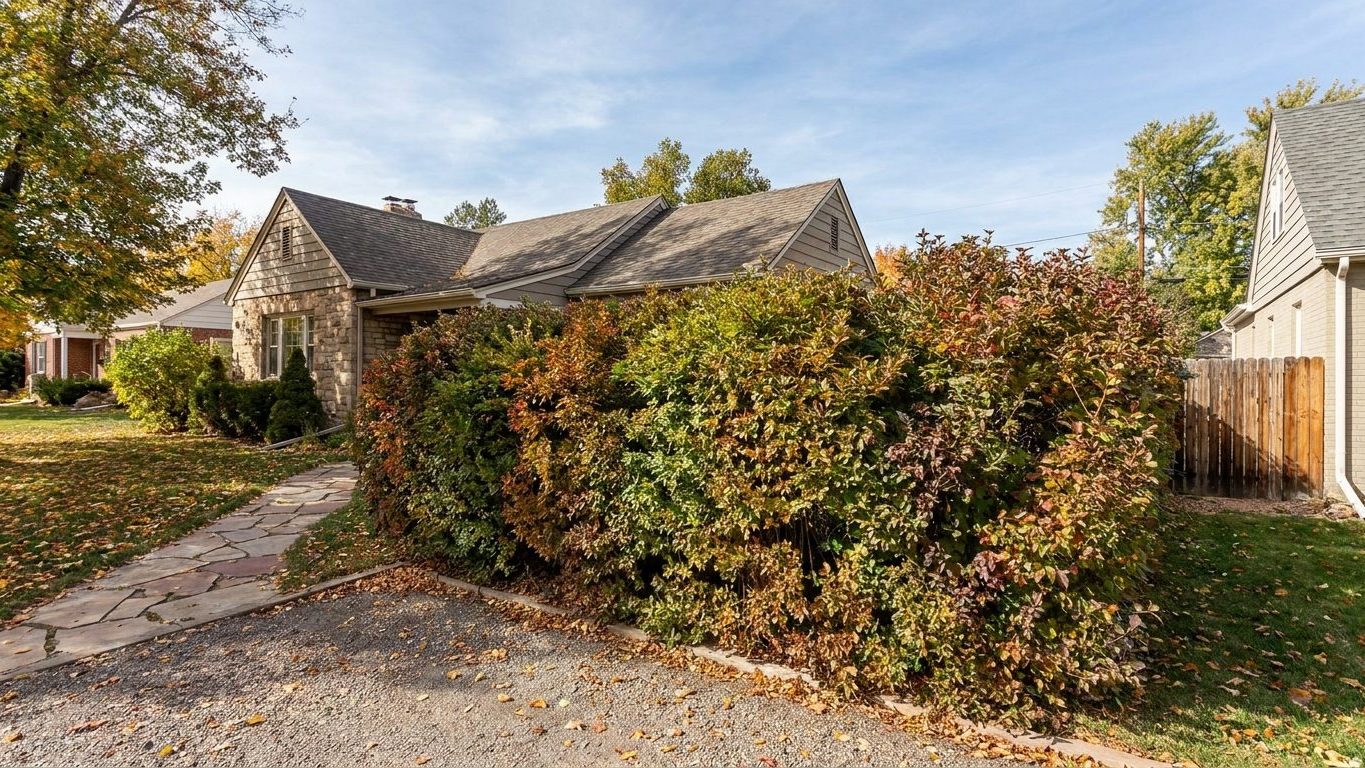

Delaware has no statewide hedge height limit. Search “Delaware hedge height law” and you won’t find a number in the Delaware Code, because the state legislature never wrote one. What controls how tall your hedge can grow is a municipal ordinance, set town by town, sometimes street by street depending on the zoning district. That’s the real answer, and it’s the one most sites selling a single figure get wrong.
There is no Delaware hedge height law
Search a little further and you’ll notice something odd: no state government website publishes a hedge height number, because none exists. Delaware’s General Assembly regulates plenty about land use at the state level, wetlands, coastal zones, agricultural preservation, but the height of a homeowner’s privet or arborvitae row isn’t one of them. That authority sits with local government, and it has for as long as zoning codes have existed in this country.
This isn’t a Delaware quirk. No state in the country sets a blanket hedge height limit. The rule always lives one level down, in the code of the city, town, or unincorporated county district where the hedge is actually planted. Wilmington’s zoning code answers to Wilmington. Dover’s answers to Dover. A homeowner in Sussex County outside any incorporated town answers to county code instead. Three addresses, three different rulebooks, and potentially three different numbers, or no number at all if the local code stays silent on hedges specifically.
That’s exactly where a lot of the pages ranking for this search go wrong. They pick one city’s ordinance, or invent a round number that sounds plausible, and present it as “the Delaware rule.” There isn’t one. Anyone who tells you a single height applies from Wilmington to Fenwick Island is either guessing or citing an ordinance that only covers the town they happened to look up, without saying so.
Fence rules and hedge rules often aren’t the same rule
Even once you find your municipality’s code, there’s a second trap: many ordinances write detailed rules for fences, as physical structures, and either say nothing specific about living hedges or address them in a separate section entirely. A code might cap fences at a certain height in a front yard and a taller height in a back yard, using the word “fence” throughout, without ever using the word “hedge” or “vegetation.” Whether that fence limit stretches to cover a laurel hedge depends entirely on how the ordinance defines “fence,” “screen,” or “structure.” Some codes do fold hedges in under a broad definition of screening. Others treat living plants as outside the fence rule altogether, at least until they encroach on a sight line or a neighbor’s property. You can’t assume either way. You have to read the definitions section, not just the number.
How to find the rule that actually applies to you
Since the answer lives in your municipality’s code, finding it means going to that code directly rather than a generic gardening site. Almost every Delaware town and city publishes its zoning ordinance online, and it’s almost always hosted by one of three publishing platforms: Municode (library.municode.com), American Legal Publishing (codelibrary.amlegal.com), or eCode360. Search “[your town name] Delaware code Municode” or try the other two platform names, and you’ll usually land on the full text within a couple of clicks.
Once you’re in the code, don’t start scrolling through the whole document. Head straight for the zoning chapter. Within zoning, hedge and fence rules typically sit under a heading like “Accessory Structures,” “Fences and Walls,” or occasionally “Screening and Buffers.” That’s where you’ll find height limits, if your town has any, along with how they’re measured (from natural grade, not from the top of a retaining wall, is a common distinction) and whether front yards, side yards, and back yards get different limits.
What to do if the code doesn’t mention hedges at all
Plenty of municipal codes go quiet on living vegetation. If yours does, that’s not necessarily good news, it just means the answer isn’t published in a way you can read yourself. Call the town’s planning and zoning department directly. This is a normal, low-stakes call for a zoning office to field, and staff there deal with hedge and fence questions regularly. Ask specifically: does the fence height limit apply to hedges, is there a separate landscaping ordinance, and does anything change for corner lots. Get the answer in writing if you can, even just a follow-up email confirming what you were told, since verbal guidance from a staffer isn’t always binding if a dispute comes up later.
If you’re in an unincorporated part of a county, rather than inside a town’s limits, you’ll be looking at the county’s code instead, and the same three-publisher rule of thumb usually applies. New Castle, Kent, and Sussex counties each maintain their own zoning ordinances separate from the towns within them, so an address a mile outside a town line can fall under a completely different rulebook than one just inside it.
The branches that cross the line
Height limits aside, there’s a second, more common source of hedge disputes: growth that crosses onto a neighbor’s property. This isn’t governed by a hedge-specific statute in most places, Delaware included. It comes from a broader, long-standing legal principle found in property law across the country, sometimes called the “self-help” doctrine for encroaching vegetation.
The general shape of that principle is this: if a branch, root, or section of a hedge grows across the boundary line onto a neighbor’s land, the neighbor generally has the right to trim it back, at their own expense, up to the property line. Not past it. They can’t reach over onto your side to “even it up” or shape the whole hedge, only remove the part that’s actually crossed into their space. This right typically doesn’t extend to killing the plant outright or cutting so aggressively that it damages the hedge’s health, since courts in various states have found that crosses the line from reasonable self-help into property damage on the other neighbor’s asset.
Where this varies from place to place is in the details: how much notice, if any, a neighbor owes before trimming, whether they can send you a bill for the work, and what happens if the trimming genuinely kills a mature, valuable hedge. Those specifics come down to case law built up state by state and sometimes court by court, not a single nationwide rule, and Delaware’s own case law on this point isn’t something a general gardening article should try to summarize as settled fact.
When this actually becomes a legal problem
Most overhanging-branch situations resolve with a conversation and a Saturday afternoon with pruning shears, never a phone call to anyone official. It becomes a real dispute when a neighbor cuts far more than the encroaching growth, when a hedge that’s been a shared privacy screen for a decade gets reduced to stumps on one side, or when someone claims the trimming damaged root structure and killed the plant. If you’re in that situation, on either side of it, this is genuinely a moment to talk to a local attorney rather than rely on general principles pulled from another state’s court decision. Property line disputes are fact-specific, and a lawyer licensed in Delaware is the only reliable source for how local courts have actually ruled on encroachment and vegetation damage claims.
What to check before you plant
Before you put a single shrub in the ground, there’s one rule that applies almost everywhere in the country regardless of what your municipal code says about hedge height in general: the sight triangle. At intersections, and often at driveway aprons too, nothing, hedge, fence, parked trailer, is allowed to block a driver’s line of sight. This isn’t a matter of aesthetics or property rights, it’s a safety standard, and it’s one of the very few things close to a near-universal rule across municipalities that otherwise disagree on almost everything else about landscaping.
The sight triangle limit is almost always lower, sometimes dramatically lower, than whatever general fence or hedge height your zoning district allows elsewhere on the lot. A code that lets you grow a six-foot privacy hedge along your side yard might cap anything within the sight triangle at two or three feet. If you’re planting anywhere near a corner lot, a shared driveway, or an intersection, check this specifically, don’t assume the general height limit is the only number that applies to that spot.
A short checklist before you dig
- Confirm whether your municipal code even mentions hedges, or only fences, and read the definitions section to see which one governs your planting.
- Find your town or county’s sight triangle requirement if you’re planting near a corner, driveway, or intersection.
- Check setback requirements, how far from the property line a hedge needs to sit, since that’s a separate rule from height in most codes.
- Call before you plant if the written code is ambiguous. A five-minute call to the zoning office costs nothing; ripping out a mature hedge later does.
- Talk to your neighbor if the hedge will sit close to the shared line, even if nothing legally requires it. Most encroachment disputes start because nobody had that conversation early.
None of this replaces reading your own municipality’s actual ordinance text. But it gets you to the right document, asking the right question, instead of trusting a number that claims to be Delaware’s rule when no such single rule exists.
Common questions
Is there a maximum hedge height allowed anywhere in Delaware?
Not at the state level. Some individual Delaware towns and cities may set a maximum height in their own zoning codes, but that limit, if it exists, applies only within that municipality’s boundaries and has to be looked up in that specific code, not assumed to apply statewide.
Does Delaware treat hedges the same as fences under the law?
Not automatically. Many municipal codes write separate definitions for “fence” and “hedge” or “vegetation,” and a height limit written for fences doesn’t necessarily apply to living plants unless the code’s definition section says so explicitly. Check the definitions before assuming either way.
Can my neighbor legally cut branches from my hedge that grow onto their property?
In general, property law across most states allows a neighbor to trim back growth that crosses the boundary line onto their land, up to the line and no further, at their own expense, without killing the plant. The specifics vary by state and by case law, so for anything beyond routine trimming, a local attorney is the right resource, not a general rule of thumb.
Who do I call if my town’s code doesn’t mention hedge height at all?
Contact your local planning and zoning department directly. Staff there can tell you whether an unwritten hedge rule exists in practice, whether a general fence or screening ordinance is meant to cover hedges too, and whether anything different applies to corner lots or shared driveways.