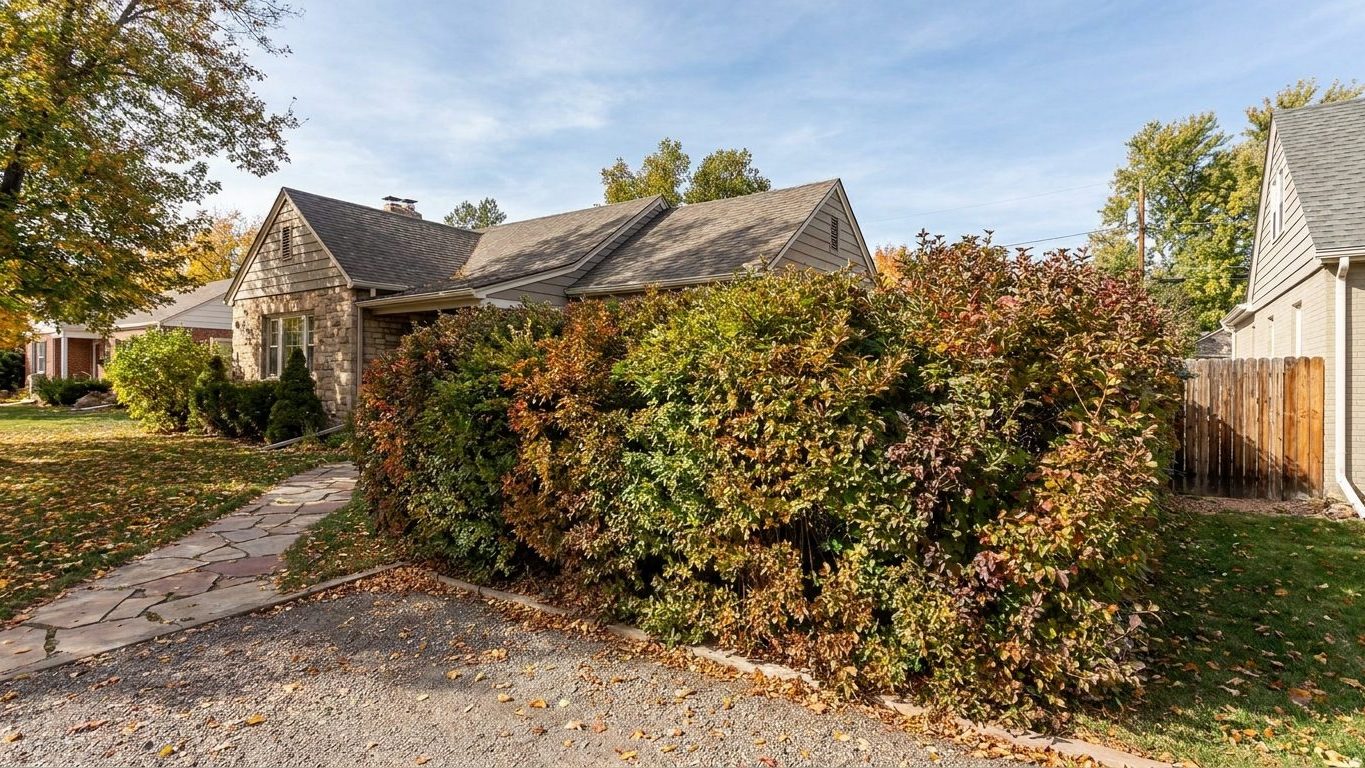

Pennsylvania has no state law setting a maximum hedge height. Search “hedge height law Pennsylvania” and you won’t find a state statute, because the Commonwealth leaves that decision to individual municipalities. The number that matters, whether it’s 3 feet at a corner lot or 6 feet along a side yard, is written into a specific city or township’s zoning code, not into Pennsylvania’s Consolidated Statutes. If a site tells you the state limit is some fixed figure, close the tab.
There is no Pennsylvania hedge height law
This surprises a lot of homeowners. Fences and property lines feel like exactly the kind of thing a state legislature would standardize. But Pennsylvania, like every other state, treats hedge and fence height as a local land-use question, not a statewide one. There’s no chapter in the state code that says “a hedge may not exceed X feet.” The authority to set that number sits with the roughly 2,560 municipalities that govern land use across the Commonwealth, from Philadelphia’s dense rowhouse blocks to small boroughs in Potter County.
The reasoning isn’t arbitrary. Height limits for hedges are almost always tangled up with visibility at intersections, setback rules for accessory structures, and neighborhood character standards, all of which vary enormously between a rural township and an urban block. Zoning is inherently local for the same reason building codes get adopted and amended by individual jurisdictions: the people setting the rule need to know the actual streets, lot sizes, and traffic patterns involved.
This is exactly why the commercial sites that rank for this search term get it wrong so often. A page that promises “Pennsylvania hedge height law: the limit is 4 feet” is manufacturing a state-level answer to a question Pennsylvania itself never answered. That number might be accurate for one specific town’s front-yard fence rule, lifted without attribution, then presented as if it applies from Erie to Philadelphia. It doesn’t.
The practical upshot: whatever height applies to your hedge lives in your municipality’s zoning ordinance, and it may not even use the word “hedge.” Some codes fold hedges into a broader “fences and screening” section. Others treat living plant material as separate from structural fencing entirely, sometimes with no height limit at all outside the sight-triangle rule described further down. You cannot know your number until you pull up your specific municipal code, which is the subject of the next section.
None of this means Pennsylvania is unregulated. It means the regulation is granular, jurisdiction by jurisdiction, and that granularity is the actual story here. A homeowner in Bucks County and one in Allegheny County could be operating under entirely different rules, both perfectly legal, both enforced by different local zoning officers, and neither one derived from anything the state legislature wrote.
How to find the rule that actually applies to you
Every municipality with zoning authority publishes its ordinance somewhere, and for most Pennsylvania cities and townships, that text lives online through one of three publishers. Municode, hosted at library.municode.com, covers a large share of Pennsylvania boroughs and townships. American Legal Publishing, at codelibrary.amlegal.com, hosts many others, including some larger cities. A third option, eCode360, run by General Code, is common among smaller Pennsylvania townships and boroughs. If a search for “[your township name] municipal code” doesn’t turn up a live copy, try each platform’s own search function.
Where inside the code to actually look
Don’t search the whole document for “hedge.” Go straight to the zoning chapter, usually its own numbered title or article separate from the property maintenance code, the building code, and the health code. Inside zoning, look for a section called “Fences” or “Fences and Walls,” and separately for “Accessory Structures” or “Accessory Uses,” since some ordinances bury height rules for plantings under the accessory-structure heading. A handful of codes also address landscaping or “buffer screening” in a separate section aimed at commercial or multi-family properties, a different rule than the one governing a residential side yard.
Read the definitions section first, since it’s the fastest way to answer the question that trips up most homeowners: does this code even regulate hedges the way it regulates fences? Some ordinances define “fence” broadly enough to include “a hedge, wall, or other structure or planting forming a physical barrier,” in which case the fence height limit applies directly. Others define fence narrowly as a built structure, in which case a living hedge may fall outside that section entirely, sometimes leaving it essentially unregulated except for the sight-triangle rule, sometimes catching it under a separate “vegetation” clause you’ll need to search for by a different keyword.
Who to call when the code is unclear
If the online code is ambiguous, outdated, or missing a recent amendment, the fastest resource is your municipality’s zoning officer or code enforcement office, typically reachable through the township or borough’s main phone line. These are the people who issue permits and respond to neighbor complaints, and they can tell you in a two-minute call whether your hedge plan needs a permit, whether it falls under the fence rule or a separate landscaping rule, and whether there’s a pending ordinance change that hasn’t hit the published code yet. This matters more in Pennsylvania than in some states, because with over 2,500 separate zoning authorities, published codes lag behind amendments more often than in states with fewer, larger jurisdictions.
The branches that cross the line
Height limits are only half the picture. The other common question, what happens when a hedge grows over the property line into a neighbor’s yard, isn’t answered by zoning at all. It comes from a body of law that predates most zoning codes entirely: the common-law rule on encroaching vegetation.
The general principle, recognized in some form across most states, is that a property owner whose land is invaded by a neighbor’s overhanging branches or intruding roots may trim that growth back to the boundary line, at their own expense, without the neighbor’s permission. The key limits matter as much as the right itself: trimming may only go up to the property line, not beyond it, and the person cutting back growth may not kill the plant or destroy its health in the process. Cutting back growth so aggressively that a hedge dies isn’t protected self-help, it can expose the person who did the cutting to a claim for damages.
This principle is important to state clearly because it did not come from the Pennsylvania legislature passing a hedge statute. It developed through case law, court by court, over decades, and its exact contours (what counts as “at the neighbor’s expense,” what remedy exists if a trim goes wrong, whether notice is required first) can vary from state to state and even shift as courts hear new cases. Treat it as a well-established general rule of American property law, not as a numbered Pennsylvania statute you can cite by section.
Where this collides with the height question: a hedge that’s fully legal under your municipality’s zoning code can still generate a real dispute if it leans over the line and shades a neighbor’s garden bed, drops debris in their gutters, or blocks their view. Zoning compliance and neighbor relations are two separate tracks. A hedge can pass every inspection your township requires and still land you in a disagreement that has nothing to do with the ordinance and everything to do with common-law encroachment rights.
If a dispute escalates past a friendly conversation, this is where a local property attorney earns their fee. Encroachment law is fact-specific, and the difference between “trim it back” and “you owe damages for killing a 20-year-old hedge” often turns on details a homeowner won’t spot alone: exactly where the surveyed line falls, exactly how the trimming was done, and exactly what evidence exists of the hedge’s health before and after.
What to check before you plant
Before a single hedge plant goes in the ground, three checks take less time than a trip to the nursery and prevent almost every dispute that follows.
Pull the zoning code first, not after. Using the Municode, American Legal Publishing, or eCode360 method above, confirm both the general height limit in your zoning district and, separately, whether hedges are treated as fences in your specific code. A limit written for “fences” that excludes plantings by definition means you may be free to plant taller, or it may mean hedges are entirely unaddressed and therefore unrestricted except for the sight-triangle rule. You need the actual text, not an assumption.
Check the sight triangle at any corner or driveway. This is the closest thing to a universal American rule on this topic, and it exists precisely because it protects driver visibility rather than aesthetics. Almost every municipality defines a triangular zone at street corners and driveway aprons where nothing, hedge, fence, sign, or parked trailer, may obstruct a driver’s sightline above a low height, typically far lower than the general residential limit allowed elsewhere on the same lot. If you’re planting near a corner lot or a driveway that meets a public street, this rule almost certainly matters more than the general height section, and it applies even in the rare municipality with no other hedge or fence rule at all.
Confirm your actual property line before you dig. A hedge planted a few feet off from where you assumed the line sat can turn a perfectly legal planting into a boundary dispute years later, once the roots and canopy have matured. A recorded survey, or at minimum a conversation with the neighbor and a look at the property deed’s legal description, is worth the hour it takes.
None of these three checks require a lawyer or a permit application in most cases. They require a phone call, a code search, and a look at a survey you likely already have somewhere in your closing paperwork. Skipping them doesn’t save time, it just moves the cost to later, usually in the form of a letter from code enforcement or an awkward conversation over the fence line.
Common questions
Does Pennsylvania have a statewide fence height law?
No. Pennsylvania sets no statewide height limit for fences or hedges. Height and setback rules come entirely from individual municipal zoning ordinances, which is why the same hedge height can be legal in one township and restricted in the next.
What if my township’s code doesn’t mention hedges at all?
Some ordinances only regulate built fences and are silent on living plantings, which can mean a hedge falls outside any height restriction except the near-universal sight-triangle rule near corners and driveways. Call the zoning office to confirm, since silence in the code isn’t always the final answer, especially if there’s a separate landscaping or buffer-screening section elsewhere.
Can my neighbor legally cut my hedge if it grows onto their property?
The general common-law principle, recognized across most states in some form, allows a neighbor to trim encroaching branches back to the property line at their own expense, but not to cut beyond the line or kill the plant in the process. This rule comes from case law rather than a Pennsylvania statute, and specifics vary, so a serious dispute is a matter for a property attorney, not a DIY reading of one blog post.
Where do I actually find my municipality’s zoning code online?
Start with library.municode.com or codelibrary.amlegal.com and search your township or borough name; many smaller Pennsylvania municipalities instead use eCode360. Once you find your code, go to the zoning chapter and look under “Fences” and “Accessory Structures,” and if you can’t find it or the text seems outdated, call your municipality’s zoning officer directly.