
Florida homes cool almost universally with air conditioning, and the vast majority run it through a central system rather than a window unit or portable. That single fact shapes everything from how a house handles humidity to what maintenance actually matters here, once you factor in how brutally long the cooling season runs.
What homes in Florida actually cool with
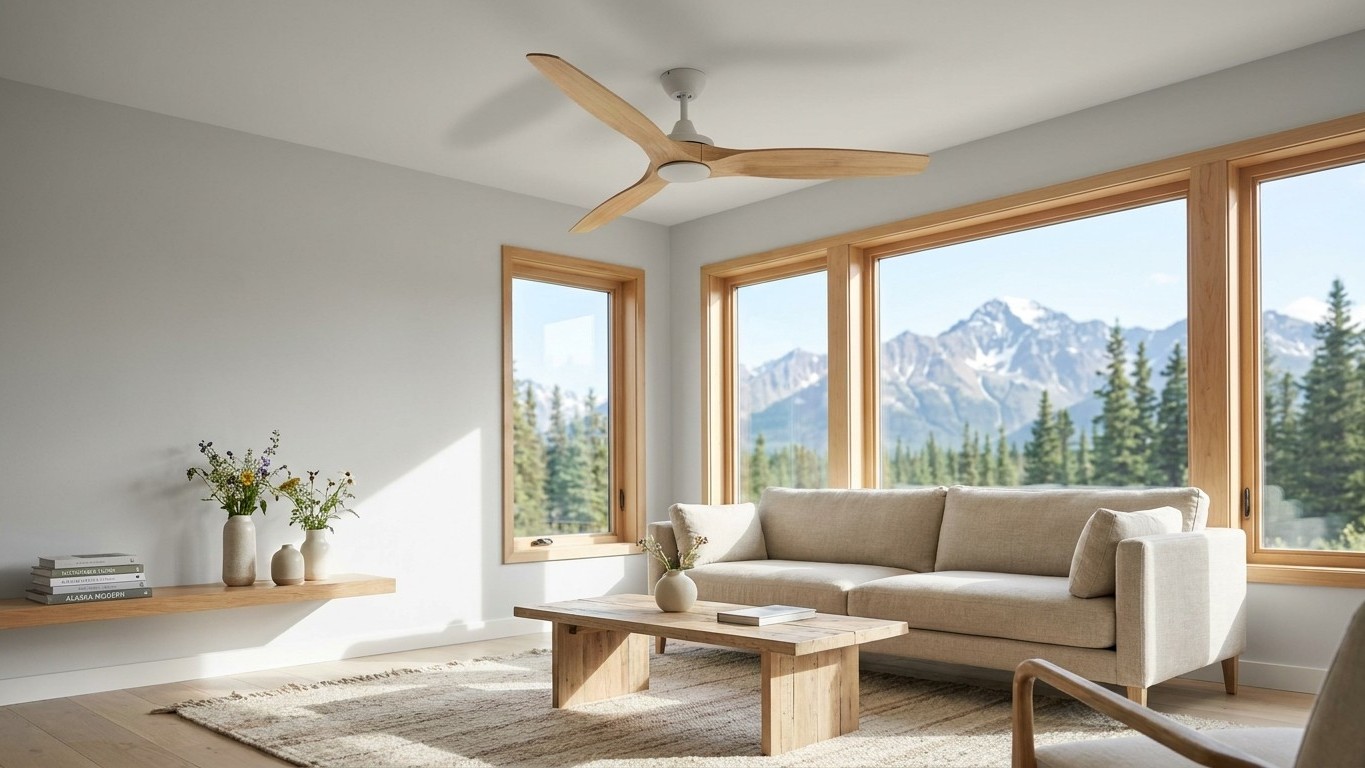
Start with the plain numbers from the U.S. Energy Information Administration’s Residential Energy Consumption Survey: 96% of Florida homes use air-conditioning equipment of some kind, 90% of homes use a central air-conditioning unit, and 11% use an individual unit, a ductless mini-split, a window or wall unit, or a portable. Ceiling fans show up in 83% of homes, which tells you something about how this state handles the shoulder seasons when full AC feels like overkill but stillness in a room does not.
The gap between “has air conditioning” (96%) and “has a central unit” (90%) is the share running on individual equipment instead, or alongside it. In Florida that gap is small, six points, which puts the state firmly in the camp where central systems dominate the housing stock. Compare that to a state like Connecticut, where 90% of homes have air conditioning but only 34% run it through a central system, meaning the rest lean on window units and mini-splits room by room. Florida doesn’t work that way. 90% of homes here run a central system, and that number reflects decades of new construction built with ductwork already baked into the design, not a retrofit decision made room by room after the fact.
That 11% running individual equipment still matters. Older homes, additions, garage conversions, mobile homes, and rental units without central ductwork often fall into this category, and a mini-split or window unit is frequently the practical fix rather than running new duct through a house that was never built for it. Nothing here is a recommendation one way or the other; it’s simply what got installed when the house went up, and what’s been added since.
A share this high for central air isn’t an accident. Florida’s building boom, especially from the 1970s onward, happened at the same time central air conditioning became standard equipment in new single-family construction across the Sunbelt. Builders ran ducts because buyers expected central air, and buyers expected it because the alternative, window units in every room of a house that sits in the heat nine months a year, was never going to cut it long-term.
How much cooling the year actually asks for
The heat load figure for this state comes from NOAA’s Climate Normals at the Jacksonville reference station: 73.2 days a year reach 90°F or higher. That’s a count of days at one weather station, not a statewide average and not a measure of how hot the air gets on the worst afternoon. It answers a narrower but more useful question: how many days a year does a cooling system have to work at all, rather than just idle.
73.2 days a year at 90°F or above is a heavy load by national standards, and it lines up with what the equipment numbers already show. This is a state where the heat load and the equipment mix agree with each other: a long, hot cooling season paired with a housing stock that’s almost entirely built around central air. That’s not always how it works. Some states run hot summers but still lean on individual units because the housing stock is older or was never built with ducts. Others sit in a mild climate zone yet still show high central-air numbers because the construction era happened to overlap with when ducted systems became the default, regardless of how much cooling the climate actually demands.
Florida isn’t one of those mismatched cases. The heat load is real and sustained, not a handful of scorching weeks, and the housing stock responded by building ductwork into nearly everything from the ground up. A central system in this state isn’t oversized ambition; it’s running close to what the climate is actually asking for, day after day, for the better part of three months.
What that means practically: a central system here isn’t sitting idle waiting for the occasional heat wave. It’s cycling on a near-daily basis across a stretch of the calendar that runs well into fall in most years, which puts more wear on components like the compressor and the blower motor than a system in a state where 90°F days are rare. Maintenance timing matters more here simply because the equipment gets used more.
Wet heat or dry heat, and what it changes
Summer rainfall at the reference station runs about 21.2 inches across June, July and August, out of 53.4 inches for the year. That’s a measure of precipitation, not humidity, and the two aren’t the same thing. Rain falling in inches tells you how often the ground gets soaked; it says nothing directly about how much moisture is hanging in the air on a still afternoon. Still, 21.2 inches over three months puts this firmly in wet-summer territory, with July at 6.77 inches, June at 7.6, and August at 6.88.
Here’s the part that actually changes how a system should be run. An air conditioner does two separate jobs at once: it lowers the temperature, and it pulls moisture out of the air as it does so. Removing that moisture takes run time, specifically slow, steady cycles where air passes over a cold coil long enough for condensation to form and drain away. In a dry-summer climate, the system’s job is almost entirely about temperature, and a short, powerful blast of cold air does the trick. In a wet-summer climate like this one, a big share of the system’s actual work is drying, and that only happens if the unit runs long enough to do it.
This is exactly why an oversized unit causes real problems in a state like Florida. It blasts the room down to the thermostat setting fast, shuts off, and never runs long enough to dry the air out. The result is a room that reads cold on the thermostat but still feels damp and clammy, because temperature dropped while humidity barely budged.
Given a wet summer profile like this one, three things matter more here than in a dry climate:
- Favor longer, steadier run times over short blasts of cold air, even if it means the thermostat takes a little longer to hit its target.
- Keep the fan setting on “auto” rather than “on” during humid stretches, so the coil stays cold enough to keep pulling moisture rather than recirculating damp air.
- Resist the urge to size up “just in case.” A system sized correctly for the space, not oversized for speed, is what actually keeps a Florida room feeling dry as well as cool.
Sizing a room unit, from the published chart
For individual units, the ones covering that 11% of Florida homes without central air, ENERGY STAR publishes a straightforward starting chart matching room area to cooling capacity:
| Area to be cooled (square feet) | Capacity needed (BTU per hour) |
|---|---|
| 100 up to 150 | 5,000 |
| 150 up to 250 | 6,000 |
| 250 up to 300 | 7,000 |
| 300 up to 350 | 8,000 |
| 350 up to 400 | 9,000 |
| 400 up to 450 | 10,000 |
| 450 up to 550 | 12,000 |
| 550 up to 700 | 14,000 |
| 700 up to 1,000 | 18,000 |
| 1,000 up to 1,200 | 21,000 |
| 1,200 up to 1,400 | 23,000 |
This chart is a starting point published by ENERGY STAR for a room unit, a window model, a portable, or a single-zone mini-split head. It does not size a central system, which needs an actual load calculation that accounts for insulation, orientation, window area, and duct layout, not just square footage. Reproduce these bands exactly as published, don’t stretch them past 1,400 square feet, and don’t try to turn them into a flat BTU-per-square-foot rate, because the relationship isn’t linear as rooms get bigger.
In a state where 90% of homes run central systems, this chart’s real audience is that smaller slice running individual equipment, an added room, a garage conversion, a mobile home, or a rental without ductwork. Sizing up “to be safe” is the most common mistake made against this table, and in Florida’s wet-summer climate it’s a worse mistake than elsewhere: an oversized unit here doesn’t just waste energy, it leaves the room cold and damp at the same time, for exactly the reasons laid out above.
What actually needs looking after here
With 90% of Florida homes on central systems working through 73.2 days a year of 90°F-plus heat, the ductwork itself deserves attention. ENERGY STAR notes that “in a typical house, however, about 20 to 30 percent of the air that moves through the duct system is lost due to leaks, holes, and poorly connected ducts.” That’s specific to ducted, central systems, and it matters here precisely because this state runs so heavily on that kind of equipment, unlike a state where window units make up most of the installed base and there’s no duct system to leak from at all.
The two habits that apply regardless of what’s installed both come from ENERGY STAR as well. First: “Inspect, clean, or change air filters once a month in your central air conditioner, furnace, and/or heat pump.” Once a month, not once a season, and that schedule matters more in a state where the system is running nearly every day for months on end rather than kicking on for the occasional heat wave. Second: “Airflow problems can reduce your system’s efficiency by up to 15 percent.” A dirty filter can cost up to 15 percent of a system’s efficiency without a single part actually failing, which is why it’s the cheapest fix available and the one most often skipped.
A seasonal pass for a Florida home worth following:
- Check or change the filter monthly through the cooling season, not just at the start of summer.
- Have ductwork inspected for leaks every few years if the system is central, since 20 to 30 percent losses are common in typical houses and Florida’s duct systems run near-constantly.
- Confirm the fan setting stays on auto during the wettest months so the system keeps pulling humidity, not just temperature.
- For individual units covering additions or rooms without ductwork, recheck sizing against the ENERGY STAR chart if the space has changed, rather than assuming the original unit still fits.