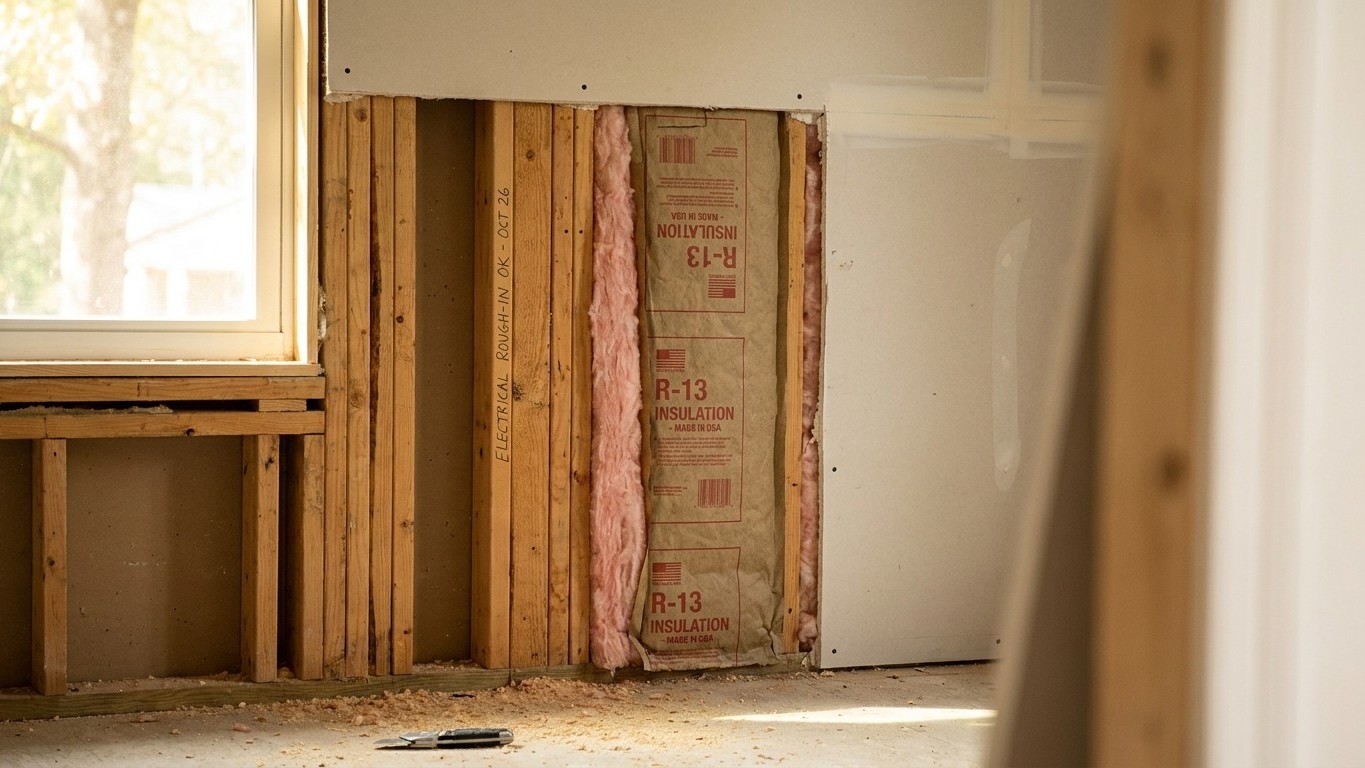

No. Under the 2021 International Residential Code, Section R702.7, a wall in Florida is not required to carry an interior vapor retarder, because the entire state falls within Climate Zones 1 and 2, and the code exempts Zones 1, 2 and 3 from that requirement outright.
What the code asks for in Florida

The rule itself, as written in R702.7, is blunt: a vapor retarder of a class set by the code’s table “shall be provided on the interior side of frame walls”, unless one of four listed exceptions applies. The one that governs Florida is short: “A vapor retarder shall not be required in Climate Zones 1, 2 and 3.” That single sentence is the whole story for this state, because Florida’s 67 counties split into two zones and both of them land inside that exempted range.
According to the 2021 International Energy Conservation Code’s climate zone table, 63 of Florida’s 67 counties sit in Zone 2A, and the remaining 4 counties sit in Zone 1A. There is no Zone 3, no Zone 4, nothing colder anywhere in the state’s official zoning. Because both 1A and 2A are named in the R702.7 exception, the practical outcome is uniform across every county line: nowhere in Florida does the base code force an interior vapor retarder onto a frame wall.
That is worth sitting with for a second, because it is a genuinely different answer than a homeowner in Minnesota or Maine gets from the same code book. This isn’t Florida getting a pass out of leniency. It’s the code recognizing that the physics of moisture movement in Jacksonville has nothing in common with the physics of moisture movement in Duluth.
Not required is not forbidden
The exception removes an obligation. It does not ban anything, and no jurisdiction in Florida makes vapor retarders illegal. A builder who wants to use a Class II or Class III retarder on a Florida wall for a specific assembly reason isn’t breaking any rule by doing so. What the exception does is take away the automatic requirement that exists in colder zones, leaving the choice to the design of the wall rather than a blanket mandate.
None of this tells any individual reader what to install in their own wall. The code in force is whichever edition and amendment the reader’s county or city has adopted, not necessarily the model code quoted here, and local building departments sometimes tweak these provisions. A wall assembled with the wrong vapor control doesn’t announce the mistake with a leak or a stain the week it’s built. It sits quietly, trapping moisture against framing and insulation, and the damage surfaces years later as rot, mold, or a musty smell nobody can trace.
Why the answer is the opposite in a warm climate
The reversal makes sense once you follow where the water vapor is actually coming from. In a cold northern climate, the warm, moisture-laden air lives inside the house. Heating systems keep interior air warm and humid relative to the freezing air outside, so that vapor constantly pushes to escape through the wall toward the cold sheathing. A vapor retarder on the interior side intercepts that push before it reaches a surface cold enough to cause condensation.
Florida runs the opposite pattern. The damp air is outside, not inside. Air conditioning keeps interior air cool and relatively dry, while Gulf and Atlantic humidity sits heavy against the exterior of the wall for most of the year. Vapor drives inward, from outside toward the cooler interior, which flips the location where a low-permeance layer becomes a problem instead of a solution.
The U.S. Department of Energy’s Building America program spells out exactly what happens if a Class I vapor retarder gets installed on the interior side of insulation in this kind of climate anyway: “If the wall contains a vapor retarder on the interior side of the insulation, the water vapor will condense on this cool, impermeable surface.” The consequence, in the DOE’s own words, is “ruined insulation, mold, and structural rot of framing members.” That interior sheet of polyethylene, which does its job perfectly in Minnesota, becomes the exact cool surface that Florida’s inbound humidity condenses against.
This is the reason the code writes different rules for different climate zones. It isn’t bureaucratic inconsistency or a regional carve-out for convenience. It’s a direct response to which way the water is traveling through the wall, and that direction depends entirely on whether the humid air sits inside or outside the insulation for most of the year.
The three classes, and why the word matters
Every conversation about vapor retarders gets muddled by loose language, especially the habit of calling any plastic sheet “a vapor barrier.” The code doesn’t grade materials by common name. It grades them by permeance, measured in perms, and sorts them into three classes.
| Class | Example materials | Perm rating |
|---|---|---|
| Class I | Sheet polyethylene, nonperforated aluminum foil | 0.1 perm or less |
| Class II | Kraft-faced fiberglass batts, vapor retarder paint | Above 0.1, up to 1.0 perm |
| Class III | Latex or enamel paint | Above 1.0, up to 10.0 perm |
Sheet polyethylene qualifies as a vapor retarder only because it lands in Class I, not because “vapor barrier” is some separate, stricter category. That distinction is the entire disagreement between a builder in a cold zone and a builder in a warm-humid one. Neither is arguing about whether a wall should have some form of vapor control. They’re arguing about which class belongs on which side, if any.
Most Florida homeowners already have a Class III vapor retarder on their walls without knowing it. Ordinary latex paint falls squarely in that 1.0 to 10.0 perm range, which makes nearly every painted interior wall in the state a mild vapor retarder by the code’s own definition, whether anyone planned it that way or not.
One more distinction worth keeping straight: a vapor retarder is not an air barrier. They solve different problems, sometimes with the same material, sometimes not, and confusing the two is a common source of bad wall assemblies.
Where the rule stops
R702.7 lists four situations where the vapor retarder requirement doesn’t apply at all, regardless of climate zone:
- Basement walls
- The below-grade portion of any wall
- Construction where accumulation, condensation, or freezing of moisture will not damage the materials
- Climate Zones 1, 2, and 3, the exception that covers all of Florida
The basement exception is the one most homeowners actually run into, even in a state with relatively few full basements. Concrete holds and slowly releases groundwater moisture for years after it’s poured, so a basement wall assembly needs the ability to dry inward over time. Sealing that inward path with an interior vapor retarder traps moisture inside the wall cavity instead of letting it escape, which is the opposite of what the exception is trying to prevent. For the mechanics of that specific assembly, the basement wall guide on this site covers it in more depth.
Who actually decides, in Florida
The model code sets the baseline, but the code that actually governs a specific wall is whatever edition and amendment the reader’s county or city building department has adopted. Model codes get adopted state by state, sometimes with local amendments layered on top, and sometimes a jurisdiction is still working from an older edition years behind the current model. That gap is exactly why this page stops short of naming an edition or a permit requirement for any specific Florida county.
Jacksonville’s NOAA climate normal runs about 1,228 heating degree days a year against roughly 2,803 cooling degree days, a ratio that tells you how little heating demand this climate actually carries compared to cooling demand. Heating degree days measure demand, not temperature, and a number that low means Florida’s walls spend most of the year working against outdoor humidity and heat rather than against winter cold. That’s the entire reason the vapor retarder question carries so little weight here compared to a northern state.
None of this replaces a call to the local building department. They can confirm the adopted code edition, any local amendments, and how the exception applies to a specific project. A wall built with the wrong vapor control in this climate doesn’t fail visibly on day one. It rots quietly behind the drywall, and the owner usually finds out only after the damage has been accumulating for years.