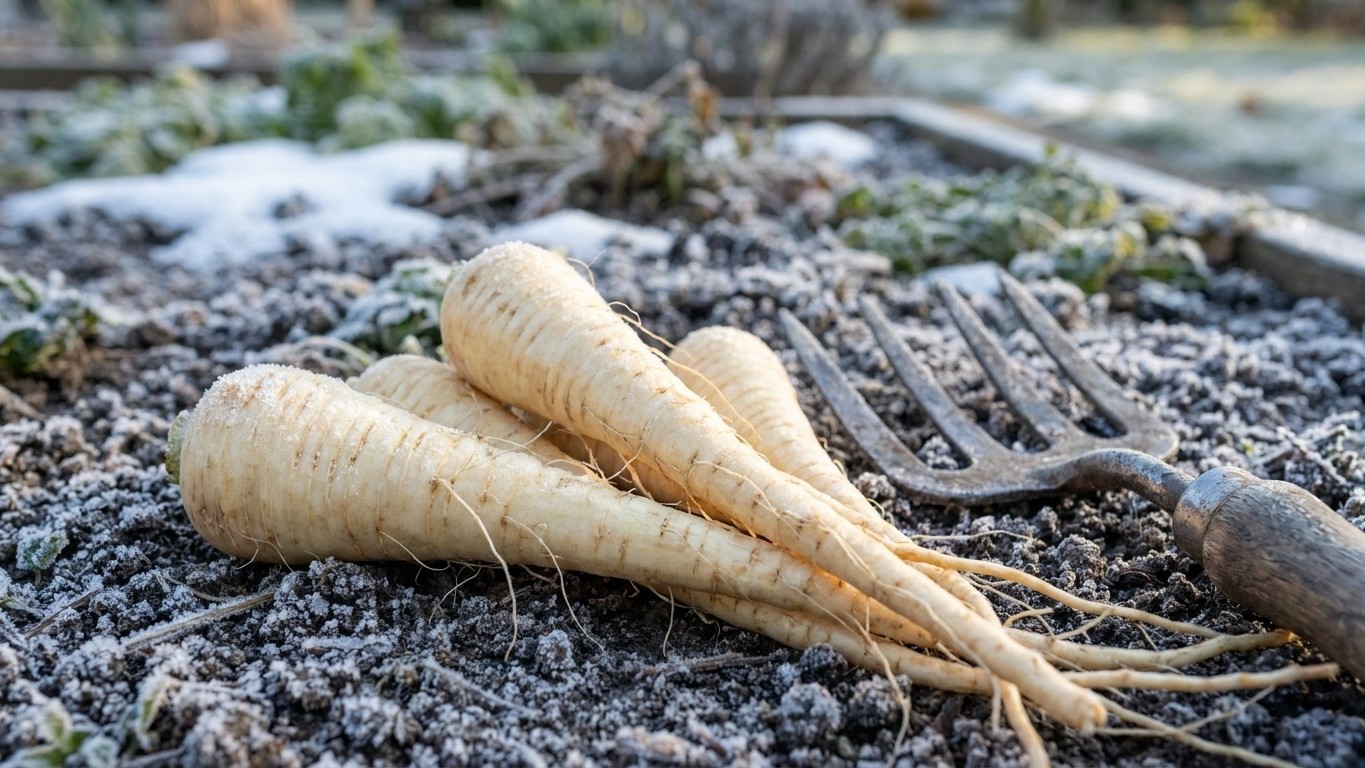

UF/IFAS Extension documents eleven pests capable of feeding on Florida vegetable crops, but only six of them have any business on a parsnip: aphids, chilli thrips, Eastern lubber grasshoppers, fall armyworm, root-knot nematodes, and whiteflies. Which one shows up depends on whether your parsnip is growing during the state’s warm months or its cooler, frost-exposed stretch.
Which pests attack parsnip in Florida
UF/IFAS Extension lists eleven pests for Florida vegetable gardens: Aphids, Chilli thrips (Scirtothrips dorsalis), Cycad aulacaspis scale, Eastern lubber grasshopper (Romalea microptera), Fall armyworm, Fire ants, Hornworm caterpillars, Melonworm, Pickleworm, Root-knot nematodes, and Whiteflies. Not all of them touch a root crop like parsnip, and pretending otherwise would send you looking for the wrong bug in your own garden.
Cycad aulacaspis scale feeds on sago palms and other cycads. It has no reason to be on a parsnip leaf, ever. Hornworm caterpillars target tomato, pepper, and eggplant, the nightshade family, not the carrot-and-parsley family that parsnip belongs to. Melonworm and pickleworm are cucurbit specialists, chewing through squash, melon, and cucumber; a parsnip planting simply isn’t on their menu. Fire ants deserve a mention too, but mostly to rule them out: they’re aggressive foragers and predators, not foliage feeders, so while they may build a mound near your root bed, they aren’t the reason your parsnip tops look chewed.
That leaves six pests genuinely worth watching on parsnip: aphids and whiteflies, which pierce and suck sap from foliage; chilli thrips, which scar new growth; Eastern lubber grasshoppers, large and destructive chewers; fall armyworm, which shreds leaves in waves; and root-knot nematodes, which work underground on the root itself, the one part of this crop you actually eat. Root-knot nematodes are the pest most specific to parsnip among this group, because they attack the storage root directly rather than the leaves.
UF/IFAS Extension doesn’t document a longer list of vegetable pests specific to parsnip beyond these six. That’s not a gap in this guide, it’s what the record actually shows for this crop in this state.
When each one shows up, and what it does first
Parsnip is sown in place, straight into garden soil, and Utah State University Extension notes germination alone takes 14 to 21 days, so don’t dig up a bed that looks bare after a week. From there, the crop needs 100 to 120 days to mature, and in north Florida that stretch has to line up with the region’s frost pattern, since the sweetening this root is known for only happens after several weeks of frosty weather. Working backward from the first fall frost window of November 26 to December 13, a late-summer sowing puts root maturity right around the start of that cold exposure, which is the timing that actually produces a sweet parsnip instead of a starchy one.
During the warm weeks of germination and early leaf growth, aphids are usually the first sign of trouble. They cluster on tender new foliage, and you’ll notice sticky honeydew on the leaves before you notice the insects themselves. Whiteflies follow a similar pattern: disturb the foliage and a small cloud of tiny white insects lifts off, leaves yellow, and a sooty mold can build on the honeydew they leave behind.
Chilli thrips show up as distorted, bronzed new growth and curled leaf edges, damage that looks more like a nutrient problem at first glance than an insect one. Fall armyworm arrives later in the season, chewing ragged holes and skeletonizing leaves, often leaving small dark frass pellets on the foliage as a giveaway. Eastern lubber grasshoppers are unmistakable once you see them, since they’re large, slow-moving, and leave big ragged chunks missing from leaves rather than the fine holes smaller pests cause.
Root-knot nematodes give no visible warning above ground until the plant is already stunted or yellowing, and the real evidence, swollen or forked sections on the root, only shows up at harvest. That’s the pest to keep in mind from the day you sow, not the day you spot a problem.
Telling the damage apart from everything else
A forked or misshapen parsnip root isn’t automatic proof of nematodes. Utah State University Extension is clear that this crop needs deep, sandy soil, and that heavy ground has to be double dug before sowing; roots that hit compacted or stony soil will fork on their own. Overwatering is the second, separate cause of forking, and the two shouldn’t be lumped together. A forked root from heavy or stony ground looks the same as a forked root from too much water, but the fix for each is completely different, so don’t assume nematodes without checking the soil and your watering habit first.
Yellowing leaves are another symptom with more than one likely cause in a Florida bed: root-knot nematode damage, plain nutrient deficiency in sandy soil, or simply too much or too little water can all produce the same pale, sagging foliage. The detail that separates them is usually below ground, not above it, which is exactly why digging one plant to check the roots tells you more than staring at the leaves ever will.
| Symptom | Possible causes | What separates them |
|---|---|---|
| Forked, misshapen root | Heavy or stony soil; overwatering | Soil texture at planting depth; recent watering pattern |
| Yellowing foliage | Root-knot nematodes; nutrient deficiency; water stress | Knots or swellings on roots when one plant is dug and checked |
| Chewed or ragged leaves | Fall armyworm; Eastern lubber grasshopper; mechanical damage | Frass pellets and feeding pattern versus a clean tear from equipment or hail |
| Sticky, curled new growth | Aphids; whiteflies; chilli thrips | Visible insects or honeydew when foliage is disturbed |
None of this replaces an actual look at the plant. A county extension agent can tell heavy-soil forking from nematode damage in a few minutes with the root in hand, which is more than any list of symptoms can promise.
What actually works here, and what is a waste of time
Physical prevention beats a spray, especially on a short-season crop where timing matters more than the product used. Row cover set over the bed at sowing keeps fall armyworm moths and whiteflies from ever reaching the seedlings, and it can come off once the plants are established enough to tolerate some feeding without losing the crop. For root-knot nematodes, the working move is prevention before sowing, not treatment after: rotating out of nematode-prone ground and working organic matter into deep, sandy soil, since Utah State University Extension already flags that soil prep as the crop’s basic requirement anyway.
Eastern lubber grasshoppers are large enough to hand-pick, and given how few generations they produce in a season, removing them by hand from a small home garden bed is genuinely effective, not just a token gesture. What doesn’t work is waiting for cold weather to solve a pest problem: north Florida’s mild winter, with a coldest-month average low of 42.9 degrees Fahrenheit, doesn’t reliably knock back aphids or whiteflies the way a hard freeze further north would.
It’s also worth being honest about what no product can fix: a parsnip grown without exposure to several weeks of frosty weather will still taste starchy rather than sweet, no matter how clean the foliage looks. That’s a climate limitation on this crop, not a pest problem, and no treatment changes it. Any pesticide labeled for use in Florida vegetable gardens is a decision for your county extension office to confirm, since label rules shift and this page isn’t the place to name products.
Where to check this for your own county
UF/IFAS Extension documents these pests at the state level, and every county office under that same system can tell you what’s actually active in your particular garden right now. Pest pressure inside Florida is not uniform: a coastal garden, a sandy inland lot, and a heavier-soil site a few miles apart can see very different pest loads in the same season, even under the same state-level list.
The frost windows used in this guide come from a Jacksonville-area station, and three of the thirty years in that record saw no freeze at all, which is a reminder that even north Florida’s cold season is inconsistent year to year. Central and south Florida don’t share this frost pattern; there, the growing calendar for a crop like parsnip essentially flips, running through the cooler months rather than around a defined frost date.
If you’re seeing damage on your own parsnip bed, the next move is a call or visit to your county’s UF/IFAS Extension office, ideally with a sample leaf or root in hand. That’s a faster, more reliable answer than matching symptoms to a list on a screen.
Common questions
Do root-knot nematodes ruin the whole parsnip crop?
Not always. Light infestations can still produce edible roots with minor forking, while heavy infestations stunt growth and produce roots too gnarled to be worth harvesting. Severity depends on soil history, which is something a county extension office can check with a soil test.
Can I skip the frost exposure and just harvest parsnip early?
You can, but Utah State University Extension is specific that the sweetness this crop is known for comes from several weeks of cool, frosty weather converting stored starch to sugar. Harvesting early gets you a starchier, less sweet root, not a ruined one.
Why do my parsnip leaves look damaged but the roots seem fine?
Foliage feeders like aphids, whiteflies, chilli thrips, fall armyworm, and Eastern lubber grasshoppers work above ground and don’t necessarily touch the root. Root-knot nematodes are the one pest on this list that damages the root itself, and that damage isn’t visible until harvest.
Does the mild Florida winter mean fewer pests overall?
Not reliably. A coldest-month average low of 42.9 degrees Fahrenheit rarely produces the kind of hard, sustained freeze that knocks back aphid or whitefly populations further north, so warm-season pests can persist later into the cooler months than gardeners moving from a colder state might expect.