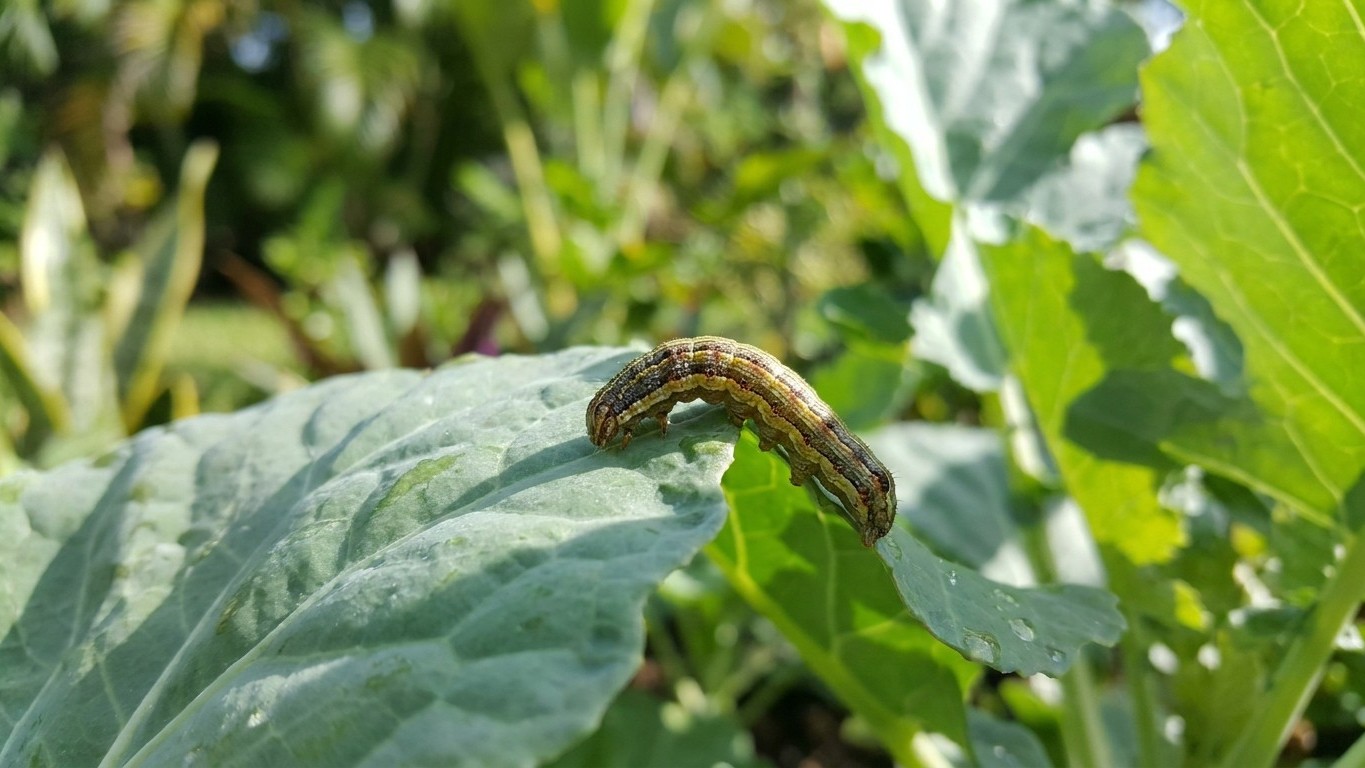

Fall armyworm shows up in Florida whenever the weather turns hot and vegetable beds or turf grass are actively growing, which in this state means a long stretch of the year rather than one tidy month. UF/IFAS Extension doesn’t publish a fixed calendar window for this specific pest, so gardeners have to read the season instead of a date.
When Fall armyworm turns up in Florida

UF/IFAS Extension tracks several hot-weather pests closely, but fall armyworm isn’t one of the species it gives a named window for. That’s worth saying plainly rather than papering over: the local extension service publishes seasonal notes for eastern lubber grasshoppers (found from March or April through October or November, with peak numbers in July and August) and for chilli thrips (heaviest during long hot, dry stretches), but it doesn’t hand fall armyworm its own dated entry.
What UF/IFAS does say is broader and still useful. Vegetables planted in August or September are flagged as susceptible to pests that thrive in hot weather, and fall armyworm fits that description as well as any insect in the state. It’s a classic warm-season feeder, most active while soil and air stay hot, and it follows the same general rhythm as the pests UF/IFAS does track by name.
Line those patterns up and a reasonable picture forms: fall armyworm pressure in Florida tracks the same long hot season that pushes lubber grasshopper numbers up through summer, with activity easing off only as nights cool later in the year. That’s a pattern borrowed from related pest data, not a published date range for fall armyworm itself, and it’s worth treating it that way. Gardeners who plant late-summer vegetable crops, the same ones UF/IFAS calls out as vulnerable, should expect the same kind of hot-weather feeding pressure that drives up other pests in this window.
Reading the calendar from your last frost
Most Florida gardeners plan their season around one number: the last spring frost. NOAA’s 1991-2020 Climate Normals put that date, for the Jacksonville area station, somewhere between February 16 and March 7, based on the 30 to 70 percent freeze-probability band. That’s a normal built from thirty years of data, not a guarantee for any single spring, and three of those thirty years saw no freeze there at all.
This window only applies to north Florida. Central and south Florida are effectively frost-free, and in those regions the growing calendar flips: the main vegetable season runs through the cooler months, and summer becomes the hard season to garden through, not the easy one. Anyone gardening near Orlando or Miami should set this Jacksonville-based frost window aside entirely.
Fall armyworm doesn’t answer to a frost date anyway. It answers to soil and air warmth, so an unusually warm February pushes activity earlier and a cold snap into March holds it back, regardless of what the calendar says. UF/IFAS doesn’t publish a fixed number of weeks between transplanting and first damage for this pest, so instead of counting days, watch the plants: once soil has warmed and new growth is pushing hard, that’s the window when a physical barrier needs to already be in place, not something to add after chewing starts.
What it attacks, and what the damage looks like
Most gardeners notice the damage well before they ever spot the insect responsible. Fall armyworm caterpillars feed on grasses and grass-family crops, and their handiwork tends to show up as one of a few familiar patterns:
- Ragged, chewed leaf edges on sweet corn and sorghum, often concentrated in the tight whorl at the center of the plant
- Thin, papery “window-pane” patches where only the leaf’s outer layer has been eaten through
- Brown, thinning patches in lawn grass that look at first glance like drought stress or disease
- Skeletonized foliage, where only the tougher leaf veins remain once feeding is heavy
The name comes from behavior, not appearance: large groups of caterpillars move across a lawn or field together, feeding as they go, the way a marching army strips a landscape bare in its path.
It’s the larval stage, the caterpillar, that does every bit of this damage. Adult moths don’t feed on plant tissue at all; they lay eggs and move on. That distinction matters for anyone trying to act on what they see, because it means treatment timing has to target caterpillars while they’re small and still feeding on leaf surfaces. Once larvae are large and burrowed into a corn whorl or working through turf at the soil line, physical controls and early-stage tactics stop being effective, and damage from that generation is largely already done.
How Florida sits in this pest’s range

This site currently documents fall armyworm in two states. With a footprint that narrow on this particular project, it says more about the current scope of coverage than about the insect’s actual range, which is far broader across the warm regions of the country. Fall armyworm is a wide-ranging pest by nature; where it’s tracked in more than one state, the real difference tends to be timing rather than whether it shows up at all.
Florida’s part in that picture is its long hot season. States with shorter, milder summers see fall armyworm activity compressed into a narrower stretch of the year, while Florida’s extended warm months give the pest more time to build numbers and run through multiple generations. That’s a difference in duration and timing, not a difference in whether the insect is present.
None of the source data used here assigns Florida a rank, a severity score, or a trend line against other states, and none should be implied. What the UF/IFAS material supports is narrower: Florida’s climate keeps conditions favorable for hot-weather pests, fall armyworm included, for more months than cooler states get, which is a statement about season length, not about how bad an infestation might get in any given year.
What actually works against it
The cheapest and most effective defense against fall armyworm starts before a single caterpillar shows up: timing. Planting vegetable crops to avoid the hottest, driest stretch of the warm season reduces the window during which conditions favor heavy feeding, since the pest, like the chilli thrips and lubber grasshoppers UF/IFAS tracks, does best during long hot periods.
Row covers work on the same logic as a locked door: they physically block adult moths from reaching leaves to lay eggs. That only holds true before caterpillars hatch and start feeding. Once larvae are already on the plant, a cover traps them in with their food supply and does nothing useful; at that point the cover needs to come off, not stay on.
Hand-picking caterpillars off small vegetable plantings works for the same reason it works on any leaf-feeding pest: fewer mouths, less damage, and it costs nothing but attention. It’s realistic on a backyard scale and largely impractical across a full lawn or field, where the sheer numbers involved make it a losing effort.
Crop rotation and clearing plant debris both target the pest’s ability to persist in one spot season after season. Removing old plant material and turning over soil disturbs egg masses and pupae that would otherwise complete their life cycle undisturbed, denying the next generation an easy start. None of these measures reach a caterpillar once it’s tunneled into a corn stalk or is feeding low in dense turf thatch; at that stage, the options that worked earlier in the season are no longer on the table.
Common questions
Does fall armyworm survive Florida winters?
UF/IFAS material used here doesn’t address overwintering survival for this species directly. What it does establish is that Florida’s long warm season, combined with vegetable plantings in August and September, creates extended conditions favorable to hot-weather pests generally.
Is fall armyworm the same insect damaging my lawn and my sweet corn?
Yes, it’s the same species behind both. The caterpillar stage feeds on a range of grasses and grass-family crops, which is why damage can turn up in turf and in a vegetable garden at the same time, particularly during hot stretches.
Should I worry about fall armyworm in central or south Florida the same way as in the north?
The seasonal reasoning shifts. North Florida’s frost-based calendar, drawn from the Jacksonville-area station, doesn’t apply south of that region, where the growing season inverts and summer becomes the harder stretch to manage rather than the easier one.