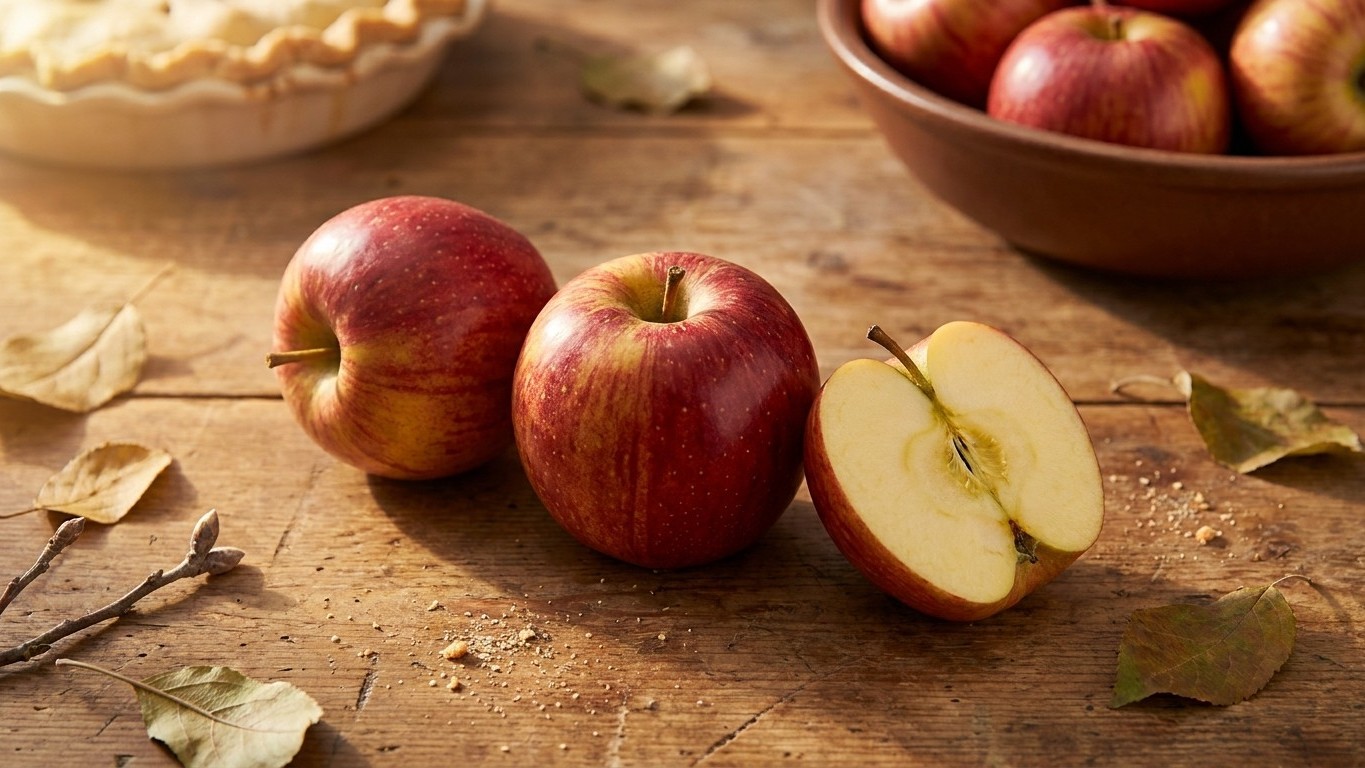

Topaz is a Czech-bred apple valued for its sweet-tart bite, firm crisp flesh, and a harvest window that lands late in the season. It grows in USDA zones 4 through 8, carries moderate resistance to fire blight, and blooms in the mid-season window, which matters when you are matching it to a pollinator. It is not sold under a well-known alias in the way Mutsu goes by Crispin, so if a tag simply says “Topaz,” that is the variety you are getting.
What Topaz actually is

A grower picking this variety is signing up for four specific things:
- Ripening time: late September to mid-October
- Flavor: sweet-tart and spicy, with firm, crisp flesh
- Best use: dessert eating and cooking, since it holds its shape when heated
- Storage life: stores well, staying useful well past harvest
The flavor is the reason people plant it in the first place. Sweet-tart apples with a spicy edge are less common on supermarket shelves than the straightforward sweetness of a Gala or a Fuji, and Topaz leans into that gap. The texture backs it up: flesh described as firm and crisp doesn’t just mean a satisfying bite out of hand, it also means the apple survives an oven. A lot of dessert apples turn to mush in a pie because the cell walls collapse under heat and the fruit’s acidity fades along with it. Topaz keeps its structure and its tartness, which is exactly what a pie filling needs to avoid becoming a sweet, shapeless puddle under a crust.
That dual identity, snack apple and cooking apple, is not automatic in this category. Plenty of varieties are bred purely for fresh eating and fall apart in a baking dish. Topaz doesn’t force a choice between an apple you eat standing at the counter and one you save for a pie plate.
Storage adds a practical bonus on top of that. An apple that stores well means the harvest doesn’t have to be eaten or processed in a rush. Late September and October fruit that keeps into winter effectively stretches a short harvest window into months of usable apples, without a dehydrator or a canning session the week you pick.
Will it grow where you are
Hardiness zone
Topaz is rated for USDA hardiness zones 4 through 8. That’s a wide band, running from cold-winter regions in the upper Midwest and interior Northeast down through much of the transition zone and into warmer areas of the South and mid-Atlantic. If your winter lows regularly fall outside that range, either much colder than zone 4 or much milder than zone 8, this is not the variety to plant without checking local extension guidance first.
Winter chill requirement
Hardiness zone is only half the equation. The other half is winter chill, the number of cold hours a tree needs during dormancy before it will break bud and flower normally in spring. A tree can survive a mild winter and still fail to fruit well if it never accumulates enough chill hours. Our sources don’t publish a specific chill-hour figure for Topaz, so rather than guess a number, the honest answer is that it isn’t documented here.
What that means practically: gardeners in the coldest part of the zone 4-8 range, where winters are long and reliably cold, are unlikely to run into a chill problem. Gardeners at the warm edge, in zone 8 and especially in regions with short, mild winters, should check with a regional extension office before assuming this variety will perform the way it does farther north. Chill accumulation varies enough by microclimate that a blanket number would be misleading even if one were published. Given that Topaz comes out of a Central European breeding program, it reads as a variety built for the colder half of its hardiness range rather than the mild-winter edge of zone 8.
What to plant beside it
Nearly all apple varieties crop better with a compatible partner nearby, even when a tree can technically set some fruit on its own pollen. Topaz blooms in the mid-season window, which puts it in range of a large share of other apple varieties, but bloom timing overlapping is not the same as compatibility. A variety can flower at the same time as Topaz and still fail to pollinate it if the two share too close a genetic relationship, such as a parent and its own seedling.
Our sources for this page do not publish a named list of pollination partners for Topaz. Rather than guess at names, the straightforward answer is that a documented partner list isn’t available here. That does not mean Topaz can’t be paired, it means the specific pairing has not been confirmed in the sources used for this fiche.
The practical move for a home orchard is to plant at least one other mid-season blooming apple variety, chosen with the same care you’d give any pollination pairing: confirmed bloom overlap, and no parent-seedling relationship between the two trees. A general-purpose apple pollination guide can walk through how to check bloom overlap and rule out incompatible parentage before you commit to a specific variety. If you already have another mid-season apple in the yard, or a neighbor within bee-flying distance does, that’s a reasonable starting point to confirm rather than assume.
Growing it well
Fire blight
Topaz carries a rating of moderately resistant to fire blight, a bacterial disease that can blacken and kill blossoms, shoots, and entire limbs in a bad year, especially during warm, wet spring weather. Moderately resistant doesn’t mean immune. It means the tree is less likely to suffer a severe outbreak than a highly susceptible variety, but a grower should still watch for the telltale signs: blackened shoot tips that curl over like a shepherd’s crook, and cankers on the bark. Pruning out infected wood promptly, well below the visible damage, is still worth doing even on a moderately resistant tree.
Growth habit
Our sources don’t detail a specific growth habit for Topaz beyond its production characteristics, so a grower should ask a local nursery about the shape and vigor to expect on the rootstock being sold, since rootstock, not the variety itself, determines how large and how upright the mature tree becomes.
Biennial bearing and thinning
Biennial bearing, the tendency of some apple trees to produce a heavy crop one year and a light or nonexistent one the next, is not addressed in the sourced facts for Topaz. Where that tendency isn’t documented, the safer assumption for any apple variety is to thin the fruit in a heavy-set year regardless. Removing excess young apples so they sit four to six inches apart along a branch reduces the strain on the tree and helps even out production from one year to the next, whether or not a variety is a known biennial bearer.
Picking it and keeping it
The harvest window for Topaz runs late September into mid-October. That’s a date range to watch for, not a date to circle on the calendar, since actual ripening shifts with the specific season’s weather. The reliable way to know the fruit is ready is to check it directly, in this order:
- Lift and twist: cup the apple in your hand, lift it gently upward, and give a slight twist. A ripe apple separates from the spur with little resistance. If it clings and you have to pull hard, it needs more time.
- Seed color: cut one test apple open and check the seeds. Ripe apples generally show brown seeds; white or pale seeds mean the fruit was picked too early.
- Ground color: look at the background skin color, the part not covered in red blush. As the apple ripens, that ground color shifts from green toward yellow.
Storage
Topaz stores well, which is one of its practical selling points. A crop harvested in late September or October doesn’t need to be used up right away. Cool, humid storage conditions, of the kind a root cellar or a refrigerator’s crisper drawer approximates, will extend usability well beyond the pick date, letting a single harvest supply fresh eating and cooking apples for weeks to months rather than days.
Common questions
Is Topaz apple self-pollinating?
Nearly all apple varieties, Topaz included, crop more reliably with a compatible pollinator nearby rather than relying on their own pollen. A documented list of confirmed partners for Topaz isn’t published in the sources used here, so plan for a second mid-season apple variety in range rather than assuming Topaz will set a full crop alone.
When should I pick Topaz apples?
The harvest window runs late September to mid-October. Confirm ripeness with the lift-and-twist test, then check seed color and ground color on a sample fruit rather than relying on the calendar date alone.
Is Topaz good for baking as well as eating fresh?
Yes. Its firm, crisp flesh holds its shape under heat, and its tartness carries through cooking instead of fading, which is what separates a good pie apple from a purely fresh-eating one.
What hardiness zones support Topaz apple trees?
USDA zones 4 through 8. Within that range, gardeners in warmer zone 8 locations should also confirm local winter chill accumulation, since a specific chill-hour requirement for this variety isn’t published in the sources for this page.
Does Topaz need spraying for disease?
It carries a moderately resistant rating for fire blight, which lowers but doesn’t eliminate risk. Watch for blackened, curled shoot tips in warm, wet spring weather and prune out infected wood promptly if it appears.