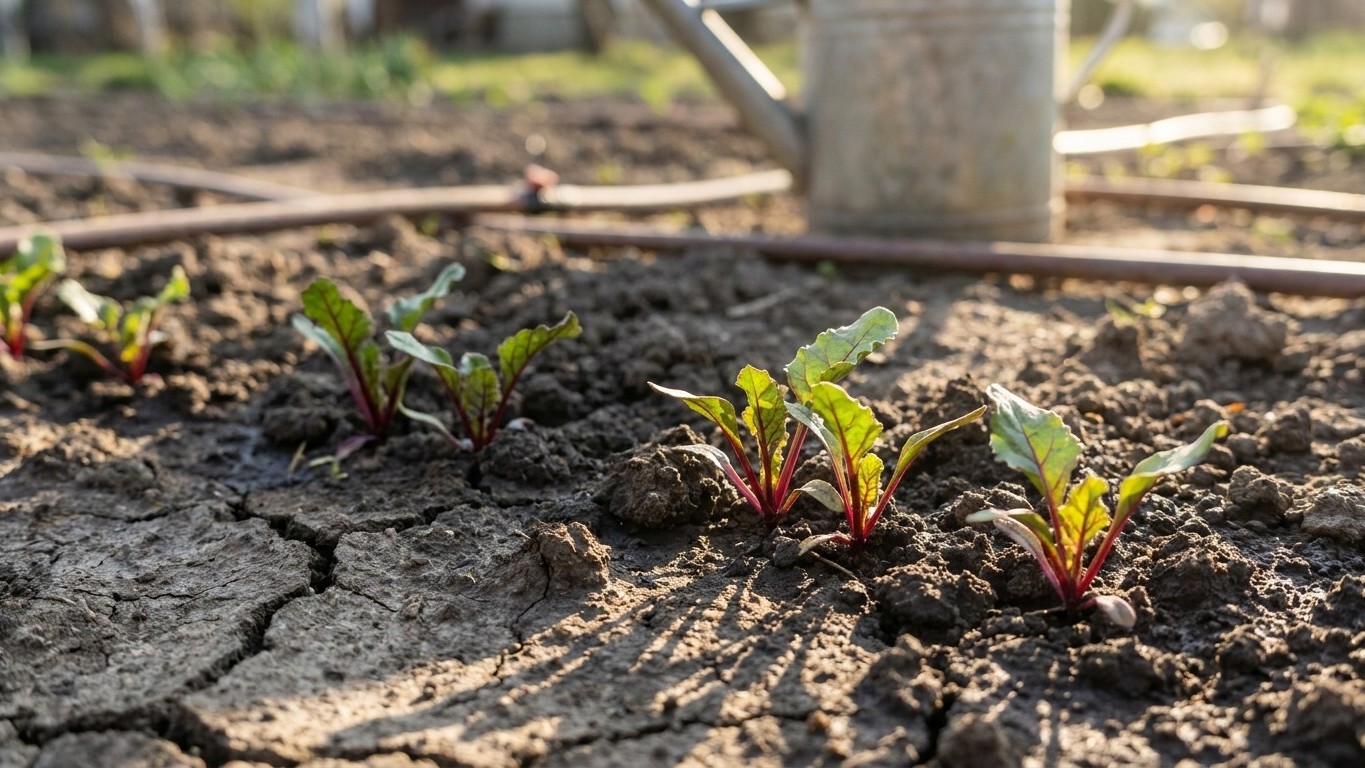

The first six weeks after a beet seed goes into the ground decide whether that plant ever makes a usable root. Water stress during that window causes premature flowering, according to Utah State University Extension’s guidance on growing beets. Once a beet bolts, it stops building a root and starts building a seed stalk instead, and no amount of watering afterward reverses that switch.
The short answer
Utah State University Extension names the mechanism directly: water stress in the first six weeks after seeding causes premature flowering, what gardeners call bolting. That single sentence carries more weight than it looks like it does, because it draws a hard line around a very specific stretch of the plant’s life. Not the whole season. Not “keep it watered generally.” Six weeks, starting at seeding, not at germination and not at some later thinning date.
Beets are direct-sown, so there’s no transplant shock to confuse the timeline. The clock starts the moment seed touches soil. That matters because a lot of garden advice for other crops talks about establishment periods measured from transplanting, and it’s easy to import that mental model into beets without noticing the mismatch. A beet doesn’t get a head start in a tray. Every day of its life happens in the bed, exposed to whatever the weather and the irrigation schedule deliver.
Bolting itself is a survival response. A plant that senses stress, dry soil chief among the triggers here, reads that stress as a signal that its window to reproduce is closing. So it redirects energy away from root storage and into a flower stalk, trying to set seed before conditions get worse. For a carrot or a radish, that’s a disappointing outcome. For a beet, it’s the same disappointment: the root you were growing for the table stays small, woody, and split by a hard central stalk, because the plant has already moved on to a different goal.
The practical takeaway from Utah State University Extension’s framing is that prevention has a deadline. There isn’t a rescue watering schedule for a beet that already bolted. The decision gets made quietly, underground and in the growing tip, sometime in that first six-week stretch, and it shows up later as a flower stalk you can’t talk the plant out of. That’s why gardeners who’ve lost a beet crop to bolting almost always trace it back to one dry spell early on, often one they didn’t think was severe enough to matter at the time.
What actually decides it
Two different failures share a root cause, water shortage, but they happen at different points in the plant’s life and they break the crop in different ways. Treating them as one problem with one fix misses half the picture.
Early thirst: the bolting trigger
In the first six weeks after seeding, a beet plant is deciding, in a biological sense, whether the season ahead looks survivable. Dry soil during this stretch reads as a threat, and the plant’s response is to rush toward reproduction rather than risk running out of time to set seed. This is the failure Utah State University Extension calls out specifically: water stress during those first six weeks causes premature flowering. Once that flowering starts, the root’s development is effectively over. There’s no watering schedule that talks the plant back out of it. This failure is about timing and consistency, not about total water volume over the season.
Later heat: the woodiness problem
The second failure shows up after the plant has already survived its early weeks without bolting. Once temperatures climb above 85°F, water stress at that stage doesn’t trigger flowering, it produces woody bulbs, according to the same Utah State University Extension guidance. The published remedy is to keep plants well-watered when temperatures go above 85°F. This is a texture problem in a root that’s still developing normally, not a reproductive switch. A beet can sail through its first six weeks with no bolting risk and still end up tough and fibrous months later if it goes thirsty during a hot stretch. Same underlying resource, water, but a completely different failure mode with its own timing and its own fix.
How to do it
- Start with a soil check before sowing. It tells you what nutrients are missing and how the bed drains, but it’s a starting point, not a diagnosis for problems that show up later. It won’t explain a bolted plant.
- Sow beet seed directly into the garden bed. Beets don’t transplant well, so every stage of timing, including the critical first six weeks, runs from the day of seeding, not from a nursery start.
- Keep the seedbed consistently moist from the moment seed goes in through the full first six weeks. This is the non-negotiable window Utah State University Extension points to for preventing bolting; a single extended dry stretch here is enough to push the plant toward flowering.
- Once seedlings are established past that six-week mark, shift attention to temperature rather than the calendar. Watch for stretches above 85°F.
- When temperatures go above 85°F, increase watering frequency to keep plants well-watered. This is the specific, published response to the woodiness risk, separate from the bolting risk earlier in the season.
- Continue steady, even watering through the rest of root development, avoiding both drought stress and waterlogged soil, until the roots reach the size you’re growing them for.
What goes wrong
- The seedbed dries out during the first six weeks. This is the specific failure Utah State University Extension links to premature flowering. The remedy has to happen before the fact: consistent moisture from seeding onward. Once bolting starts, there’s no fix for that plant; the practical response is to replant and protect the new seeding through its own six-week window.
- A hot stretch above 85°F hits plants that already survived their early weeks. Growers sometimes relax watering once seedlings look established, assuming the risky period has passed. It has, for bolting, but not for woodiness. The remedy is to keep plants well-watered specifically when temperatures rise above 85°F.
- Treating both failures as the same problem. “Just keep it watered” sounds like a complete answer, but it collapses two distinct mechanisms, an early reproductive trigger and a later texture problem, into one vague habit. A grower who waters generously all season but lets the bed dry out once in week three can still lose the crop to bolting despite doing everything else right.
- Assuming the soil test explains a bolted plant. A soil test describes fertility and drainage before planting. It doesn’t record what happened to soil moisture in week two or week five. When beets bolt, the soil test from before planting isn’t the place to look for the cause.
- Picking a variety expecting it to solve watering problems. Utah State University Extension names five beet varieties in its guidance but publishes no comparative data on bolting tendency, color, season, or use for any of them. Variety selection isn’t a documented substitute for consistent watering in the first six weeks.
Common questions
Can a bolted beet still be harvested for the root? Once flowering starts, the plant has redirected its energy toward the seed stalk rather than root storage, so the root stops developing further. Utah State University Extension’s guidance doesn’t offer a way to reverse that once it begins.
Does mulching prevent bolting the way watering does? The guidance cited here names water stress during the first six weeks as the trigger and doesn’t publish mulching as a separate remedy. Consistent watering through that window is the documented fix.
What if I don’t realize the seedbed went dry until after the six-week window has passed? If bolting hasn’t started, keeping the plant well-watered going forward still matters, particularly once temperatures rise above 85°F, since that’s the separate trigger for woody roots. But the specific bolting risk from that early dry spell can’t be undone after the fact.
Are all beet varieties equally likely to bolt? Utah State University Extension lists five varieties in its beet guidance but doesn’t publish data comparing their bolting tendency. Without that published comparison, watering consistency in the first six weeks remains the documented factor, regardless of which variety is in the ground.