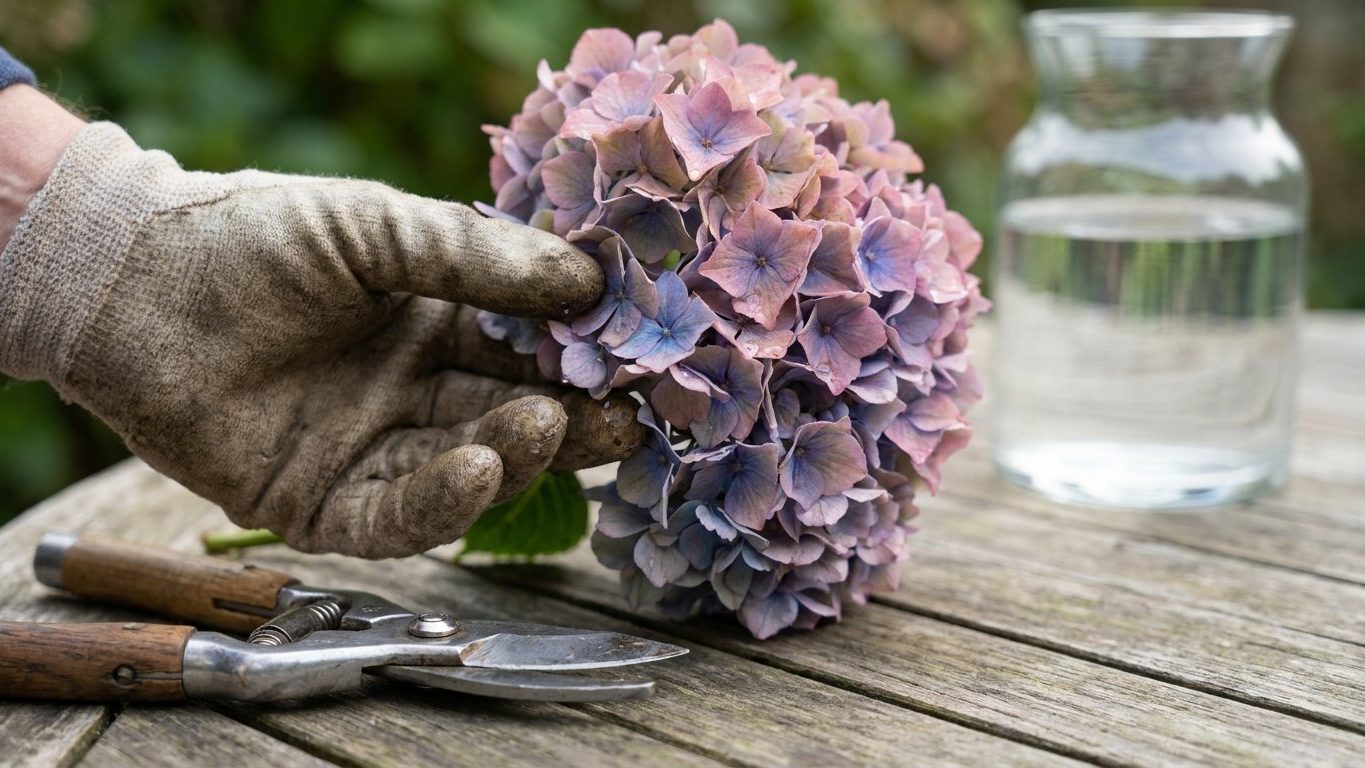

Cut hydrangea blooms only once the petals feel papery rather than smooth, then plunge the stems into water immediately and submerge the whole flower head for at least 20 minutes before arranging. Skip either step and even a perfectly timed cut will flop over the vase rim within a day.
Why this matters
A hydrangea bloom isn’t one flower. It’s a dense cluster of dozens of small sepals packed with water, which is exactly why the whole head goes limp so fast once it’s separated from the roots. The stem also starts sealing itself with sap within seconds of being cut, and that seal can trap air bubbles that block water from ever reaching the flower again. Once that happens, no amount of fresh water in the vase fixes it.
Skip the maturity check and you’re cutting a bloom that hasn’t finished developing on the shrub. Its petals are still soft, still building the structure that will eventually hold water on its own. Cut that stem and stick it in a vase, and it collapses in hours, not days, no matter how careful the rest of your technique is. This is the single most common reason people give up on cutting Hydrangeas for indoor arrangements.
When to do it
Forget the calendar. Watch the bloom itself. On bigleaf and mountain hydrangea, which flower on last year’s wood, run a petal between your fingers before you cut anything. If it feels smooth and slightly cool, it’s not ready. If it feels papery, almost like tissue paper, and makes a faint rustling sound when you brush it, the bloom has matured enough to survive cutting. That papery texture means the plant has finished pumping structural sugars into the sepals, which is what lets them hold their own water once separated from the stem.
Panicle hydrangea is more forgiving because it blooms on the current season’s growth and its stems are naturally sturdier. Wait until the cone-shaped panicles start shifting color, usually from white or green toward a blush or tan, before cutting. That color shift is a reliable sign of maturity across the whole cluster, not just the outer petals.
Whatever the type, resist cutting the very first flush of blooms the week they open. Give them days to finish developing. And don’t take more than a third of the flowering stems at once; the shrub needs the rest to keep feeding next year’s growth, especially on old-wood bloomers where this season’s stems are also next year’s flower buds.
How to do it

Cut early in the morning or in the evening, never in the heat of the day. Stems are fully hydrated at those times, and less water is lost to transpiration between the cut and the vase. Use sharp bypass pruners or floral snips, not scissors, which crush stem tissue instead of slicing it cleanly.
The cut itself
Run the papery-petal test first. Once you’ve confirmed a bloom is mature, cut the stem at a 45-degree angle, about 12 to 18 inches long depending on how you plan to arrange it, just above a leaf node. Strip the lower leaves that would otherwise sit underwater in the vase and rot, but leave the upper foliage intact; those leaves help the stem regulate water uptake, and over-stripping the whole stem doesn’t speed anything up.
Carry a bucket of room-temperature water out to the garden and drop each stem in the moment it’s cut. Don’t collect a handful of blooms on the porch and deal with water later. Every minute a cut stem spends dry is a minute air has to work its way up the stem and block water later.
Sealing the stem
Back inside, recut each stem underwater by about an inch, this removes any air pocket that formed during the walk from garden to sink. Then choose one of two sealing methods: either dip the freshly cut end in powdered alum, or split the last inch of stem vertically with your pruners to expose more surface area for water absorption. Woody stems, like those on oakleaf hydrangea, benefit more from the split than from alum.
The submersion trick
This step matters most for bigleaf, mountain, and smooth hydrangea, whose full round blooms have the most petal surface competing for water. Submerge the entire flower head, not just the stem, in a basin of cool water for 20 minutes to a few hours before arranging. This lets the petals absorb water directly through their surface, which buys time while the stem’s own water-conducting tissue catches up. Panicle blooms can usually skip this step; their sturdier structure holds up without it.
Arrange in a clean vase with fresh water, change that water every one to two days, and recut the stem ends each time you do. Keep the arrangement away from direct sun, heating vents, and bowls of ripening fruit, which release ethylene gas that speeds up wilting in cut flowers generally.
What goes wrong

The most common failure is cutting a bloom before it’s matured. There’s no fixing this after the fact; an immature bigleaf or mountain hydrangea bloom will collapse regardless of how carefully you seal the stem or how long you submerge it. If a cut flower wilts within a few hours despite good technique, the petal-maturity test was the step that got skipped.
Letting cut stems sit dry, even for the ten minutes it takes to walk from garden bed to kitchen sink, lets air work into the stem and block water later. This looks harmless in the moment but shows up the next morning as a drooping head that no amount of fresh water revives.
Here’s the one that looks like extra care but isn’t: stripping every leaf off the stem to “reduce stress” on the flower. Leaves help regulate how fast the stem loses and takes up water. A bare stem doesn’t last longer in a vase; it often wilts faster because the plant’s own water-management system has been removed.
Using cold water straight from the tap is another quiet mistake. Cold water is absorbed more slowly than room-temperature water, which matters most in the first hour after cutting, when the stem is doing the most work to recover from the cut. And if there are pets or small children in the house, keep in mind that bigleaf hydrangea flowers, stems, leaves and bark contain hydracyanosides and are documented toxic if eaten in quantity, causing nausea, stomach pain, vomiting and sweating in people, cats, dogs and horses alike.
Doing it differently
Panicle hydrangea tolerates a more relaxed approach across the board. Its sturdier, woodier stems hold up without the submersion soak, and because it blooms on new growth rather than last year’s wood, cutting stems for the vase doesn’t touch next year’s flower buds the way it does on bigleaf or mountain types.
Oakleaf hydrangea has genuinely woody stems, closer to a small shrub branch than a soft-tissue flower stalk. A simple angled cut often isn’t enough; split the last inch or two of stem vertically, the same way you would with lilac, to expose enough surface area for water to move up efficiently.
Climbing hydrangea is rarely worth cutting for arrangements at all. It’s slow to start flowering in the first place, and its stems cling by aerial rootlets rather than growing the clean, straight cuttable stems the other types produce.
Container-grown plants deserve a lighter hand. A potted hydrangea has fewer total stems than one in the ground, so removing several blooms represents a bigger share of the plant’s leaf area for making next year’s growth. Greenhouse or otherwise protected plants can bloom earlier in their own cycle with less obvious petal maturation, which makes the finger-feel test more important than usual, since visual cues alone can be misleading.
Common questions
Can I cut panicle hydrangea blooms while they’re still white or green?
It’s better to wait for the color shift toward blush or tan. White, freshly opened panicles haven’t finished developing and are more likely to wilt than ones that have started aging on the plant.
Why did my hydrangea wilt even after I did everything right?
The most likely explanation is that the bloom wasn’t mature when you cut it. Run the papery-petal test before cutting next time; a bloom that still feels smooth and cool needs more time on the shrub, not more care in the vase.
How long do cut hydrangeas typically last in a vase?
That varies by type, maturity at cutting, and how well the stem was sealed, and no single figure covers all of that reliably. What’s clear from the mechanics is that a mature bloom, cut and sealed properly, will consistently outlast an immature one regardless of type.
Is it a problem to have cut hydrangeas around pets?
Only bigleaf hydrangea is documented as toxic, and only if eaten in large quantities, affecting cats, dogs and horses as well as people. Keep cut arrangements out of reach of pets that chew on plants, and treat any large ingestion as worth a call to a vet.