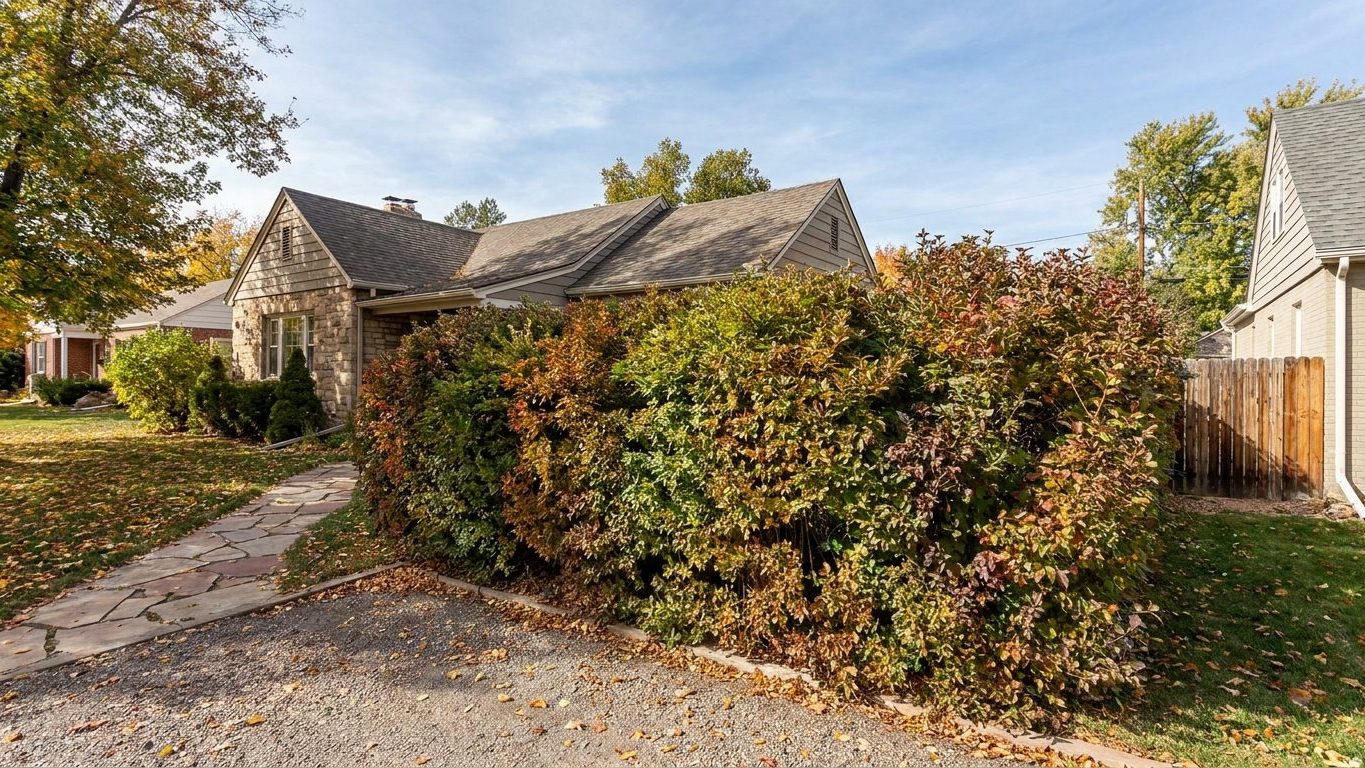

Illinois has no statewide hedge height limit. No single number applies from Rockford to Cairo, and any page that quotes one for the whole state is guessing. Height is set by the ordinance of your city, village or town, and sometimes layered with county rules or a homeowners association’s covenants. So the useful question is which rule covers your lot and where to read it. This page shows how to find it, and what to check before you plant or trim.
There is no Illinois hedge height law
Why the answer changes at the village line
Springfield does not write hedge rules. Zoning belongs to local government, and each municipality adopts its own code. Two neighbors on opposite sides of a municipal boundary can have different limits, different definitions and different enforcement habits. That is true in every state, not only here. The How High Can a Hedge Be in Iowa? What the Law Actually Says, How High Can a Hedge Be in Michigan? What the Law Actually Says and How High Can a Hedge Be in Pennsylvania? What the Law Actually Says pages describe the same patchwork.
Three layers can apply to one Illinois yard. The first is the municipal code, which governs most suburban and town lots. The second is the county, which may cover land outside any municipality, and some of that land has little or no hedge regulation at all. The third is private: a subdivision’s covenants, which can be stricter than anything the city requires and are enforced by the association, not the village hall.
A hedge is often not a fence in the code
Here is where homeowners trip. Many ordinances treat a fence as a structure and give it a height cap, then say nothing about living plants. Others regulate hedges in a separate section, under landscaping or screening. Some do not mention them anywhere. If your code limits “fences” and defines a fence as a built barrier of wood, metal or masonry, the fence cap may not reach a row of arborvitae. If the definition says “fence, wall or hedge,” it does.
Do not assume in either direction. Read the definitions section of the code, which usually sits near the front of the zoning chapter, and look at the exact word used.
The one rule that nearly always applies
The sight triangle is the near-universal exception. At a street corner, and often at a driveway meeting a road, nothing may block a driver’s view of oncoming traffic or pedestrians. The permitted height inside that zone is usually far lower than the general fence limit. It can apply even in a town that says nothing else about hedges, and it is the usual reason a code enforcement officer knocks on a door over a thick shrub at a corner. A hedge that is perfectly legal along the back lot line can be a violation ten feet from the stop sign.
No Illinois city is documented on this page, so no figure appears here. Any number you see for “Illinois” without a named city and a code citation should be treated as unverified.
How to find the rule that actually applies to you
Start with the municipal code, which is online
Most Illinois municipalities publish their code through one of three publishers: Municode, American Legal Publishing or eCode360. Search the web for your city or village name plus “municipal code” and you will usually land on one of them. A few small towns post a PDF on their own site instead.
| Publisher | Web address | How to use it |
|---|---|---|
| Municode | library.municode.com | Pick Illinois, choose your municipality, then search the code text |
| American Legal Publishing | codelibrary.amlegal.com | Find your municipality in the list, then use the code’s table of contents or search box |
| eCode360 | Search “eCode360” plus your town’s name | Open your town’s code and use the chapter list or search |
Once inside, go to the zoning chapter first. The rule typically sits under a heading such as “fences” or “accessory structures.” Then run a text search for “hedge,” “shrub,” “screening,” “landscaping” and “vision” or “sight triangle.” The last two catch the corner-visibility rule, which is often written in a different chapter from the fence section, so check both.
Confirm with a person, and get it in writing
Codes are written in legal language, and a definition can change what a sentence means. Call the city’s planning, zoning or community development department. In a small village, the village clerk or building department will point you to the right person. Ask three things: whether the code regulates living hedges, which section it falls under, and whether any corner or driveway visibility rule applies to your lot.
Ask for the answer by email. A written reply from the zoning office is worth far more in a later disagreement than your memory of a phone call.
If you are not sure your home sits inside a municipality, check your property tax bill or your county’s online parcel map. Both usually show which taxing districts and jurisdiction apply. If the lot is unincorporated, call the county planning or zoning office instead. Then read your deed paperwork or HOA documents for covenants. Those are separate from the city code, and you must satisfy both.
More background on how rules differ from place to place is collected in our Hedges section.
The branches that cross the line
The general principle, and why it is not Illinois law
Height is one question. Overhang is another, and it usually works differently. In most states, a neighbor may cut back growth that crosses onto their property. The cut stops at the boundary, it is made at the neighbor’s own expense, and it may not kill the plant. That rule comes from court decisions rather than statutes, and details vary from state to state. Treat it as a general principle, not as a statement of what an Illinois court will decide in your case.
Several practical consequences follow. Cutting up to the line does not permit stepping onto the other side without permission. It does not make the owner of the hedge pay for your saw or your hired crew. And it does not allow cutting so hard that the shrub dies, because that can turn a tidy-up into a damages claim.
Why the “don’t kill it” limit matters
It matters more than it sounds. Many conifers, arborvitae among them, do not resprout from bare old wood. A hedge planted close to the line, then sheared flat at the boundary by a neighbor, can end up with a bare brown face that never fills back in. Legal in theory, ruinous in practice. If the cut would take the whole side of the plant, you are no longer trimming, and that is the situation where talking to a lawyer comes before picking up the shears.
The better move is almost always a conversation. A dated photo of the overhang, a friendly note, and an offer to trim it yourself or split the cost settle most cases before anyone quotes case law. A certified arborist can do the cut properly and tell you whether the plant will survive it, which also gives you a neutral record if a disagreement lands in court.
Be careful with a hedge planted right on the boundary. In some places, a plant growing exactly on the line is treated as jointly owned, and then neither side may remove it without the other’s agreement. Whether that holds in your case is a legal question. Nothing here settles it, and no website can.
For a real dispute, whether over height, overhang or a damaged plant, the people to call are the municipality, for code questions, and an Illinois attorney, for anything involving property rights or money.
What to check before you plant
Fall is a workable planting window for many shrubs, and it is also a good month to make the phone calls, since the answers shape what you buy. Work through this list before you order plants:
- Read which word your code uses (fence, hedge, shrub, screening) and whether it limits living plants.
- Locate the sight triangle at any corner or driveway and keep the planting out of it, or keep it low.
- Ask the zoning office whether a setback from the property line applies to hedges.
- Check HOA covenants, which can cap height or ban certain species regardless of city rules.
- Call 811 before digging, so buried utilities are marked.
Plan around mature size, not the nursery tag’s first-year look. A shrub that matures wider than expected will push its branches across the line within a few seasons, and that brings the overhang problem described above. Setting the row back from the boundary leaves room to prune from your own side and to reach the far face of the plants without trespassing.
Keep the zoning office’s email answer with your plant receipts. If a neighbor complains years later, or the property changes hands, that record shows you checked the rule, and it saves you from relying on a figure someone read on a page about “Illinois” in general.
Common questions
Is there a maximum hedge height in Illinois?
Not at the state level. Any limit comes from your municipality’s ordinance, possibly from a county rule if you live outside city limits, and from private covenants. Only your own city’s code can give you a number you can rely on.
Does my town’s fence height limit apply to my hedge?
Only if the code says so. Some ordinances regulate living hedges alongside fences, some treat them separately, and some ignore them. Read the definitions and search the zoning chapter for the words “hedge” and “shrub” before assuming.
Can my neighbor trim branches that hang over the line?
As a general principle in most states, yes, up to the boundary, at their own expense, and without killing the plant. This comes from court decisions and varies, so it is not a statement of Illinois law. If the cut would badly damage the hedge, talk to an attorney first.
Who do I call to find out my local rule?
Your city or village planning, zoning or community development department. If you live outside city limits, call the county zoning office. Ask for the answer by email so you have it on record.