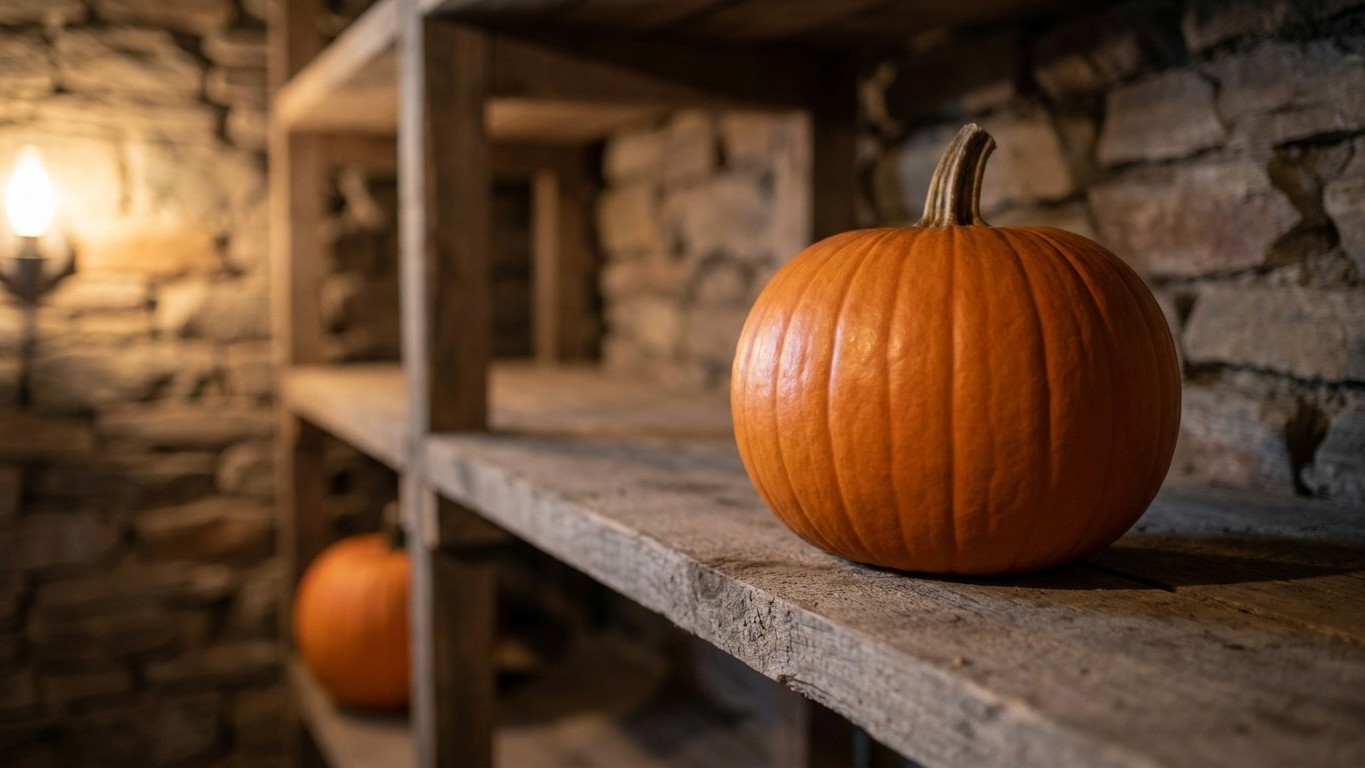

A whole, uncarved pumpkin can hold up for three to six months in a cool, dark spot between 45 and 50 degrees Fahrenheit, according to the University of Illinois Extension. Carving changes everything, and once you cut into one, that clock resets in a way no extension office has ever measured or published.
The short answer

If you’re wondering how long a pumpkin will sit on your porch looking good before Halloween without turning into a science experiment, the University of Illinois Extension has the number: three to six months, provided it’s whole and stored in a cool, dark location between 45-50 F. That’s a wide window, and it’s the reason growers can harvest pumpkins in early fall and still have firm, orange stock left when the last trick-or-treater shows up.
That figure applies only to the pumpkin in its natural, sealed state. Once a knife opens it up, the flesh is exposed to air, bacteria, and moisture loss, and no research institution, including Illinois or Utah State University Extension, publishes a shelf-life number for a carved pumpkin. Any specific day count you’ve seen floating around for a jack-o’-lantern, three days, five days, whatever the figure, didn’t come from a land-grant university testing pumpkins. It came from somewhere with no data behind it.
What that means practically: the smart move is to buy or harvest your pumpkin weeks ahead, store it whole using the conditions above, and save the carving for close to the day itself. The pumpkin does the waiting for you. The knife does the least amount of work possible, the latest possible day, because that’s the one part of this process where nobody can tell you how many days you’ll get.
There’s a temperature ceiling here too. Storage above 50 F speeds up softening and mold, while temperatures that dip toward freezing can damage the rind and turn flesh mushy. A garage that swings from 60 F in the afternoon sun to near-freezing overnight isn’t the stable environment the three-to-six-month window assumes. Consistency matters more than finding the single coldest spot in the house.
None of this is about a magic trick to preserve a carved pumpkin longer. It’s about front-loading your patience: pick well, store whole, wait, and only then carve. The three-to-six-month figure is your buffer, and it exists precisely so you’re not stuck buying a pumpkin the same week you plan to carve it.
What actually decides it
The three-to-six-month window isn’t a fixed countdown that starts the moment a pumpkin leaves the field. It’s the outer edge of what’s possible when three separate mechanisms all line up in the pumpkin’s favor. Miss on any one of them, and the timeline shrinks fast.
The stem is a seal, not a handle
The University of Illinois Extension is specific about this: look for a pumpkin with 1 to 2 inches of stem left. That stem isn’t decorative and it isn’t there for carrying the pumpkin around. It’s sealing off the spot where the pumpkin was once attached to the vine. Once the stem breaks off, that section becomes exposed, and the chance of premature spoiling goes up immediately. A pumpkin lifted, swung, or carried by its stem risks snapping that seal before it ever reaches your porch, which is why the stem should never be used as a handle. Carry a pumpkin the way you’d carry a bowling ball, from underneath, with both hands supporting the weight.
Cool and dark slows the clock
Storage between 45-50 F in a location shielded from direct light is the second mechanism. Warmth speeds up the natural breakdown of starches and moisture loss that eventually softens a pumpkin’s rind. Light and heat together accelerate that process even faster, which is why a sunny front porch in warm early fall weather works against you compared to a shaded garage, unheated basement, or covered patio.
Ethylene from other produce
Ripening fruits and vegetables, apples, potatoes, and tomatoes among them, release ethylene gas as part of their own ripening process. Store a pumpkin near a fruit bowl or a bag of potatoes and that gas will hasten the pumpkin’s own softening and spoilage. Keeping pumpkins in a separate space from produce isn’t a superstition, it’s a documented interaction between ethylene-producing items and the pumpkin’s rind.
How to do it
- Choose a pumpkin with intact stem. Look for 1 to 2 inches of stem still attached, since that stem seals the spot where the pumpkin separated from the vine.
- Inspect the rind for blemishes and soft spots. Avoid any pumpkin with visible bruising, cuts, or areas that give under light pressure. Shape doesn’t matter, but weight does: a heavy pumpkin for its size generally indicates dense, healthy flesh.
- Carry it without touching the stem. Lift from underneath with both hands. Never grab or swing a pumpkin by the stem, since that’s the fastest way to snap the seal before storage even begins.
- Pick a cool, dark storage spot. A garage, basement, covered porch out of direct sun, or shed all work, as long as the temperature holds between 45-50 F.
- Separate it from ripening produce. Keep the pumpkin away from apples, potatoes, tomatoes, or any fruit bowl where ethylene gas is being released.
- Check on it periodically. Rotate it occasionally and glance for any new soft spots or discoloration developing at the base or stem.
- Wait as long as reasonably possible before carving. Since no extension service publishes how long a carved pumpkin lasts, the practical strategy is to keep it whole through the bulk of the three-to-six-month window and carve only in the final days before you plan to display it.
- Carve close to the day you’ll display it. The later you cut into it relative to Halloween, the less time the exposed flesh has to soften, dry out, or mold before anyone sees it.
What goes wrong
- The stem snaps off during handling. This usually happens when someone lifts or carries the pumpkin by the stem itself. Once broken, that spot is exposed and spoilage risk goes up right away. The remedy is prevention: always support the pumpkin from underneath, and treat the stem as untouchable cargo, not a handle.
- The pumpkin sits near a fruit bowl or vegetable bin. Ethylene gas from ripening apples, potatoes, or tomatoes speeds up softening. If you notice your storage spot doubles as kitchen produce overflow, relocate the pumpkin to a separate area, even if that means a less convenient spot in the garage or a back closet.
- Storage temperature swings too widely. A porch that bakes in afternoon sun then chills at night isn’t the stable 45-50 F range the storage window assumes. Move the pumpkin to a location with a more consistent temperature, like an interior garage wall or a shaded shed, rather than a spot exposed to direct sun for part of the day.
- Someone assumes the same rules apply after carving. The three-to-six-month figure is for a whole, uncarved pumpkin only. Once cut open, there’s no published extension figure for how long it will hold up, so don’t plan around a specific day count for a carved jack-o’-lantern. Carve as close as possible to when you want it displayed instead of carving early and hoping for the best.
- A soft spot or blemish gets overlooked at purchase. Even one small soft area can be the start of rot that spreads across the whole pumpkin during storage. Inspect the entire surface, not just the side facing you, before bringing it home, and set aside any pumpkin with visible bruising no matter how appealing its shape.
Common questions
How long can I keep an uncarved pumpkin before it starts to go bad?
The University of Illinois Extension puts the range at three to six months when it’s stored whole in a cool, dark location between 45-50 F. Where you land in that range depends on how well the stem stayed intact and how consistent your storage conditions were.
Since I’m asking here specifically, how long does a carved pumpkin last?
No university extension, including Illinois or Utah State, publishes a specific number of days for a carved pumpkin. Any figure you’ve seen quoted for a jack-o’-lantern’s lifespan didn’t come from research. The practical answer is to keep the pumpkin whole for as long as possible and carve it close to when you want it displayed.
Does it matter if the pumpkin’s stem breaks off before I get it home?
Yes. The stem seals the spot where the pumpkin separated from the vine, and once it breaks off, that area is exposed and more likely to spoil early. It’s not a cosmetic issue, it’s a functional one, which is why extensions recommend choosing a pumpkin with 1 to 2 inches of stem still attached and never carrying it by that stem.
Should I worry about a frost damaging a pumpkin still sitting outside?
A pumpkin already harvested and off the vine is less affected by frost than one still growing in the field, but exposure to freezing temperatures can still damage the rind and speed up softening. Keep in mind the average first fall frost date for your area is just that, an average, not a guaranteed day, so don’t assume your pumpkin is safe outdoors right up until a specific date on the calendar.