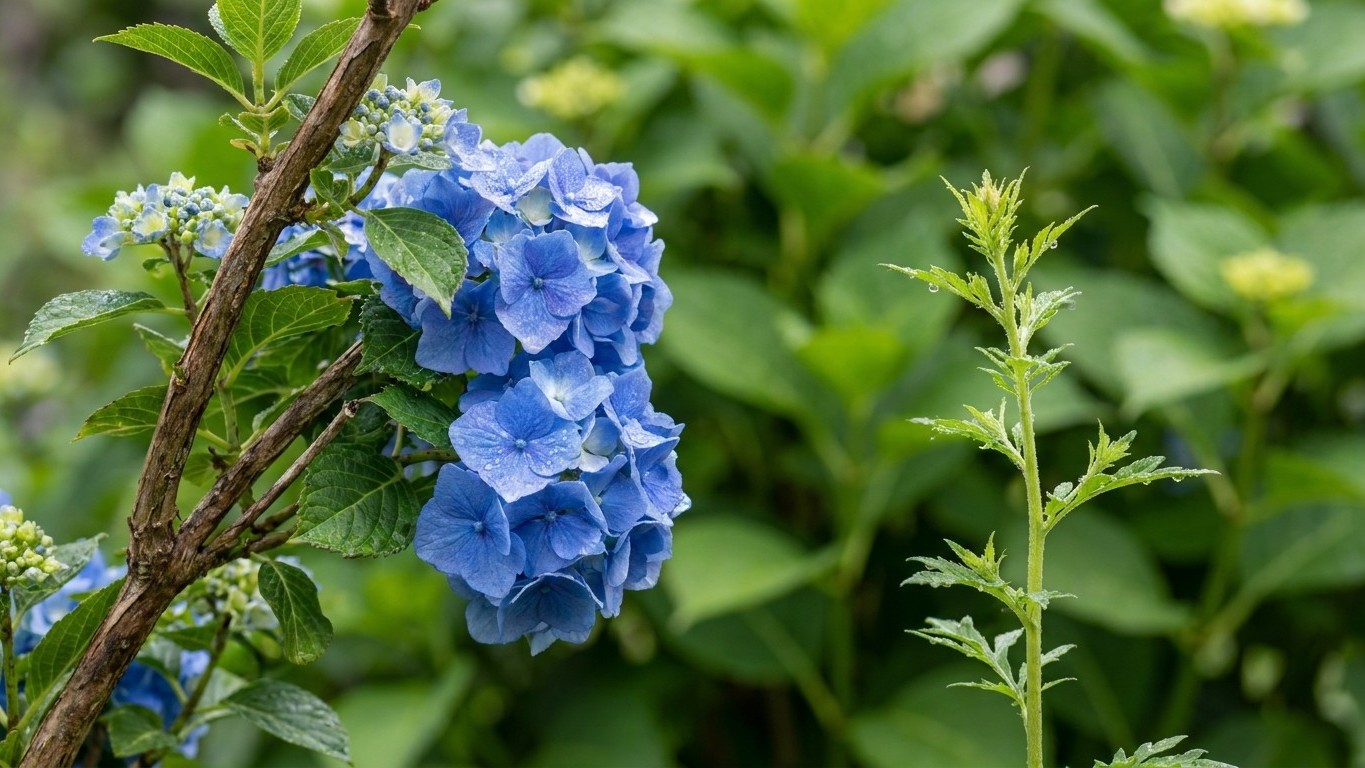

Plant Hydrangeas in Nebraska from late April into May, after the last spring frost has passed (April 12 to April 23 at the Omaha reference station, later in colder pockets of the state). Panicle and smooth types are the dependable choices because they bloom on new wood and shrug off hard winters. Bigleaf types can work too, but they take more coddling here.
When to plant Hydrangeas in Nebraska

The reference figure comes from NOAA NCEI U.S. Climate Normals for 1991-2020, which put the last spring freeze at April 12 to April 23 (the 30-70% probability band) at the airport station in Omaha. That band is a window, not a promise. Gardens in the suburbs and out in the country typically get their last frost one to two weeks later than an airport runway, and the northern tier and the higher ground in the Panhandle run later still. Look up your own county before you commit to a date. The NOAA normals file is public if you want to see how the band is built.
For most Nebraska yards, a sensible first planting date is somewhere between the end of April and the second week of May. Take the late end of the Omaha window (April 23), add the one to two weeks that outlying gardens typically need, and you land at roughly May 7 as a cautious target. A late frost won’t kill a dormant, established plant. But new growth on a freshly planted shrub can be blackened overnight, and the plant spends its first summer catching up.
Seeds, cuttings and nursery plants
Starting hydrangeas from seed indoors is possible and not worth it. Seedlings take years to flower, and they rarely resemble the parent plant. Most gardeners buy container shrubs or root cuttings from a plant they already own. Cuttings taken from new growth in June root over several weeks, then need a protected winter (a pot in an unheated garage, watered sparingly) before they go into the ground the following spring.
The count-back arithmetic is simpler for nursery plants. Say your target planting day is May 7. Greenhouse-grown shrubs bought in April have never felt wind or direct sun, so they need about a week of hardening off. Set them outside in shade for a few hours, lengthen the time each day, and move them into morning sun by day seven. Count back seven days from May 7 and you start hardening off around April 30. Plants that spent their lives outdoors at a garden center can skip most of this.
The fall option
Fall planting is a legitimate second window. The reference first fall frost is October 15 to October 26 (same NOAA NCEI normals, same airport caveat, and rural gardens usually freeze earlier). A common rule of thumb says roots need about six weeks to settle before the ground locks up, so count back from October 15 and aim to have shrubs in by early September. That’s a rule of thumb, not a published Nebraska date, so adjust for your county.
Soil and site preparation
Light matters first. Smooth and panicle hydrangeas bloom best with at least six hours of sun, while bigleaf and oakleaf types do better with morning sun and afternoon shade. Nebraska afternoons are hot, windy and often dry, so a spot on the east side of a house or fence gives bigleaf types a fighting chance. Full western exposure on open ground, with nothing to break the wind, is rough on large leaves.
Drainage decides more failures than fertility does. Hydrangeas want steady moisture but dislike sitting in water. Dig a test hole about a foot deep, fill it with water, and let it drain; fill it again and time it. If water is still standing after a day, raise the bed or choose another spot. Heavy clay is common across the eastern part of the state and handles water slowly. Sandier ground, found in parts of the Sandhills and along river valleys, drains fast and dries out, so it needs more organic matter to hold moisture. A basic soil test through your extension office will tell you your texture, pH and organic matter in plain terms.
Start in the weeks before planting, not on the day. About a month ahead, kill off sod or weeds in the planting area and work in two to three inches of compost across a bed wider than the hole. Dig the hole three times as wide as the root ball and no deeper than it is tall, so roots spread sideways into loosened soil. Amending only the hole itself can make a bathtub that holds water around the roots. That is the single most common site-prep error.
Spacing depends on the type. Compact panicle selections can sit about three feet apart, while full-size smooth and panicle shrubs want four to six feet. Crowding invites mildew, because air can’t move between the leaves.
Varieties that suit Nebraska
Start with a trait rather than a name. In a state where late spring frosts and hard winters can both nip buds, the most useful trait is blooming on new wood, meaning the flower buds form on stems grown this season. A hydrangea that sets buds the previous summer (old wood) can lose its whole flower crop to one bad winter or one late freeze. One that blooms on new wood can be frozen to the ground and still flower that summer.
Smooth hydrangea (Hydrangea arborescens) and panicle hydrangea (Hydrangea paniculata) both bloom on new wood, so they lead for most of Nebraska. Bigleaf (Hydrangea macrophylla) is the one that disappoints. Oakleaf hydrangeas are handsome but struggle in the colder, windier parts of the state.
| Type and example | Blooms on | Good for | Watch for |
|---|---|---|---|
| Smooth: Annabelle | New wood | Big white blooms, shade tolerance, reliable return after hard winters | Stems flop under heavy blooms, especially after rain |
| Smooth: Incrediball | New wood | An Annabelle-type shrub bred for sturdier stems | Still wants steady moisture |
| Panicle: Limelight | New wood | Sun tolerance, green-to-cream-to-pink bloom progression, tough in wind | Needs a few years to reach full size |
| Panicle: Bobo, Little Lime | New wood | Compact size for small beds and foundation plantings | Smaller flower heads than full-size forms |
| Panicle: Quick Fire | New wood | Early bloom, useful where the season feels short | Same sun and water needs as other panicles |
| Bigleaf: Endless Summer | Old and new wood | Blue or pink color, some rebloom if buds are damaged | Color depends on soil pH; needs winter protection |
Disease resistance is the second trait to weigh. Powdery mildew and leaf spot are the usual complaints, and both ease with airflow and spacing more than with any variety choice. Heat and drought tolerance come third. Panicle types handle sun and dry spells better than the others, and smooth types forgive shade but wilt dramatically in a drought.
Color deserves a straight answer. Only bigleaf and mountain types turn blue or pink with soil chemistry, and blue needs acidic soil where aluminum is available to the roots. Many Nebraska soils lean neutral to alkaline, so blue is a project here, not a default. Smooth and panicle hydrangeas ignore soil pH, which is another reason they suit the state. For similar cold-winter ground, see the guides for Growing Hydrangeas in Iowa: Types, Colour and Winter and Growing Hydrangeas in Wisconsin: Types, Colour and Winter.
What to plant alongside
The best companions solve a real problem. Hydrangeas have shallow, fibrous roots and large leaves that lose water fast, so neighbors that shade the soil and hold moisture earn their place. Hostas are the classic partner because they cover the ground beneath the shrub in part shade and like the same watering rhythm. Ferns, astilbe and heuchera do the same job. In sunnier beds, a ground cover such as creeping sedum on the dry edge or barrenwort in the shade keeps roots cooler and weeds down without competing hard for water.
Some pairings fight. Large shrubs with thirsty roots, such as maples, compete for water and will leave a hydrangea bed dry no matter how often you irrigate. Black walnut roots release a compound (juglone) that harms many garden plants; if you have a walnut on the property, keep hydrangeas well clear and watch for yellowing. Turf is another competitor: a lawn fertilized heavily right up to the shrub’s edge will out-compete young roots, so keep a mulched ring around each plant.
Watering, feeding and support
Water deeply and let the top inch of soil dry before the next round. About an inch a week, counting rain, is a reasonable starting point for established shrubs; new plantings need water two or three times weekly for the first month. A slow soak at the base beats overhead sprinkling, because wet leaves in the evening invite leaf spot. Large-leaved hydrangeas wilt in afternoon heat even when the soil is moist, so check the soil before you reach for the hose. If the leaves perk up by evening, the plant is fine.
Mulch is the cheapest insurance in a Nebraska summer. Spread two to three inches of shredded bark or leaf mold across the root zone, and keep it a couple of inches off the stems to prevent rot. It cuts evaporation during dry July and August stretches and moderates soil temperature swings in both directions.
Feeding is easy to overdo. One application of a balanced, slow-release fertilizer in spring as growth starts is plenty for most plantings. Heavy nitrogen produces lush leaves and floppy stems at the expense of blooms, and fertilizing late in summer pushes tender growth that winter then kills. Compost applied as a spring top-dressing does most of the job on its own.
Support, pruning and suckers
Annabelle-type smooth hydrangeas are famous for bowing under their own flower heads, especially after a summer storm. A grow-through ring or peony cage set over the crown in spring, before the stems get tall, lets the plant hide its support. Sturdier selections reduce the problem, but they don’t eliminate it.
Pruning follows the bloom wood. Smooth hydrangeas can be cut back hard in late winter (to a foot or so, or just to a low framework) and will flower on the new stems. Panicle types also bloom on new wood and can be trimmed in late winter to shape them. Bigleaf types bloom on old wood, so prune them lightly, right after flowering, and only to remove dead stems. Cut a bigleaf to the ground in March and you’ve cut off that year’s flowers.
Suckers, the shoots that pop up around the base, are best handled by purpose. Remove them if you want a tidy single shrub. Or dig a few in spring with some roots attached and plant them elsewhere; it’s a free way to get more plants. See the How to Grow Hydrangeas: The Complete Guide for propagation basics.
Common problems

Most hydrangea trouble starts with the plant not blooming. The usual causes are pruning off old-wood buds, frost damage to buds that formed the previous summer, too much shade, and too much nitrogen. Check the type first. A bigleaf that leafs out beautifully and never flowers is almost always a pruning or winter-damage problem. A smooth or panicle that sulks has likely been planted too shaded or fed too heavily.
Wilting comes in two kinds. Midday droop on a hot afternoon that disappears by evening is the plant managing water loss, and you can leave it alone. Wilting that persists in the morning, with dry soil, means it needs a deep soak. If the soil is soggy and the plant still droops, suspect root rot from poor drainage. Dig up a small section and look for dark, mushy roots.
Brown, crispy leaf edges are scorch. They come from hot wind, dry soil or reflected heat off a wall, and the fix is better watering, mulch and sometimes a different location. Yellow leaves with green veins point to iron chlorosis, common in alkaline soils, where iron is present but locked up. A soil test will confirm the pH, and a chelated iron product or a lower pH can help. Don’t treat it with a general fertilizer.
Powdery mildew shows up as a white, dusty film on leaves, usually late in summer. It looks worse than it is, and healthy shrubs seldom suffer lasting damage. Open up crowded stems, water at the base and clean up fallen leaves in fall. Leaf spot appears as brown or purple blotches, often after wet spring weather. Remove affected leaves and keep foliage dry, and don’t spray unless the problem returns for several years in a row.
Pests that damage hydrangeas in Nebraska
The pest list for this section comes from Nebraska Extension’s vegetable garden insect guidance (NebGuide G1633). It names grasshoppers, squash bugs, squash vine borers, blister beetles, bean leaf beetles, cucumber beetles, Japanese beetles, green June beetles, imported cabbageworms and tomato and tobacco hornworms. That list isn’t exhaustive. Several of those insects specialize in squash, beans or tomatoes and ignore hydrangeas. Three do real damage to them: grasshoppers, Japanese beetles and blister beetles. For identification, send a specimen or photo to your county extension office, since pressure varies within the state. The extension’s vegetable garden insects page covers the full list.
Grasshoppers
What you see first is ragged leaf margins and notched foliage, usually on plants at the edge of the yard near weedy fields or grassy strips. Twostriped grasshoppers hatch around mid-May. The best control window is mid-to-late June, when the nymphs are at the third or fourth instar (a half-grown stage, still wingless). Adults then move into gardens in July and August. Control the weedy borders in early summer and use a labeled insecticide on nymphs in that June window, because adults in July are much harder to stop.
Japanese beetles
You see metallic green-and-copper beetles clustered on leaves and blooms, leaving skeletonized, lace-like foliage. Damage arrives in summer, during the beetles’ adult feeding period. The control that works with the least collateral damage is knocking beetles into a bucket of soapy water, early in the morning when they’re sluggish. Pheromone traps tend to attract more beetles than they catch, so keep them away from the shrubs if you use them.
Blister beetles
Gardeners notice slender, soft-bodied beetles feeding on flowers and leaves, sometimes in sudden groups. Handle them carefully: they release a compound that can blister skin. Wear gloves, brush them into soapy water, and avoid crushing them against your skin. Don’t pull dead beetles into hay or feed for livestock, because they’re toxic to horses.
Cut flowers and end of season
Hydrangeas are harvested as cut flowers. For fresh arrangements, cut stems early in the morning when the plant is fully hydrated, choosing blooms that have fully opened and firmed up. Plunge the stems into water right away and recut under water at home. Smooth and panicle blooms hold well in a vase, while mophead blooms wilt fast.
For drying, let panicle and smooth blooms age on the shrub until the petals feel papery and the colors shift toward antique pink, green or tan, usually late summer into fall. Cut them then, strip the leaves and hang them upside down in a dark, dry spot, or stand them in a vase with an inch of water and let it evaporate. Store dried heads away from humidity and direct sun, and they will last for months.
As fall approaches, watch for the first freeze. The reference range is October 15 to October 26 at Omaha’s airport station (NOAA NCEI normals), and gardens outside the city often freeze one to two weeks earlier. Stop fertilizing by midsummer so growth hardens off. Water deeply through fall if rain is scarce, since dry roots go into winter stressed. After the ground begins to freeze, add a few inches of mulch or shredded leaves over the root zone. Bigleaf types gain from a wire cage filled with leaves around the crown. Smooth and panicle types rarely need it. For a milder, wetter angle on winter, see Growing Hydrangeas in Connecticut: Types, Colour and Winter. The statewide overview lives in our Nebraska guides.
Local help
Nebraska Extension offices serve every county, and staff can help with soil pH, diagnose a damaged shrub from a photo or sample, and tell you what is hitting local yards this season.
Common questions
When is the safest time to plant hydrangeas in Nebraska?
Late April through May, after your local last frost. The Omaha reference window is April 12 to April 23, and outlying gardens run one to two weeks later. Early September is the other good window, roughly six weeks before your first fall frost.
Which hydrangeas are most reliable in Nebraska?
Smooth types such as Annabelle and Incrediball, and panicle types such as Limelight, Bobo and Quick Fire. All bloom on new wood, so a hard winter or late frost rarely costs you the flowers.
Can I grow blue hydrangeas in Nebraska?
Sometimes. Blue color only happens on bigleaf and mountain types in acidic soil. Many Nebraska soils lean neutral to alkaline, so get a soil test before you try, and expect to adjust pH over time or grow in containers.
Why won’t my hydrangea bloom?
Common causes are pruning a bigleaf in spring (removing the buds), frost damage to old-wood buds, too much shade, or heavy nitrogen feeding. Identify the type first; the fix depends on whether it blooms on old or new wood.
What pests should I watch for on hydrangeas here?
Grasshoppers, Japanese beetles and blister beetles are the ones from Nebraska Extension’s list that damage hydrangeas. Control grasshopper nymphs in mid-to-late June, and hand-pick beetles into soapy water. Your county extension office can identify anything unfamiliar.