
Tomato trouble rarely announces itself with a name. It shows up as a spot, a curl, a soft patch on a fruit, and the plant leaves you to figure out what happened. The fastest way to a real answer is to read the damage by location, then sort it into two piles: something alive that can spread, or a growing condition that won’t.
Start with what you can see

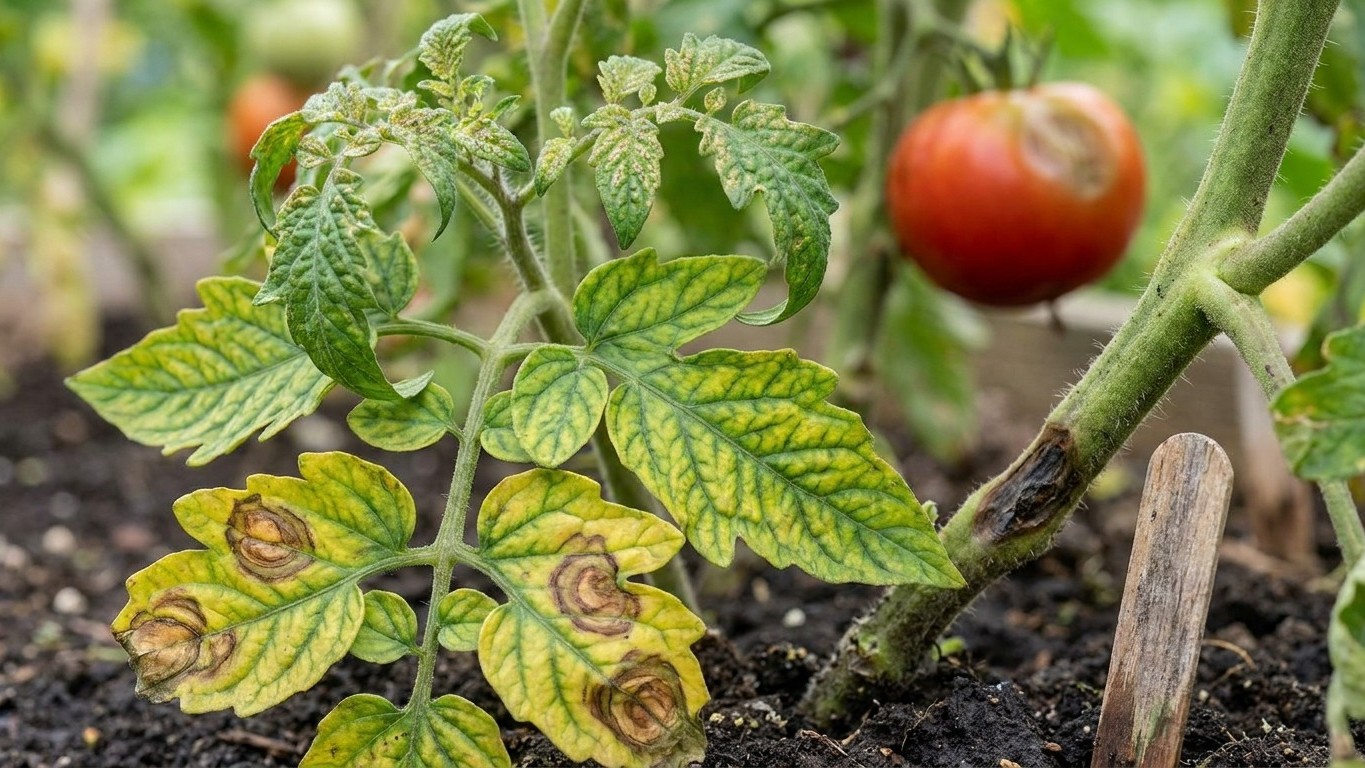
Leaves are usually the first place a problem shows, and where it appears on the leaf matters. Spots that start on the lowest, oldest leaves and work upward, especially with concentric rings or a yellow halo, point to a fungal issue living in the soil and splashing up during watering or rain. Leaves that yellow between the veins while the veins stay green usually mean the plant can’t move a nutrient where it needs to go, which is a growing condition, not an infection. Leaves that curl upward on otherwise healthy-looking plants often trace back to heat or drought stress rather than a pathogen. Leaves that pucker, look mottled, or come in stunted and distorted from new growth deserve more suspicion, since that pattern is a common signature of a virus moving through the plant.
The stem tells a different story. A plant that wilts despite moist soil, especially if only one side droops first, suggests a vascular problem, something clogging the plant’s internal plumbing, often a soilborne fungus. Dark, sunken patches or cracks near the soil line can mean a stem rot or canker, which is an active infection and one of the few situations where speed matters. Stems that just look pale or thin, with no lesions, are more often a light or nitrogen issue than disease.
Fruit damage is where gardeners feel it most, and it splits cleanly too. A flat, leathery brown-black patch on the bottom of the fruit, appearing on fruit that otherwise looks fine, is a calcium delivery problem tied to watering, not a disease at all. Sunken, water-soaked spots that later grow fuzzy or moldy are a fungal or bacterial rot, and that one can spread fruit to fruit in humid weather. Cracks radiating from the stem end usually follow a rain event after a dry spell, a mechanical growing-condition issue rather than an organism. Roots are the hardest part to inspect without pulling the plant, but stunted growth paired with wilting that watering doesn’t fix is worth checking for root rot or nematode damage below the soil line.
The distinction underneath all of this is the one worth carrying into every other page on this topic: a living cause needs action against the organism, sanitation, spacing, sometimes removal, while a growing condition needs a change in how the plant is watered, fed, shaded, or spaced. Confusing the two wastes a season either way.
The ones that are not a disease at all
A surprising share of what gets reported as tomato disease is neither fungal nor bacterial. Blossom end rot is the clearest example. Gardeners see a rotten patch and assume infection, but the mechanism is mechanical: calcium moves through the plant with water, and when watering swings between bone-dry and soaked, the fruit’s growing tip gets shorted even if the soil has plenty of calcium in it. The fix is a steadier watering rhythm and a couple of inches of mulch, not a fungicide, and soil that tests fine for calcium can still produce this problem if irrigation is erratic.
Leaf roll works the same way. In a hot, dry stretch, tomato leaves curl upward and inward as a water-conservation move, similar to how a plant closes its stomata. It looks alarming, especially on lower branches, but it typically does not reduce yield and reverses once temperatures ease. Sunscald follows a related logic: fruit that’s suddenly exposed to direct afternoon sun, often after aggressive pruning, develops a pale, papery patch on the sun-facing side. That’s heat and light, not a pathogen, and it’s prevented by leaving more foliage cover, not by treating the plant.
Nutrient symptoms deserve a second look too, because the plant can show a deficiency it doesn’t actually have. Soil pH outside the range tomatoes prefer locks up iron or magnesium even when both are present in the soil, so the leaves yellow as if starved while a soil test shows adequate nutrient levels. Adjusting pH solves it; adding more of the “missing” nutrient usually does not. None of these four conditions spread to a neighboring plant, and none respond to anything sprayed on for disease control. Recognizing them early saves a wasted product purchase and, more importantly, points the fix at watering habits, pruning timing, or soil chemistry instead.
When it is worth acting, and when it is not
Not every mark on a tomato plant deserves a response. Flea beetle pinholes on leaves, light sunscald on one shoulder of a fruit, or a few lower leaves lost to early blight late in the season cost little to nothing in actual harvest, and the plant usually outgrows or outproduces the damage without intervention. Spending effort chasing cosmetic symptoms is effort not spent on the plant’s actual needs.
Some damage is simply already finished by the time it’s visible. Blossom end rot on a fruit that’s already showing the patch won’t heal, since the calcium shortfall happened weeks earlier during fruit set; the useful response is fixing the watering pattern so the next cluster of fruit doesn’t repeat it, not treating the one you’re looking at. The same logic applies to virus symptoms on established growth: the infected tissue stays infected, and the meaningful decision is whether to remove the plant to protect its neighbors, not to treat the leaf in front of you.
A short list of problems does call for prompt action: fast-moving fungal blights on wet foliage, a rot spreading fruit to fruit in humid weather, or a stem canker that’s girdling the plant. These spread while you wait, and delay costs more plants, not fewer. Everything else, particularly soilborne issues tied to this year’s bed, this year’s rotation, or a variety poorly matched to your climate, is better answered by a change made before next season’s transplants go in the ground than by anything applied to the plant standing in front of you right now.
Matching the Symptom to the Cause
Once you’ve worked out roughly what’s happening to your plant, the next step is narrowing down why. If the bottom of the fruit has gone sunken and dark, that’s blossom end rot, which comes from uneven water delivery to the fruit rather than a calcium shortage in the soil. Fruit that’s split open, usually after a dry spell and then a heavy soak, is covered under cracked and split tomatoes. If it’s the foliage that’s misbehaving, check whether the leaves are cupping upward and leathery, which points to curling tomato leaves, or turning yellow, in which case yellow leaves on tomato plants walks through the three usual patterns. Plants that flower well but never set anything are dealt with under tomato plants not setting fruit, which looks at temperature, pollination, and nitrogen. And if the fruit is sizing up fine but staying stubbornly green or pale, that’s the subject of tomatoes not ripening, where heat is usually the culprit.