Skip to content

The Homestead Post

Home & garden, state by state

  • Home
  • Garden
    • Flowers
    • Lawn
    • Soil & Compost
    • Trees & Shrubs
    • Vegetables
  • Home Care
    • Electrical
    • Foundations
    • HVAC
    • Plumbing
    • Roofing
  • Energy
    • Heating & Cooling
    • Insulation
    • Rebates & Credits
    • Solar
  • Pests
    • Ants
    • Mosquitoes
    • Rodents
    • Termites
    • Ticks
  • Decor
    • Bedrooms
    • Kitchens
    • Living Rooms
    • Outdoor Spaces
  • DIY
    • Repairs
    • Tools
    • Weekend Projects
  • State Guides
    • Northeast
      • Connecticut
      • Maine
      • Massachusetts
      • New Hampshire
      • New Jersey
      • New York
      • Pennsylvania
      • Rhode Island
      • Vermont
    • Southeast
      • Alabama
      • Arkansas
      • Delaware
      • Florida
      • Georgia
      • Kentucky
      • Louisiana
      • Maryland
      • Mississippi
      • North Carolina
      • South Carolina
      • Tennessee
      • Virginia
      • West Virginia
    • Midwest
      • Illinois
      • Indiana
      • Iowa
      • Kansas
      • Michigan
      • Minnesota
      • Missouri
      • Nebraska
      • North Dakota
      • Ohio
      • South Dakota
      • Wisconsin
    • Southwest
      • Arizona
      • New Mexico
      • Oklahoma
      • Texas
    • West
      • Alaska
      • California
      • Colorado
      • Hawaii
      • Idaho
      • Montana
      • Nevada
      • Utah
      • Wyoming
    • Pacific Northwest
      • Oregon
      • Washington
    • Canada
      • Alberta
      • British Columbia
      • Manitoba
      • New Brunswick
      • Newfoundland and Labrador
      • Northwest Territories
      • Nova Scotia
      • Nunavut
      • Ontario
      • Prince Edward Island
      • Quebec
      • Saskatchewan
      • Yukon

Curing Potatoes: The Three Weeks That Decide the Winter
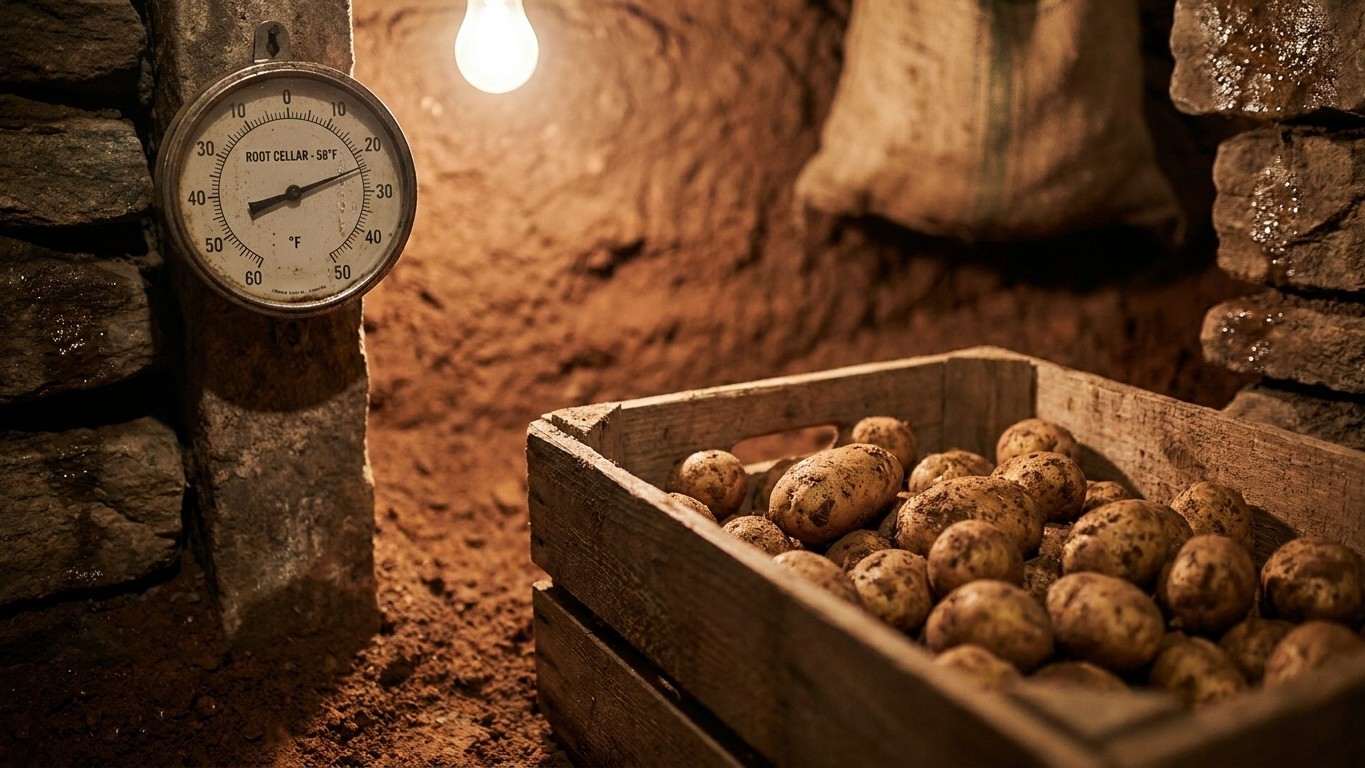
Curing Potatoes: The Three Weeks That Decide the Winter

Fresh-dug potatoes need three weeks at 55-60 F with high humidity before they ever see a root cellar or a cardboard box.
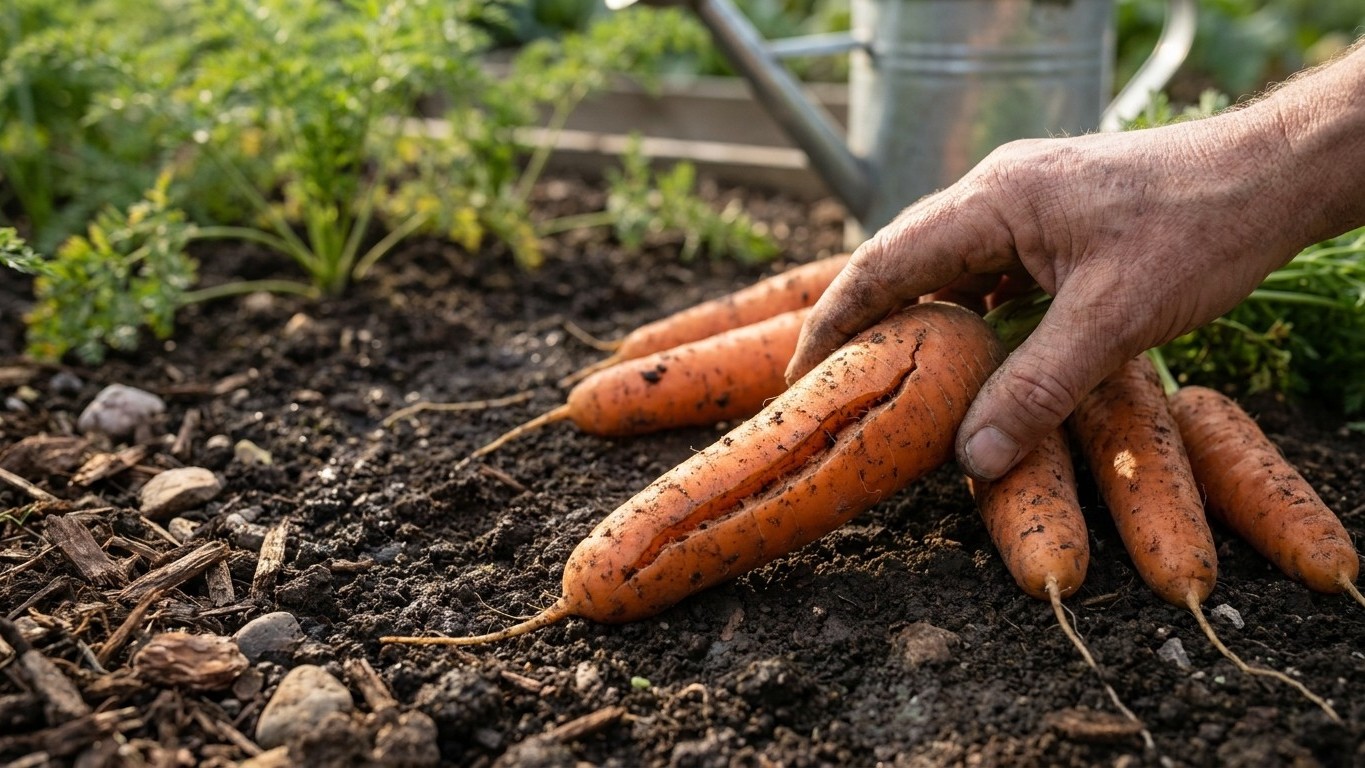
Watering Carrots: Why Uneven Water Splits the Root

Watering Carrots: Why Uneven Water Splits the Root

Split carrot roots trace back to irregular soil moisture more often than gardeners realize.
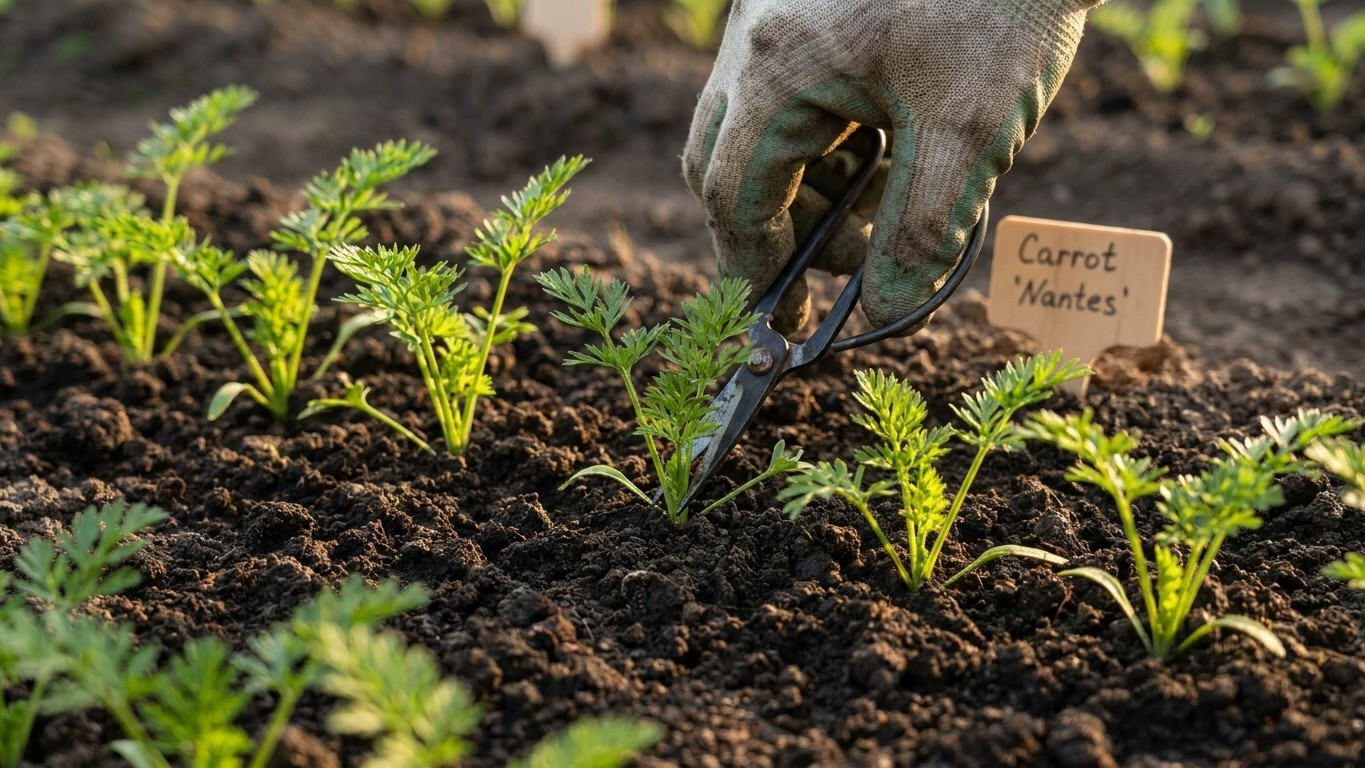
Thinning Carrots: When, and How Far Apart

Thinning Carrots: When, and How Far Apart

Thin carrots once seedlings show three to four true leaves, cutting them down to two to three inches apart in rows spaced twelve to eighteen inches.
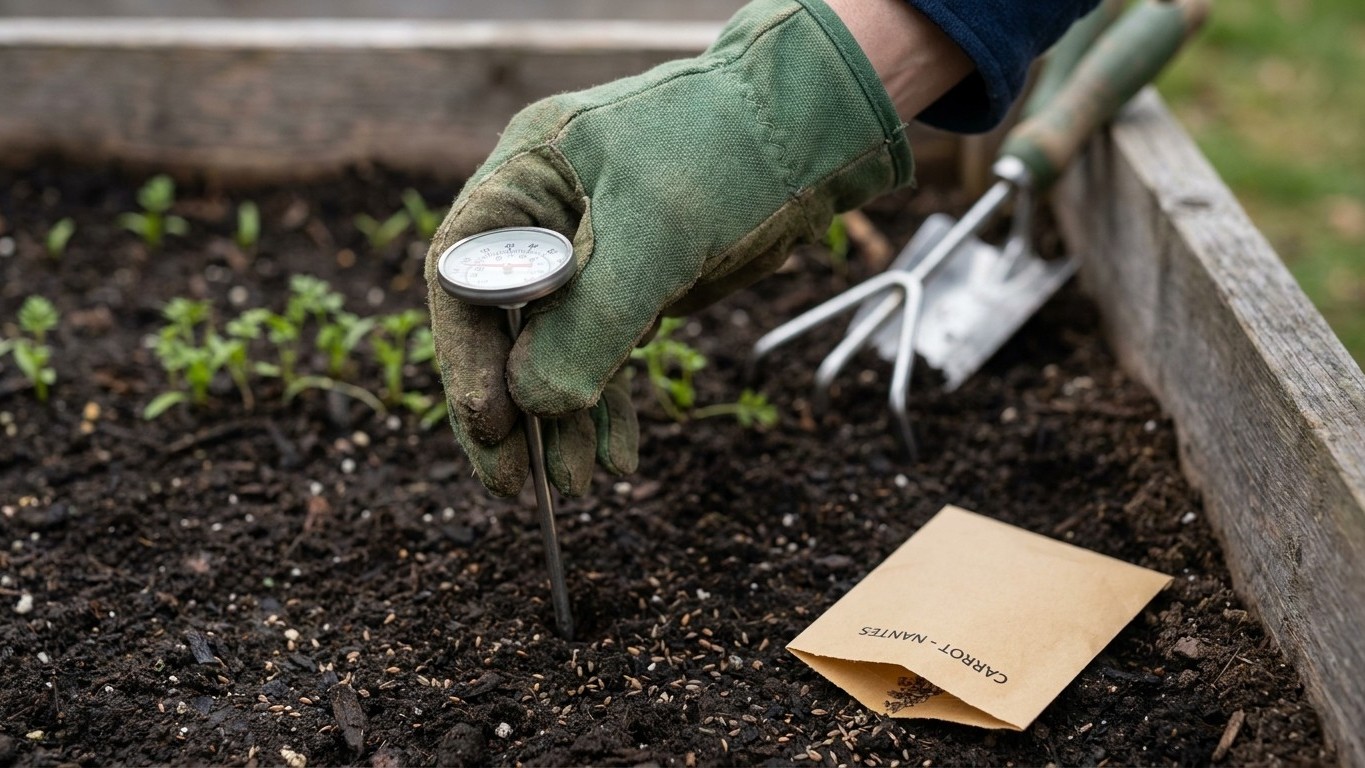
Sowing Carrots: Soil Temperature, Not the Calendar

Sowing Carrots: Soil Temperature, Not the Calendar

Soil temperature decides the sowing date, not the calendar page. Carrot seeds germinate best at 55-65 F, but Utah State University Extension sets the…
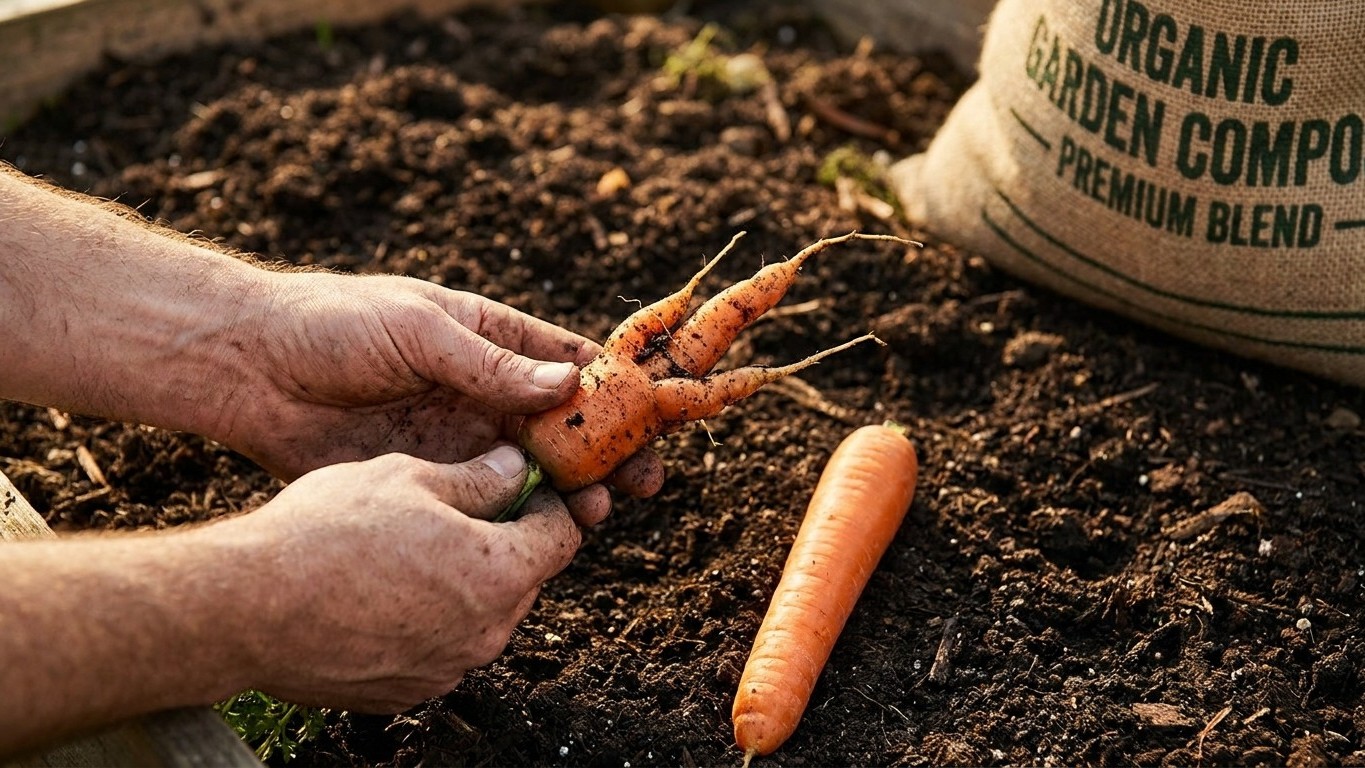
Carrot Soil: Why the Root Forks and What Fixes It

Carrot Soil: Why the Root Forks and What Fixes It

Carrots fork when the taproot hits heavy or rocky soil and splits into several roots instead of growing straight down.
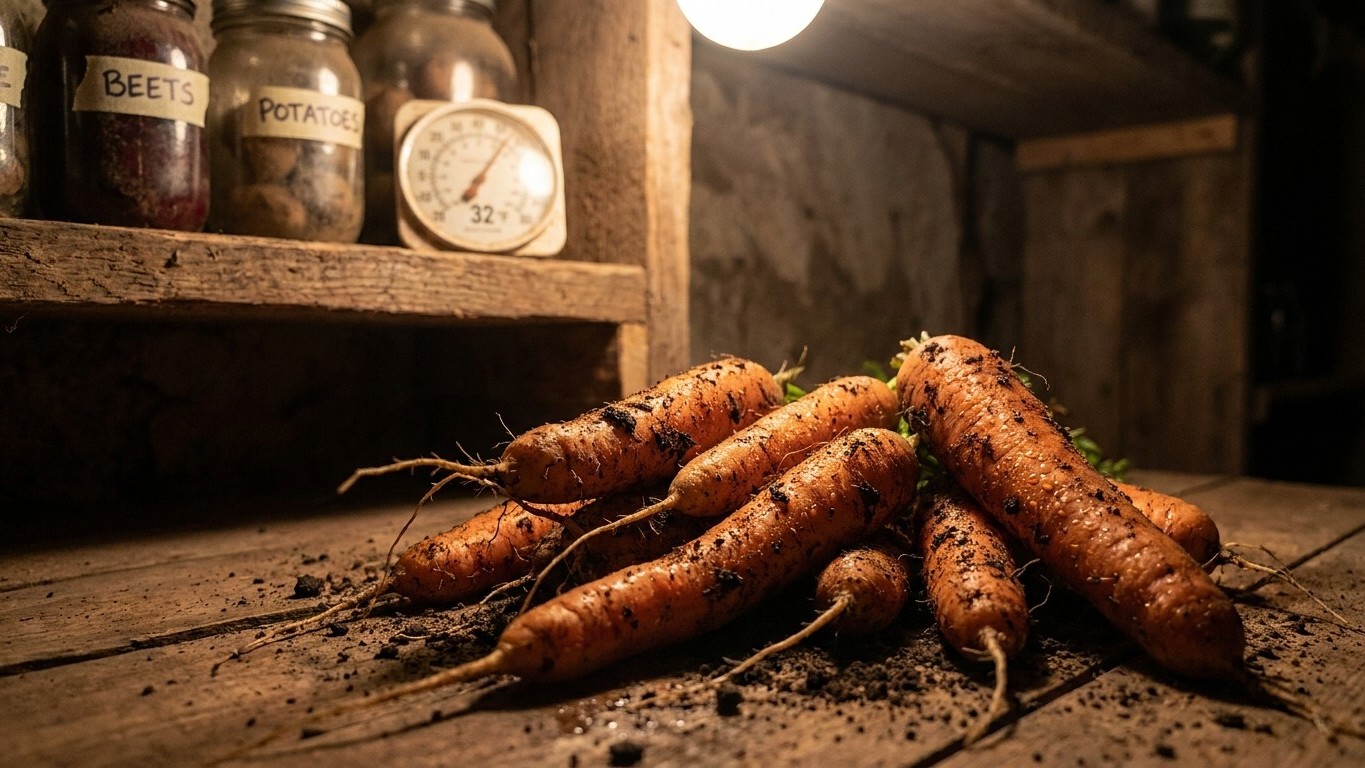
Harvesting and Storing Carrots: 32 F and 95 Percent

Harvesting and Storing Carrots: 32 F and 95 Percent

Store carrots at 32 F and 95 percent relative humidity, the benchmark set by Utah State University Extension.
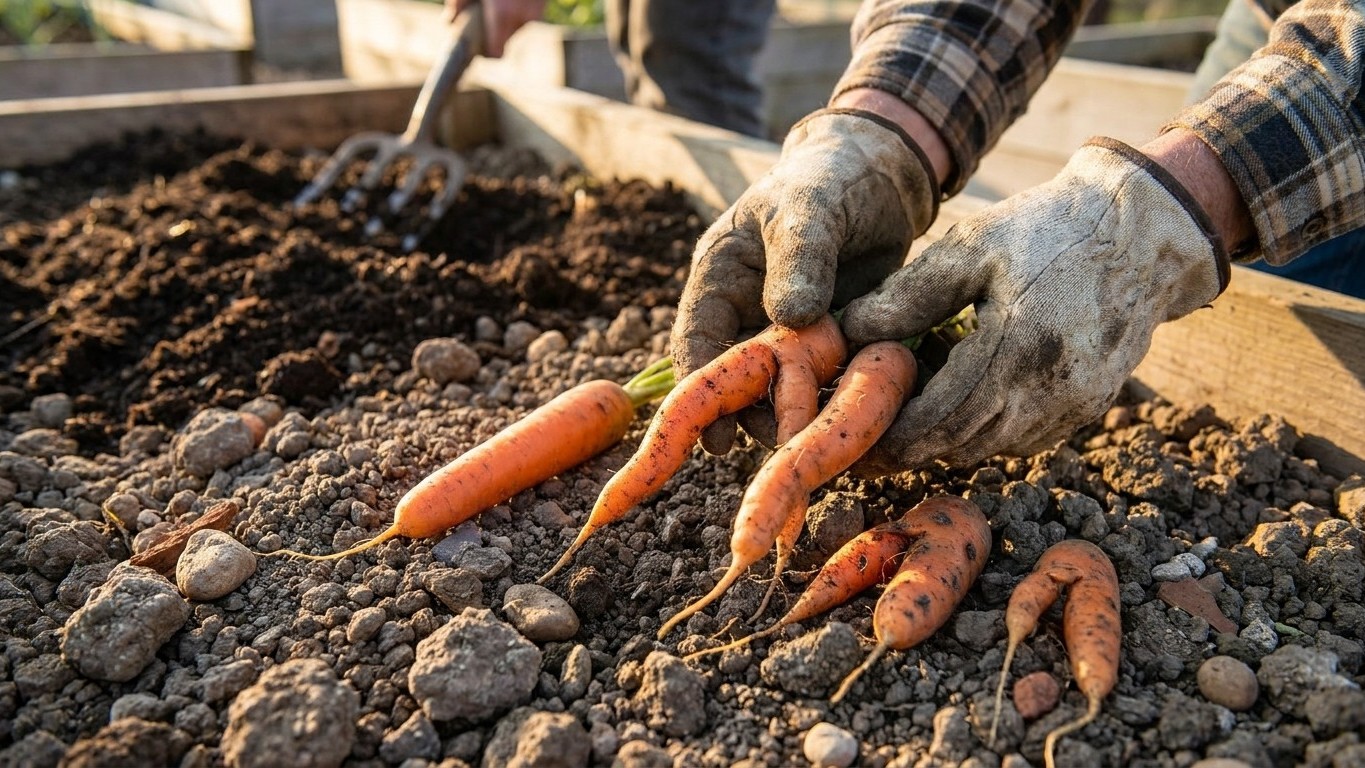
Forked and Twisted Carrots: Reading What the Soil Did

Forked and Twisted Carrots: Reading What the Soil Did

A forked or twisted carrot root usually means the tip hit something it couldn’t push through, or the soil around it changed moisture too many times while…
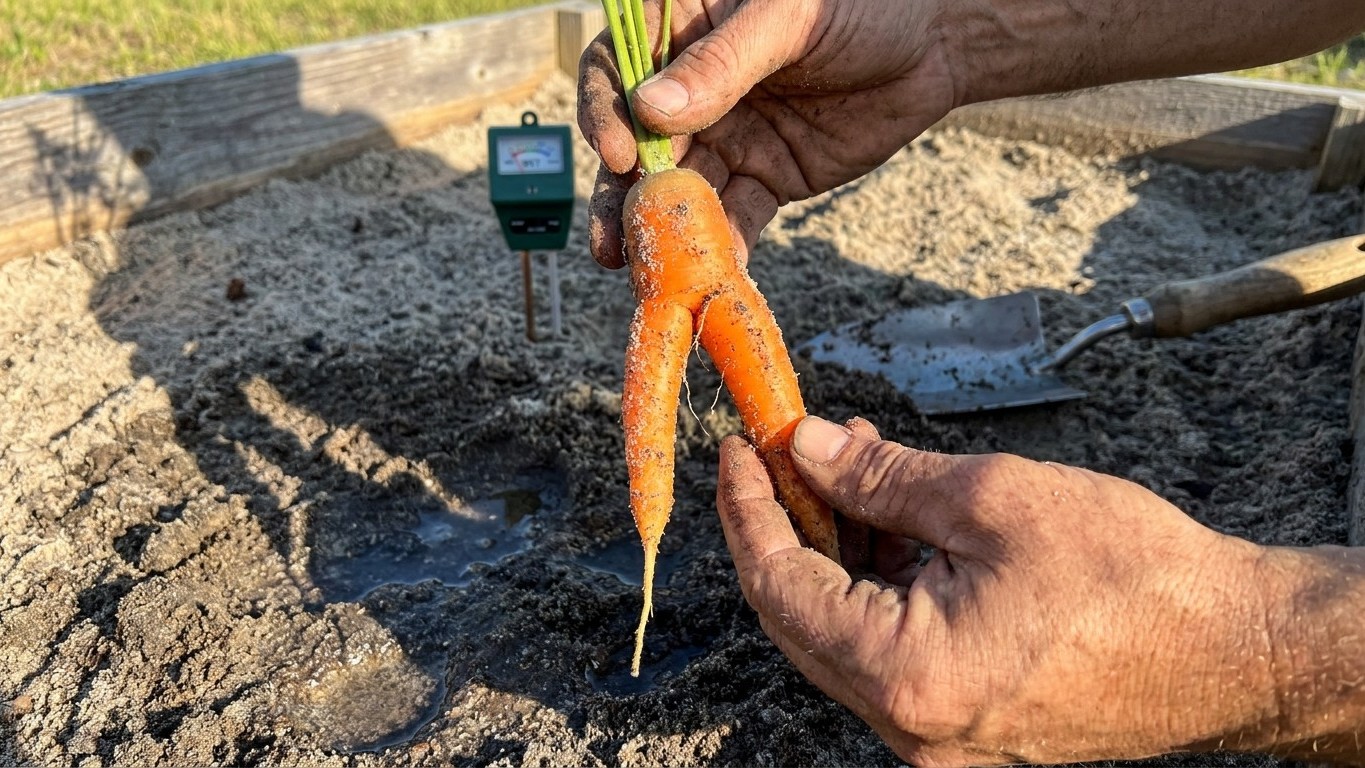
Growing Carrots in Florida: Soil, Sowing and Forked Roots

Growing Carrots in Florida: Soil, Sowing and Forked Roots

Florida’s official state soil is almost pure sand, which sounds like carrot heaven until you learn it’s also rated poorly drained.
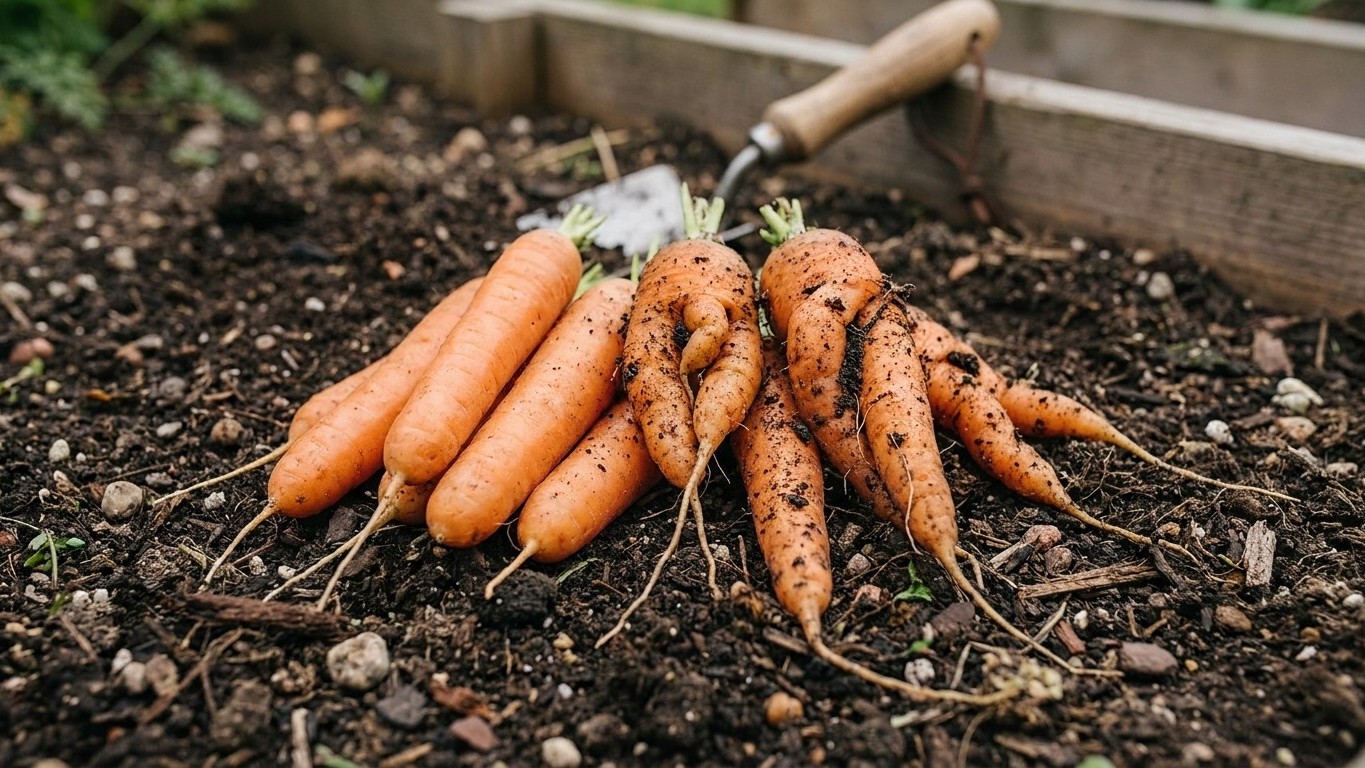
Growing Carrots in Delaware: Soil, Sowing and Forked Roots

Growing Carrots in Delaware: Soil, Sowing and Forked Roots

Delaware’s official state soil, the Greenwich series, runs well drained and only mildly acid, which sounds encouraging for carrots.
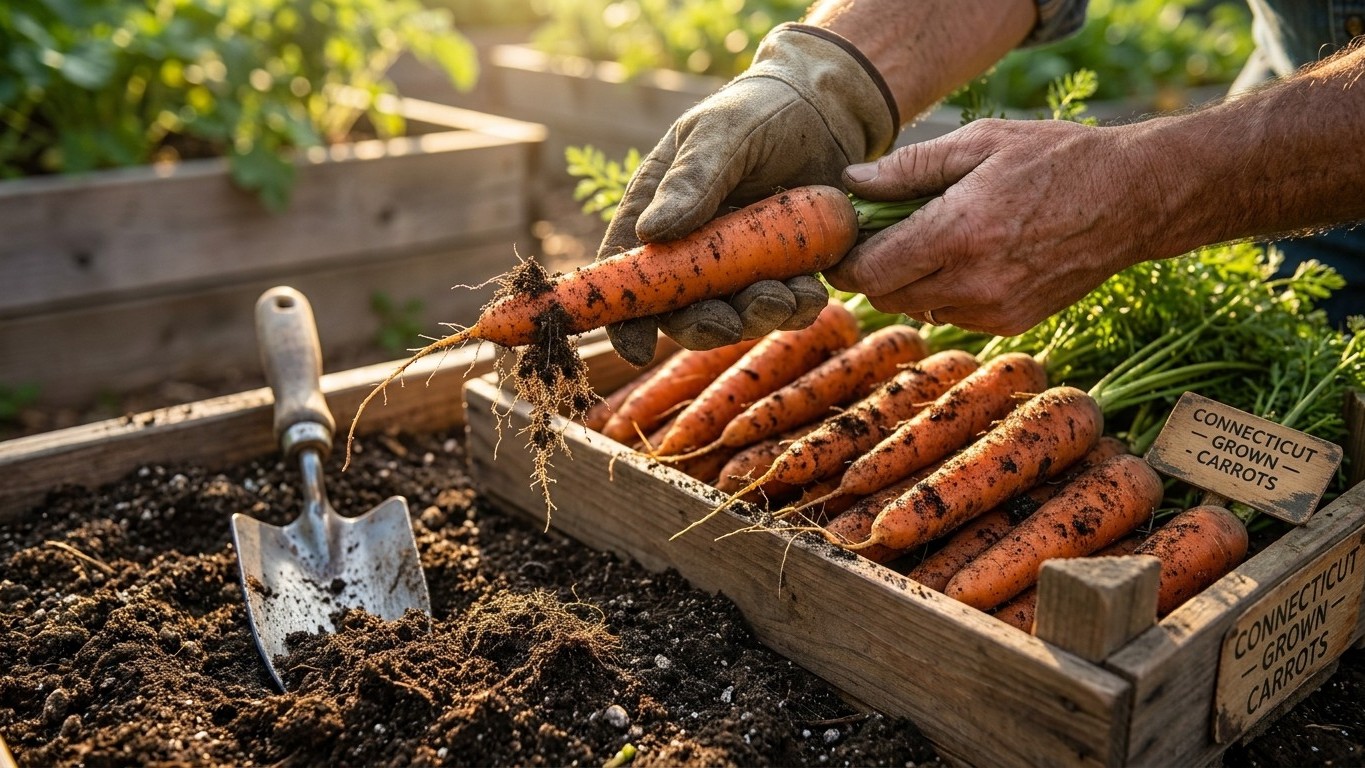
Growing Carrots in Connecticut: Soil, Sowing and Forked Roots

Growing Carrots in Connecticut: Soil, Sowing and Forked Roots

Connecticut’s most representative soil, the Windsor series, is sandy and sharp-draining, the opposite of the heavy, waterlogged ground that twists a…

Older posts
Newer posts
← Previous Page1 … Page529 Page530 Page531 … Page695 Next →

The Homestead Post

Home and garden advice with the numbers attached — written for your climate, your season and your local rules.

Sections

  • Garden
  • Home Care
  • Energy
  • Pests
  • Decor
  • DIY

Popular states

  • California
  • Texas
  • Florida
  • New York
  • Pennsylvania
  • Ohio
  • Georgia
  • North Carolina
  • All states →

The Post

  • About us
  • Contact
  • Editorial guidelines
  • Affiliate disclosure
  • Privacy policy
  • Terms of use
© 2026 The Homestead Post·Home & garden, state by state