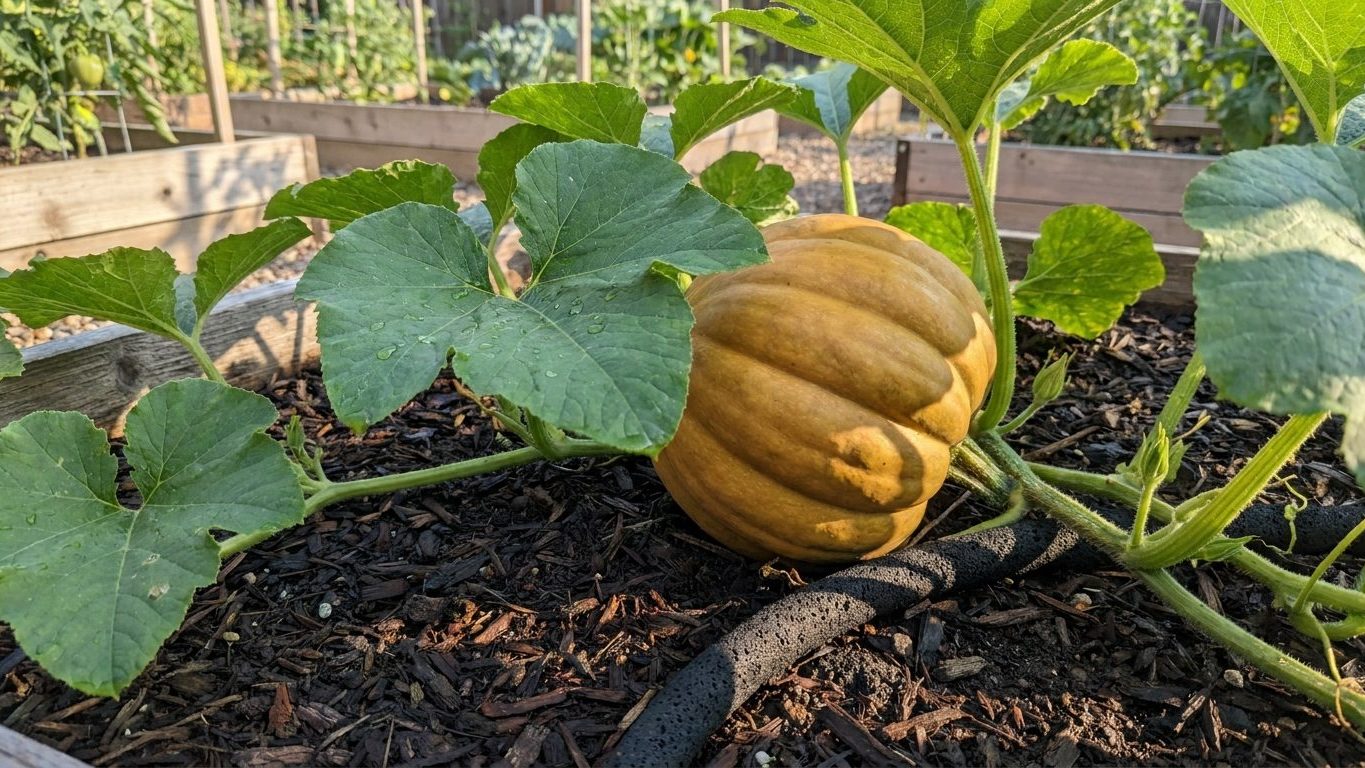

Get the sequence right and a winter squash plant asks for two different things from a hose across one growing season: steady, generous moisture while the vines run and the fruit sizes up, then a deliberate dry-down in the final weeks so the rind can harden and the flesh can cure for storage. Reverse that order and the squash that looked perfect in September turns soft in the pantry by December.
What is actually going on

A winter squash plant runs on two distinct water budgets, and confusing them is the root of most disappointing harvests. In the first phase, from seedling through flowering and fruit set, the plant is building root mass, laying down vine length, and pushing water and nutrients into developing fruit. Moisture stress here shows up fast: blossoms drop before they set, fruit that does form comes out lopsided or stunted, and the whole plant looks tired by early afternoon even when the soil isn’t bone dry.
The second phase starts once fruit has reached roughly its full size and begins to change color and firm up. This is when the plant shifts energy toward concentrating sugars and starches in the flesh and hardening the outer rind. Heavy watering during this window works against the plant’s own timeline. Extra moisture keeps the skin soft longer than it should stay soft, dilutes the sugars that give a squash its flavor, and sets the stage for rot once the squash sits on a shelf rather than a vine.
This two-phase pattern applies across the market types gardeners generally call winter squash, whether that’s a butternut type, an acorn type, a hubbard, a kabocha, a delicata, or a spaghetti squash. The specific variety that performs best in a given garden is a local question, and the state land-grant extension service for that area will have trial data on which varieties held up under regional conditions. That’s a better source than any general guide, this one included.
It’s worth being clear about a distinction that trips people up: a carving pumpkin and a winter squash are grown for different purposes, even when they’re botanically close cousins. A carving pumpkin is bred and managed for a thick, uniform shell that holds its shape once cut. a Winter Squash Is grown for the flesh inside and for how well that flesh keeps once harvested. Where pie pumpkins straddle that line, they behave more like Winter Squash in terms of curing and storage, and readers looking into pumpkin culture specifically should check this site’s pumpkin guides rather than trying to apply squash-specific advice to a carving variety.
Curing itself deserves a plain-spoken caution. A hardened rind and a longer shelf life are the goal of easing off water late in the season, but no watering schedule guarantees a squash is safe to eat weeks or months down the line. That judgment happens at the point of inspection: any soft spot, any weeping or sunken patch, any mold at the stem end means that squash gets used now or discarded, not stored on faith.
In the garden
The watering curve across a winter squash season isn’t a single number so much as a shifting target tied to what the plant is doing. Broken into stages, it looks like this, along with what tends to go sideways when the amount of water is wrong for that stage.
| Growth stage | Watering approach | What goes wrong when it’s off |
|---|---|---|
| Germination and seedling establishment | Keep the top few inches of soil consistently moist, never soggy, until true leaves appear and roots reach deeper soil. | Too dry and germination is spotty or seedlings wilt and stall; too wet and young roots rot before the plant gets going. |
| Vine growth (vegetative stage) | Deep, less frequent watering that encourages roots to grow downward rather than staying shallow, aiming for consistent moisture rather than daily sips. | Shallow, frequent watering trains roots to stay near the surface, making the whole plant more vulnerable the first time watering is missed during a hot stretch. |
| Flowering and fruit set | This is the most water-sensitive stage; even brief dry spells can cause blossom drop or poor fruit set, so consistency matters more here than at any other point. | Inconsistent watering here means fewer fruit set overall, and the fruit that does set can come out misshapen or undersized. |
| Fruit sizing and bulking | Maintain steady moisture as fruit expands, since this is when most of the flesh volume is built. | Uneven watering, heavy rain after a dry stretch for example, can cause fruit to split or crack as it swells too fast. |
| Final weeks before harvest | Taper watering back noticeably as fruit reaches full size and the rind starts to change color and firm up; rely more on natural rainfall and let the soil dry between any supplemental watering. | Continued heavy watering here delays rind hardening, softens the skin the plant needs for storage, and increases the odds of rot showing up weeks after harvest. |
Mulch plays a supporting role through most of these stages, holding soil moisture steady between waterings and cutting down on the wide swings that stress the plant more than a slightly low average moisture level ever would. Watering at the soil line rather than overhead also matters, since wet foliage held wet for hours at a time is an open invitation to fungal disease. None of this replaces a moisture check by hand; a finger pushed a couple inches into the soil tells a gardener more than any fixed schedule can.
What it depends on where you are
Everything above describes a pattern, not a calendar, and the calendar is exactly the part that varies by location. How long the growing season runs, how hot and dry the summer gets, and how much rain falls without help from a hose all shift where a garden lands on that watering curve and how much supplemental water it actually needs. A garden in a region with reliable summer rain might rarely need to water during the vegetative stage at all, while a garden in a hot, dry region may need irrigation through nearly the whole season just to keep the plant from stalling.
Soil type changes the math too. Sandy soil drains fast and needs more frequent watering to stay in that steady-moisture zone winter squash wants during fruit set and sizing. Heavier clay soil holds water longer, which can mean less frequent watering but a higher risk of staying too wet after a heavy rain, right when the plant is trying to taper off before harvest.
None of this is something a national guide can specify accurately for an individual reader’s yard. The season length in one state can differ by months from another, and even within a single state, coastal and inland gardens can see very different rainfall patterns in the same growing year. This is where the state-level pages on this site, built around the growing conditions and squash types that actually perform in that region, come in more useful than a generic schedule. Beyond that, the local state extension service remains the most reliable source for frost dates, typical rainfall patterns, and variety trial results specific to that area. That combination, a general understanding of the two-phase watering pattern paired with locally accurate timing, is what actually produces a squash worth storing.
The mistake that costs the most
The single error that does the most damage is watering right up until harvest as though the plant’s needs never changed. It’s an easy habit to fall into. The plant looks like it’s still growing, the fruit is still sizing up, and an automatic sprinkler or a well-meaning weekly soak doesn’t know that the squash inside has entered a different phase than the one it started in. But by the time fruit has reached full size and started to change color, that same watering pattern that helped it grow starts working against it.
The fix isn’t complicated, but it does require watching the plant rather than following a fixed schedule. Once fruit has sized up and the rind begins to firm and change color, that’s the signal to back off. Let the soil dry out more between waterings, lean on rainfall where it’s available, and only step in with supplemental water if there’s a genuine extended dry spell that’s stressing the whole plant, not just the fruit. Vine dieback toward the end of the season is normal and expected, not a sign that something needs more water.
Skip this step and the fruit that comes off the vine may look perfectly fine at harvest, since a soft rind doesn’t always announce itself right away. The trouble shows up weeks later, in storage, when a squash that should have held for months starts developing soft spots or rot at a rate that catches gardeners off guard. That gap between a good-looking harvest day and a disappointing storage outcome is exactly why the taper matters more than almost any other single decision made across the whole season. Get that one adjustment right, and the rest of the watering curve does most of the remaining work on its own.