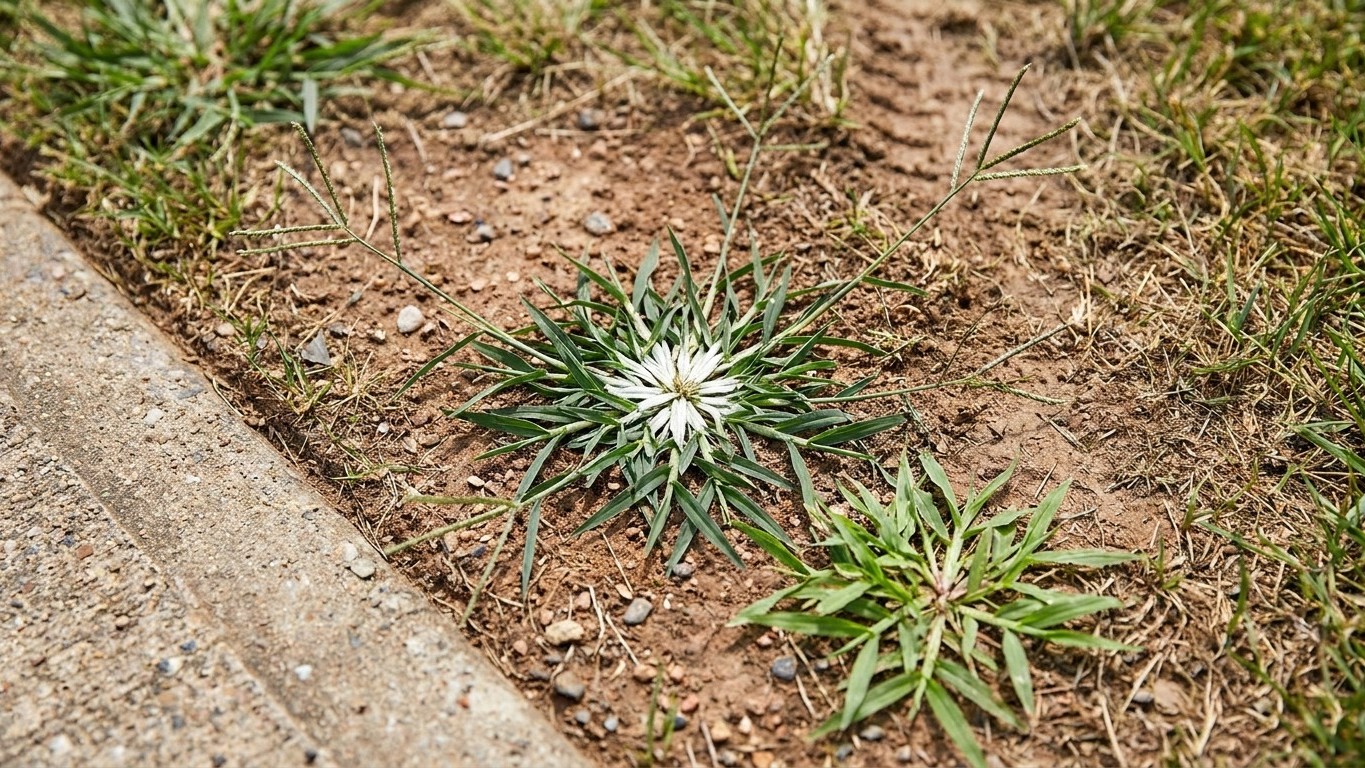

In Georgia, the grass under your feet sets the date. Fescue, bluegrass and ryegrass lawns get aerated in fall while they are still growing, finished ahead of the November 13 to December 1 first-freeze window at the Atlanta station. Zoysia and bermudagrass get aerated in summer, when they grow fastest. Same machine, opposite seasons. Many Georgia yards have both kinds of grass in play, so the choice matters.
When to aerate a lawn in Georgia
Atlanta, the reference city here, lands in the transition zone. The Homestead Post assigned that label from climate normals, read against the season tolerances in Clemson Cooperative Extension’s HGIC 1214. Neither kind of grass excels in a transition zone. Clemson’s lawn-grass guidance and Penn State Extension (for the cool-season species) point to tall fescue, Kentucky bluegrass and perennial ryegrass on one side, zoysiagrass and bermudagrass on the other. A cool-season lawn suffers in July. A warm-season lawn is brown from October to April. And the label belongs to Atlanta, not the whole state: higher ground and the far north or south of Georgia can sit in the neighboring zone.
Cool-season lawns: fall, before frost
The University of Nebraska-Lincoln Extension puts it this way: “Cool season grasses, including Kentucky bluegrass, fescues, and perennial ryegrass, can be aerated in spring from early April through the end of May and again in fall from late August through the end of October.” Those months are Nebraska’s. Do not copy them onto a Georgia calendar. What carries over is the condition: aerate while the grass is actively growing, with enough weeks left to recover before a freeze.
NOAA NCEI’s 1991-2020 Climate Normals put the first fall 32°F freeze at the Atlanta station (30-70% probability band) between November 13 and December 1. That station sits in an urban heat island. North Georgia and the mountains freeze several weeks earlier, and the coastal plain runs milder. So a fescue lawn in the mountains has a much shorter fall runway than one near the coast. First and Last Frost Dates in Georgia shows how the window shifts around the state. Aerate cool-season lawns in fall while they are still growing, and finish well ahead of your own first-freeze window.
Spring is on the Nebraska list too. In Georgia, though, spring aeration lands right before the stretch that already punishes fescue, so fall is the safer bet.
Warm-season lawns: summer growth
UNL’s rule for the other camp: warm-season grasses “should also be aerated when they are growing actively.” Nebraska’s version of that is late May through late August, which again is not a Georgia date. Zoysia and bermudagrass are both warm-season grasses, so the same logic applies: wait until the lawn is fully green and growing hard, then aerate during summer. A mixed lawn or a fescue-and-bermuda patchwork takes judgment, and The Georgia Lawn Care Calendar, Month by Month helps you sort what each part of the yard needs and when.
Core aeration, not spikes
A spike or solid tine pokes a hole by shoving soil sideways, which can leave the hole walls packed tighter than before. A core aerator removes a plug of soil and leaves the hole open. UNL’s article says solid-tine or spike aeration is “not effective in clay/silt soil” and names core aeration as the method for compacted ground. Pull cores; skip the spikes and the spiked sandals.
Georgia’s state soil complicates the picture. USDA lists the Tifton series, an Ultisol, as the representative soil of the state. Ultisols are old, heavily weathered and leached, naturally acid and low in nutrients. USDA NRCS Soil Data Access gives the series’ surface horizon a pH of about 5.5, with 84 percent sand, 6 percent clay and 9 percent silt, about 0.8 percent organic matter, and good drainage. Ground like that tends to shed water rather than hold it, so compaction usually comes from foot traffic, mowers and construction, not from sticky clay.
That is the state’s representative soil, not necessarily yours. A lot scraped or filled by a builder, a clay-heavy yard or a river bottom can behave completely differently, and the pH above is not your pH. A soil test gives your own numbers, and it also tells you whether compaction is a real problem or whether you would be aerating out of habit.
What good cores look like
Look for intact plugs of soil, evenly spaced and left lying on the surface. Leave them there to crumble back into the lawn. Thin crumbs or holes that barely dent the ground mean the soil was too dry. Smeared, muddy plugs mean it was too wet. Aim for soil that is moist but not wet: a screwdriver should slide in without a fight, and a handful should hold together loosely without dripping.
Aerating and overseeding together
For a cool-season lawn, the holes are a gift to new seed. Seed scattered on bare turf bounces around and dries out. Seed that drops into an open core hole sits against moist soil, shaded from the sun. That is why fall aeration and overseeding belong in the same weekend. Aerate first, spread seed the same day, then keep the surface damp while the seedlings come up. Aerate first, seed the same day.
Because this is a transition zone, the species you seed matters as much as the timing. Tall fescue, Kentucky bluegrass and perennial ryegrass all come up in fall, but they have different strengths in a hot Georgia summer. The Best Grass Seed for Georgia Lawns covers that trade-off, and When to Overseed a Lawn in Georgia goes deeper on seeding dates by region.
Where the pairing does not fit
A zoysia or bermudagrass lawn is a different story. Its aeration window is summer, when the grass spreads and fills holes on its own. By fall it is heading toward dormancy and turns brown from October to April, so seed dropped into holes then has nothing to compete with except winter weeds. Warm-season lawns get aerated in summer and, if they need thickening, are filled in by the grass itself, not by seed from another season.
What goes wrong
The most common error is aerating a dormant lawn. A brown zoysia or bermudagrass lawn in January cannot heal the holes, and weeds move straight into the openings. Do not aerate any lawn while it is dormant. Wait until it is actively growing.
Aerating too close to the first freeze catches cool-season lawns when growth is already slowing. Roots do their recovering during growth, and a fescue lawn punched open in late fall may go into winter with exposed, torn roots. The Atlanta window of November 13 to December 1 is the outer edge, and north Georgia reaches it earlier, so the safe move is to aerate well before your own.
Soil moisture is the next trap. Waterlogged ground gives smeared cores and compacts under the machine. Bone-dry ground resists the tines, so the holes come out shallow and ragged. Water the day before if it has been dry, and wait a few days after a soaking rain.
The last mistake is hoping spikes will rescue clay. UNL says spike aeration is not effective in clay or silt soil, and clay is where compaction hurts most. If your yard is clay-heavy, rent or hire a core aerator. For the rest of the year’s routine, Lawn Care is the place to start.
Common questions
Is it better to aerate in spring or fall in Georgia?
For cool-season grass, fall is the better choice because the lawn has time to recover before winter and before the next July. Spring appears in the Nebraska rule, but it is a weaker fit for Georgia summers. Warm-season lawns skip both and get aerated in summer.
Can I use the Nebraska dates for my Georgia lawn?
No. The months UNL gives are for Nebraska. Use the conditions instead: active growth, and for cool-season grass, enough time before your first freeze.
Should I aerate before or after overseeding?
Before. Aerate, then seed the same day, so the seed falls into the open holes.
Do I need to aerate if my soil is sandy?
Maybe not. USDA’s representative Georgia soil, the Tifton series, is well drained and sandy at the surface, but your own yard may differ. A soil test and a look at where traffic or construction has compacted the ground will tell you more than the calendar.