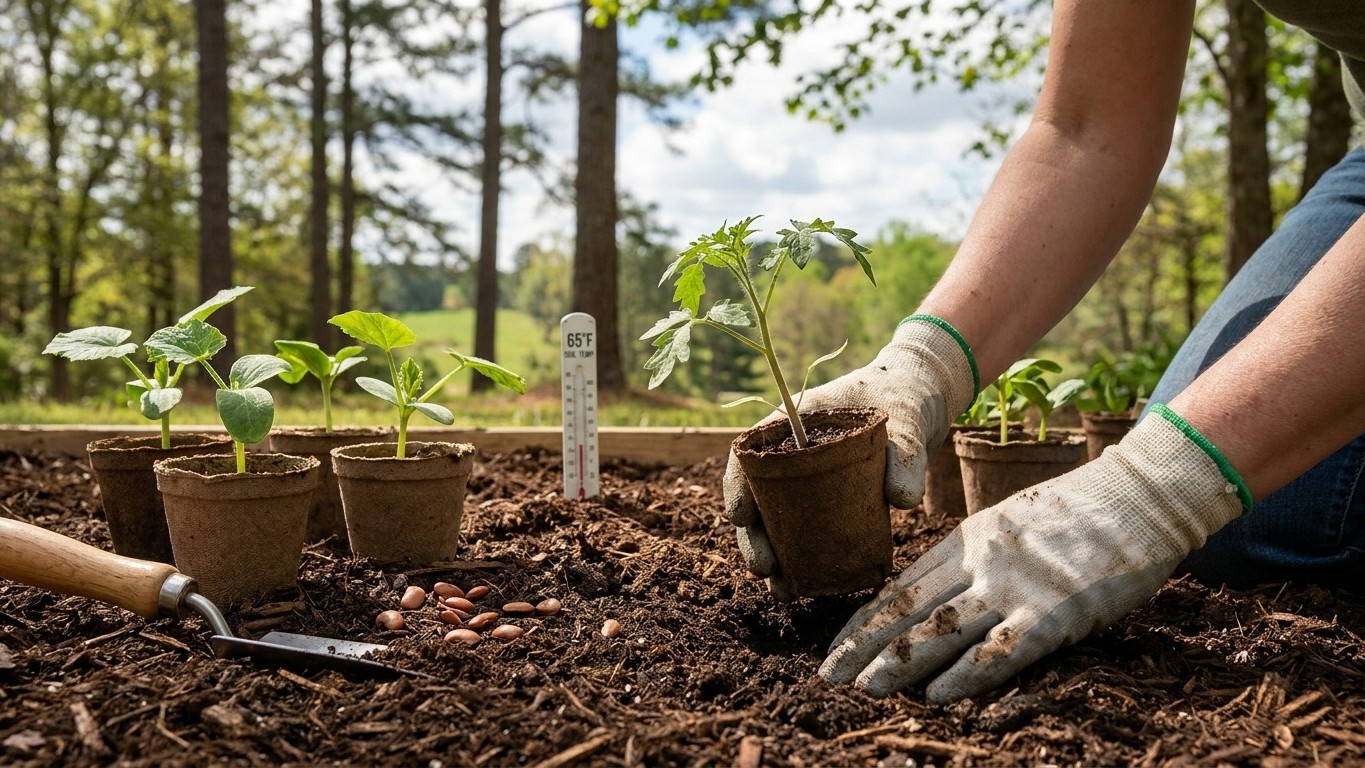

By April, most of Georgia has already passed its last frost window, which averages March 11 to March 29 at Atlanta’s long-term weather station. That opens the ground to warm-season staples like beans, squash, corn, and tomato transplants, while a few cool-season crops still have a short lane left before the heat builds. Mountain gardens should hold off a little longer than the rest of the state.
What goes in the ground in April

Soil temperature decides more than the calendar does. NOAA’s 1991-2020 Climate Normals put the average last 32°F freeze at Atlanta’s reference station between March 11 and March 29, which means April usually opens with frost risk already behind most of the state. That single station sits in an urban heat island, though, and the caution matters: north Georgia’s mountains typically stay colder into spring, while the coastal plain runs milder and often clears frost weeks earlier than Atlanta does.
Georgia also spans hardiness zones 6a to 9b on the USDA Plant Hardiness Zone Map, a range built on average extreme winter lows rather than spring frost timing. Atlanta sits toward the milder end of that range, which is one more reason a single date for the whole state doesn’t hold up well once you cross the Piedmont into the mountains or down onto the coastal plain.
| Region | How it compares to Atlanta’s frost window (March 11-29) |
|---|---|
| North Georgia mountains | Frost risk lingers longer; treat early April like mid-to-late March in Atlanta |
| Metro Atlanta / Piedmont | Reference window; frost risk mostly over by April |
| South Georgia / Coastal Plain | Runs milder; frost risk was likely over before April began |
With that window closed for most of the state, April is the month warm-season crops finally go into open ground:
- Snap beans and lima beans, direct-sown once soil hits at least 60°F
- Squash and cucumbers, direct-sown or transplanted
- Sweet corn, direct-sown in blocks rather than single rows for reliable pollination
- Tomato and pepper transplants, hardened off over a week before they go in the ground
- Sweet potato slips, once nighttime lows stay reliably above 55°F
- Cantaloupe and watermelon, direct-sown late in the month once the soil is warm to the touch
Cool-season crops still have a lane too, especially early in the month before daytime heat builds: bolt-resistant lettuce, spinach, beets, carrots, and one last sowing of English peas before longer, warmer days hurt pod set. Onion sets and seed potatoes planted in late winter are already up and growing; there’s a short window left in the far north of the state to tuck in a few more sets if the ground stayed workable.
The real gamble in April isn’t frost, it’s cold soil. A transplant that shrugs off a chilly night can still sulk for weeks sitting in soil below 55°F. That’s why melons and peppers wait even after the frost date has passed: air temperature and soil temperature run on different clocks.
What to start under cover
Frost isn’t the constraint indoors in April, lead time is. Two crops benefit most from a seed tray this month: okra and a second round of tomatoes aimed at a fall harvest.
Okra germinates and grows best once soil holds steady above 65°F, which for much of Georgia doesn’t arrive until late April or May. Starting seed indoors in early April and setting transplants out three to four weeks later gets pods forming earlier than direct-seeding into still-cool soil would allow.
The fall tomato math is the more interesting arithmetic. Count backward from the first fall frost window, November 13 to December 1: a slicing tomato needs roughly eight to ten weeks from transplant to first ripe fruit, and the transplant itself needs five to six weeks of growing indoors before it’s ready for the ground. Add that up and a fall crop set out by early-to-mid summer needs its seed started well before the worst of summer heat, which puts April and May in play for gardeners running a second tomato season.
The two ways this goes wrong are familiar to anyone who’s started seed indoors before. Start too early without enough light and heat, and seedlings stretch into leggy, weak stems that never fully recover once transplanted. Start too late, and there isn’t enough season left before the first fall frost for fruit to size up and ripen. Neither mistake is fatal alone, but stacked together they’re a big part of why a windowsill tray so often underperforms a nursery transplant bought later in spring.
Melons and winter squash started under cover, rather than direct-sown, also get a head start on the squash vine borers and cucumber beetles that build through May and June.
What is ready to pick
April is when the late-winter sowings finally pay off. Lettuce, spinach, and radishes planted under cover in February or early March are usually ready now, and the trick with all three is picking before real heat pushes them toward bolting. Spinach turns bitter and bolts fast once daytime highs push past 75°F, so a bed that looked fine last week can go from harvest to seed stalk within days.
Turnips and beets sown in late winter size up through April; turnip greens can be cut repeatedly as long as the growing point stays intact. Kale and collards that overwintered in the garden are usually at their last good stretch before bolting, and the flavor sweetens with each cool night, which is one more reason not to rush pulling them.
Asparagus beds two years old or older start sending up spears this month. Cut once spears reach six to eight inches, snapping or cutting at the soil line, and stop cutting once spear diameter drops to pencil-thin so the plant can rebuild its root reserves for the rest of the season.
Strawberries planted the previous fall usually start coloring up toward the end of April, though timing shifts with variety and how mild the winter ran. English peas sown in late winter reach the pod stage by month’s end in much of the state; picking pods young and often keeps vines producing longer than letting a few go tough and oversized.
The jobs that matter this month
Mulch goes down now, not in June. Soil moisture swings hard once daytime highs climb through the 70s and 80s, and a two-to-three-inch layer of straw or shredded leaves applied while the soil is still cool holds that moisture and keeps weed seedlings from ever getting established. Wait until the ground has already dried out and cracked, and mulch just locks in the deficit.
Staking and caging belong at planting, not three weeks later. Supports driven in alongside a young tomato or pepper transplant cause no root damage; the same stake pushed in after the plant has sprawled tears through roots that took weeks to establish.
Watering rhythm shifts this month too. Cool-season crops finishing their run need less water than the warm-season crops just going in, which want consistent moisture to establish roots before the first hot stretch. Deep, infrequent watering trains roots downward; frequent shallow watering keeps them near the surface, right where they’re most vulnerable when a dry week hits later in spring.
Succession sowing keeps beans, squash, and cucumbers producing longer than a single planting date ever could. A new short row of bush beans every two to three weeks through spring means the harvest doesn’t collapse all at once come early summer.
Pest scouting starts in earnest this month, before populations build. Fire ant mounds become more visible as soil warms, aphids cluster on new growth almost as soon as it appears, and squash bugs lay their bronze egg clusters on the undersides of leaves well before plants show any damage. Checking leaves every few days now, while numbers are still small, beats fighting an infestation later.
A soil test taken before the bulk of summer planting still has time to come back with results that matter, since amendments like lime take weeks to shift pH. Testing after the tomatoes are already in the ground means adjusting for a crop that’s already growing in whatever soil it got.
What not to do in April
The classic April mistake is trusting the air instead of the soil. A run of warm afternoons feels like permission to set out peppers or plant melon seed, but if the soil a few inches down is still sitting in the 50s, seeds will rot before they sprout and transplants will simply stall, sometimes for weeks, sometimes for good. A soil thermometer pushed a few inches into the bed takes the guesswork out of it and costs less than a flat of ruined transplants.
Pulling row covers and cold frames too early after one warm stretch is the second trap, especially in north Georgia, where a mild run in early April can still be followed by a hard cold night before the month is out. Cool-season crops under cover generally tolerate staying protected a little too long far better than they tolerate being uncovered a little too soon.
Nitrogen timing trips up more tomato and pepper crops than any pest does. A heavy dose of nitrogen right at transplanting pushes fast, leafy growth at the expense of root establishment and, later, at the expense of flowering. Plants that look the lushest in spring are often the ones setting the fewest fruit come summer. A modest starter feeding at planting, followed by a side-dress once fruit sets, does more for the eventual harvest than an early nitrogen boost ever does.
Overhead watering on a fixed schedule regardless of rainfall is the last habit worth breaking. Newly set warm-season transplants need consistent moisture, but soil already wet from a spring shower doesn’t need the sprinkler running anyway, and constant sogginess around new transplants invites damping-off and root rot before the plant ever gets established.
Checking this against your own county
A state-wide frost window is a starting point, not an instruction. The March 11 to March 29 range comes from one station in Atlanta, and elevation alone can shift that window by weeks: a garden at 2,500 feet in the mountains works on a different clock than one on the coastal plain a few hundred feet above sea level. Local terrain, a valley that pools cold air or a slope that drains it away, moves the real date further still.
The University of Georgia Cooperative Extension Service (extension.uga.edu) tracks county-level guidance and local frost data that a state-wide average can’t capture. A quick call to the county office before setting out a flat of pepper transplants costs a few minutes and can save the whole flat.
Common questions
Is it too late to plant tomatoes in Georgia in April?
No. April is prime time for setting out tomato transplants across most of the state, since the last frost window of March 11 to March 29 has typically passed. Gardeners in the mountains should still watch nighttime lows before planting.
Can I still plant peas in Georgia in April?
Early April still works for a quick-maturing pea planting, but bolting risk climbs fast once temperatures rise. Getting peas in by mid-month gives them the best shot at a full pod set before heat shuts them down.
What vegetables can I direct sow in Georgia in April?
Beans, squash, cucumbers, and corn can go straight into the ground once soil has warmed, with melons following toward the end of the month. Early in April there’s still room for lettuce, beets, and carrots before the heat builds.
When should I stop planting cool-season crops in Georgia?
Once daytime highs start pushing consistently into the mid-70s and beyond, which for much of the state arrives by late April, crops like spinach and lettuce bolt or turn bitter quickly and are better held off until fall.