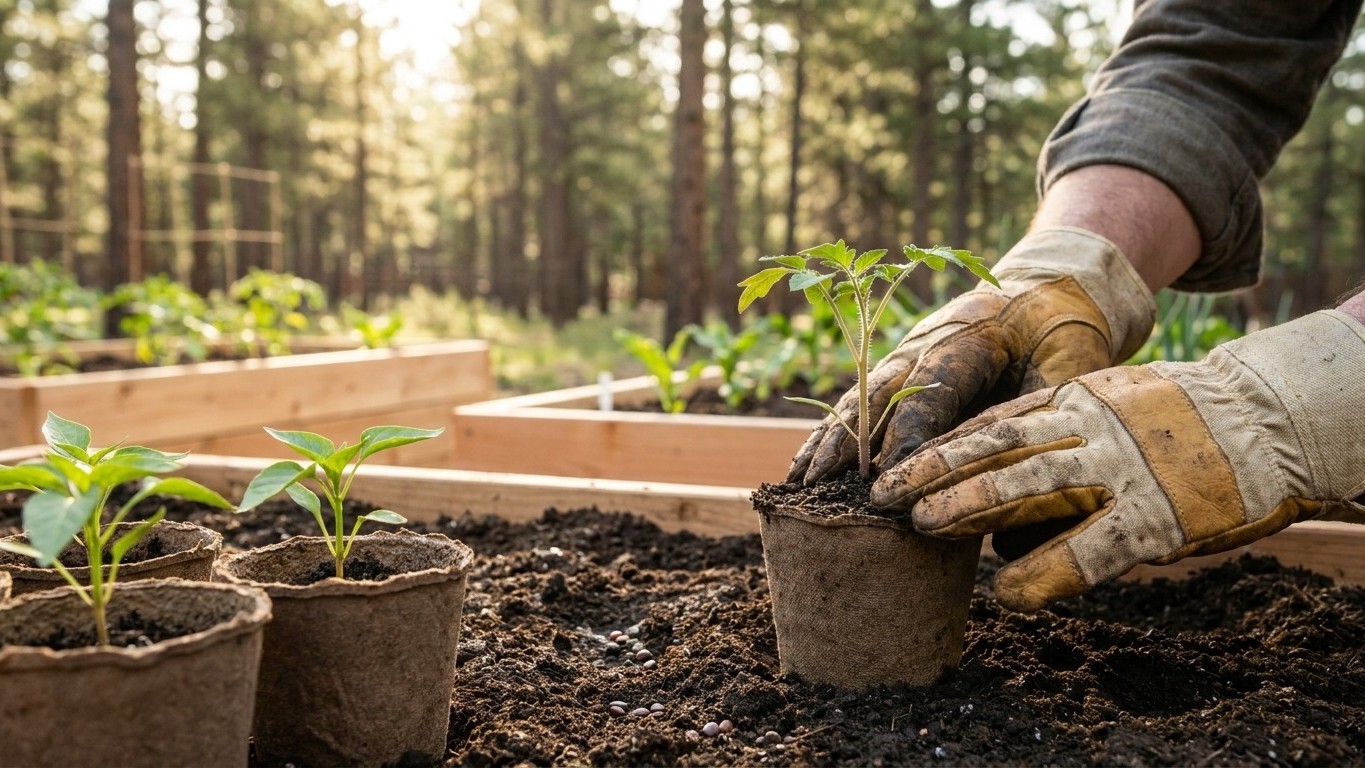

By May, Georgia gardens are past the frost line statewide. The reference station near Atlanta puts the last spring freeze between March 11 and March 29, so soil has had a full month or more to warm before May even starts. That means this is the month for warm-season crops across most of the state: tomatoes, peppers, squash, beans, corn, melons, okra and sweet potatoes all go into the ground now, with only the highest mountain elevations asking for a little patience in the first week or two.
What goes in the ground in May

Air temperature tells you almost nothing useful this month. Soil temperature does. Beans, corn, squash, cucumbers, melons, southern peas and okra all germinate poorly in cold soil even when the calendar says the frost danger has passed, and by May, soil across the Piedmont and coastal plain has usually caught up. Direct-sow seeds of all of these once the top few inches of soil feel warm to the touch rather than cool and damp.
Transplants go in now too. Tomatoes, peppers, eggplant and sweet potato slips that were started indoors weeks earlier can move outside once nights stay reliably mild. In the coastal plain, where the frost-free stretch arrives earliest, gardeners often had this window open before May began. In the mountain counties of north Georgia, sitting at the cooler edge of the state’s 6a-9b hardiness range, the same crops may need another week or two of soil warming before they settle in without stalling.
This is also the last realistic month for a few cool-season holdouts. Lettuce, spinach and other leafy greens sown now will race the rising heat and likely bolt before a full harvest, so treat any May sowing of those as a short-term gamble rather than a main crop. Peas planted this late are in the same position; they can still produce, but a hot spell will end them early.
Sweet corn deserves a special note. It does best sown in blocks rather than single rows, since wind pollination needs neighboring plants close by. If you’re aiming for a steady supply rather than one big harvest, stagger corn and bean sowings by two to three weeks rather than planting everything on the same day.
What to start under cover
Most of the state’s headline crops are already going straight into the ground by May, so starting under cover this month serves a narrower purpose: giving cucurbits and long-season crops a head start where soil is still catching up, and setting up fall harvests that need to be counted backward from autumn frost rather than forward from spring.
Leeks are the clearest example of backward math. A leek needs well over 100 days from seed to harvest. With the first fall frost landing between November 13 and December 1, seed started under cover in May and transplanted out in midsummer lands right in that window without rushing. Winter squash and pumpkins for fall harvest work the same way when started in cell trays now rather than direct-sown later, particularly useful for gardeners trying to dodge early-season squash vine borer pressure by giving plants a jump before the pest’s egg-laying window opens.
Mountain gardeners in the cooler end of the state’s hardiness range sometimes start a second flush of tomato and pepper seedlings under cover in May, holding them a few weeks before setting them into soil that needs more time to warm than the Piedmont or coastal plain.
Two mistakes show up every year with cucurbit starts in particular. Start them too early under cover and they turn rootbound and leggy in their cells, since squash and melon roots resent disturbance and stall hard after transplant shock. Start too late and there isn’t enough runway left before fall frost to finish a full-size winter squash or pumpkin. A four-to-six-week head start under cover, timed to the local last-frost window rather than a fixed date, is the range most guides land on.
What is ready to pick
May is when the spring garden pays off. Lettuce, spinach and arugula sown back in late winter or earliest spring hit their peak now, and the tell for harvest timing is simple: pull them before the center stem starts to elongate and send up a flower stalk, a sign the plant is shifting from leaf production to bolting as days lengthen and warm.
Strawberries hit their main harvest window in most of the state during May, with berries ready once they’re fully red to the tip rather than pink-shouldered. Snap peas and snow peas planted in late winter are usually filling out pods now too; check by feel, plump and firm rather than flat, and pick every couple of days since peas left too long on the vine turn starchy fast.
Garlic planted the previous fall isn’t ready for full harvest yet, but garlic scapes, the curling flower stalks, are worth cutting off in May. Removing them redirects the plant’s energy back into bulb size and gives an early edible bonus in the process. Green onions, radishes and early cabbage sown in late winter are also coming off in succession through the month.
Established asparagus beds and rhubarb crowns, if they’ve had a couple of seasons to settle in, are producing steadily by May as well. For rhubarb, harvest stalks by pulling and twisting at the base rather than cutting, which reduces the chance of rot setting into the crown.
The jobs that matter this month
Mulch goes down now, before the heat really sets in. A two-to-three-inch layer around transplants and between rows holds soil moisture through the hotter weeks ahead and keeps weed pressure down while the garden is still easy to work in. Skip this in May and you’re fighting both weeds and drought stress by midsummer.
Staking and caging matter before plants sprawl, not after. Tomatoes, cucumbers and pole beans set their growth habit early, and trying to force a sprawling plant into a cage weeks later usually breaks stems and stresses roots. Set supports at planting time or within the first couple of weeks.
Watering rhythm shifts in May as temperatures climb. Deep, infrequent watering that encourages roots to grow downward beats a light daily sprinkle that keeps roots shallow and vulnerable once real summer heat arrives. Morning watering, rather than midday or evening, gives foliage time to dry and cuts down on the fungal issues that thrive on wet leaves overnight.
Succession sowing of beans, corn and summer squash every two to three weeks through the month keeps the harvest from arriving in one overwhelming wave and then stopping. Pest scouting matters just as much right now: aphids, flea beetles and early squash bugs are establishing themselves on tender new growth, and catching a small colony in May is far easier than fighting an infestation in July. Check the undersides of leaves on cucurbits and brassicas at least once a week.
What not to do in May
The most common mistake is trusting air temperature over soil temperature, especially in north Georgia’s cooler counties. A run of warm afternoons doesn’t mean the soil six inches down has caught up, and okra, sweet potatoes and melons set into soil that’s still cold below the surface will sit and sulk rather than grow, sometimes for weeks. Wait for consistently warm soil, not just a pleasant week.
Skipping the hardening-off step on transplants is another one that shows up every spring. Seedlings raised indoors or under cover need several days of gradually increasing outdoor exposure before they go into the ground full-time. Move them straight from a sheltered spot into full sun and wind and the leaves scorch or the whole plant stalls from shock, even well after the frost window has closed.
Nitrogen timing trips up a lot of tomato and pepper growers. Heavy nitrogen early in the season pushes lush green foliage at the expense of flowering and fruit set. Once plants start flowering, a lower-nitrogen, higher-phosphorus and potassium feed supports fruit development better than another dose of the fast-growth fertilizer that worked fine for leafy greens earlier in spring.
Overhead watering at midday is worth dropping too. It wastes a good share of the water to evaporation before it reaches roots, and wet foliage sitting in afternoon heat is a setup for fungal disease. Watering the soil directly, in the morning, does more with less.
Checking this against your own county
A statewide planting month is a starting point, not an instruction. Georgia’s hardiness range runs from 6a in the highest mountain counties to 9b along the coast, according to the USDA Plant Hardiness Zone Map, and that spread alone can shift a safe planting window by several weeks in either direction. Elevation slows soil warming in the north; the coastal plain runs milder and earlier all season long.
For a planting calendar built around your specific county, the University of Georgia Cooperative Extension is the source to check before betting a full bed of warm-season transplants on a statewide date.
Common questions
Is it too late to plant tomatoes in Georgia in May?
No. May sits well inside the safe window for tomato transplants across most of the state, since the last spring frost typically falls between March 11 and March 29 near Atlanta. Coastal and Piedmont gardeners have plenty of runway; mountain gardeners should confirm soil has warmed before setting plants out.
Can I still direct sow corn and beans in May in Georgia?
Yes, and May is actually a prime month for both. Staggering sowings every two to three weeks through the month extends the harvest rather than concentrating it all at once.
What vegetables are ready to harvest in Georgia in May?
Spring-sown lettuce, spinach, arugula, radishes, peas and early cabbage typically finish up in May, alongside peak strawberry season and established asparagus and rhubarb beds.
When should I stop planting cool-season crops in Georgia?
By May, cool-season leafy greens and peas are on borrowed time; rising heat pushes them toward bolting quickly. Treat any May sowing of these as a short-term crop rather than a full-season planting.