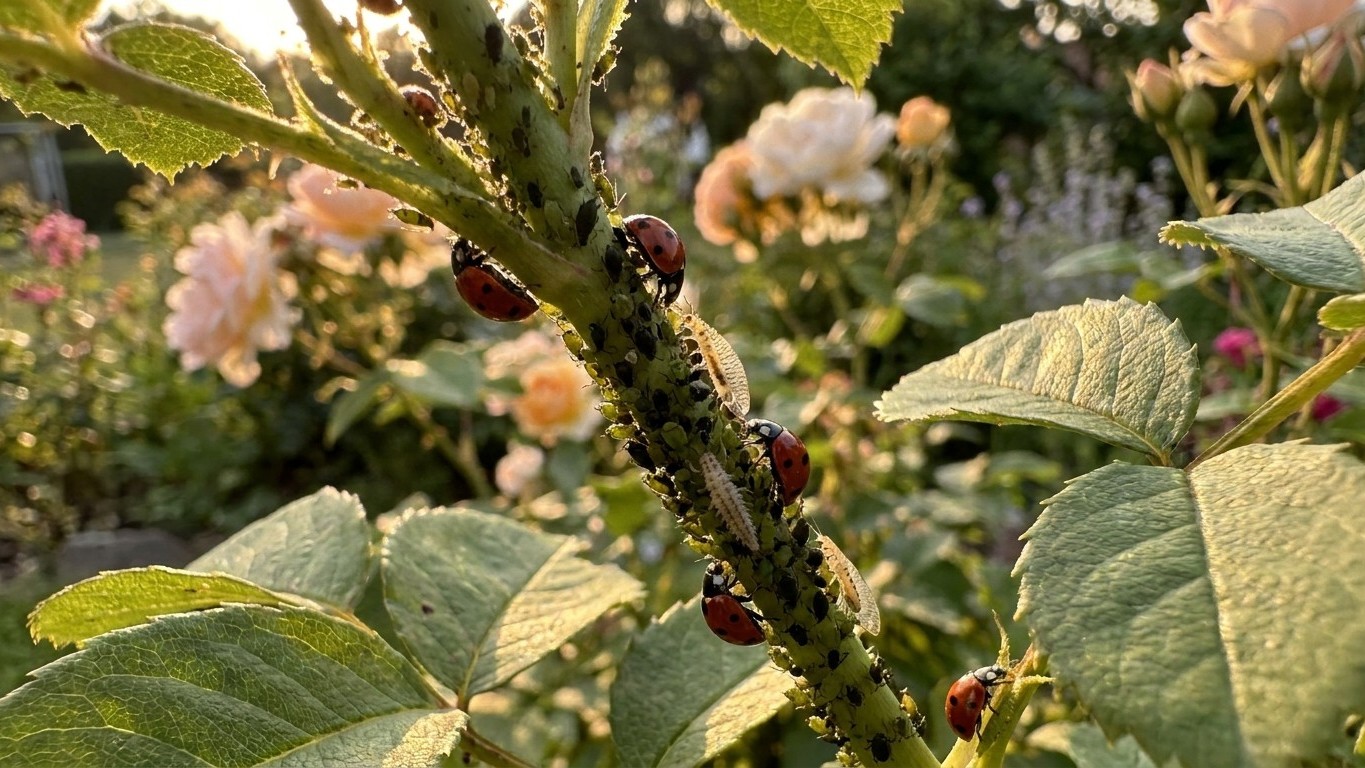

Aphids start showing up in Georgia as early as February in the coastal plain and by late March across the rest of the state, riding the first stretch of 65-degree days. They stick around through early summer, thin out during the peak heat of July and August, then surge again in September and October when temperatures ease back into their comfort zone. Stopping them usually comes down to three things working together: encouraging natural predators, catching populations early with soap or oil sprays, and cutting back on the nitrogen-heavy fertilizing that makes plants irresistible to them in the first place.
Georgia’s Climate Gives Aphids a Long Runway

Georgia spans three USDA hardiness zones, from 6b in the north Georgia mountains down to 9a along the coast near Brunswick and St. Marys. That range matters because aphids don’t hibernate the way some pests do. They slow down, but in the southern half of the state, mild winters mean a percentage of the population keeps feeding on cool-season vegetables and winter annuals right through January.
North of Atlanta, the pattern looks different. A hard freeze in December or January knocks populations back close to zero, and growers there see a cleaner reset each spring. That’s one reason gardeners in Blue Ridge or Dahlonega often report fewer aphid headaches than someone gardening in Valdosta or Albany, even though both are dealing with the same insect.
Spring is the main event almost everywhere in the state. New growth on roses, crepe myrtles, and vegetable transplants is soft, sugary, and easy to pierce, exactly what aphids are built for. A single female can start producing live young without mating within days of finding a good host, and each of those offspring is often already pregnant when born. That’s how a handful of aphids on a pepper seedling turns into a visible colony inside two weeks.
Why Aphids Nearly Disappear in July
Extreme heat is rough on aphids. Once daytime highs push past the mid-90s, which happens regularly across middle and south Georgia in summer, aphid reproduction slows and mortality rises. Many species retreat to shadier, more tender growth or simply decline in number until temperatures moderate. Gardeners sometimes assume they’ve solved the problem in July, only to watch it reappear in September when cooler nights return and plants push out a fresh flush of growth.
Which Aphid Species Turn Up Most in Georgia
Not every aphid behaves the same way, and knowing which one you’re dealing with changes the response.
- Cotton aphid (melon aphid): Common on cotton, cucumbers, squash, and okra across the state’s row-crop and garden regions. Color varies from yellow to nearly black depending on the season.
- Green peach aphid: A generalist that hits peppers, tomatoes, and brassicas like collards and kale, both of which are staples in Georgia home gardens.
- Cowpea aphid: Shows up on southern peas, crimson clover, and vetch, especially in the coastal plain.
- Oleander aphid: A bright yellow species that targets milkweed and oleander, common in landscape plantings around Atlanta and Savannah.
- Woolly aphids: Found on crepe myrtle, hackberry, and pecan trees, recognizable by the white, cottony wax they secrete.
Pecans deserve a specific mention since Georgia produces more pecans than any other state. Yellow pecan aphid and black-margined aphid both feed on pecan foliage, and heavy infestations can lead to sooty mold coating leaves and nuts, which affects both photosynthesis and the crop’s marketability.
What Actually Stops Aphids in Georgia Landscapes and Gardens
Chemical sprays get most of the attention, but they’re rarely the first or best line of defense. Aphids reproduce so fast that killing the visible colony without addressing what drew them in usually means dealing with a new one within a couple of weeks.
Let Natural Predators Do the Heavy Lifting
Ladybugs, lacewing larvae, and parasitic wasps are already present in most Georgia yards, and a single lacewing larva can eat dozens of aphids a day. Broad-spectrum insecticides wipe these predators out along with the aphids, which is part of why populations sometimes rebound worse after a spray than before it. Planting dill, fennel, yarrow, or sweet alyssum near vegetable beds gives these predators nectar and pollen to sustain themselves between aphid meals, keeping them in the yard year-round instead of just passing through.
Watch the Ants
Ants farm aphids for the honeydew they excrete, and in exchange, they’ll actively fight off ladybugs and other predators trying to move in. A trail of ants running up a crepe myrtle trunk or rose cane is often the first visible sign of an aphid colony overhead, even before the aphids themselves are obvious. Dealing with the ant trail, whether through baiting or a sticky barrier at the base of the plant, removes the protection aphids rely on and lets natural predators do their job.
Cut Back on Nitrogen
Heavy nitrogen fertilizing pushes out soft, fast growing tissue that’s easier for aphids to feed on and that supports faster reproduction. Georgia gardeners who over-fertilize spring vegetables, especially with quick-release synthetic products, often see denser aphid colonies than those using slow-release or organic sources. Backing off fertilizer doesn’t eliminate aphids, but it makes plants a less attractive target and slows population growth once they arrive.
Use Water, Soap, and Oil Before Reaching for Anything Stronger
A firm spray of water from a garden hose knocks a large share of aphids off a plant, and most don’t find their way back. For heavier infestations, insecticidal soap or horticultural oil applied directly to the colony works by disrupting the insect’s outer coating on contact, and both break down quickly in the environment with minimal impact on bees or predatory insects when applied in early morning or evening. Neem oil offers a similar contact effect along with some repellent action on new growth.
Systemic insecticides containing imidacloprid or similar neonicotinoids are available and do work, but they carry real tradeoffs. They move through the plant’s vascular system and end up in pollen and nectar, which is a documented concern for pollinators according to research compiled by the EPA’s pollinator protection program. Save these for situations where lighter methods have failed and the plant isn’t one bees are actively visiting.
Signs You’ve Got a Problem Worth Treating
Small numbers of aphids on a healthy plant usually aren’t worth any intervention at all, since predators typically catch up within a week or two. The signs that warrant action are curling or yellowing new leaves, a sticky film of honeydew on leaves and the ground below, sooty mold developing on that honeydew, and visible clusters, usually on the undersides of leaves or along tender stem tips.
On food crops like squash, collards, and southern peas, dense aphid feeding can stunt growth and reduce yield, and some species transmit plant viruses, which is a bigger concern than the direct feeding damage itself. On ornamentals like crepe myrtle or roses, the main issue is usually cosmetic (sooty mold and honeydew drip onto cars or patios below), rather than a threat to the plant’s survival.
Checking the undersides of new growth once a week during March through May and again in September gives most Georgia gardeners enough lead time to catch a colony before it explodes, since that early detection window is when a water spray or a single soap application is enough to knock things back to a manageable level.
Related guides
- Aphids in Florida: When It Shows Up and What Stops It
- Aphids in Alabama: When It Shows Up and What Stops It
- Aphids in Hawaii: When It Shows Up and What Stops It
- Aphids in Idaho: When It Shows Up and What Stops It
- Mexican bean beetle in Georgia
- Melonworm in Georgia
- Aphids in Arizona: When It Shows Up and What Stops It
- Aphids in Utah: When It Shows Up and What Stops It