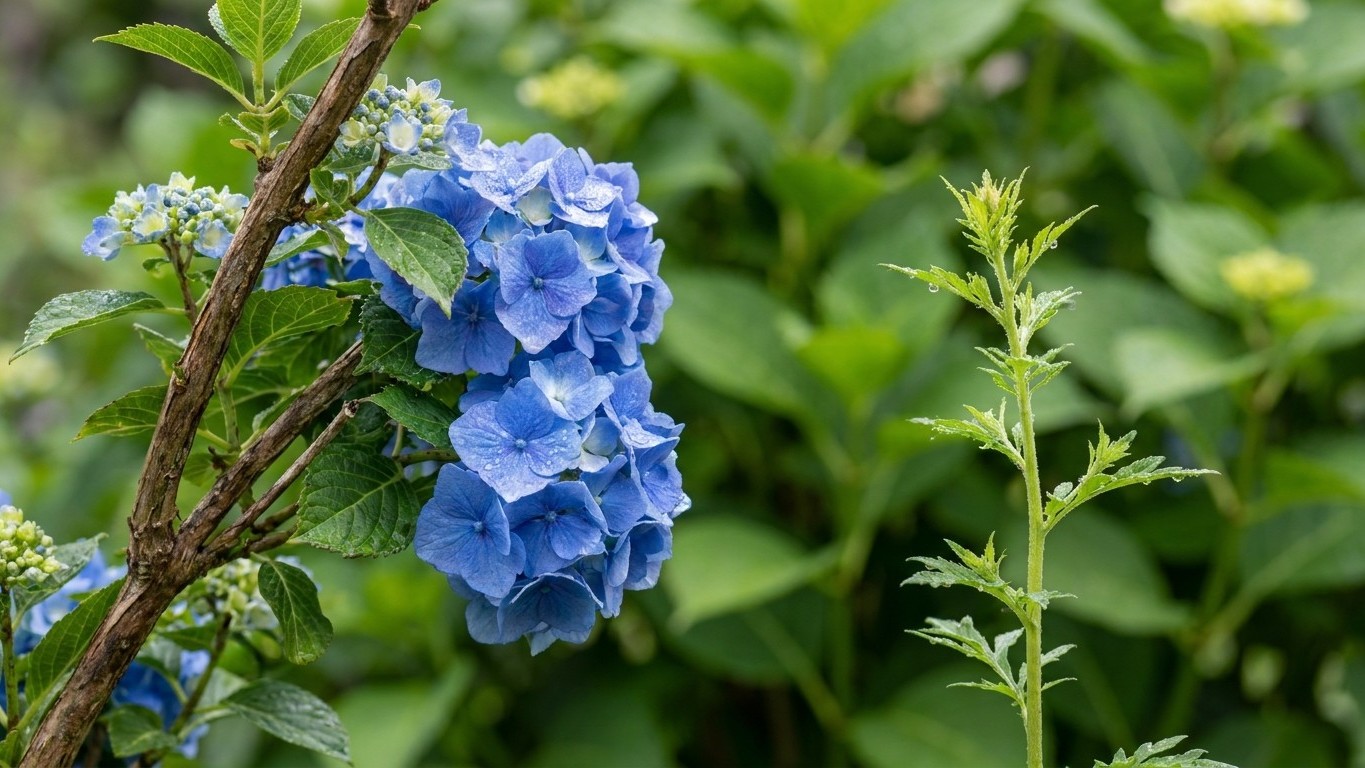

Hydrangeas turn pink in Hawaii because the soil, water and fertilizer in most gardens keep aluminum locked away from the roots, and bigleaf hydrangeas need to absorb aluminum to make blue flowers. Acidify the soil, cut back on phosphorus, and a pink plant can turn blue over a season or two. Some plants never will, and the reasons are below.
What this comes down to in Hawaii
Honolulu, the reference city for NOAA’s climate normals, records zero days per year at or below 32°F, and no freeze occurs anywhere people garden in the islands. Cold never decides when hydrangeas bloom or what color they turn here, so the answer sits in the ground: soil acidity, how much aluminum the plant can actually absorb, and how much rain falls on the bed.
Why does soil chemistry change hydrangea color?
The pigment in bigleaf hydrangea sepals is an anthocyanin called delphinidin-3-glucoside. By itself it reads pink to red. When the plant takes up aluminum and carries it into the flower, the aluminum binds to the pigment and shifts it toward blue. In between, you get purple, mauve and those two-toned heads that look like a dye job gone sideways.
Whether the plant can take up aluminum depends on soil pH. In acidic soil, roughly pH 5.0 to 5.5, aluminum dissolves into a form roots can absorb, and flowers lean blue. As the soil becomes less acidic, aluminum turns into compounds the plant cannot use, and flowers lean pink. A bed can be full of aluminum and still grow pink flowers.
Why are so many hydrangeas pink in Hawaii gardens?
Volcanic soils are rich in aluminum, so the mineral itself is rarely missing. Three things usually tip the plant toward pink.
- Soil pH has drifted up, often from lime, coral rock, concrete, or a dry leeward climate that lets minerals accumulate instead of washing out.
- Fertilizer is high in phosphorus. Phosphorus binds aluminum inside the soil and inside the plant, and it can turn a blue plant pink without any change in pH.
- Irrigation water or potting mix is on the alkaline side, which slowly raises pH in a container or a small bed.
Shoppers also run into a plain commercial fact. Many nursery plants are grown in a potting mix tuned for a particular color, and once they go into native ground the color often drifts. A blue hydrangea bought in a pot can come back pink the next summer.
The USDA Plant Hardiness Zone Map, which rates zones by average annual extreme minimum temperature, runs from 9a to 13a across the state. Honolulu is the right anchor for the no-freeze statement, and the highest volcano summits are the only places where frost does occur. For the broader picture of site and care, see growing hydrangeas in Hawaii.
Working it out for your own garden
Start by reading what the plant is already telling you. Flowers that open pink or red in the garden point to pH above about 6, or to a phosphorus problem. Purple points to pH somewhere in the middle. Blue means you are already in range, and the task is simply holding it there. White hydrangeas do not respond to any of this, because they carry no pigment for the aluminum to change.
How do you test soil pH for hydrangeas?
A home pH kit from a garden center gives a rough reading. For a number you can rely on, send a sample to a lab. The College of Tropical Agriculture and Human Resources Extension can point you to soil testing in your county. Take samples from the top few inches of soil near the drip line, mix several spots together, and test a separate sample for each bed, because pH can vary a lot over short distances on this island chain.
How do you turn a pink hydrangea blue?
Work through the cause in order. Take a bed that tests in the upper 6s. The target is the low 5s, which is a big drop, and soil pushes back. Elemental sulfur does the job slowly, since soil microbes have to convert it to acid, so expect months. Aluminum sulfate acts faster because it supplies aluminum and acidifies at once, but it can burn roots if overdone. Follow the label, start at the lower rate, and apply to soil that has already been watered. Switch to a fertilizer low in phosphorus, because a high middle number in the fertilizer analysis works against you.
Color change shows up on new growth. Flowers already open will not shift, and buds already formed hold their color. Start treating well before the next bloom cycle, and time it with growth that follows pruning. When to Prune Hydrangeas in Hawaii covers when new shoots appear.
When will a hydrangea not turn blue?
Now take a bed that will not finish the job. A planting next to a concrete wall, or in coral-based soil near the coast, keeps pushing pH back up no matter how much sulfur you add. The same goes for a plant watered from a hard, alkaline source. In those spots the practical fix is a container with an acidic potting mix, watered with rain or soft water. Containers let you hold pH where you want it, and they are also the easiest place to confirm a method before you commit a whole bed.
What changes across the state
The islands do not behave like a single garden. Rainfall swings sharply over short distances, and rain is what moves pH. Heavy rain washes calcium and other bases out of the soil, which leaves it acidic and keeps aluminum available. Dry ground lets those minerals build up, which pushes pH higher.
| Setting | Soil and water tendency | Color leaning without intervention |
|---|---|---|
| Windward slopes with steady rain | Leached, acidic, aluminum readily available | Blue to purple |
| Dry leeward lowlands | Minerals accumulate, harder irrigation water, higher pH | Pink |
| Coastal coral or limestone-influenced ground | Alkaline, strongly buffered against acid | Pink, hard to change |
| Cooler, wetter upland gardens | Organic, acidic soil that holds moisture | Blue to purple |
Elevation matters for the plant as much as for the color. Upland gardens run cooler and wetter, so hydrangeas there are usually healthier and the soil starts out more acidic, while the lowlands add heat stress to the pH problem. Frost, where it appears on the highest summits, is a separate concern for plants grown up there, covered in Protecting Hydrangeas Through a Hawaii Winter. The same island can hold both a wet blue zone and a dry pink one within a short drive, so judge your own lot instead of the neighborhood or island average.
The mistakes this state punishes
Adding lime or bonemeal near hydrangeas is the most common one. Lime raises pH, and bonemeal brings in phosphorus. Both feel like helpful, old-fashioned garden practice, and both push flowers pink. Skip them in beds where you want blue.
Planting right beside concrete is next. Walls, walkways and block edging leach lime into nearby soil for years, and the pH rises close to the wall. Give hydrangeas some distance, or plant in a container.
Overdosing aluminum sulfate is the mistake that kills plants. More is not faster. Too much burns fine roots, and plants that are already stressed by heat or dry spells suffer most. Apply to wet soil, follow the label, and split a dose across several applications.
Another is a one-season expectation. Soil pH moves slowly, especially in a buffered, alkaline bed. A single treatment seldom changes the whole plant, so plan on a full growing cycle, then retest.
Last, many gardeners pick the wrong plant for the goal. A white hydrangea will not turn blue, and some bigleaf plants stay pinker than others, so a stubborn plant may be a better candidate for pink than a bed makeover. If pink looks good, leave it alone. Fighting leeward soil chemistry year after year is expensive and tiring.
Checking this against your county
Soil pH, rainfall and water quality shift from one valley to the next, so treat everything above as a starting point. Your county office at the University of Hawaii extension service can tell you what soils and water are typical where you live, and where to send a sample. For site, watering and care beyond color, return to growing hydrangeas in Hawaii.
Common questions
Can I change hydrangea color in the ground in Hawaii?
Yes, in many beds, though slowly. Lower the soil pH with sulfur or aluminum sulfate, cut phosphorus, and give it a full growing cycle. Beds next to concrete or in coral-influenced soil may keep pushing back, and a container is the easier route there.
Is there any frost that affects hydrangea color?
No. Honolulu has zero days per year at or below 32°F, and frost reaches only the high summits of Mauna Kea, Mauna Loa and Haleakala. Color follows soil chemistry here.
Will white hydrangeas turn blue?
No. White varieties lack the pigment that aluminum changes, so soil treatments do nothing for their color. Only bigleaf types with pink or blue pigment respond.
How long does it take to turn pink hydrangeas blue?
Expect the new growth of the next season to show change, and sometimes a second season for full blue. Flowers already open stay the color they are, so start before the next bloom cycle begins.