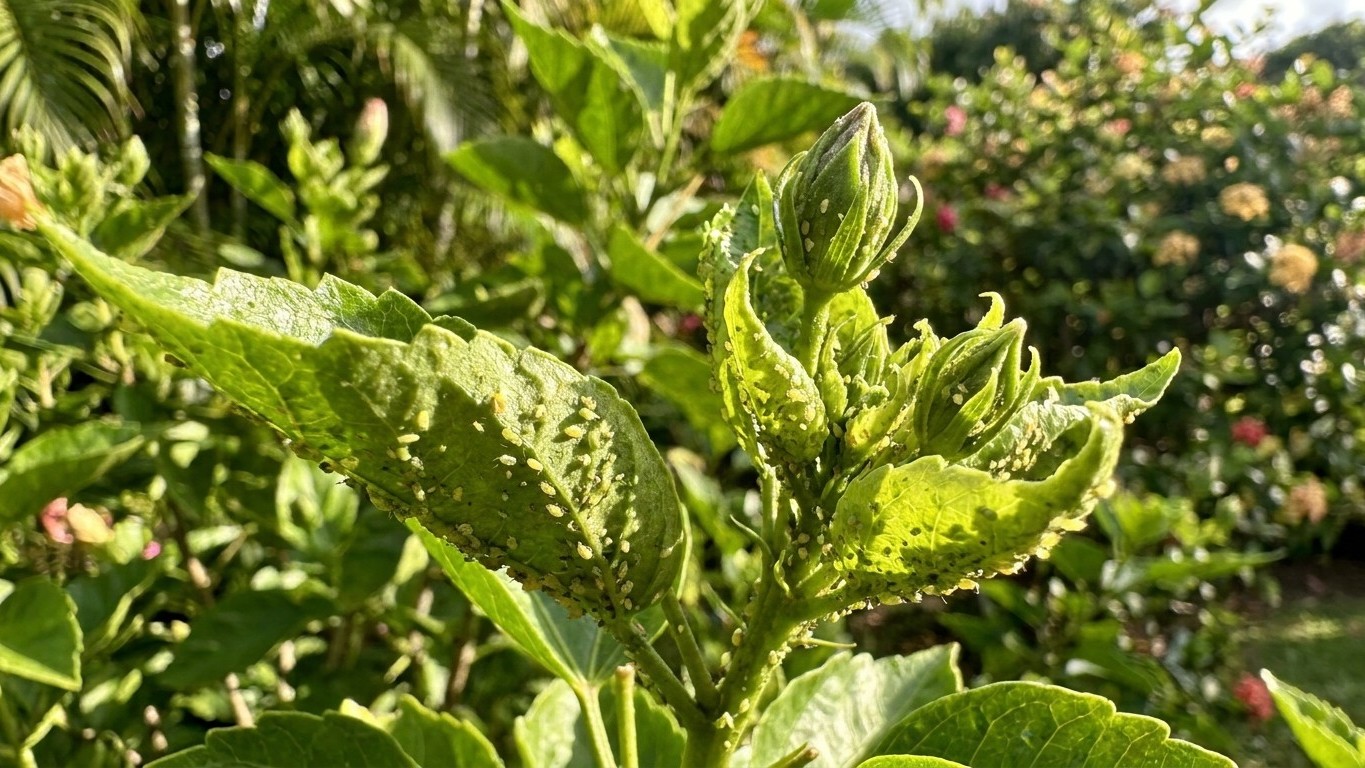

Aphids don’t take a season off in Hawaii. Because the islands never see a hard freeze, these soft-bodied insects reproduce year-round, with the heaviest pressure showing up during the drier months between April and September when new plant growth is tender and predator populations lag behind pest reproduction. If you garden in Honolulu, Hilo, or anywhere in between, the question isn’t whether aphids will visit your hibiscus or your papaya seedlings. It’s when the colony gets big enough to notice, and what you do before it does.
Why Hawaii’s Climate Keeps Aphids Active All Year

Aphid reproduction is temperature-driven. On the mainland, a cold snap kills off adults and eggs overwinter, resetting the population each spring. Hawaii never gets that reset. Average lows in even the coolest months rarely dip below 60°F at sea level, and female aphids can produce live young without mating once conditions turn favorable. A single female can generate dozens of offspring in a week under warm, humid conditions, and those offspring are reproducing within days themselves.
That means a colony that starts on one hibiscus bud in March can spread across an entire hedge by June if nothing interrupts it. Rain actually helps homeowners here more than it hurts. Heavy tropical downpours physically knock aphids off leaves and disrupt colonies, which is part of why populations often dip during Hawaii’s wetter winter months (November through March) even though temperatures stay warm enough for breeding.
Which Aphid Species Show Up in Hawaii Gardens and Farms
Several aphid species have established themselves across the islands, and each tends to favor specific plants.
- Melon aphid (Aphis gossypii): targets cucurbits, hibiscus, and citrus, and is one of the most common species reported on backyard vegetable plots
- Banana aphid (Pentalonia nigronervosa): feeds on banana plants and is a serious concern because it transmits banana bunchy top virus, a disease that has damaged commercial and backyard banana crops across the state
- Green peach aphid (Myzus persicae): a generalist feeder found on peppers, tomatoes, and many ornamentals
- Cowpea aphid (Aphis craccivora): common on beans and legumes grown in home gardens
The banana aphid deserves extra attention. Unlike most aphids, which mainly weaken plants by sucking sap, this species spreads a virus with no cure. Infected banana plants show narrow, upright leaves with dark green streaking and eventually stop producing usable fruit. The state Department of Agriculture treats infected plants as a removal priority, not just a pest management issue, because the virus can move to neighboring properties through infested plant material.
The Ant Connection Nobody Warns You About
Aphids excrete a sugary waste called honeydew, and ants love it. In exchange for that food source, ants protect aphid colonies from ladybugs, lacewings, and parasitic wasps, essentially running a small farming operation on your plants. This relationship is a bigger problem in Hawaii than in most mainland states because of the sheer number of invasive ant species established here, including the Argentine ant and the little fire ant.
Little fire ants, first detected on the Big Island in the 1990s and now confirmed on Oahu, Maui, and Kauai, are especially aggressive tenders of aphid colonies. They deliver a painful sting and will defend “their” aphids with enough persistence that natural predators simply give up and move elsewhere. If you notice ant trails running up and down a stem toward a cluster of aphids, dealing with the ants often does more good than spraying the aphids directly, because new aphids will just recolonize as long as the ants keep protecting them.
What Actually Stops Aphids in a Hawaiian Yard
Control here works best as layered defense rather than a single treatment, mostly because humidity and rain wash away residues faster than in drier mainland climates.
Water and Manual Removal
A strong jet from a garden hose, aimed at the undersides of leaves where colonies cluster, removes a surprising percentage of an aphid population without any product at all. For small infestations on ornamentals like hibiscus or plumeria, this alone, repeated every two or three days for a week, often brings numbers down to a manageable level.
Insecticidal Soap and Horticultural Oil
Both work by suffocating soft-bodied insects on contact and break down quickly in the environment, which matters in a state where runoff can reach reef ecosystems. Neem oil is widely used across Hawaii’s home gardens for this same reason. None of these products have lasting residual effect, so reapplication every five to seven days during an active outbreak is standard practice.
Encouraging Natural Predators
Ladybugs, lacewing larvae, and syrphid fly larvae are already present across the islands and can eat dozens of aphids per day. The problem is that broad-spectrum insecticides kill these predators along with the target pest, which is why heavy pesticide use sometimes makes aphid problems worse over the following weeks. Planting flowering herbs like dill, cilantro gone to seed, or sweet alyssum near vegetable beds gives these predators a nectar source and keeps them established in the yard rather than passing through.
Ant Management as Aphid Prevention
Since ants actively protect aphid colonies from predators, controlling ant access to plants (sticky barriers on trunks, bait stations placed away from the plant itself, removing ant nests near the root zone) removes the protection racket and lets natural predators do their job. The University of Hawaii’s College of Tropical Agriculture and Human Resources has documented this ant-aphid relationship as one of the more overlooked factors in why home aphid treatments fail to hold.
Banana Bunchy Top Virus: When Removal Beats Treatment
For banana growers specifically, no insecticide cures a plant already infected with bunchy top virus. The state’s guidance is direct: infected plants need to be cut down, the corm destroyed, and the aphid vector controlled on remaining healthy plants before replanting. Waiting to “see if it gets better” only gives the banana aphid more time to spread the virus to nearby mats. Homeowners in areas with known infections, particularly on Oahu’s windward side and parts of the Big Island, should inspect new banana leaves for the telltale narrow, upright growth pattern before assuming a nutrient deficiency is to blame.
One detail that surprises a lot of new gardeners here: aphid outbreaks often spike right after a round of nitrogen-heavy fertilizer, since the flush of soft new growth that follows is exactly what these insects prefer to feed on. Spacing out fertilizer applications and favoring slow-release formulas over quick liquid feeds can reduce how often a colony gets the tender growth it needs to explode in the first place.