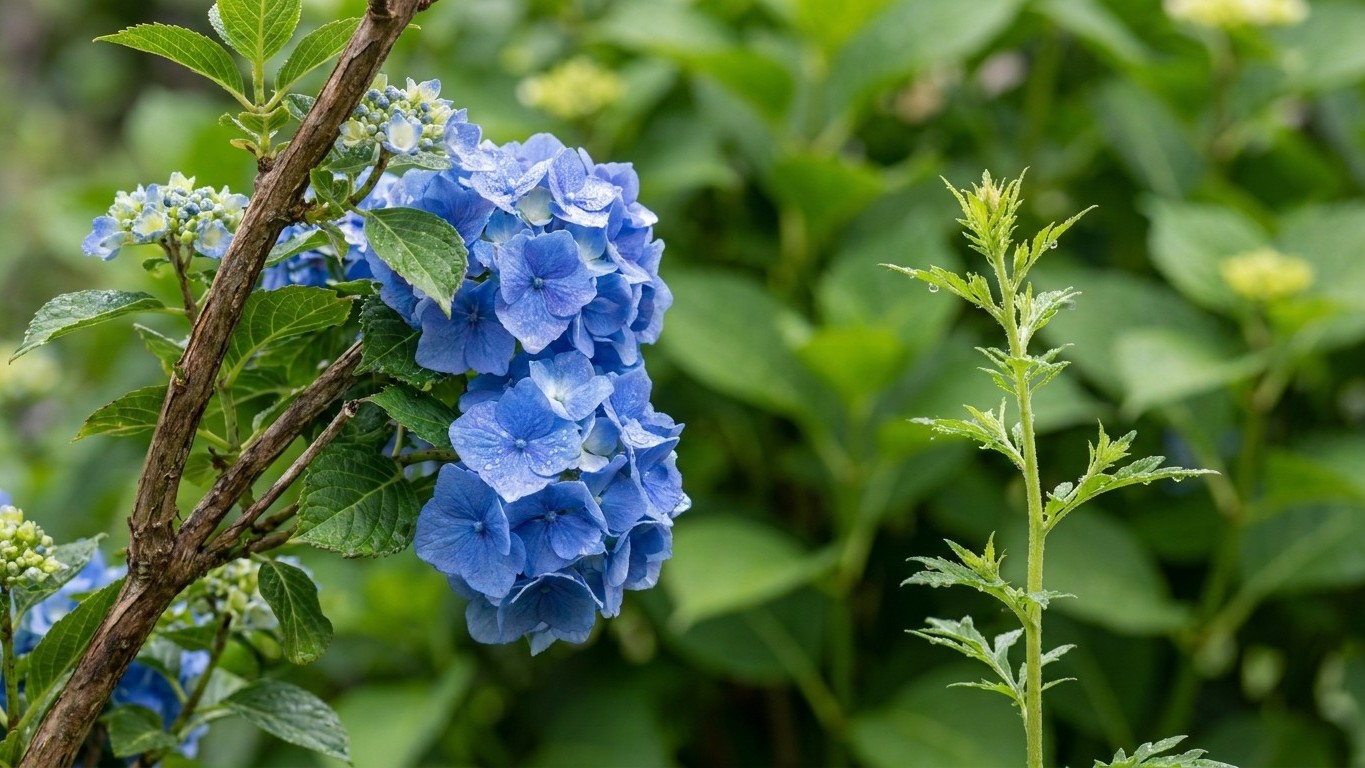

Prune hydrangeas that bloom on new wood (panicle and smooth types) in late winter or early spring, before the buds swell. Prune those that bloom on old wood (bigleaf, mountain and oakleaf types) right after the flowers fade, and in early spring remove only the stems that died over winter. Cutting the wrong type in the wrong season is the most common reason a healthy shrub never flowers. Which group yours belongs to decides the calendar.
What this comes down to in Idaho
In Boise, the reference city for Idaho’s frost window, the last spring freeze falls between April 23 and May 7, based on NOAA NCEI Climate Normals for the Boise station (the 30 to 70 percent probability band for a 32°F freeze). The first fall freeze arrives between October 7 and October 21. Boise sits in a low valley, and most of Idaho is higher, colder and shorter on season, so treat these dates as a local guide and check with your county extension office. New-wood types get cut before that spring window. Old-wood types get checked after it begins.
Which hydrangeas bloom on new wood?
Panicle hydrangeas (Hydrangea paniculata) and smooth hydrangeas (Hydrangea arborescens, the family that includes Annabelle) form flower buds on shoots that grow this spring. Nothing you cut off in winter carries next summer’s flowers, so you can prune hard while the plant is dormant. Cutting panicles back after the blooms fade, or smooth hydrangeas down to a few buds, keeps the framework tidy and the flower heads large. Finish before the leaf buds start to swell.
Which hydrangeas bloom on old wood?
Bigleaf (Hydrangea macrophylla), mountain (Hydrangea serrata) and oakleaf (Hydrangea quercifolia) hydrangeas set next year’s flower buds in late summer and fall, on stems that are standing right now. A winter or early spring haircut takes those buds with it. The window for shaping is short: after the blooms fade. After that, you are cutting off flowers that are already formed.
What about the reblooming bigleaf types?
Rebloomers flower on both old and new wood, which makes them more forgiving, but they still do best with a light hand. Remove dead stems in spring, trim spent flowers after the first flush, and skip heavy cutting. Gardeners growing bigleafs for color should also read Why Hydrangeas Are Pink in Idaho, and How to Turn Them Blue, since soil chemistry and pruning are separate levers.
Working it out for your own garden
A calendar date only works in a place with a predictable spring. A method works after a move, or after an odd year when March feels like May. The method has three steps: name the type, read the stems, and count back from the fall freeze.
How do you tell when your hydrangea is ready to prune?
Start with the stem test. Scratch the bark of a stem with a thumbnail. Green and moist underneath means the stem is alive. Tan or brown and dry means it is dead. Do this on several stems, because winter cold often kills the tips and leaves the lower parts alive. For old-wood bloomers, wait until the leaf buds along the stems swell and turn green, then cut back to just above the first pair of healthy buds. In Boise that usually lands around the time the spring freeze window is opening or has just passed, and it comes weeks later in colder parts of the state.
For new-wood types, the signal is the opposite. Prune while the plant is still bare, on a mild day in late winter, and wrap up before the buds start to open.
When should you stop pruning for the season?
Cutting in late summer encourages soft shoots that the first freeze will kill. Take the fall freeze window in Boise, October 7 to October 21, and count back. That lands before the fall freeze window, and it is the latest any shaping cut makes sense. Old-wood bloomers need an earlier cutoff, since their buds are forming in that stretch, so finish them by midsummer.
What does a worked example look like?
Take a smooth hydrangea like Annabelle, a new-wood bloomer. Cut it back in March. It has the whole spring to push growth, and even if a late freeze in the April 23 to May 7 window nips the first leaves, the flower buds have not formed yet, so the blooms are safe. Now take a classic bigleaf like Nikko Blue, an old-wood bloomer. Cut it to the ground in March and you remove every flower bud it carries. Wait until after the frost window opens, find the green buds, remove only what is dead, and the shrub keeps its flowers.
What changes across the state
Idaho runs from low river valleys to high mountain basins, and the USDA Plant Hardiness Zone Map (a system based on the average annual extreme minimum temperature) places it anywhere from zone 3b to zone 7b.
How does elevation change pruning dates?
Every climb in elevation pushes spring later and fall earlier. In higher valleys such as those around McCall or Sun Valley, buds break well after Boise’s, and a hard freeze can come back late in spring. The stem test and bud test matter more there than any date. Wait for green growth, and give new-wood types a few extra weeks of dormancy before cutting. Expect to prune weeks later than the Boise window suggests.
Is northern Idaho different from the south?
Yes. The Panhandle around Coeur d’Alene and Sandpoint gets more moisture and a more maritime influence, and low-elevation Lewiston is among the warmer corners of the state. The Snake River Plain in the south is dry and sunny, but cold air settles into the flat basins on clear nights, so late freezes can still catch early leaf-out. High southeastern Idaho is colder again.
In the coldest zones, bigleaf stems often die to the ground each winter. They then behave like new-wood plants, so cut the dead stems to the ground in spring and expect late or sparse flowers. The choice of variety matters as much as the pruning, and Which Hydrangeas Survive a Idaho Winter covers it.
The mistakes this state punishes
Idaho’s weather swings between warm spells and hard freezes, and several pruning habits turn those swings into lost bloom. Most of the damage comes from acting on a date or a feeling instead of on what the stems show.
Why is pruning after a warm spell risky?
A mild stretch in February or March tempts people to start early. Cutting stimulates growth, and growth started early is exposed to the freeze that often follows. If a warm spell arrives, trim new-wood types only if the buds are still tight. For everything else, wait for the stem test to give a clear answer, and hold off until the last freeze window has begun.
What happens if you cut everything to the ground in spring?
A bigleaf with brown tips in April often looks dead. Gardeners then cut it to the ground, and with it go the live lower stems carrying the year’s flowers. Cut only to the first green buds, and give stems a few more weeks before you decide. A late-leafing hydrangea is common after a cold winter and does not mean the plant is gone.
Why shouldn’t you tidy hydrangeas in the fall?
Fall cleanup removes the buds on old-wood types, and a late trim on any hydrangea invites tender growth just ahead of the first freeze. Leave the spent flower heads through winter. They give the buds below some protection and cost nothing. Tidy in spring, when you can see what survived.
Checking this against your county
Dates from Boise are a starting point for your own yard. Elevation, slope and cold-air pockets can move your spring by weeks. Your county’s University of Idaho Extension office knows the local last-freeze pattern and can tell you which hydrangeas have done well nearby. For the broader picture of choosing and caring for these shrubs, start with growing hydrangeas in Idaho.
Common questions
What if I don’t know which type of hydrangea I have?
Wait through one season without pruning. If it blooms in early to midsummer on stems from last year, treat it as an old-wood type and prune just after flowering. If the shoots grow fresh from the base and flower later in summer, it is a new-wood type and can be cut in late winter. Panicle heads are cone-shaped, smooth heads are round and flat, and bigleaf heads are mopheads or lacecaps.
Can I prune hydrangeas in the fall in Idaho?
Avoid it. Fall cutting removes flower buds on old-wood types and prompts soft growth on every type just before the first freeze, which falls between October 7 and October 21 in Boise and earlier in higher country. Leave the stems standing and prune in spring.
How do I fix an overgrown hydrangea?
Spread the work over several years. Each year, remove some of the oldest, thickest stems at the base, and the shrub renews itself without losing all its flowers at once. Do it at the right time for the type: late winter for panicle and smooth, right after bloom for old-wood types.
Should I deadhead hydrangeas?
You can, but timing matters. On old-wood types, snip spent flowers just above the first pair of healthy buds soon after they fade, and stop by midsummer. In fall, leave the heads on. On panicle and smooth types, deadheading is optional, since the late winter cut handles the tidying.