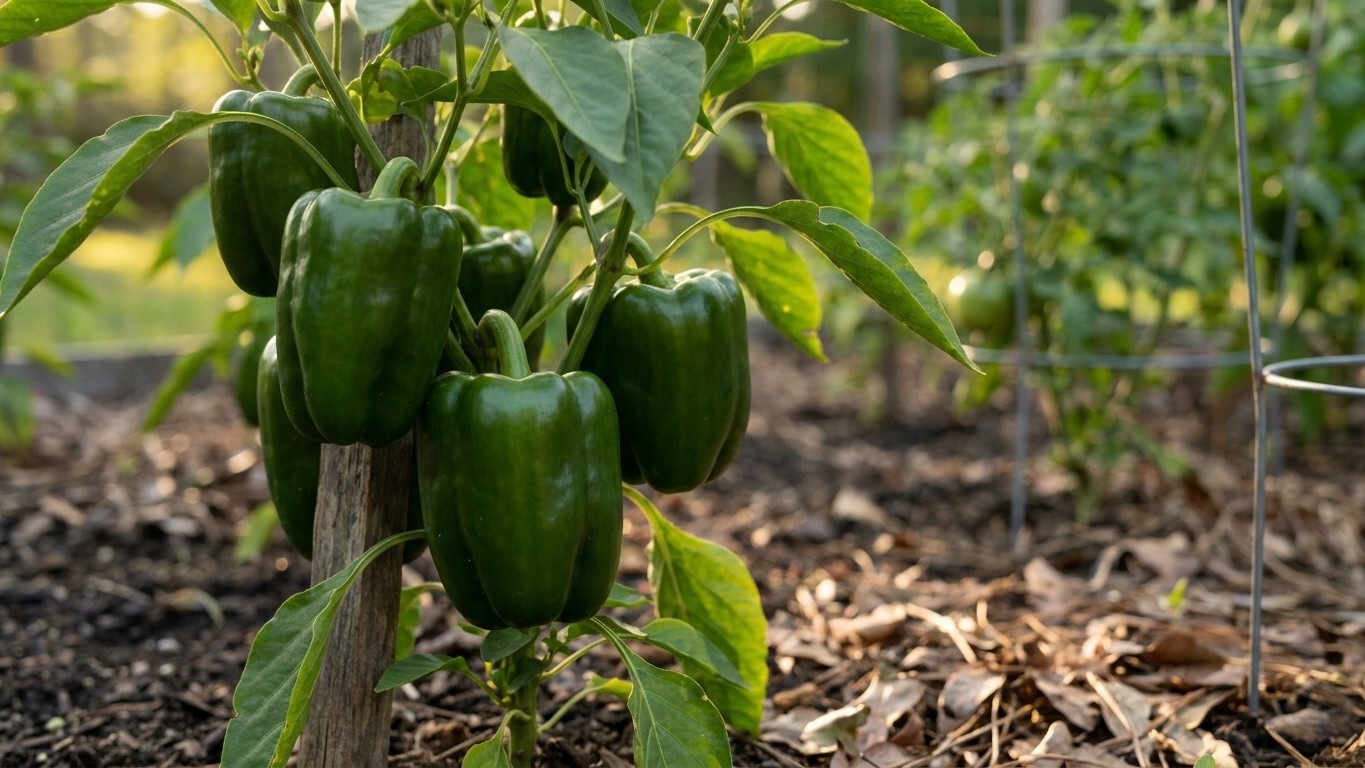

Pick peppers once the fruit has reached full size and feels firm. Clemson Extension puts that at about 70 to 85 days after transplanting. Then keep them at 45 to 50 F, not in the refrigerator, which runs colder than that and leaves the skin pitted and soft. Idaho adds its own wrinkle, because summer heat can stall the flowers before there is anything to pick.
The short answer
Boise, the reference station for this site, averages 47.5 days a year at or above 90 F, according to NOAA NCEI Climate Normals. Stacked end to end, that is nearly seven weeks. Not every one of those days lands while a given plant is in bloom, so the number is no countdown to failure. It measures heat load, the same figure that drives water demand and heat stress. Even so, a few of those days in a row during flowering can cost a plant a whole wave of blossoms. A dropped blossom is a pepper that never exists to be picked.
Both ends of the fruit set window
Heat is only half of it. Utah State Extension says pepper fruit set fails at both ends: days above 90 F, and nights below 55 F. A garden can have a mild afternoon and still lose flowers to a cold night in June, or the reverse.
This site carries the count of days at or above 90 F, but it does not carry summer night minima. Nobody here can tell you your lowest overnight temperature, and it cannot be guessed from the map. You have to watch your own. A min/max thermometer set at plant height in the bed, checked each morning once buds appear, will tell you more than any regional average. Boise is also a low valley. Most of Idaho sits higher and colder, with far shorter seasons, so treat 47.5 as the reference station’s number and not as your county’s. For the full picture on flower drop, see Why Peppers Fail to Set Fruit in Idaho.
When to pick, and where to put the fruit
Clemson’s figure of 70 to 85 days runs from transplanting, not from sowing the seed. Pick when the fruit is full size and firm to the squeeze. Green peppers are fully sized but not ripe, and leaving them on the plant to color up costs time but gives a sweeter pepper. In a short season, that trade is yours to make.
Storage is where most people go wrong. The Clemson Cooperative Extension fact sheet gives the optimal conditions as 45 to 50 F and 80 to 90 percent relative humidity, for two to three weeks. Read that as a ceiling under ideal conditions, not a promise.
The refrigerator is too cold for peppers. Below about 45 F they develop pits and go soft, which is chilling injury, and nearly everyone makes this mistake. The damage may not show until the peppers come back to room temperature. A cool basement, an unheated mudroom or a root cellar can sit in that 45 to 50 F range, but verify it with a thermometer before you trust it. If you have no such spot, keep the harvest on the counter and eat it within days, or freeze what you cannot use.
When to start seed here
Start from the transplant date and count backward. The rule from Utah State Extension is to transplant after frost, once the soil reaches 60 F, and to start seed 8 to 10 weeks indoors. Here is the arithmetic, in order, so you can redo it for your county:
- Find your last spring frost. For Boise, NOAA NCEI Climate Normals (station USW00024131) put the 32 F freeze probabilities in a band from April 23 to May 7. Boise is a low valley. If you garden higher up, your date is later, and this site does not publish one for your county.
- Wait for 60 F soil. This date often falls after the last frost, sometimes by weeks. Push a soil thermometer a few inches down in the morning, and treat the transplant date as the day the soil reads 60 F, not the day the frost risk ends.
- Subtract 8 to 10 weeks. Say, as a made-up example, your soil reaches 60 F on May 21. Eight weeks is 56 days, which lands on March 26. Ten weeks is 70 days, which lands on March 12. Your seed-starting window is March 12 to March 26.
- Add the harvest count. Clemson says 70 to 85 days after transplanting. From the May 21 example, 70 days is July 30 and 85 days is August 14. These are first-harvest estimates, not guarantees, since heat or cold at flowering can push them back.
- Check the result against the heat. If your first flowers will open in the hottest stretch of July, you are betting on a few days at or above 90 F not arriving all at once. Later plantings do not escape the heat. They only move the bloom to a different part of the summer.
Starting earlier than 10 weeks does not gain you a head start. Seedlings that outgrow their pots before the soil warms get leggy and root-bound, and they sulk after planting. If a late frost threatens, move the plants to a bright indoor spot for a week instead of rushing them outside. The broader picture of site choice, soil and spacing lives in Growing Peppers in Idaho.
What goes wrong here
Idaho’s climate produces a short list of repeat failures. Each has a remedy that works with the plant, not against it.
- Blossom drop in heat or cold. Flowers fall off in a hot spell above 90 F or after a night below 55 F. The plant is not dying, only skipping a round. Shade cloth over the bed on the hottest afternoons helps with the first, and a row cover pulled on at dusk helps with the second. Keep watering steady, and be patient, since new flowers usually follow when conditions settle.
- Sunscald. Strong sun bleaches a pale, papery patch on the side of the fruit facing the light, and the spot later turns soft or moldy. It usually shows up where leaves were lost to pruning, disease or an early heat wave. Leave the foliage alone so it shades the fruit, and use shade cloth during intense stretches. Cut away scalded fruit before it rots, since it will not recover.
- Blossom-end rot. A dark, sunken, leathery patch appears on the bottom of the fruit. It reflects trouble moving calcium into the pepper, and uneven watering is the usual trigger, more often than a shortage in the soil. Water deeply and regularly, mulch to hold moisture steady, and get a soil test before adding calcium. The first fruits are most often affected, and later ones may come in clean once watering evens out.
- Chilling injury after picking. Not a garden problem, but a pepper-killer all the same. Pits and soft spots appear after fruit sits in a fridge colder than about 45 F. Store at 45 to 50 F instead, or use the fruit fresh.
Damage that does not match any of these may be insects, and chewed fruit looks different from scald or rot. What Eats Pepper in Idaho, and When covers what to check before you blame the weather.
Common questions
Can I store peppers in the refrigerator?
Not without risk. The optimal range from Clemson Extension is 45 to 50 F, and a household fridge is colder. Below about 45 F peppers pit and soften from chilling injury. If the fridge is your only option, use the fruit within a few days and keep it out of the coldest back shelves.
How long after transplanting will peppers be ready?
Clemson Extension says about 70 to 85 days after transplanting. That is a typical range, not a promise. Hot spells above 90 F and nights below 55 F during bloom can delay fruit set, which pushes the harvest later.
How long do picked peppers keep?
Two to three weeks at most, and only at 45 to 50 F with 80 to 90 percent relative humidity. Treat that as a maximum under ideal conditions. At room temperature, plan on eating them far sooner.
How do I know if my nights are too cool for fruit set?
Measure them. Utah State Extension names nights below 55 F as one end of the failure range, but this site does not carry summer night minima for Idaho. Put a min/max thermometer in the bed, record the overnight low each morning during bloom, and compare it with 55 F.