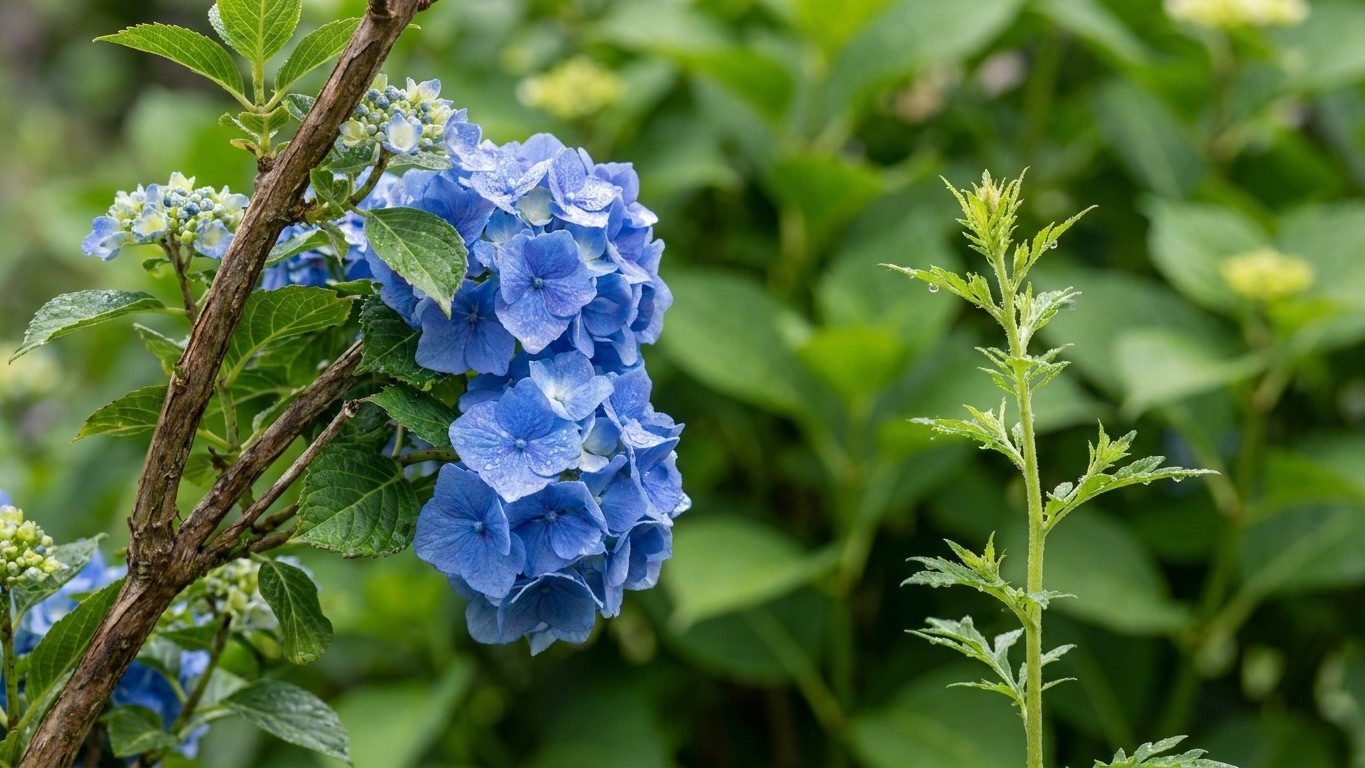

Prune hydrangeas that bloom on new wood in late winter, and prune the ones that bloom on old wood right after their flowers fade. In Iowa, that puts smooth and panicle types on the March-to-early-April list. Bigleaf and oakleaf types get a light trim in July, if they need one at all. Mix those up and you can remove a whole summer of flowers in ten minutes. The details below depend on which kind of hydrangea you own.
What this comes down to in Iowa

At the Des Moines airport weather station, the last spring frost falls between April 12 and April 24, and late winter pruning of new-wood hydrangeas is done before that window opens. Old-wood hydrangeas run on a different clock. Their pruning window opens when the flowers fade in summer and closes a few weeks later.
The reason is where the flower buds form. Some hydrangeas set next year’s buds on stems that grew this year, then carry them through the winter. Cut those stems in spring and the flowers go with them. Others grow new stems each spring and flower at the tips of that fresh growth, so a hard cut costs them nothing. Iowa State Extension county records run about 4 days later in spring than the airport figures, so treat the Des Moines dates as the early end of the range for your yard.
| Type | Flowers on | Best pruning time | How much |
|---|---|---|---|
| Panicle | New wood | Late winter, March to early April | Up to a third of the height |
| Smooth | New wood | Late winter, March to early April | Down to about a foot to 18 inches |
| Bigleaf | Old wood (rebloomers also on new) | Right after bloom, plus dead wood in May | Spent flowers and dead stems only |
| Oakleaf | Old wood | Right after bloom | Very little |
When do you prune panicle and smooth hydrangeas in Iowa?
Panicle types carry cone-shaped flower clusters, and ‘Limelight’ is the best-known name. Smooth types, such as ‘Annabelle’, have big rounded white heads. Both are the easy group. Cut them while the stems are bare, from mid-March to early April, so you can see the shape you are working with. On a panicle, remove up to a third of the height and any crossing branches. On a smooth hydrangea, cut to somewhere between a foot and 18 inches. The taller cut gives stiffer stems that hold the heavy blooms up in July rain.
When do you prune bigleaf and oakleaf hydrangeas in Iowa?
These two set buds the previous summer, so the knife stays mostly in the drawer. Prune in July, within a few weeks after the flowers fade. Take off the spent blooms and dead stems, and cut one or two of the oldest canes to the ground if the shrub is crowded. Reblooming bigleaf cultivars flower on both old and new wood, but a hard Iowa winter often kills the old stems, so they do not make up for a heavy cut. How well each type handles Iowa cold is covered in Which Hydrangeas Survive a Iowa Winter.
Working it out for your own garden
A date on a calendar breaks the first time spring runs three weeks late. A method holds up through a move to another county or a cold year, and it takes two steps: work out what you have, then count from the frost window.
How do you tell which kind of hydrangea you have?
Start with the flower and the leaf. Cone-shaped clusters that open lime or cream and age to pink are panicle. Big round white heads on a plant that looks tidy and soft-leaved are smooth. Large mophead or flat lacecap flowers in pink or blue, with glossy, thick leaves, are bigleaf. Leaves shaped like oak leaves, with white flower cones that turn burgundy in fall, are oakleaf. If a tag is long gone, look at the history. A shrub that flowered well after a hard cut is a new-wood type. One that gave only leaves after a spring cut is an old-wood type, and you now know not to repeat the mistake.
How do you count back from the frost window?
For new-wood types, aim to finish about three to four weeks before the last spring frost window. Take the Des Moines range of April 12 to April 24 and subtract a few weeks, and you land on roughly mid-March to the end of March. County figures that run a few days later push that comfortably into early April. If buds are visibly swelling, you are already late, and a light cut is still fine.
For old-wood types, count forward instead. Bloom ends in summer in most Iowa gardens, and buds for next year start forming on those stems through late summer, well before the first fall frost window of October 14 to October 25 at the same airport station. Finish pruning before the plant sets next year’s buds and you will not be cutting into next year’s flowers.
Dead wood is the exception for every type. Wait until leaves open in May, then cut back to the first pair of buds that are green and swelling. A quick scratch of the bark with a thumbnail shows green and moist tissue on living stems and brown and dry tissue on dead ones.
What changes across the state
The USDA Plant Hardiness Zone Map runs from zone 4b to 6a across Iowa. That system rests on one number, the average annual extreme minimum temperature, and the spread tells you the state is not one climate. The Des Moines figures are a reference point, and other parts of the state differ.
Northern Iowa sits at the cold end. Spring comes later, so new-wood pruning can wait until the plant shows signs of growth without harm. Old-wood hydrangeas lose more stems to winter there, which means the May cleanup matters more and you will often be cutting a bigleaf nearly to the ground. Southern Iowa warms sooner. Buds break earlier, and a March cut that is fine in the north can leave tender new shoots exposed in the south if a freeze follows a warm week.
Local ground matters about as much as latitude. Towns and cities hold heat, so a shrub on a south-facing wall in a city lot wakes up earlier than the same variety on open farmland. River valleys can collect cold air on still nights. Exposed rural sites take the full force of winter wind, which dries out stems that snow does not cover. The adjustment is simple: shift your late winter pruning later in the cold pockets and earlier in the warm ones, and let the buds, not the calendar, make the final call.
The mistakes this state punishes

The most expensive error is the spring haircut on a bigleaf or oakleaf. It feels tidy and productive, and it removes the buds that were set the previous summer. The plant grows back green and flowerless. Leave those shrubs alone until July, and in spring cut only what has plainly died.
Pruning dead wood too early is a close second. Bigleaf stems in Iowa often look lifeless in April and then sprout from lower down in May. A gardener who cuts to the ground after a mild March may be removing living wood. Wait for leaves, then cut to green.
Rushing a warm spell causes its own trouble. Iowa can run warm for a week in March and then drop back below freezing in April, inside the last-frost window. Pruning prompts growth, and fresh shoots on any hydrangea can be nipped by that freeze. Prune on the late side of the range if a warm stretch has the buds moving.
Late summer cutting is the quiet one. Trimming a bigleaf in August or September, to neaten it before fall, takes off next summer’s buds. Fall cleanup should be limited to raking leaves. Leave the dried flower heads on bigleaf through winter, because they offer a bit of protection to the buds below, and remove them in spring.
Checking this against your county
A statewide pruning calendar is a starting point. Your own county can run a week or more away from the Des Moines airport figures. Your Iowa State University Extension county office can tell you what local frost records look like and what your soil and exposure mean for timing. For the wider picture on site, planting, and care, see the full guide to growing hydrangeas in Iowa.
Common questions
Can I prune hydrangeas in fall in Iowa?
Panicle and smooth types will tolerate it, since they bloom on new wood, but waiting until late winter leaves you with sturdier stems through the cold months and some structure for snow to rest on. Bigleaf and oakleaf types should not be cut in fall at all, because the buds for next summer are already on the stems.
When should I cut back ‘Annabelle’ hydrangeas?
Do it in late winter, from March to early April, before new growth starts. ‘Annabelle’ is a smooth hydrangea that flowers on new wood, so a cut to somewhere between a foot and 18 inches will not cost you flowers. If the blooms have flopped in past summers, leave a bit more height.
My bigleaf hydrangea looks dead in May. Should I cut it down?
Not yet. Scratch a stem and check for green. Cut back to the first pair of swelling buds, and if nothing is green, look at the base for new shoots. Winter often kills the upper stems of a bigleaf while the roots send up fresh growth, and a plant like that may flower late or not at all that year.
Does pruning change the flower color?
No. Color on bigleaf types comes from soil acidity and the aluminum available to the plant, which is explained in Why Hydrangeas Are Pink in Iowa, and How to Turn Them Blue. Pruning affects how many flowers you get and when they open.