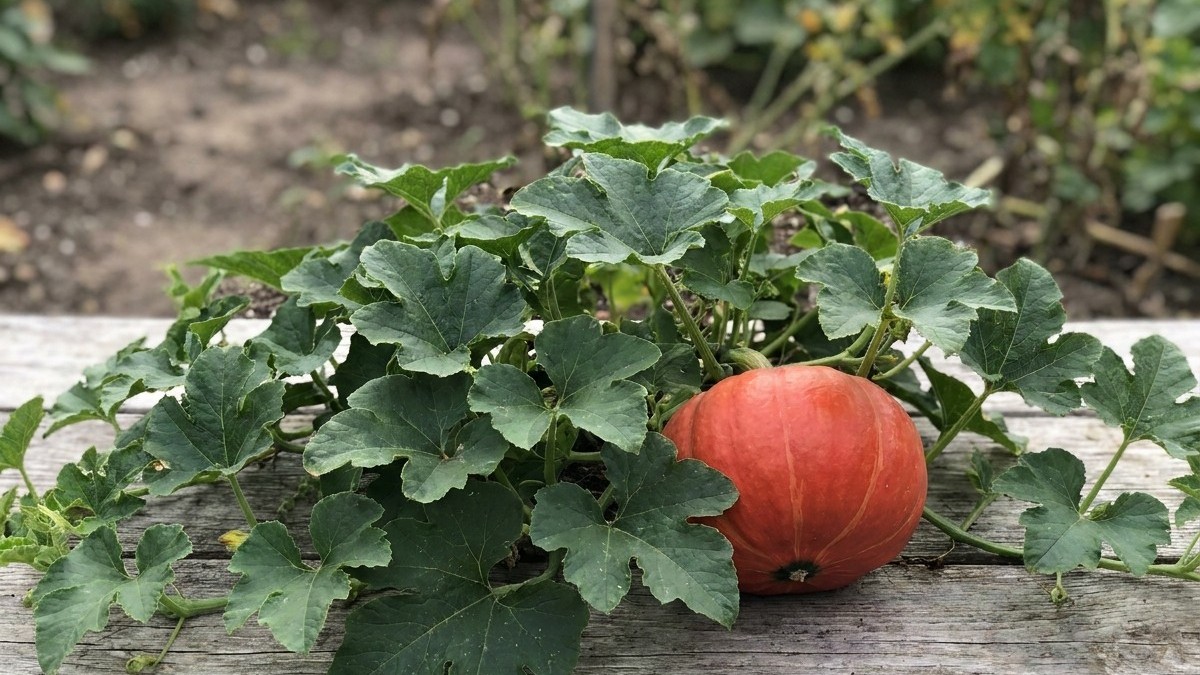

Cut pumpkins once the rind is too hard to dent with a thumbnail, the color is deep and even, and the stem has dried and gone woody. A whole, uncarved pumpkin can then keep for three to six months, but only in the right conditions. Most houses don’t offer those conditions by default, so the last section helps you find a spot.
When pumpkins are ready in Iowa
Watch the plant first and the calendar second. A ripe pumpkin has a rind that resists a fingernail, a stem that has turned brown and corky, and a color that no longer looks glossy or patchy. Vines often start dying back around the same time, though a vine that dies early from disease or insects doesn’t mean the fruit is ripe.
The clock that sets that window starts at flowering. Utah State University Extension says pumpkins need 45 to 55 days after flowering to mature. The count does not start at seeding or transplanting. The seed packet’s days-to-maturity figure counts from sowing, so it includes the weeks the vine spends growing before it ever flowers. A pumpkin cannot be rushed once the flower has opened, and a flower that opens too late produces a green fruit that frost will find before it ripens.
Now set that clock against the frost dates. NOAA NCEI’s 1991-2020 Climate Normals put the first fall freeze, using the 30-70% probability band for 32 F, between October 14 and October 25 at the reference airport station. Count back from there. Flowers that open after that are worth little. Pinch them off so the vine puts its energy into fruit that can still finish before frost.
How much earlier can frost come at your place?
Treat those airport dates as the optimistic end. Iowa State Extension county figures, which cover 1950 to 2021, run about 10 days earlier in fall than the airport station. That moves the realistic first frost to roughly early or mid-October for many farms and yards, especially in low spots and away from town. County figures also run about 4 days later in spring, so the airport’s April 12 to April 24 window for the last spring freeze is a little generous too. If you garden in a frost pocket or on open ground in the northern counties, plan for the earlier end of everything.
Planting time follows soil temperature, not the last frost date. Pumpkins are sown when the soil reaches 65 F, and the soil lags the air by weeks, so that moment usually comes well after the last spring frost. A cheap soil thermometer pushed a few inches down in the morning tells you more than the calendar does. The full planting timeline is in Growing Pumpkins in Iowa.
When frost is in the forecast and the pumpkins aren’t quite done, cut them that day. Leave the stem attached, carry each pumpkin by its body rather than the stem, and bring it indoors. If a number of fruits are still green, Will Pumpkins Ripen Before Frost in Iowa? covers what can still change after cutting. If squash bugs or cucumber beetles weakened the vines this summer, What Eats Pumpkin in Iowa, and When explains why some fruit stalls short of ripe.
Keeping them, and for how long
How long does a whole pumpkin keep?
University of Illinois Extension, in its guide Choosing a Pumpkin, says a whole pumpkin keeps for three to six months in a cool, dark location between 45-50 F. Read that as a ceiling. Three to six months is what a sound pumpkin can reach when everything goes right, and a pumpkin with a bruise, a cracked rind, or a missing stem won’t get anywhere near it. A pumpkin cut in early October and stored well would be good into winter, and perhaps into early spring at the far end. One kept in a warm kitchen may not keep as long.
Utah State University Extension adds the other half of the rule: keep harvested pumpkins where they will not freeze. Freezing damages the flesh, and the pumpkin turns soft and watery after it thaws. A rind that looks fine the next morning can still be ruined underneath. A spot that stays above freezing matters more than getting to 45 F exactly.
Why shouldn’t pumpkins sit near apples?
Illinois Extension also says to store pumpkins away from any ripening fruit or vegetables, and it names apples, potatoes, and tomatoes. Ripening produce gives off a gas that ages the pumpkin faster. It is the reason the porch next to the apple crate is a poor place for it, even if the temperature happens to be right. A basement cold room that holds the winter potatoes has the same problem. Give the pumpkins their own shelf or their own room, as far from the fruit as the house allows.
Does a carved pumpkin keep that long?
No. The 45-50 F range applies to a whole pumpkin. It says nothing about one with the rind cut open, and carved pumpkins break down much faster because the cut flesh is exposed to air and to mold. If you plan to carve, do it close to the day you want to display it, and keep the pumpkin whole until then. A whole pumpkin that has started to soften or leak is the first one to carve, cook, or compost, since it won’t improve.
Check stored pumpkins regularly. Look for soft spots, weeping, or mold near the stem. One failing pumpkin can be removed before it affects its neighbors, and it’s easier to catch early than to clean up later.
Where in the house that actually is
Which room comes closest to 45-50 F?
For most Iowa homes, an unheated but insulated basement room, a cold cellar, or a rarely used interior room with the vent closed comes closest. The living areas are too warm, and a pumpkin there will shrivel and soften long before the three-to-six-month mark. A refrigerator is a poor answer from the other direction. It runs colder than the 45-50 F range, and the shelf space is the wrong size for a pumpkin anyway.
The garage is the tempting one, and the riskiest. It follows the weather. An attached garage may hold a decent temperature in October, then drop below freezing later in the season. A detached garage or shed cools faster. Utah State’s rule is to keep them where they will not freeze, and a garage in an Iowa winter can’t promise that. Even in autumn, a garage that heats up in the afternoon sun and cools overnight puts the pumpkin through swings it doesn’t need.
How do you check a spot with a thermometer?
Put a min-max thermometer on the shelf where the pumpkins will sit, and leave it for a while before you move them in. The minimum reading tells you whether the spot ever gets near freezing, and the maximum tells you whether it climbs past the range. Skipping this step is how a basket of good pumpkins ends up as a pile of soft ones. A thermometer costs a few dollars, and a bad guess can cost the whole harvest.
Place the thermometer at the height of the pumpkins, not on the wall at eye level. Keep the pumpkins off bare concrete by setting them on a board, a pallet, or a layer of cardboard. Keep them out of reach of a furnace, a water heater, or a dryer vent, and make sure the shelf is clear of apples, potatoes, and tomatoes. If the spot reads right after a week and the produce is somewhere else, you’ve found the place.
Common questions
Can I cut pumpkins before they turn fully orange?
You can, and sometimes you have to when frost is coming. Pumpkins that are mostly colored with a hard rind may deepen a little indoors. See Will Pumpkins Ripen Before Frost in Iowa? for what to expect and when to give up on a late fruit.
What if frost is forecast before my pumpkins are ready?
Cut every fruit that has started to color before the cold arrives, with the stem attached, and bring them in. The vines can be lost to frost, but the fruit should be inside by then. Late-forming green fruit won’t finish, and it is not worth protecting at the cost of the ripe ones.
Is the 45 to 55 days counted from planting?
No. It runs from flowering, which comes weeks after sowing. Seed packet days count from sowing and are a separate figure. Sow once the soil reaches 65 F, which is later than the last frost date, and use the flowering date to judge whether the crop will finish before frost. The planting side is covered in Growing Pumpkins in Iowa.
Can a carved pumpkin be stored at 45-50 F?
A cool spot slows decay, but the three to six months applies only to a whole pumpkin, and a carved one should not be expected to last anywhere near that. Carve close to the day it will be displayed, and keep the rest of the harvest uncut. Your county extension office can advise on local conditions if you have questions about storage.