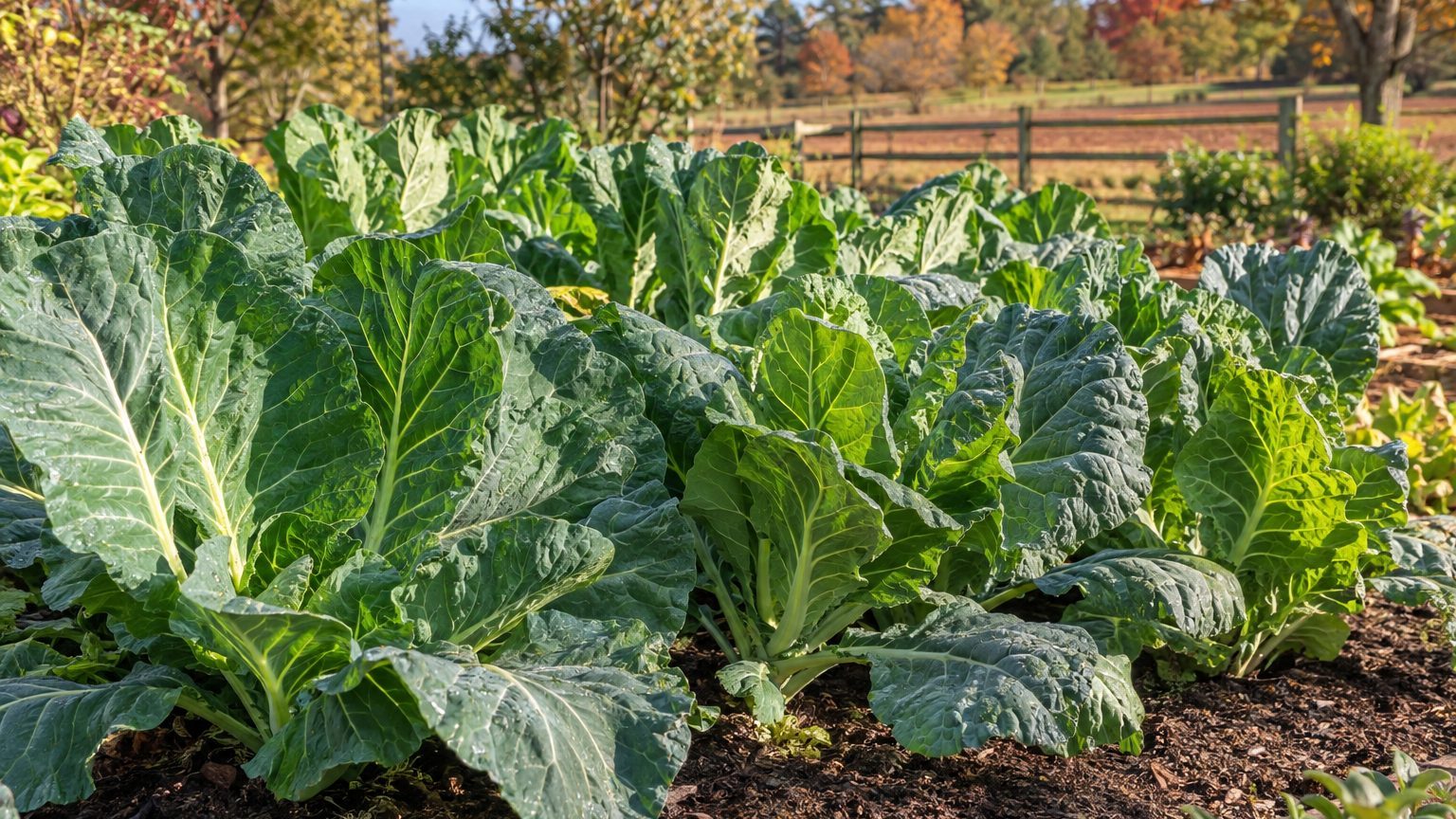

Collards are one of the easiest leafy crops to grow in Kansas, and the planting date matters more than the variety name on the seed packet. Any standard, open-pollinated collard does well if it is set out early enough to size up before hard freezes. Varieties differ mainly in plant size, cold tolerance and how quickly they reach a first picking. Fall is where Kansas collards shine.
The short answer for Kansas
Choose a full-size, open-pollinated collard such as Georgia Southern for the main fall crop. Add a compact type such as Vates for spring and for tight beds. Fill out the greens patch with kale, mustard and turnip greens, which cover the stretches when collards are slow or tired.
Those picks come from the calendar. At the Wichita reference station, the last spring freeze (32°F) falls between April 4 and April 18, and the first fall freeze between October 23 and November 2. Those dates mark the 30 to 70 percent probability band for a freeze on those days. A suburban or rural garden usually freezes later in spring and earlier in fall than an airport does, often by one to two weeks, and more at elevation. Collards are cool-season plants that shrug off light frost, so a fall crop gets a long run, and the leaves taste sweeter after a few cold nights.
Which collard type fits which job?
| Type | Best use in Kansas | Watch for |
|---|---|---|
| Full-size open-pollinated (Georgia Southern) | Main fall crop, picked leaf by leaf for weeks | Needs room and a start early enough to fill out before freezes |
| Compact open-pollinated (Vates) | Spring planting, small beds, windy sites | Smaller plants give a smaller total harvest |
| Kale, mustard, turnip greens | Quick spring greens, extra cold hardiness, variety in the pot | Mustard bolts fast once days warm up |
Check the days to maturity on the packet. For collard transplants those days count from transplanting, so a slower, larger variety needs an earlier start than a compact one.
What will not work here

Late planting is the most common failure. A collard started in late spring runs straight into Kansas summer heat. The leaves toughen, aphids and cabbage worms pile on, and the plant bolts. The slowest, largest varieties suffer most because they need the longest stretch of mild weather to fill out.
Why do late fall transplants fall short?
Counting back from the Wichita freeze window of October 23 to November 2 is too generous for most gardens. A suburban or rural plot often sees its first fall freeze a week or two ahead of that window. A transplant that goes in late has less time to build a full plant. It may give only a few small pickings before cold stops it. Midsummer transplants for the fall crop beat September ones, and the When to Plant Collards in Kansas guide breaks that timing down by season.
Can collards overwinter in Kansas?
Sometimes, but plan on losing them. At the Wichita reference station, the mean daily minimum in the coldest month is 22.5°F. That is an average, so some nights run colder, and gardens in the northern half of the state run colder still. Plants that go into winter at full size, mulched, and under row cover in the coldest weeks may live. A bare bed in a hard, windy winter usually ends the crop. Treat any spring regrowth as a bonus.
What about watering once a week?
A weekly soaking does not keep up with a hot, windy Kansas summer, particularly in the drier west and on sandy or thin soils. Uneven moisture leaves collards leathery and bitter. A layer of mulch and steady watering when the top inch of soil dries out do far more than a rigid schedule. In the more humid east, crowding is the opposite mistake. Plants set shoulder to shoulder hold moisture on the leaves, and that invites leaf spots and mildew.
What changes across Kansas
Kansas does not have one garden climate. The USDA Plant Hardiness Zone Map (2023, based on 1991-2020 normals) runs from zone 5b to 7a across the state. That zone number reflects only the average annual extreme minimum temperature, so it says how cold winters get, not how long the growing season is. There is no single answer for the whole state, and the spread is wide.
What should a northern or western gardener shift?
The colder end of the range sits toward the north and northwest, and higher ground in the west also freezes earlier in fall and later in spring. Gardeners there should plan for a fall freeze well ahead of the Wichita window. That favors compact, quicker types, an earlier start for the fall crop and row cover when the first freeze arrives. Kale is the hardier backup. Overwintering collards is a long shot in the colder zones.
What should a southern or eastern gardener shift?
Toward the warmer end of the range, fall runs longer and overwintering is more realistic in mild years. Spring heat also arrives sooner, so spring collards go in as early as soil allows. Full-size types do better there, and they have more time to produce through the fall.
Gardeners should look up their own location on the USDA map rather than assuming the Wichita reference applies. The reference city sits in the middle of the range, and a garden an hour or two away may sit a zone or more away.
Where to check this for your own county
The county office of Kansas State University Research and Extension is the best next stop. Every county has local agents who know its soils, its frost patterns and the pests that show up each year. A county recommendation beats a statewide one, and the dates in this article come from a single Wichita reference station.
Look for three things on the extension site or at the local office:
- The vegetable planting calendar for your county, with its spring and fall dates for cool-season crops.
- Variety trials or recommended vegetable lists for your area, which show what actually performed in local soil.
- Local frost dates, which usually differ from the airport numbers by a week or two.
Extension staff also answer questions about pests, soil tests and watering. A soil test through the office costs little and shows whether your bed needs lime or fertilizer before collards go in. Once you have your county dates, the Growing Collards in Kansas guide covers the rest of the season, from soil to harvest.
Checking this against your own garden
The plants and the soil in your own yard outrank every date in a printed guide. Three things worth watching tell you about your own microclimate.
First, soil warmth by feel. In spring, push your hand into the bed. If the soil is cold and clumps when squeezed, wait. A bed that crumbles and feels cool rather than icy is ready for transplants. South-facing, sheltered beds warm sooner than open lots, and the difference can be a week or more.
Second, the first true leaves on your seedlings. When a transplant has grown beyond the seed leaves, it is ready to harden off. If your seedlings reach that stage sooner than the packet suggests, your light and warmth are better than average. If they lag, the garden is probably cooler, so push the rest of the schedule later.
Third, the first white on the grass in fall. Note which corner of the yard frosts first. Low spots collect cold air and freeze earlier, so that corner shows how much earlier your fall ends than the airport’s. Collards placed higher or near a wall often get a week or two longer.
Common questions
Do collards grow better in spring or fall in Kansas?
Fall is the stronger season. Plants mature as heat fades, and light frost sweetens the leaves. Spring plantings work too, but they face summer heat after only a short window.
Will collards survive a Kansas winter?
Some years they do, mostly in the warmer south and east. The coldest month at the Wichita reference station has a mean daily minimum of 22.5°F, and colder nights are common in the north. Mulch and row cover help, but plan on replanting.
Is kale a better choice than collards in Kansas?
Kale tolerates cold a bit better, while collards handle heat and late summer better. Many Kansas gardeners grow both and pick whichever is doing best. Mustard and turnip greens fill the quick spring gaps.
How early can collard transplants go in the ground?
Transplants tolerate light frost, so they can go out before the last spring freeze. At the Wichita reference station that freeze falls between April 4 and April 18. Gardens outside the city often freeze later, so check your county dates first.