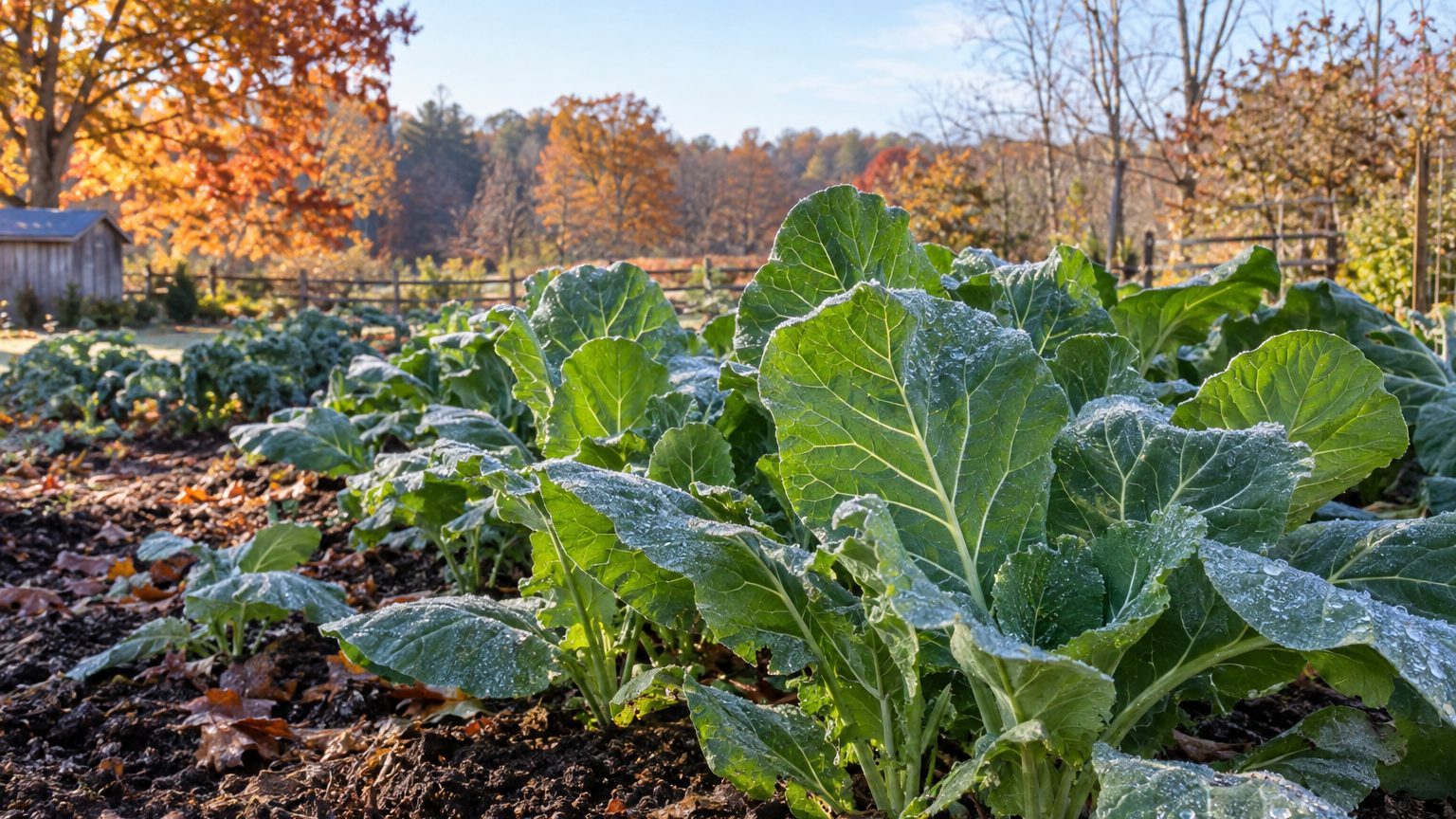

Collards go in twice a year in Kansas. Transplants go out from late March into April for a spring crop, and seed or transplants go in from mid summer for a fall crop that keeps producing through the first freezes. Fall is the stronger of the two. The week that suits your garden depends on where it sits, since the reference frost dates come from one airport station and rural plots usually frost later in spring and earlier in fall.
The short answer for Kansas
Set spring transplants out ahead of the last freeze. Sow or transplant the fall crop from late July through mid August. Both windows hang on two reference ranges from the Wichita airport station (NOAA 1991-2020 Climate Normals): the last spring freeze falls between April 4 and April 18, and the first fall freeze between October 23 and November 2.
Each range is a probability of a 32°F freeze. It marks the 30 to 70 percent band, the stretch of dates when a freeze is still a live possibility. A freeze can arrive before or after the dates, so they are a planning guide. Collards also handle cold better than most garden crops, so watch the plants and the forecast before setting them out. A hardened-off transplant shrugs off a light frost.
When do you plant collards in spring in Kansas?
Start seed indoors in late February or early March, then move seedlings outside from late March to mid April. Direct seeding works too once the soil can be worked, but transplants get a head start. They reach harvest size before summer heat toughens the leaves. Most packets list days to maturity, and counting from transplanting versus sowing changes the harvest date, so read which one the packet uses.
When do you sow collards for fall in Kansas?
Count back from the first-freeze range. That puts the last sensible direct sowing in late July or early August, with transplants going out into mid August. The plants grow through September’s cooling weather and are ready to pick by October. They keep going well past the first light freezes, which sweeten the leaves.
| Crop | Start seed | Plant outdoors | Harvest window |
|---|---|---|---|
| Spring collards | Late February to early March, indoors | Late March to mid April | Late May into June |
| Fall collards | Late July to early August, in the ground or in flats | Transplants by mid August | October through the first freezes, often into early winter |
Shift every line later by a week or two if your garden is suburban or rural, since those sites typically see the last spring frost later and the first fall frost earlier than the airport does.
What will not work here

Planting collards in May and expecting a spring harvest rarely works. Summer heat arrives before the plants have grown big enough to pick, and what leaves they make turn tough and attract aphids and cabbage worms. If the spring window is missed, skip to fall rather than push a late planting. A fall crop is also the better place for slow-maturing types, so the best collards and greens for Kansas are worth reading before you order seed.
Why does midsummer sowing fail so often?
Seed sown in late July lands in hot, dry soil. A weekly deep watering is not enough here. The top inch of soil dries quickly, and a crust forms that seedlings cannot push through. Anyone who waters once a week will see patchy, thin stands at best. The fix is light watering until the seedlings are up, plus a board or shade cloth over the row for the first few days. Many gardeners skip the problem by starting seed in flats in a shaded spot and moving the seedlings out in August.
Waiting until September is the other common miss. With the first freeze arriving between October 23 and November 2 at the reference station, and often one to two weeks earlier in rural gardens, a September planting never builds a plant big enough to feed a household. It yields baby leaves at best.
Can collards survive a Kansas winter?
Sometimes, but plan as though they will not. The mean daily minimum of the coldest month at Wichita is 22.5°F. Mature collards come through nights like that, particularly with a layer of straw mulch. A sharp dip well below that average, helped along by wind and dry soil, can kill leaves to the ground or finish the plant. Gardens in the colder part of the state should treat the fall crop as a harvest through late fall and early winter, and count any plants that make it to spring as a bonus.
Transplanting on the early date is the last place this goes wrong. April 4 is the early end of a probability band at one airport. A garden that frosts one to two weeks later can lose newly set plants to a freeze that never touched the weather station. Keep row cover, buckets, or old sheets handy through the middle of April.
What changes across Kansas
No single planting date fits the whole state. The USDA Plant Hardiness Zone Map (2023 edition, built on 1991-2020 normals) places Kansas anywhere from zone 5b to zone 7a. That is a wide spread for one state, and it shows up in the garden as weeks of difference in when the soil warms and when the first hard freeze lands.
The Wichita figures sit in the south-central part of the state. A gardener farther north should check their own county extension office for local frost dates. Start by adding a week or two to the spring dates and subtracting the same from the fall ones, then adjust from experience. Higher ground in the west does the same thing, and frost pockets in low-lying yards can be as cold as sites a hundred miles north.
The southern tier gets the opposite benefit. Fall collards there have a longer runway, and mulched plants are more likely to stay alive into midwinter. Even so, the reference station’s 22.5°F average coldest-month minimum says a hard cold snap can still reach them.
One caution about the zone map. Hardiness zones come from a single variable, the average annual extreme minimum temperature. They say whether a perennial survives winter. They do not give frost dates, summer heat, or the length of the growing season, so a zone number is a poor tool for dating a sowing. Use the USDA map to see which zone covers your area, then use your county’s frost dates for the calendar. Do not rely on a neighbor’s guess at the zone, and do not take one from a seed packet.
For a first look at the possibilities, the guide to growing collards in Kansas covers site, soil, and spacing for the whole state.
Where to check this for your own county
A county recommendation beats a state one. The dates above describe a single reference city and a state-wide range of zones, which is a good starting point and a poor final answer. Your county extension office knows the local frost record, the soil, and what has grown well in nearby gardens.
In Kansas that means K-State Research and Extension, the land-grant university’s outreach arm. It runs offices that serve every county or district, and most answer garden questions by phone or email. Its website carries vegetable publications, and local staff and Extension Master Gardener volunteers can fill in what the statewide material leaves out.
Look for two things in particular:
- A local vegetable planting calendar, with spring and fall dates for cool-season crops such as collards, kale, and cabbage.
- Varieties tried in your county or region, especially for fall plantings that must finish before hard freezes.
Ask the office for the local last spring and first fall frost dates as well. A county office can say whether your area typically runs ahead of or behind Wichita, and by how much. That answer replaces the one-to-two-week rule of thumb with something measured near your garden.
Checking this against your own garden
Your own observations outrank every date above. Three things are worth watching, and none needs equipment.
Soil warmth by feel. In early spring, grab a handful from a few inches down. If it crumbles and feels cool but not cold, it is ready for collard seed or transplants. If it clumps into a wet ball or leaves your hand numb, wait. A bed against a south-facing wall will pass this test days before an open, shaded one, which tells you where your warmest microclimate is.
What the neighborhood is blooming. Forsythia, redbud, and dandelions flower in step with the soil warming. When they open in your yard, spring planting is near. If they flower a week behind a friend’s across town, move your own dates back by the same margin. In fall, watch the tomato and basil leaves. The first to blacken show where frost arrives first, and that spot is where fall crops need covering.
The first true leaves on seedlings. The first pair that opens after sprouting is the seed leaves. The pair after that are the true leaves, and the seedling is ready for the garden once it has several of them. If true leaves take longer than expected, your starting spot is cooler or darker than you thought. Move the flats closer to the light or try a warmer corner.
The Moon calendar is a separate, older custom: see when to plant collard greens by the moon, written as tradition rather than fact.
Common questions
Can I sow collard seed straight into the garden in spring?
Yes, once the soil can be worked, a few weeks before the last freeze. Transplants set out in late March or April usually reach harvest sooner, which matters because spring plantings have to finish before summer heat.
Will collards live through the winter?
They often survive light freezes and some deep cold with mulch, but the coldest month averages a low of 22.5°F at Wichita, and sharper dips can kill plants. In the colder parts of the state, plan on harvesting through early winter and treat any survivors as a bonus.
How late can I plant fall collards?
Transplants set out by mid August have time to size up. Seed sown in late July or early August works, but anything later gives you small plants with only baby leaves before the first freeze, which arrives between October 23 and November 2 at the reference station and sooner in many rural gardens.
Do collards taste better after a frost?
Yes. Greens picked after a light freeze are milder and sweeter than those picked in warm September weather.