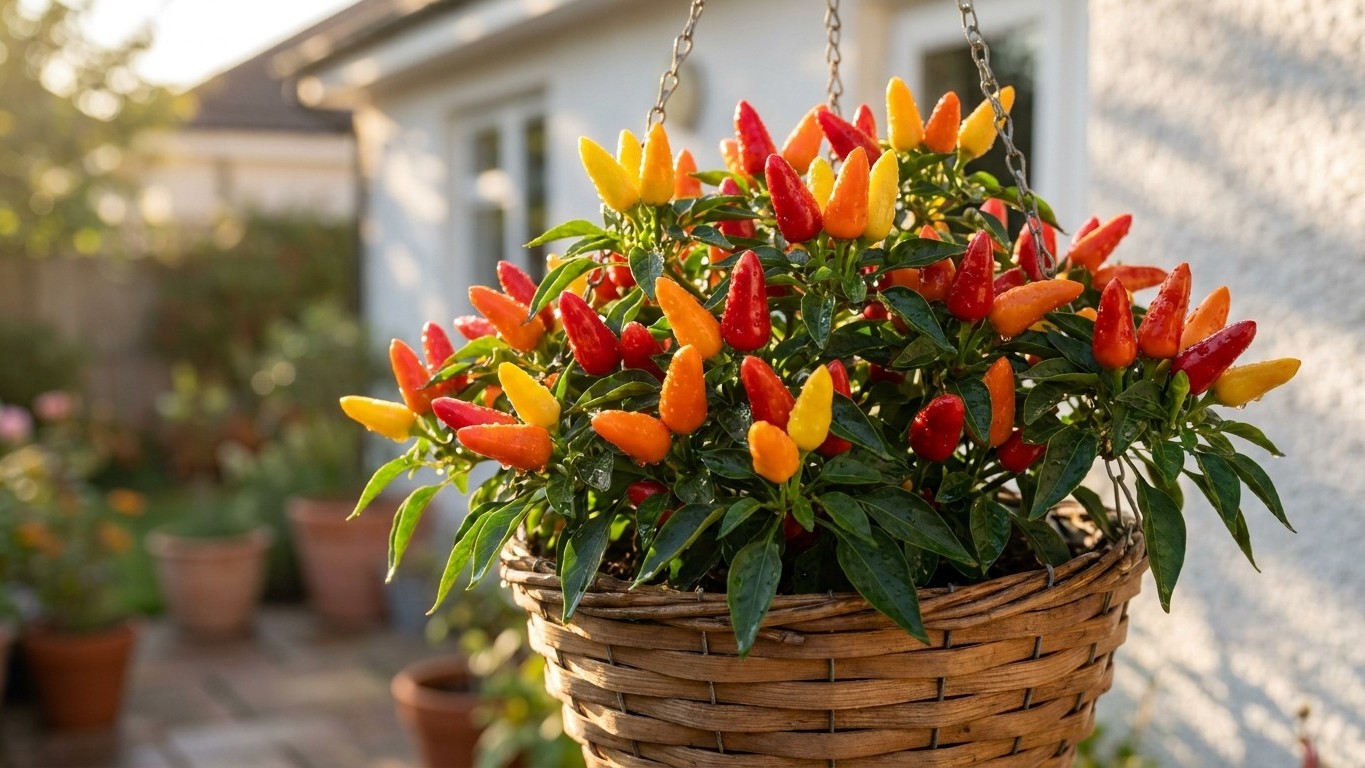

The honest answer: no species-level list of insects or animals documented as pepper pests in Kansas appears in the verified data behind this page. What is verified and tied to this state is the climate window that decides when pepper plants are stressed, vulnerable, or simply failing to set fruit, the frost dates, the summer heat load, and the temperature swings that often get blamed on bugs when the real cause is weather.
Which pests attack pepper in Kansas
This page cannot hand you a named, sourced list of insects or wildlife that feed on pepper plants in Kansas, because that list simply isn’t part of the verified facts available. Making one up, or borrowing a generic “common garden pests” list from somewhere else, is exactly the kind of guessing that leads to wasted sprays and misdiagnosed plants. So instead, this section sorts through what actually is confirmed for this state: the climate thresholds that determine whether a pepper plant thrives, struggles, or fails outright.
Those thresholds matter because a stressed plant looks a lot like a pest-damaged plant to an untrained eye. Pepper fruit set fails at both ends: nights below 55°F stop pollination just as reliably as days above 90°F do. A gardener who sees blossoms dropping in July and assumes an insect is at work may be watching heat stress instead, and no amount of pest control fixes that. The Wichita reference station averages 57.6 days a year at or above 90°F, based on NOAA NCEI Climate Normals from 1991 to 2020.
What this section deliberately does not do is list a tomato hornworm, a flea beetle, an aphid, or any other species as confirmed for Kansas pepper crops, because none of those names appear in the sourced material this page draws from. A pest name attached to no source is worse than no name at all, because it trains a reader to trust a claim that was never checked. If a gardener’s plant shows chewed leaves, holes in fruit, or sticky residue, those are real signs of insect activity, but naming the culprit requires a local diagnosis, not a guess dressed up as a fact.
That local diagnosis is exactly what a state extension service exists to provide: identification at the species level, tied to a specific county and season, is a job for a trained specialist looking at an actual sample or a clear photo, not a general climate page. The sections below build out the timing framework, the stress-versus-damage checklist, and the physical steps that make sense for this state’s growing season, so that whatever a gardener finds crawling on a pepper plant, they know when to expect trouble and how to rule out weather before assuming pest.
When each one shows up, and what it does first
Timing in Kansas starts indoors, long before a pepper plant ever sees a garden bed. Transplants need 8 to 10 weeks indoors before they go in the ground, and they shouldn’t go outside until the soil reaches 60°F, and after frost has passed. At the Wichita reference station, the last spring frost typically falls somewhere between April 4 and April 18, though suburban and rural gardens across the state often see frost linger one to two weeks past that, sometimes longer at higher elevations. That later date is the one that actually matters for a given yard.
The first few weeks after transplant are about shock recovery, not pest pressure. A newly set pepper plant that looks wilted or pale in its first week is usually adjusting to outdoor light, wind, and soil conditions, not fighting off an insect. Watch for a plant that fails to perk up after a few days of consistent watering; that’s worth mentioning to an extension office, since a truly damaged root system or a chewed stem base won’t resolve the way transplant shock does.
Flowering brings the next stress window, tied directly to that fruit-set threshold. Roughly 35 to 45 days after flowering begins, not from the sowing or transplant date, fruit either sets or it doesn’t, and a run of nights below 55°F or days above 90°F during that stretch can blank out a whole flush of blossoms. A gardener who notices flowers falling off without ever forming fruit should check recent overnight and daytime temperatures before assuming anything chewed them off, because dropped blossoms from heat or cold usually show no physical damage at all.
Harvest lands 70 to 85 days after transplanting, per Clemson Cooperative Extension, and this stretch is when fruit-level damage becomes easiest to spot: holes, scarring, or discoloration on the fruit itself, as opposed to leaf damage earlier in the season. Anything found on the fruit at this stage is worth documenting with a photo and a location, since that’s the kind of detail a county office needs to make an actual call.
Telling the damage apart from everything else
Plenty of pepper problems in Kansas have nothing to do with insects, and mixing them up wastes time and, often, money on the wrong fix. The single most useful habit is checking whether damage recovers with water and shade before assuming something is feeding on the plant.
| What you see | Likely cause | What distinguishes it |
|---|---|---|
| Wilting on a hot afternoon | Heat stress from days above 90°F | Plant perks back up by evening if soil moisture is adequate; chewed stems don’t recover regardless |
| Flowers dropping before fruit forms | Fruit-set failure from nights below 55°F or days above 90°F | No chew marks, holes, or discoloration on the flower itself |
| Pitted, soft skin after harvest | Chilling injury from storage below roughly 45°F | Appears only after harvest, spreads evenly across the fruit, no entry holes |
| Ragged or torn leaf edges | Wind or hail damage | Damage pattern lines up with wind direction rather than scattered feeding marks |
| Pale leaves with green veins | Nutrient deficiency | Confirmed only through a soil test, not by looking |
That storage-related row deserves its own note, because it trips up nearly every home gardener at some point. Peppers store best at 45 to 50°F with 80 to 90 percent relative humidity for two to three weeks, and a standard refrigerator runs colder than that. A pepper that pits and softens in the crisper drawer wasn’t attacked by anything; it suffered chilling injury from a fridge that’s simply too cold for the fruit. Mistaking that for pest or disease damage after the fact sends people looking for a bug that was never there.
None of this replaces an actual look at the plant. A gardener who has ruled out heat, cold, wind, and nutrient issues and still sees chew marks, holes, or insect bodies has a real case worth bringing to a local extension office, ideally with a clear photo and a note on when the damage first appeared.
What actually works here, and what is a waste of time
On a growing season bookended by a frost date in one direction and 57.6 average days a year above 90°F in the other, timing does more work than any product could. Delaying transplant until the soil hits 60°F, rather than transplanting by a calendar date, avoids the single most common early-season loss in Kansas gardens. A physical barrier like row cover, put down during the vulnerable first couple weeks after transplant, protects against both a late cold snap and early insect activity without needing to identify a species first.
Consistent watering during stretches of days above 90°F does more to prevent blossom drop than any treatment aimed at a suspected pest, since a well-hydrated plant tolerates heat stress far better than a drought-stressed one. Checking plants in the cool of morning makes it easier to spot actual chew marks or holes rather than confusing them with midday heat droop.
What’s a waste of time: treating for an unidentified pest based on a general online description, since the cost and effort go toward a guess rather than a confirmed problem. This site doesn’t name products, active ingredients, or dosages, because pesticide registration and legal use vary by state, and the only source that knows what’s labeled for use in Kansas is the local extension office. Refrigerating peppers to “keep them fresh longer” also backfires, given the chilling injury threshold noted above; a cool pantry shelf or root cellar space closer to 45 to 50°F does far more good than a refrigerator drawer.
Where to check this for your own county
K-State Research and Extension is the service to contact for anything this page can’t verify, particularly a species-level pest identification tied to a specific garden. County-level pest presence varies enough that a confirmed problem one county over doesn’t mean much for a different yard, even within the same state. The frost dates and heat-day counts cited above come from a single reference station near Wichita; a garden fifty miles away, at a different elevation or with different local drainage, can run noticeably cooler or warmer.
That gap between state-level data and one specific yard is why a county extension office exists. They see local samples, track local outbreaks season to season, and know which insects have actually shown up in a given area recently, information that no climate dataset or general gardening page can replace. A phone call or an email with a photo of the damage, the date it appeared, and the county it’s in gives them what they need to make an actual call.
The next useful step for anyone dealing with an unidentified pepper problem in Kansas is straightforward: rule out heat stress, cold stress, and storage-related chilling injury using the thresholds above, then bring anything that still looks like feeding damage to the local K-State Research and Extension county office rather than guessing from a photo search online.
Common questions
Is it normal for pepper flowers to drop without ever forming fruit?
Yes, and it usually points to temperature rather than pests. Fruit set fails when nights run below 55°F or days climb above 90°F, and dropped blossoms from that cause show no chew marks or holes.
Can I store harvested peppers in the refrigerator?
A standard fridge runs colder than the ideal range of 45 to 50°F, and peppers held below about 45°F develop pitting and soft spots from chilling injury. A cool pantry or root cellar closer to that range works better, for up to two to three weeks under good conditions.
When should I transplant pepper seedlings outdoors in Kansas?
Wait until the soil reaches 60°F and frost has passed. At the Wichita reference station, the last spring frost typically falls between April 4 and April 18, though many gardens see it later by one to two weeks.
How do I know if damage on my pepper plant is from an insect?
Rule out heat stress, cold stress, wind damage, and nutrient deficiency first using the signs described above. If chew marks, holes, or actual insects remain after that, contact the local K-State Research and Extension county office with a photo for identification.