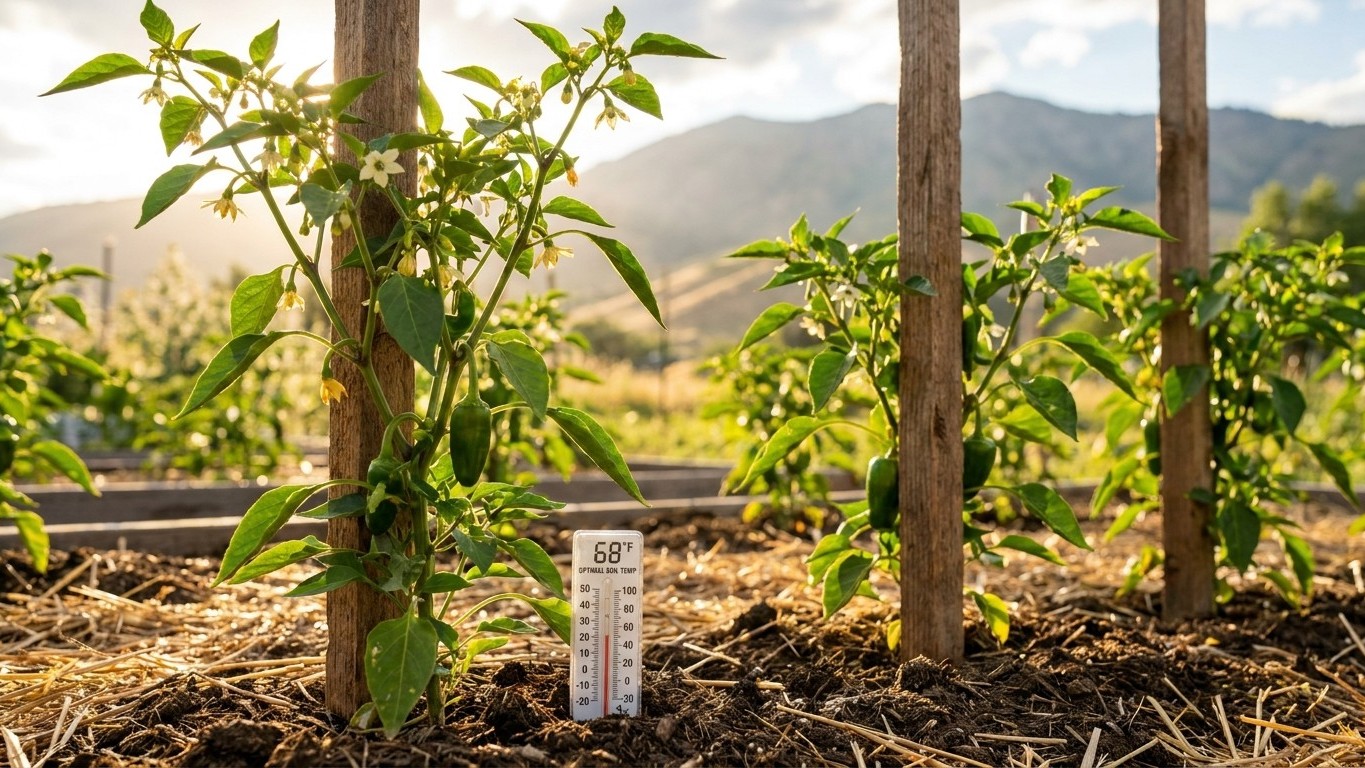

In Kansas, peppers ripen reliably when growers work around two thresholds: the heat that shuts down fruit set in midsummer, and the cool nights that do the same thing in spring and fall. The reference station near Wichita logs 57.6 days a year at or above 90 F, which is enough to stall a pepper crop more than once in a season if the planting window isn’t timed to dodge the worst of it.
The short answer

That 57.6-day average matters because pepper flowers abort when daytime highs climb past 90 F for more than a few days running. The plant doesn’t die. It just stops setting fruit, holds its blossoms, and drops them instead of turning them into peppers. In a Kansas summer, that heat load isn’t a rare event tacked onto the end of July. It’s spread across the season, which means growers who plant a single early crop and hope for the best often watch a productive June turn into a frustrating, fruit-free August.
The fix isn’t a different variety so much as a different rhythm. Get plants into the ground early enough that they’ve already set a first flush of fruit before the hottest stretch arrives, then expect a lull once daytime highs push past that 90 F line for days at a stretch. Production usually picks back up as the heat breaks in late August or September, which is why a second look at the plants in early fall often turns up more peppers than growers expected.
The other end of the failure gets less attention, and it shouldn’t. Pepper fruit set also fails when nighttime temperatures drop below 55 F, according to Utah State University Extension. That’s a spring problem and a fall problem both, and it’s the one growers tend to underestimate because a cool night doesn’t feel dramatic the way a 100-degree afternoon does. A pepper plant sitting in soil that feels warm enough during the day can still be losing blossoms overnight if the mercury dips under that mark.
This is also where a state-wide guide runs out of room to help. This site tracks days above 90 F by territory, because that’s a measured, published figure. It does not track summer night minima, and no reliable version of that number can be inferred from where a location sits on the map or from how cold its winters run. A county in the Flint Hills and a county along the Missouri border can have very different overnight patterns in June and September even if their daytime highs look similar. The only way to know whether your nights are dipping under 55 F is to watch them, with a thermometer in the actual bed, during the actual weeks the plants are flowering.
When to start seed here
The timing question has a straightforward arithmetic, and it starts at the transplant date, not at the seed packet. Work backward from there and the seed-starting date falls out on its own.
- Start with the last spring frost. For the reference station near Wichita, NOAA’s 1991-2020 climate normals put that window between April 4 and April 18, based on the 30-70% probability band for a 32 F freeze. That’s a station reading, not a county guarantee. Suburban and rural gardens typically see their last frost land later than the reference city, sometimes by one to two weeks, and gardens at higher elevation can run later still.
- Add time for the soil, not just the calendar. Peppers don’t go in the ground the day frost risk ends. Utah State University Extension is clear that transplants belong in the garden after frost, once the soil itself reaches 60 F. Cold, wet spring soil in Kansas can lag behind the air temperature by a week or more, so the actual transplant date is often later than the frost date alone would suggest.
- Count back 8 to 10 weeks from that transplant date. That’s the window Utah State gives for how long pepper seedlings need indoors before they’re ready to go outside. If your own frost-free, 60-degree-soil date lands in late April, 8 to 10 weeks back puts the seed-starting date somewhere in mid-February to early March. Push the transplant date later, into early May, and the seed-starting window shifts later with it, into late February or early March on the long end.
- Check your own county before locking in a date. Because the frost figures above come from one reference station, and because gardens away from that station tend to run later in spring, the safest approach is to watch local frost history and soil temperature directly rather than starting seed strictly off the reference dates.
None of this arithmetic should be rushed at the front end. Starting seed too early just means holding leggy, root-bound seedlings indoors for extra weeks with nowhere to put them, which tends to produce weaker transplants than starting a couple of weeks later on a tighter schedule.
What goes wrong here
Most Kansas pepper problems trace back to the same two thresholds already covered, showing up as specific, recognizable symptoms in the garden rather than an abstract “the plant isn’t doing well.”
- Blossom drop in a heat spell. Flowers form, then fall off before they ever swell into fruit, typically during a run of days at or above 90 F. The remedy is patience more than intervention: keep plants watered evenly through the hot stretch so they’re not also fighting drought stress, and expect fruit set to resume once daytime highs pull back below that threshold. Pruning or fertilizing hard during the heat wave won’t force fruit set; it just adds stress to a plant that’s already coping.
- Blossom drop from a cool night. The same symptom, a different cause, this time nights dropping under 55 F, most likely in early spring right after transplant or again as fall approaches. Since this site doesn’t carry night-minimum data by territory, the only real remedy is direct observation: track overnight lows in your own bed during flowering, and if a cold snap is forecast, consider row cover to hold in a few extra degrees rather than assuming the plants will push through it.
- Sunscald on exposed fruit. Kansas summer sun is intense enough that peppers left uncovered by foliage, especially after aggressive pruning or on plants that have lost leaves to disease, develop pale, papery patches on the side facing the sun. The remedy is to let plants keep a fuller leaf canopy through the hottest months rather than pruning for looks, and to avoid stripping foliage right as a heat wave arrives.
- Blossom-end rot on the fruit itself. A dark, sunken patch at the blossom end of the pepper, usually tied to inconsistent watering that disrupts calcium uptake more than to a soil calcium shortage. The remedy is even, regular watering, especially during the hot stretch when soil dries fast, since letting beds swing between bone-dry and soaked is what triggers the problem more often than the soil itself running short on calcium.
Common questions
Can I speed up fruit set once a heat wave hits?
Not really. Once daytime highs push past 90 F for several days, the plant’s own flowers abort rather than something a grower can water or fertilize around. Keeping the plant otherwise healthy, watered, and not drought-stressed sets it up to resume flowering as soon as the heat breaks, but there’s no fix that keeps fruit setting through the hot stretch itself.
Why does this site not give a night-temperature threshold for my county?
Because that data isn’t published at the territory level here, and guessing at it from latitude or winter cold would be a false precision. The 55 F fruit-set threshold from Utah State University Extension is real and worth watching for, but the only reliable way to apply it locally is to track your own overnight lows in the bed during flowering.
Should I trust the April frost dates for my exact address?
Treat them as a starting reference, not a guarantee. They come from a single weather station, and gardens in suburban or rural settings, especially at higher elevation, commonly see their last frost land one to two weeks later than that station’s figure. Local frost history for your specific county is worth checking before locking in a transplant date.
Does the 35 to 45 day figure for fruit development start at seeding?
No. That window, where it applies, runs from flowering, not from when the seed goes in the ground or even from transplant. The 8 to 10 week indoor-seedling window and the flowering-to-harvest window are two separate counts, and conflating them is one of the more common timing mistakes gardeners make when planning a pepper season.