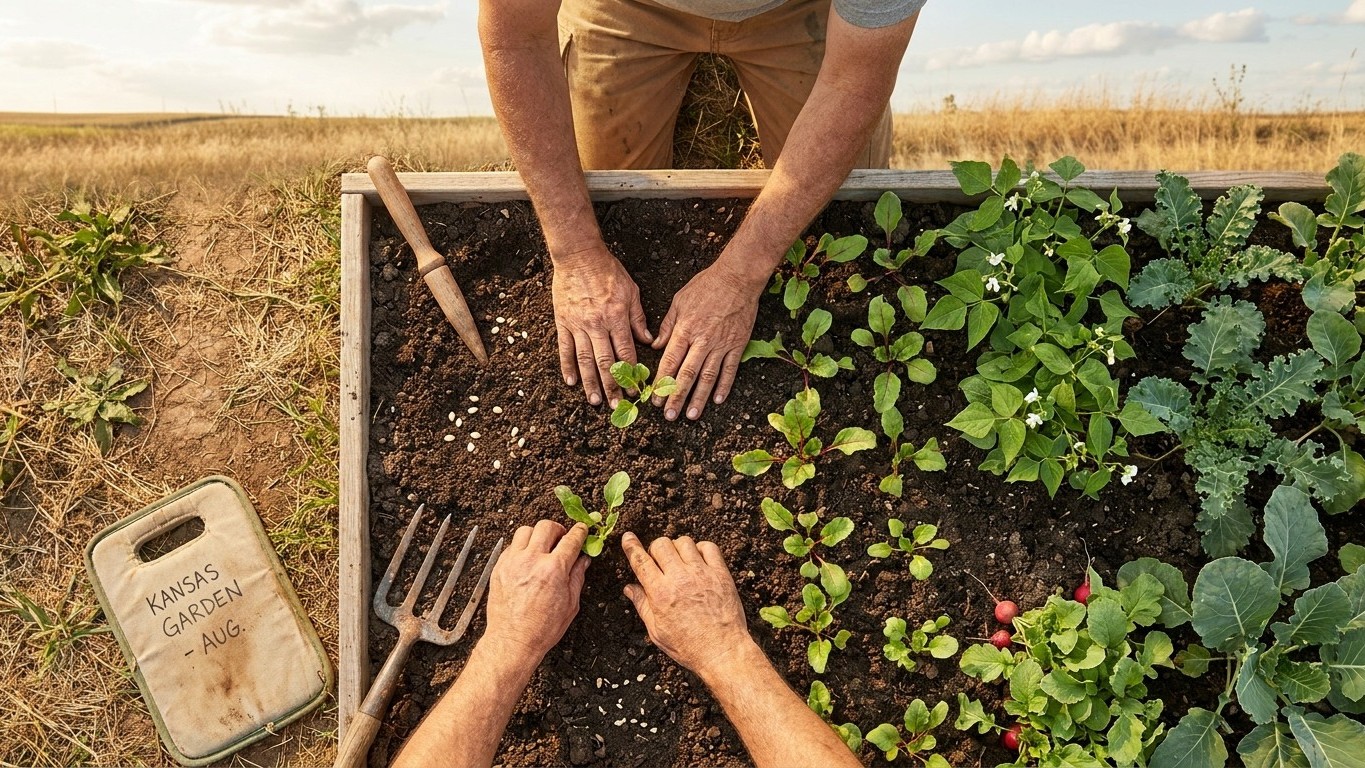

August in Kansas belongs to the fall garden, not the summer one. With the first fall frost landing somewhere between October 23 and November 2 at the reference station, gardeners have roughly nine to eleven weeks left to get quick-maturing greens, roots, and brassica transplants into the ground before the season closes. The obstacle this month isn’t cold. It’s heat.
What goes in the ground in August

The math that matters in August is simple: count backward from the first fall frost window (October 23 to November 2) and subtract the number of days a crop needs to mature. Anything that fits comfortably inside that window is a safe bet. Anything that doesn’t is a gamble on a warm fall, which Kansas sometimes delivers and sometimes doesn’t.
Bush beans are the easiest yes. At 50 to 55 days, an early-August sowing lands well ahead of frost with room to spare. Beets and turnips fit too, especially varieties bred for quick roots. Radishes are almost foolproof, some varieties ready in under a month. Kale, collards, and mustard greens tolerate the transition from August heat into October cold better than almost anything else in the garden, and a light frost actually sweetens their flavor rather than ruining it.
Spinach and lettuce are trickier, not because of the frost math but because of germination. Kansas soil temperatures in August routinely sit in the 85 to 95 degree Fahrenheit range at seeding depth, and both crops struggle to sprout above roughly 85 degrees. Direct sowing works better in the last week or two of the month as temperatures ease, or with shade cloth and extra watering to cool the soil earlier on.
Broccoli, cauliflower, and cabbage transplants (started as seedlings weeks earlier) go into the ground now for a fall harvest. Buying started transplants from a garden center is the practical shortcut if seedlings weren’t started in time.
Garlic is the classic exception. It goes in far later, typically October, once soil has cooled. Planting it in August wastes the bulb on premature top growth. Skip it for now.
What to start under cover
The backward math from a first fall frost of October 23 to November 2 governs what still gets a seed tray or a shaded nursery bed this month. A crop needing 70 days to mature has to be in the ground, as a transplant, by roughly mid-August to finish before the earliest frost date. That means broccoli and cauliflower seedlings destined for an August transplant should already be growing by the time this month opens, not starting from seed now.
What can still start under cover in August is anything with a shorter runway: fast lettuce varieties, spinach, and Asian greens like bok choy or tatsoi, all of which germinate more reliably in the shaded, slightly cooler conditions of a covered tray or a shady porch than in bare, sun-baked soil. Starting them indoors or in dappled shade for the first week or two, then transplanting once they have true leaves, sidesteps the germination problem entirely.
The two ways this goes wrong are mirror images of each other. Start too early, before there’s a clear runway to frost, and warm-season leftovers in the bed (tomatoes, peppers, squash) crowd out the space these seedlings need, forcing them to sit rootbound in trays too long and stunting them. Start too late, past the point where the days-to-maturity math still fits before the first frost window, and the crop runs out of season with half-grown roots and thin leaves. The safe habit is to write down each crop’s maturity days and count backward from October 23, the earlier end of the frost window, rather than the later end. Building in that cushion costs nothing and covers an early cold snap.
What is ready to pick
August is peak harvest for the crops planted back in spring. Tomatoes should be coming off the vine steadily, and the test is simple: a ripe tomato releases from the stem with a light twist rather than resisting. Peppers, sweet corn, cucumbers, summer squash, melons, okra, and eggplant all hit their stride this month, and daily or near-daily picking keeps plants producing instead of bolting to seed.
Beans and cucumbers in particular punish neglect. Left on the vine even two or three extra days past ready, they turn tough and seedy, and the plant slows production in response. Checking vines every other day at minimum keeps the harvest coming and the plant working.
Sweet corn signals readiness through the husk and the silk: silks turn brown and dry, ears feel firm and full to a light squeeze. A quick check is to pull back a bit of husk and press a kernel; if it releases a milky liquid rather than a clear one, it’s ready.
Splitting tomatoes and misshapen squash are common August complaints, and they trace back almost always to uneven watering rather than disease. A dry stretch followed by heavy rain or a deep soak swells fruit faster than the skin can stretch. Consistent watering, not more watering, is the fix.
The jobs that matter this month
Watering rhythm matters more in August than in any other month on the Kansas calendar. Deep, infrequent watering (soaking to six inches or more, two or three times a week rather than a light sprinkle daily) trains roots to grow down instead of staying shallow and heat-stressed. Morning watering, before the heat of the day, cuts evaporation loss and reduces the fungal issues that come from wet foliage overnight.
Mulch does double duty this month: it holds soil moisture during the driest stretch of the year, and it keeps soil temperatures low enough for fall seed germination to actually happen. A two to three inch layer of straw or shredded leaves over bare fall-planting beds can drop soil temperature several degrees, which is often the difference between lettuce that germinates and lettuce that just sits there.
Pest pressure peaks with the heat. Squash bugs and squash vine borers are actively laying eggs on cucurbits, spider mites thrive in dry, dusty conditions, and Japanese beetles are still active on beans and roses. Checking the undersides of leaves weekly and catching infestations early beats spraying later.
Staking and supporting heavy-fruited tomato plants before they collapse under their own weight saves fruit from rot and sunscald on the ground. Succession sowing of beans, beets, and quick greens through the first half of the month keeps the harvest window open longer. And as early crops like garlic, onions, or spring greens finish and clear out, those beds should get a quick amendment of compost before the fall planting goes in behind them.
What not to do in August
The single most common mistake is direct-sowing lettuce or spinach seed into bare, sun-baked soil and assuming it will come up because the calendar says it’s fall-planting time. Soil above roughly 85 degrees Fahrenheit suppresses germination in both crops regardless of what the air temperature feels like. Cooling the soil first, with mulch, shade cloth, or a few days of consistent watering, fixes this before a single seed goes in.
Skipping water during a hot stretch, then compensating with a heavy soak once the plant is already stressed, causes more damage than a slightly dry week ever would. Tomatoes respond to that swing with blossom end rot and split fruit, not gratitude for the eventual drink.
Heavy nitrogen fertilizer late in the tomato and pepper season is another classic error. Nitrogen pushes leafy green growth at the expense of fruit set and ripening, which is the opposite of what’s needed as the season winds toward frost. A lower-nitrogen, higher-potassium feed supports fruit finishing instead.
Hard pruning of tomato or pepper foliage during the hottest stretch of August removes the leaf cover that’s shading fruit from sunscald, and it stresses a plant that’s already working hard just to stay hydrated. Light, targeted pruning is fine; wholesale cutting back is not.
Checking this against your own county
The frost windows above come from one reference weather station, and Kansas covers a lot of ground between its eastern river bottoms and its high western plains. Elevation, local terrain, and simple north-south distance across the state can shift a first fall frost by a week or two in either direction, and rural gardens away from urban heat tend to frost out earlier than the station data suggests. The state’s USDA hardiness range, 5b to 7a, spans a real difference in winter severity depending on where in Kansas a garden sits.
The Kansas State University Research and Extension service (ksre.k-state.edu) publishes county-level guidance and localized planting calendars that account for these differences far better than any single statewide date range can.
Common questions
Is it too late to plant tomatoes in Kansas in August?
Yes, for a first planting from seed. Tomatoes need 60 to 80 days to fruit, and starting now leaves too little runway before the October frost window. An already-fruiting plant purchased as a nursery transplant could still finish, but a seed-started tomato won’t make it.
Why won’t my lettuce seeds germinate in August?
Kansas soil temperatures often run well above the roughly 85 degree Fahrenheit threshold where lettuce germination drops off sharply. Cooling the soil with mulch or shade, or starting seed indoors and transplanting once temperatures ease later in the month, solves the problem.
Can I still start a fall vegetable garden this month?
Yes. Quick-maturing greens, beans, beets, radishes, and turnips all fit comfortably before the first fall frost window of October 23 to November 2 if sown in the first half of the month.
When should garlic go in the ground in Kansas?
Not in August. Garlic goes in much later, typically in October once soil has cooled, so the cloves root without pushing premature top growth.