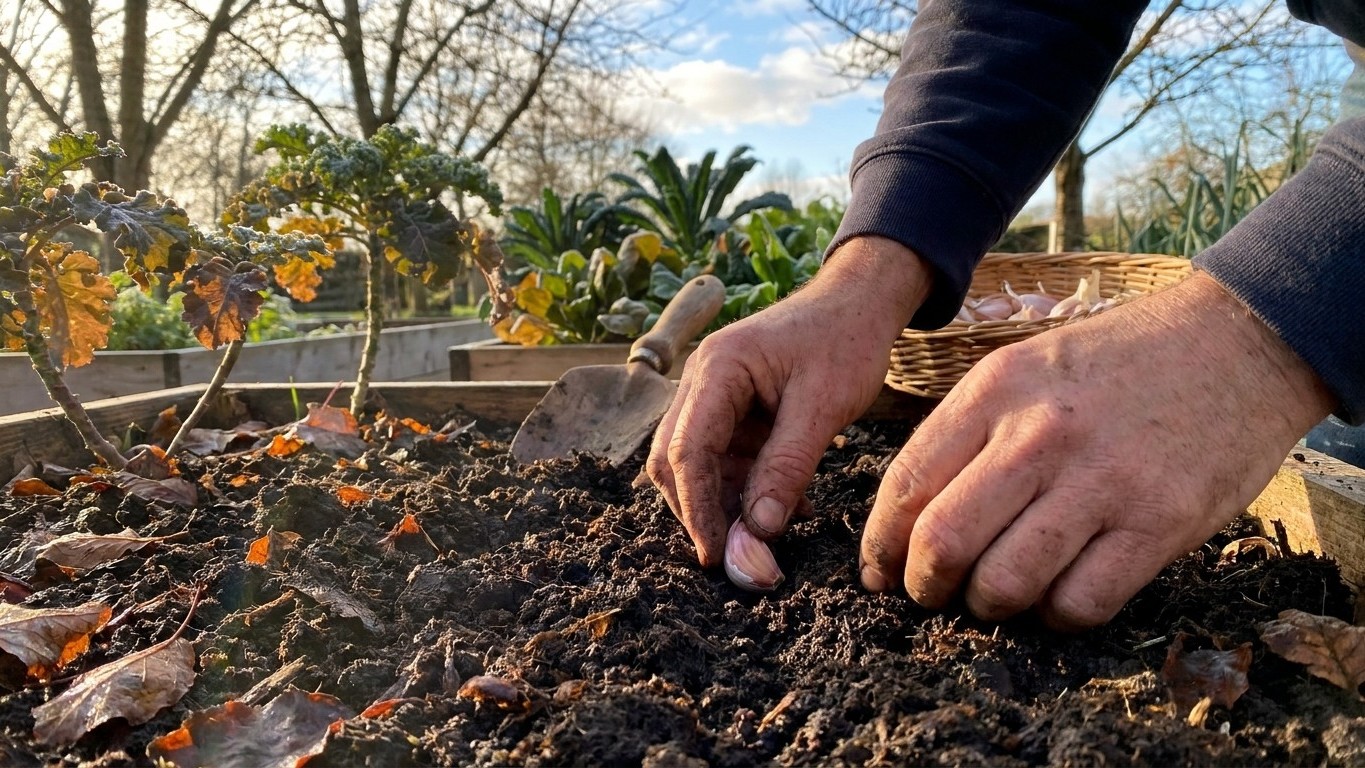

October in Kansas is garlic-planting month, not shutdown month. Early in the month there’s still time to tuck in cold-hardy greens under cover, and the first fall frost doesn’t arrive statewide until somewhere between October 23 and November 2, which leaves a real, if narrowing, window for direct-sowing and transplanting before the garden pivots to cleanup and cover crops.
What goes in the ground in October

Soil temperature, not the date on the calendar, decides what survives this month. Garlic and shallots are the anchor crop for October in Kansas, cloves go into the ground anytime the soil is workable, ideally four to six weeks before it freezes solid, so they can grow roots without pushing top growth that frost would just knock back. There’s no need to rush this into the first week; garlic planted through most of October, and even into early November in a mild fall, still has enough time to root in before winter dormancy.
Early in the month, with the first fall frost still weeks away in most of the state, there’s a last real chance to direct-sow quick, cold-tolerant greens: spinach, arugula, mache, and radishes can still go in if they’ll have three to four weeks to size up before a hard freeze. Transplants of cold-hardy brassicas, kale, collards, Swiss chard started earlier in a flat, can also go out now, since these crops shrug off a light frost and often taste better after one.
What’s a gamble this month
Peas sown this late rarely mature before frost ends the season, and anything in the tomato or pepper family is out of the question, soil temperatures are already dropping past the point where warm-season roots establish well. If the last-chance window has already closed in a given county, cold frames and low tunnels stretch the calendar by several weeks, letting greens and root crops keep growing after open-ground planting stops making sense.
What to start under cover
Counting backward from the first fall frost, which lands somewhere between October 23 and November 2 depending on location, is more useful than counting forward from any fixed date. A spinach or mache seedling needs roughly four to six weeks of decent growing conditions before short days and cold slow it to a crawl, which means sowing under a cold frame or row cover in the first half of October gives the plants enough runway to establish real root systems before growth stalls for winter.
Sow too early, while September’s heat is still lingering under cover, and tender greens can bolt, wilt, or rot in soil that’s still too warm and too wet under plastic. Sow too late, past the point where there’s enough daylight and warmth left to build real roots, and the seedlings sit as weak, spindly plants that never really get going before the cold shuts them down entirely, the same rootbound, leggy failure that hits spring starts sown too early, just running in reverse.
Cold frames and hoop houses are also the place to keep lettuce and claytonia going past the point where the open garden has given up. These aren’t crops racing toward a harvest date so much as insurance: cover crops establish slowly through fall and hold the bed through winter, so getting cereal rye or winter wheat seed into open ground before the coldest weather sets in matters more than hitting an exact date.
What is ready to pick
October carries the last of the warm-season harvest and the first of the fall one. Winter squash and pumpkins should come off the vine before a hard freeze damages the skin, the test is a thumbnail pressed into the rind that doesn’t leave a mark, and a stem that’s dried and corky rather than green. Sweet potatoes need digging before soil temperatures drop much below 55°F, since cold soil bruises the roots and shortens their storage life. Any tomatoes still on the vine when frost threatens are worth picking green and ripening on a counter indoors rather than risking losing the whole crop overnight.
Alongside that last push, fall greens sown back in August or early September are hitting harvest size now: lettuce, spinach, turnips, and radishes planted for a fall crop are ready to pull as soon as they size up, and cutting outer leaves rather than whole heads stretches the harvest further into the month. Onions and garlic from earlier plantings should be fully cured, tops collapsed and papery, before they go into storage.
Apples and pears from home orchards are often still coming off the tree this month too, ready when they separate from the branch with a gentle twist rather than a pull. Once frost does arrive, that’s the natural end point for anything tender still standing outside; after that, the harvest shifts to whatever’s stored in the root cellar or garage, and to checking those onions, squash, and potatoes for the first ones starting to soften or sprout.
The jobs that matter this month
October’s workload is less about planting and more about setting the garden up to survive winter in good shape, and skipping these jobs now costs real ground in spring. Cleaning up dead and diseased plant material after frost kills off the tomatoes, squash, and peppers removes overwintering spots for pests and disease before they get a chance to settle in for the cold months.
Mulching garlic beds with a couple inches of straw once the ground has cooled protects the cloves through winter swings without smothering them, and the same goes for any perennials or newly planted trees and shrubs that haven’t had a full season to root in. Cover crop seed needs to go down early enough in the month to germinate and put on some growth before frost stops it cold, cereal rye is forgiving on timing, but it still needs a few weeks of open soil to be worth the seed.
Planning ahead pays off now
Spring-flowering bulbs like tulips and daffodils go in through October, since they need a real cold spell to bloom well, and this is also the natural point to divide overgrown perennials while the soil is still workable. Ordering seed for next season before the popular varieties sell out, testing soil pH and amending it based on the results, and cleaning and sharpening tools before they sit unused all season are jobs that take an afternoon now and save a scramble later. Watering shouldn’t stop just because the air feels cool, new plantings and recently divided perennials still need consistent moisture until the ground actually freezes.
What not to do in October
The most common mistake this month is planting warm-season crops because a stretch of mild weather made it feel like summer isn’t really over. Soil at root depth cools more slowly than the air, but it’s still dropping, and tomatoes or peppers set out now won’t outrun the first fall frost between October 23 and November 2, that effort is better spent on garlic or cover crops instead.
Pulling row covers or cold frame lids off too soon after a warm spell is the reverse version of the same mistake. A few mild days don’t mean the cold is done, and tender greens exposed on the one night frost does show up can lose weeks of growth in a single evening. It’s worth leaving protection in place a little longer than feels necessary rather than betting on the weather holding.
Feeding nitrogen to garlic, trees, or perennials this late in the season pushes soft new growth right when the plant should be settling into dormancy, and that new growth is exactly what frost damages first. If soil needs amending, this is the month for compost and slow-release organic matter that builds fertility over winter, not a fast-acting nitrogen feed that encourages growth the plant can’t afford to make.
Checking this against your own county
A statewide October guide is a starting point, not an instruction sheet. Kansas runs from USDA Hardiness Zone 5b in the northwest to 7a in the south, and elevation, local topography, and even a nearby lake or river can shift frost timing by a week or two in either direction from the reference figures cited here. Suburban and rural gardens in particular tend to see frost arrive earlier than the same date recorded at an airport weather station.
For a planting calendar tuned to a specific county, the Kansas State University Research and Extension service is the right next stop, its local offices track conditions county by county in a way no single statewide date range can match.
Common questions
Is it too late to plant garlic in October in Kansas?
No : October is generally considered the prime month for garlic across Kansas. Cloves planted anytime the soil is still workable, ideally four to six weeks before the ground freezes solid, have enough time to root in without pushing vulnerable top growth before winter.
Can I still start a fall vegetable garden this late?
Only with quick, cold-hardy crops and only early in the month. Spinach, arugula, radishes, and mache sown in the first half of October, especially under a cold frame or row cover, can still reach harvest size before growth stalls with the shorter days and colder soil.
When does the first frost typically hit in Kansas?
Based on NOAA NCEI 1991-2020 climate normals, the first fall freeze at the reference weather station falls somewhere between October 23 and November 2. Rural and elevated areas often see frost arrive a week or two earlier than that range.
Should I cover my plants every night once October starts?
Not yet, early in the month, but keep row cover or cold frame lids on hand and check the forecast closely as the month goes on. A run of mild days doesn’t rule out a sudden overnight freeze, and pulling protection off too soon after a warm spell is one of the more common ways gardeners lose a fall crop.
Gardeners who plant by the Moon can check the October 2026 moon planting calendar, a tradition rather than a proven method.
Related guides
Elsewhere? See what to plant in October in every state and province.