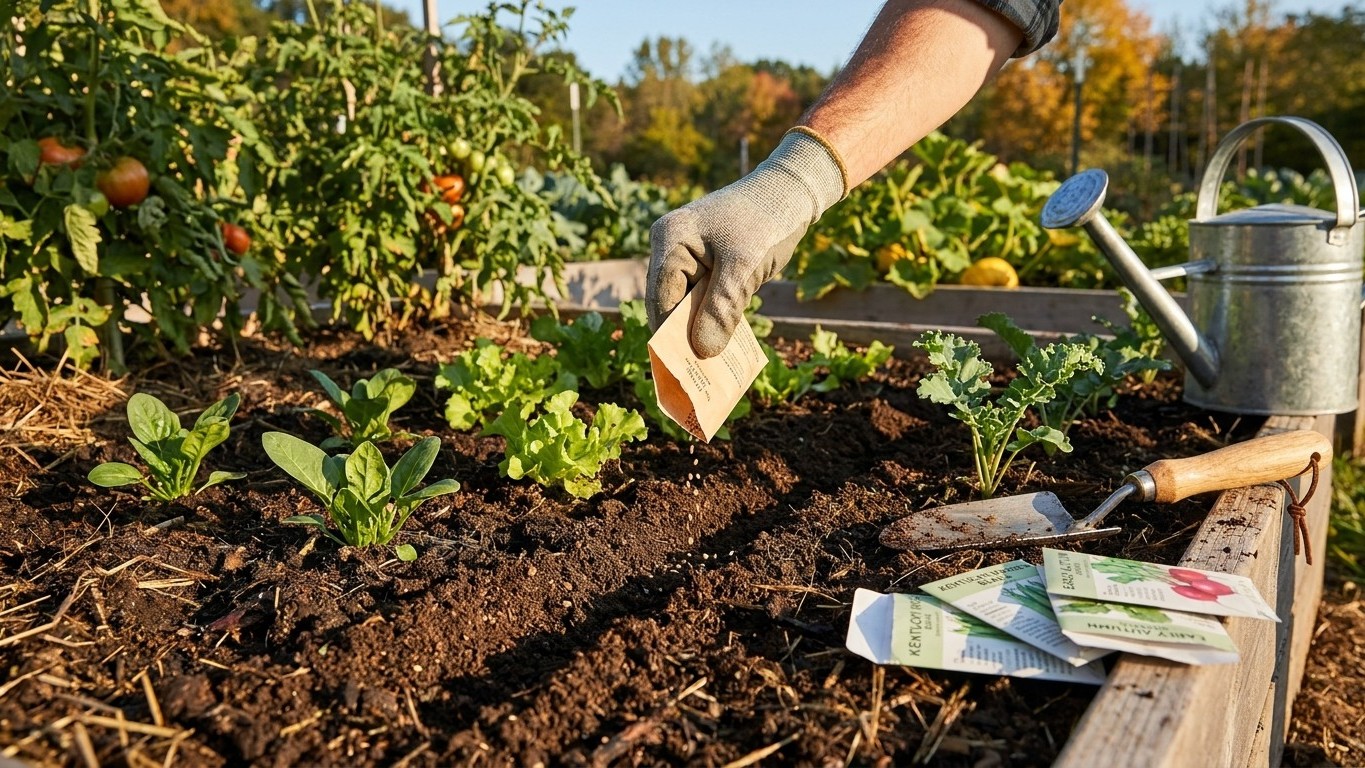

September in Kentucky is the state’s best-kept planting secret: the soil is still warm from summer, the worst heat has broken, and the first fall frost (November 2 to November 12, per NOAA climate normals) is still weeks away. Direct-sow spinach, lettuce, kale, turnips, radishes and fall peas now. Skip new tomato or pepper transplants, they won’t have time to produce before the cold arrives.
What goes in the ground in September

The calendar says September, but the soil doesn’t care about the calendar. What matters is soil temperature and the number of frost-free days left, and in Kentucky that number is fixed by one hard boundary: the first fall freeze arrives somewhere between November 2 and November 12, based on NOAA’s 1991-2020 climate normals. That gives most of the state roughly eight to ten weeks from the start of the month to work with. It sounds like a lot until you count backward from harvest day.
Fast, cold-tolerant crops are the safe bets. Spinach, leaf lettuce, arugula, mustard greens, tatsoi and mizuna all mature quickly and shrug off the first light frosts, so a direct sowing in early-to-mid September still has a real shot at a full harvest. Radishes are almost foolproof this time of year, and turnips planted now often size up nicely by the time the cold arrives. Fall peas, sown in the first half of the month, can produce a modest picking before growth stalls.
A rough sowing window
Because “September” covers four very different weeks, it helps to think in terms of days to maturity rather than a single planting date.
| Crop | Typical days to maturity | Reasonable last sowing (using the earlier frost date, Nov. 2, as the conservative marker) |
|---|---|---|
| Radish | ~25 days | Early October |
| Arugula | ~21 days | Early-mid October |
| Spinach | ~40 days | Late September |
| Leaf lettuce | ~45 days | Mid-September |
| Turnip (roots) | ~45-55 days | Mid-September |
What’s a gamble now is anything that needs warm nights to set fruit. New tomato, pepper, squash or bean transplants have essentially no chance of a real harvest before frost. Garlic and shallots, meanwhile, are better held for October in most of the state, when soil temperatures drop into the range that favors strong root development without pushing top growth too early.
What to start under cover
Counting backward from the first fall frost is the only reliable way to decide what still makes sense to start, whether that’s a seed tray on a porch, a cold frame, or a covered nursery bed. With the frost window sitting at November 2 to November 12, a gardener has roughly eight to ten weeks left, and every crop eats into that window differently depending on how long it needs from seed to a size that can handle cold nights.
Quick greens are the ones worth starting under cover now. Spinach and lettuce seeded in shaded trays or a partly shaded cold frame in early September avoid the germination problems that come with hot soil, and by the time they’re a few inches tall the weather has usually cooled enough to move them into open beds or leave them under row cover for a longer harvest window that stretches past the first frost. Kale and other hardy brassicas started as transplants now can also still make it, since a light freeze actually improves their flavor rather than ending the crop.
Slower crops are the risk. Broccoli, cabbage and cauliflower typically need six to eight weeks from seed to transplant size, then another eight to ten weeks to head up. Starting them under cover this late leaves almost no margin against the November frost window, and a bad stretch of cool, cloudy weather can push maturity past the point where the crop finishes at all. The two failure modes to watch for are starting too early, which produces leggy, rootbound seedlings sitting too long in small cells, and starting too late, which leaves a healthy plant with no season left to use.
What is ready to pick
September in Kentucky still delivers a real harvest, even as the summer garden winds down. Tomatoes, peppers, eggplant and summer squash keep producing into the month, though yields slow as nights cool. Sweet corn from later plantings often finishes up early in the month, and pole beans and okra can keep bearing right through the first couple of weeks if picked regularly to keep plants producing.
Winter squash and pumpkins planted back in early summer are approaching harvest now, and the test is simple: press a thumbnail into the skin. If it resists and doesn’t puncture easily, the fruit is ready to cure. Melons signal readiness with a change in stem color and a hollow sound when tapped, though by mid-September most melon vines are past their peak. Fall greens sown in August are often ready as baby leaves this month, giving an early return before the main fall crop matures.
It’s also the month to start checking stored crops from earlier in the season. Onions cured and stored after a July or August harvest can begin to soften at the neck if humidity crept into storage, and any bulb showing soft spots should be used first rather than left to spread rot to the rest of the batch. The same goes for garlic bulbs held from summer harvest.
The jobs that matter this month
September rewards gardeners who treat it as a transition month rather than a wind-down. Soil preparation for fall crops pays off directly: working compost into beds now, while the soil is still warm and biologically active, gets nutrients available to roots faster than the same work done in cold October soil. Mulch matters here too, not for winter protection yet, but to buffer the wide day-to-night temperature swings that come with early fall and to hold soil moisture as rainfall patterns shift.
Late tomatoes and heavy-fruited squash still need staking or trellising support before the plants sprawl further and fruit starts rotting on wet ground. Watering rhythm should shift with the season: deep, less frequent watering suits cooling soil better than the frequent light watering that summer heat demanded, and it encourages the deeper root growth that helps fall crops handle any dry spells before frost.
Succession sowing has a real deadline attached to it this month. Every two weeks, another short-season crop like radish or arugula can go in, but that window closes once the remaining days to frost fall below the crop’s maturity time. Pest scouting doesn’t stop either: fall armyworm and squash bugs are active in September and can do real damage to a crop that’s otherwise on track to finish strong.
Behind the growing beds, this is also the month to start the off-season paperwork of gardening. Order garlic sets ahead of an October planting, since the better varieties sell out early. Pull a soil test if beds have been struggling, so amendments can be worked in before the ground turns cold and unworkable. Clean up spent summer beds promptly, since leftover plant debris is exactly where squash bugs and other pests overwinter.
What not to do in September
The classic September mistake in Kentucky is trusting warm afternoons over the calendar. Air temperatures in the 70s and 80s can persist well into the month, and it’s tempting to set out a new tomato or pepper transplant on the logic that summer isn’t really over. The soil may feel warm, but the plant doesn’t have the eight to ten weeks it needs before frost arrives sometime between November 2 and November 12. The better move is to accept that warm-season planting closed out in summer and redirect that bed to a fast cool-season crop instead.
A second mistake is pulling row cover or venting a cold frame too early after a mild stretch, assuming the risk of frost has passed. It hasn’t. The frost window runs a full ten days across the state, and a warm week in early September says nothing about what happens in late October or the first days of November. Leave protective covers in place through cool nights rather than gambling on a string of mild days.
Nitrogen fertilizer is the third trap. Feeding trees, shrubs or perennials with a high-nitrogen product this late in the season pushes soft new growth that has no chance to harden off before the first freeze. That tender growth is often what gets damaged first, weakening the plant heading into winter. If feeding is needed this month, it belongs on fast-growing annual greens, not on woody perennials settling into dormancy.
Checking this against your own county
A statewide frost window is a starting point, not an instruction specific to any one garden. Elevation, local terrain and simple geography move these dates by weeks: a garden in the hills of eastern Kentucky can see frost noticeably earlier than one in the Jackson Purchase region in the far west, and the NOAA data itself notes that the Louisville station it’s drawn from tends to run later in spring and earlier in fall than the surrounding rural county. USDA hardiness zone 6a-7a spans the same range, built purely on average extreme minimum winter temperature, and it shifts across the state rather than describing one fixed reality.
For a planting window matched to a specific county, the University of Kentucky Cooperative Extension Service is the resource built for exactly that question.
Common questions
Can I still plant tomatoes in September in Kentucky?
New transplants set out in September won’t reach harvest before the first fall frost, which arrives between November 2 and November 12 across most of the state. Established plants already producing can keep going, but don’t start new ones.
When should garlic go into the ground in Kentucky?
Most Kentucky gardeners have better luck waiting until October, once soil temperatures have cooled further, rather than planting garlic in September.
What vegetables can I direct-sow outdoors in September in Kentucky?
Spinach, leaf lettuce, arugula, mustard greens, turnips, radishes and fall peas are all reasonable direct-sow choices, since each matures fast enough to beat the first frost.
Is it too late to start a fall garden in September in Kentucky?
No. With eight to ten weeks left before the first frost, there’s still time for quick greens and root crops, though slower crops like broccoli or cabbage are a tighter fit unless started earlier or grown under cover.
Gardeners who plant by the Moon can check the September 2027 moon planting calendar, a tradition rather than a proven method.