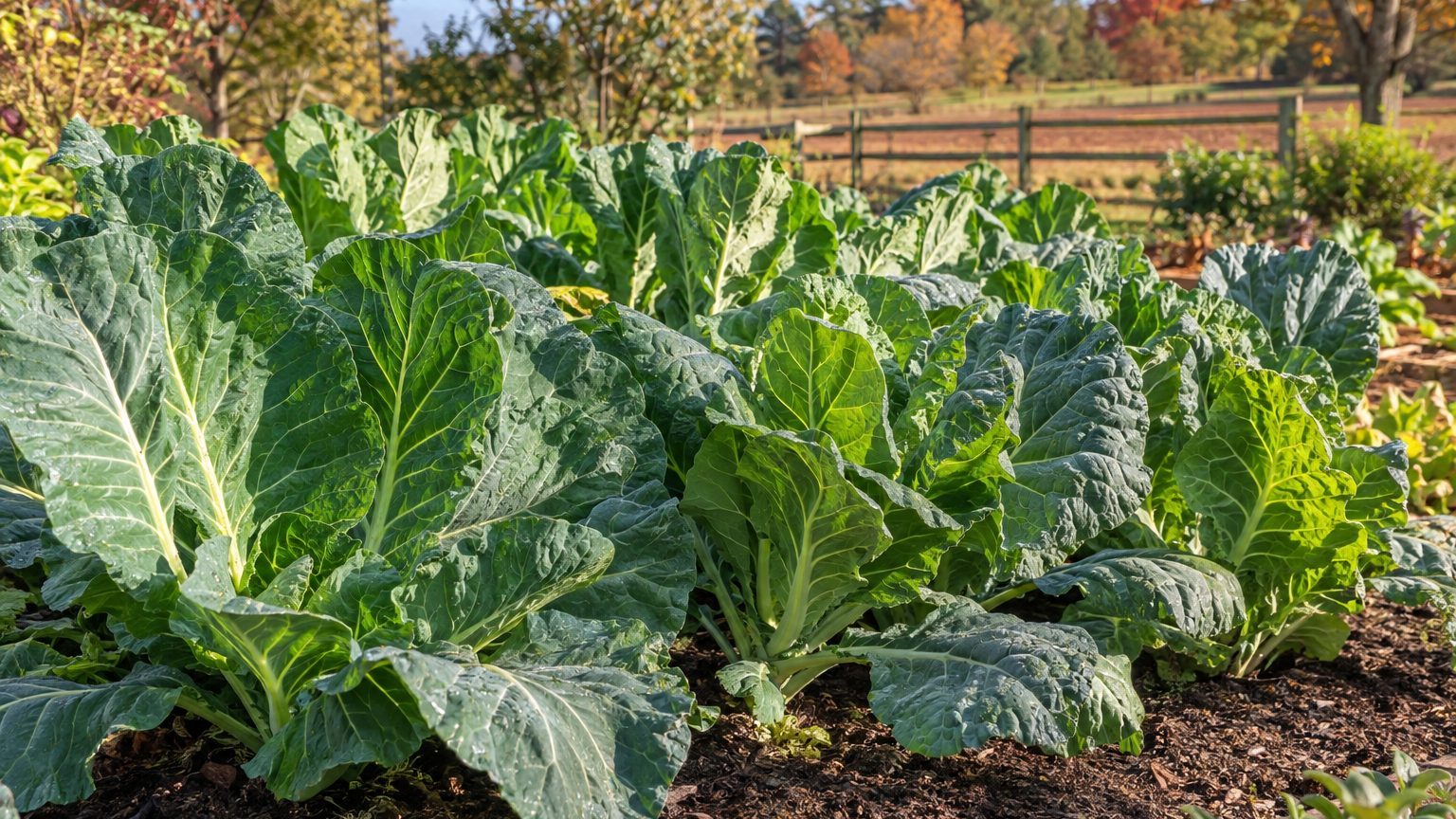

The best collards for Louisiana are standard non-heading Southern types, such as Georgia Southern and Vates, grown as a cool-season crop from a late-summer or fall start. They shrug off mild winters. Summer heat is what beats them, so the planting date matters more than the variety. Mustard, turnip greens and kale fill in around them.
The short answer for Louisiana
Choose an open-pollinated, non-heading collard and plant it for the cool half of the year. Georgia Southern and Vates are the reliable baseline: big leaves, steady growth, and regrowth after picking across a long, mild season.
The reasoning starts with winter. At the New Orleans reference station, the mean daily minimum of the coldest month is 46.1°F, which is well above anything that stops a collard. Plants keep growing from fall through early spring. A hard freeze is also unreliable. A 32°F freeze occurs in only 86.8 percent of years there, so roughly one year in seven has no freeze at all.
The frost dates are probabilities of that 32°F freeze, taken from the 30 to 70 percent band. The first fall freeze falls between December 17 and January 8, and the last spring freeze between January 18 and February 8. The fall window straddles New Year’s Day. A calendar built on frost would tell you almost nothing here, which is why the useful dates revolve around heat. The When to Plant Collards in Louisiana guide works through them.
Here is how the main types sort out for a long, warm season.
| Type | What it offers | Best use |
|---|---|---|
| Open-pollinated standard (Georgia Southern, Vates) | Large leaves, steady regrowth after picking, seed and transplants easy to find | Default choice for fall through spring |
| Fast hybrids (such as Flash) | Quicker, more uniform plants | A late start that leaves little room |
| Heading or cabbage collards (Morris Heading) | Leaves fold into a loose head | Cool stretches only; needs steady cool weather to fill out |
| Mustards, turnip greens, kale | Fast to harvest, different flavors | Companions that fill gaps in the bed |
Mustards and turnip greens run on a shorter clock than collards. They bolt quickly once days warm, so they suit the coolest months rather than the shoulders. For soil, feeding and harvesting, see Growing Collards in Louisiana.
What will not work here
Waiting for frost to plant. In colder states the last freeze date is the starting gun. Here it lands between January 18 and February 8 and it sometimes never comes, so a gardener who waits for the all-clear is sowing into a season that heat is about to close. A spring crop started after that window has only a short stretch before warm weather arrives.
Counting on frost to sweeten the leaves. Cold turns starch to sugar in collards, and a light freeze improves flavor. But with one winter in seven passing without a 32°F freeze, and many coastal winters barely touching it, sweetness has to come from cool nights, not from a freeze you can schedule. Plants that mature in November and December do better than plants that mature in warm spells.
Summer plantings and second-year plants
Starting seedlings in the heat of midsummer is a struggle. Soil stays warm, seedlings wilt by afternoon, and caterpillars find them first. Cabbage loopers and diamondback moth larvae feed on brassicas, and a winter that never drops below 46.1°F on average gives them little break. A collard carried over into its second spring is no better. It sends up a flower stalk as days lengthen, and the leaves turn tough and bitter. Treat collards as an annual and pull them when they bolt.
Close spacing and weekly watering habits
A humid climate punishes crowding. Where summers are hot and humid and rain comes in heavy bursts, leaves that touch stay wet, and leaf spots and rots follow. Give each plant 18 to 24 inches so air moves between them, and water at the base in the morning rather than overhead at dusk. Heavy clay that holds water after storms also drowns roots, so a raised bed or mounded row beats flat ground.
One more mistake is buying by the packet photo alone. A variety bred for a short northern season may be a fast, tender, bolt-prone plant in Gulf heat. Slow, long-season types are not a handicap here, because the cool season is long and mild.
What changes across Louisiana
The USDA Plant Hardiness Zone Map (2023) puts the state across zones 8a to 10a. That spread covers several half-zones, so no single answer fits every garden. The zone also rests on only one variable, the average annual extreme minimum temperature. It says nothing about summer heat, the thing that limits collards here. The dated figures above come from the New Orleans reference station, and gardens elsewhere will differ.
North Louisiana freezes far more reliably than the coast. Frost arrives earlier in fall and lingers later in spring, which shifts the window in both directions. Fall sowing should start somewhat earlier so plants are well established before cold slows them. Hard freezes can damage leaves that a coastal plant never sees, so a floating row cover over the bed on the coldest nights is worth having. Spring sowing can begin a little later, and the sweetness benefit of real freezes is more dependable.
On the coast and in the far south, the pattern flips. Freezes are rare, and some winters pass with none. Plants grow almost continuously, and harvests can run all winter. The price is that spring heat and bolting arrive sooner, and caterpillar pressure rarely lets up. Plan to sow in staggered batches so something is always at picking size, and plan to retire the crop earlier.
To find your own zone, use the USDA Plant Hardiness Zone Map and look up your ZIP code rather than guessing from a neighbor. Then adjust the dates by how far you are from New Orleans: earlier fall starts toward the north, later ones toward the Gulf.
Where to check this for your own county
The state’s land-grant extension service is the LSU AgCenter. Louisiana runs on parishes rather than counties, and the AgCenter keeps an office in each one. A parish recommendation beats a statewide one, because a statewide recommendation is an average across zones 8a to 10a, sandy coastal soil, heavy clay and wide differences in rainfall. A parish agent works from local soil and local weather.
Two things are worth looking for. The first is a planting calendar for your region, ideally one that lists sowing and transplanting months for fall greens by part of the state. Check what it says about the end of the cool season as well as the start, since the bolting date tells you more here than the frost date. The second is a list of varieties recommended or trialed in your area. Where a county or parish list exists, it reflects what actually performed in local soil and humidity, not a seed catalog’s national claims.
When you call or visit, bring specific questions. Ask which collard types do best for fall sowings, when local gardeners usually see the first leaf spot or caterpillar damage, and whether your soil needs a raised bed. Many offices also run soil testing, which tells you pH and nutrient levels before you plant. A few dollars and a week’s wait often save a whole fall bed.
Checking this against your own garden
Every date above is a starting guess. Your yard’s own signals outrank it, and three of them cost nothing.
- Soil warmth by feel. Push your hand a few inches into the bed in late summer. Soil that feels warm like bathwater will stress seedlings, while soil that feels merely mild is ready. A bed against a sunny wall warms and cools on a different schedule than one under a tree.
- First true leaves. The first pair after the seed leaves marks a seedling ready to thin or transplant. If they appear quickly, your bed is warm and the plants may need shade and water. If they come slowly, the spot is cooler or shadier than you assumed.
- The first flower stalk. In spring, a center that stretches upward and forms buds means the plant has decided the season is over. Note the date. It is your garden’s own measure of when heat takes over, and next year’s fall sowing and spring retirement can be set from it.
Write all three dates on a calendar for a year or two. Together they will tell you more about your microclimate than any statewide table.
Common questions
What is the single best collard variety for Louisiana?
Georgia Southern and Vates are the safest picks. Both are standard non-heading types with large leaves and steady regrowth, and both are easy to find as seed or transplants.
Do collards need a frost to taste good?
A light freeze improves flavor, but cool nights do most of the work. Since a 32°F freeze occurs in only 86.8 percent of years at the New Orleans reference station, plan on cool weather rather than frost.
Can collards grow through a Louisiana summer?
They survive, but quality falls. Leaves toughen, caterpillars multiply and new seedlings struggle. Most gardeners start in late summer to fall and pull plants when spring flower stalks appear.
Are mustard or turnip greens easier than collards?
They are faster, which helps with a late start, but they bolt sooner as days warm. Collards last longer into the season and keep producing after repeated picking.