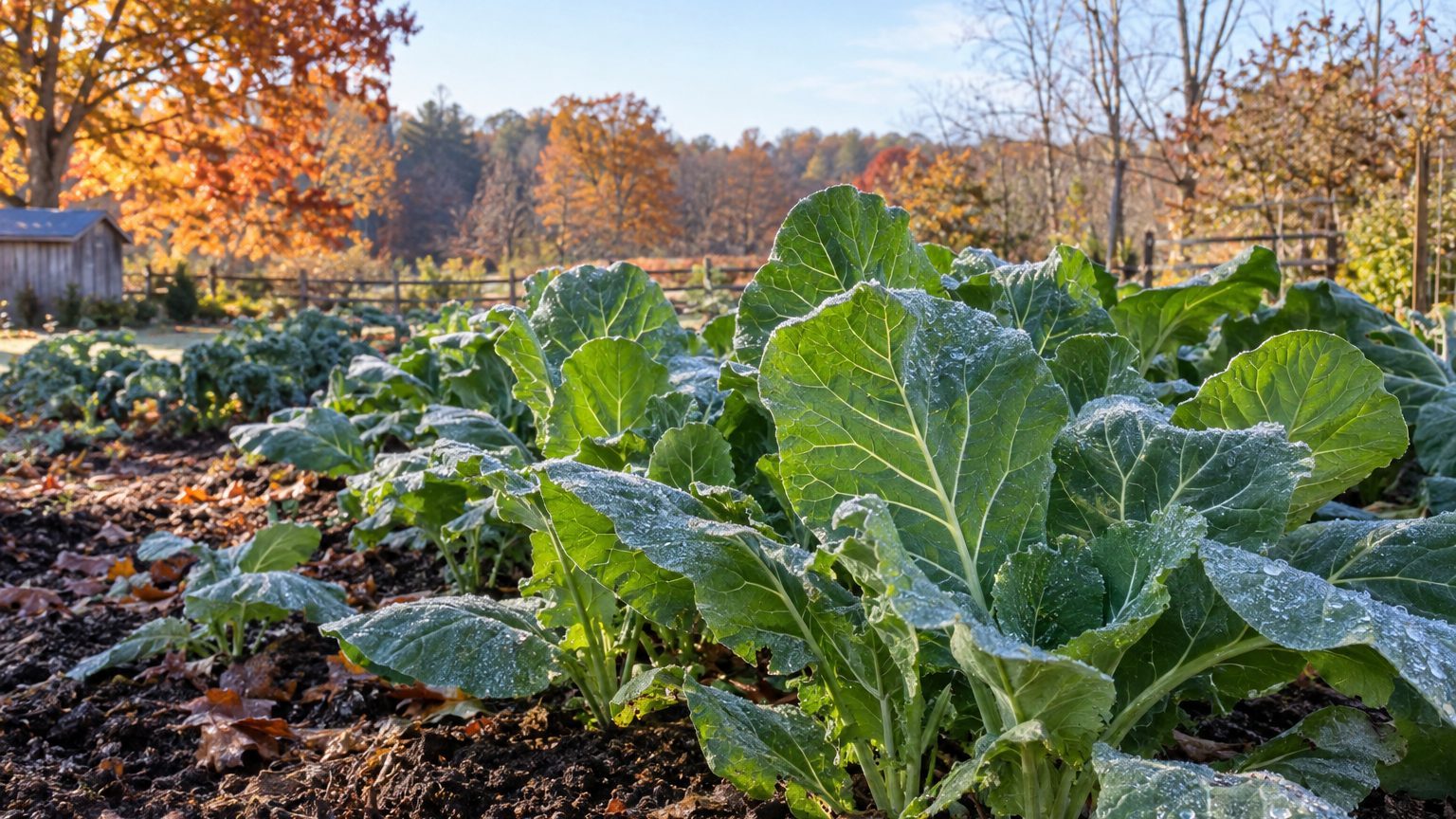

Plant collards in Louisiana when summer heat breaks, not when frost ends. Fall is the main season: start seed in late summer, set transplants from September into November, and make a smaller second planting from mid-January to early February. Winter here is mild enough that collards keep growing straight through it. Summer is what ends the crop.
The short answer for Louisiana
Sow collard seed in late August and September, set transplants from September through November, and plant again in mid-January to early February for a spring crop. The fall planting does most of the work. It gets cool, steady growing weather and can be harvested from late fall well into winter.
What the frost dates actually say
The last spring freeze falls between January 18 and February 8, and the first fall freeze between December 17 and January 8. Both are probabilities. NOAA’s 1991-2020 Climate Normals mark the span in which the chance of a 32°F freeze sits between 30 and 70 percent, measured at a south Louisiana station.
A 32°F freeze occurs in only 86.8 percent of years at that station. Roughly one year in seven has no freeze at all. The fall window also straddles the New Year, so the first freeze of a winter can arrive after the date the last freeze usually ends. Frost barely frames the season here. The mean daily minimum of the coldest month is 46.1°F at the New Orleans reference station, which means most winter nights sit above anything that bothers a collard plant.
The calendar in practice
- Late August to September: start seed in pots in light shade, or direct-sow once a run of cooler nights arrives.
- September to November: set transplants. Plants in the ground by October have time to size up before the coldest weeks.
- Mid-January to early February: plant the spring crop inside the last-freeze window, not after it.
The spring planting is a race. It has to produce leaves before warm weather turns them tough. The full growing picture is in Growing Collards in Louisiana.
What will not work here
Summer sowing and slow varieties
Seed sown in May, June or July meets soil that is hot all day and nights that stay warm. Seedlings stall or collapse, and the plants that survive attract more caterpillars. Cabbage loopers, imported cabbageworms and diamondback moth larvae all feed on collards, and warm months favor them. A spring sowing in March suffers the same way, only more slowly. The plants bolt or turn bitter as the weather warms.
Slow, long-season types fail for a similar reason. Set out in late winter, they run out of cool weather before they fill out. Choosing quicker types for the spring window is part of the plan, and The Best Collards and Greens for Louisiana sorts them.
Waiting on frost, and crowding plants
Waiting for the last frost date before planting spring collards wastes weeks. The date itself falls between January 18 and February 8, and collards do not need to wait for it. Waiting for a freeze to sweeten fall leaves is also unreliable. With a freeze missing in about one year in seven, some winters never deliver one. Cool nights alone still improve flavor, but the crop should not hinge on a frost.
Humid air and heavy winter rain punish close spacing. Plants set shoulder to shoulder dry slowly after rain, and leaf spot and rot move in. Give each plant roughly 18 to 24 inches, water at the base in the morning, and raise beds in heavy clay so roots do not sit in standing water.
What changes across Louisiana
A range of zones, not one answer
The USDA Plant Hardiness Zone Map (2023 edition, built on 1991-2020 normals) places the state in zones 8a to 10a. There is no single answer for the whole state, and the spread is wide. The map rests on one variable, the average annual extreme minimum temperature. It says whether a plant survives winter. It does not say how hard summer heat will hit a fall seedling.
For a dated recommendation, New Orleans is the reference city. The dates above describe the south, not the whole state.
What to shift in the north
North Louisiana freezes far more reliably. The first fall freeze comes earlier and the last spring freeze later than the southern window. A reader there should move fall planting earlier, by a week or two as a starting rule, so plants are well established before hard cold. Spring planting should move later, since a mid-January sowing meets cold ground. Winter-kill is also a bigger concern in the north, so fall plants need more size going into the cold.
Readers should look up their own zone on the USDA map instead of guessing from a neighbor’s garden. The map is searchable by ZIP code and takes a minute.
Where to check this for your own county
What to look for at LSU AgCenter
The state’s extension service is the LSU AgCenter. It works through local offices, which Louisiana organizes by parish rather than county. Two items are worth finding. One is the local vegetable planting calendar, with sowing and transplant dates for your area. The other is the list of collard varieties trialled near you, since variety performance shifts with soil, rainfall and pest pressure.
A parish office can also tell you which caterpillars and leaf diseases are active in your area and when. That timing often decides whether a planting date works.
Why the local answer wins
A county or parish recommendation beats a state one. A statewide calendar averages gardens from the Gulf marshes to the Arkansas line, which sit in different zones and freeze at different rates. The dates here are a starting frame, and local extension guidance is built on trials and records from nearby ground.
When the two disagree, go with the local office. Use the statewide calendar to know what questions to ask.
Checking this against your own garden
Your own garden outranks every date above. Three observations take no instruments.
Soil warmth by feel
In late summer, push a hand a few inches into the bed in the morning. If the soil still feels warm, wait on direct seeding or keep seedlings in pots and shade. Beds near brick walls or paved drives hold heat longer than open ground. Beds under tree cover cool sooner.
The first true leaves
Seedlings first show rounded seed leaves, then true leaves that look like small collard leaves. Move transplants out once they have several true leaves and the nights have cooled. Slow growth after setting out usually means the spot is too hot or too shaded.
First flower stalks and first caterpillars
In spring, a flower stalk rising from the center means the plant has bolted. Note the date, because it shows when your garden’s warmth arrives. The first pale butterflies and small green caterpillars give an early signal to start checking leaf undersides.
If you follow the almanac, here is when to plant collard greens by the moon. It is a tradition, not a proven method.
Common questions
Can I plant collards in spring in Louisiana?
Yes, but the window is short. Plant from mid-January to early February so leaves develop before warm weather arrives. Planting later raises the risk of bolting and bitter, tough leaves.
Do collards need a frost to taste good?
Cold improves sweetness, but a hard freeze is not required. Cool nights are enough, and in about one winter in seven the south sees no 32°F freeze at all. Collards grown through a mild winter are still worth eating.
How late can I plant collards in fall?
Transplants can go in through November in the south. Plants set out later grow slowly and stay small, so a harvest depends more on mild weather. In the north, plant earlier to reach good size before hard cold.
Can collards survive a Louisiana summer?
Established plants may hang on, but they rarely stay productive. Heat, humidity and caterpillar pressure wear them down. Treating collards as a cool-season crop and replanting each fall gives better results than nursing a summer plant along.