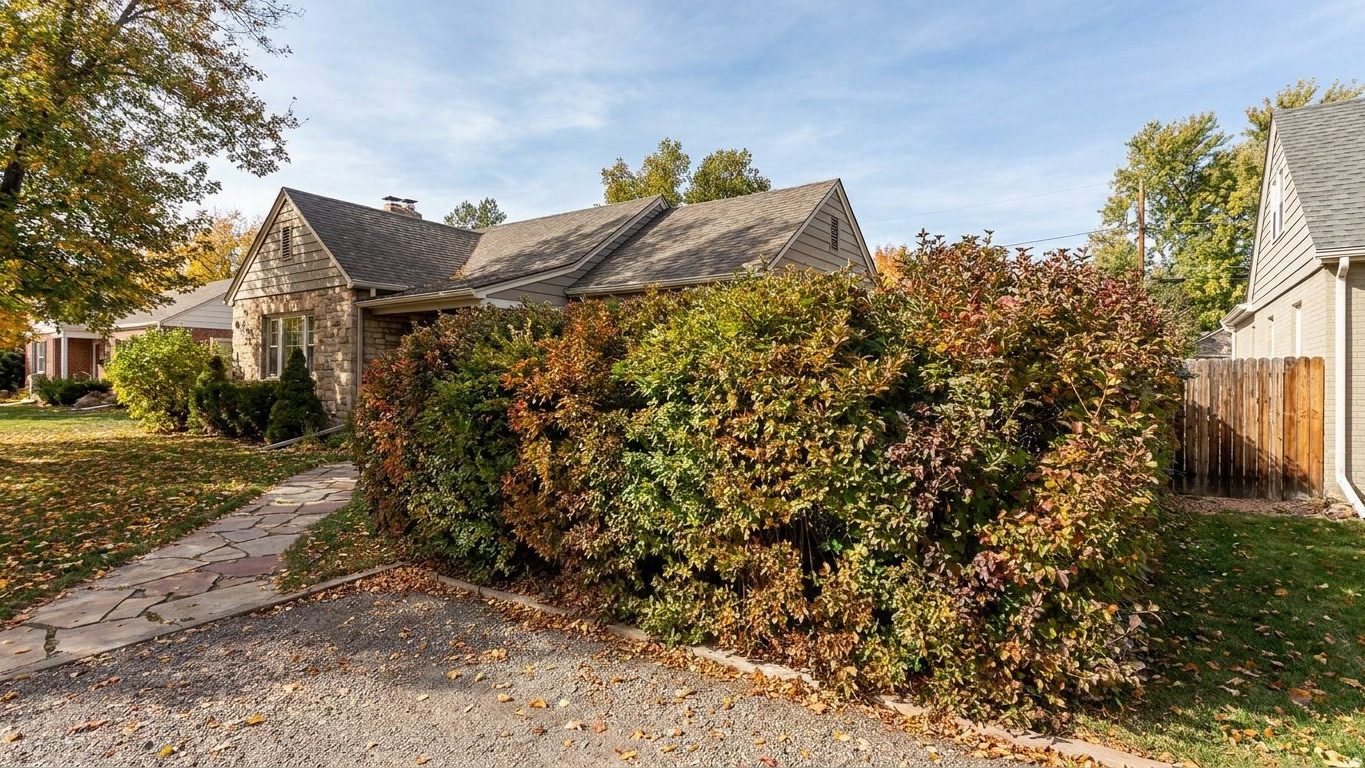

Louisiana has no statewide hedge height limit. Search the state’s revised statutes and you won’t find a number, because the legislature never set one. Height rules for hedges come from municipal ordinances, adopted city by city, sometimes parish by parish. That means the real answer to “how tall can my hedge be” depends entirely on which town you live in, not on any law passed in Baton Rouge.
There is no Louisiana hedge height law
This surprises people, but it shouldn’t. Louisiana’s legislature regulates plenty of things that touch property, drainage, coastal zones, timber harvesting, but it has never written a height cap for hedges into the Revised Statutes. No agency in the state publishes one either. If you’ve read a blog or a listicle claiming “Louisiana law caps hedges at X feet,” that figure was invented, borrowed from another state, or lifted from a single city ordinance and mislabeled as statewide.
That gap is not an oversight. It’s how land-use law works across nearly every state in the country. Height limits for fences, hedges, and other “accessory structures” are a classic zoning matter, and zoning in Louisiana, as almost everywhere in the United States, is delegated to local government. The state sets broad frameworks for how municipalities may zone; it doesn’t dictate the specifics of a backyard privet.
So when a homeowner in Shreveport asks about hedge height, and a homeowner in Lafayette asks the identical question, they are not looking for the same answer. They’re looking for two entirely different local codes, adopted by two different city councils, possibly decades apart, possibly amended since. One city might cap hedges at a modest height near the street and allow taller growth in the rear yard. Another might not mention hedges at all, addressing only fences, and leaving living plants unregulated except through a general nuisance clause.
This is why a single number for “Louisiana” can’t exist honestly. Any site that gives you one is either guessing or quoting a city ordinance without saying so. The useful version of this question isn’t “what does Louisiana say,” it’s “what does my parish or municipality say,” and that’s a search you can actually finish this week.
Unincorporated areas add another layer. If you live outside city limits, in unincorporated parish territory, your hedge may fall under a parish zoning ordinance instead of a city one, or under no height rule at all, if the parish’s code doesn’t reach residential landscaping. That’s a real possibility in rural and semi-rural Louisiana, where parish government is often thinner than city government on landscaping matters.
How to find the rule that actually applies to you
Start by identifying whether you live inside city limits or in unincorporated parish territory, because that determines which code book you need. City residents look up the municipal code; everyone else looks up the parish code, if one exists for land use outside towns.
From there, the fastest path is one of three online publishers that host the majority of American municipal codes: Municode (library.municode.com), American Legal Publishing (codelibrary.amlegal.com), and eCode360. Most mid-size and small Louisiana cities have their code hosted on one of these three platforms, searchable by city name. Type your city into any of the three search bars, and you’ll usually land directly on the current code.
Where in the code to actually look
Don’t search the whole code for “hedge.” Go straight to the zoning chapter (sometimes labeled “Land Development Code” or “Unified Development Code”), and within it, look for a section on fences or accessory structures. Height limits for yard barriers, living or built, tend to sit in that section, often expressed in feet and often varying by whether the barrier is in a front yard, side yard, or rear yard.
Pay attention to setback language too. Some codes tie hedge or fence height to distance from the property line: a hedge might be allowed to grow taller the farther back it sits from the street or sidewalk. That detail changes what’s legal in your front yard versus your backyard, even under the same ordinance.
If the online code search doesn’t turn up anything, or you’re not confident you found the current version, call the city. Ask for the planning and zoning department, sometimes called “code enforcement” or “community development” depending on the city’s org chart. This department administers the ordinance day to day and can tell you, often in one phone call, whether hedges are addressed at all and what the number is if so.
One more thing worth checking before you assume anything: whether your property sits inside a homeowners association. HOA covenants routinely impose hedge and fence rules stricter than the municipal code, and those rules are enforced through the HOA’s own process, not the city’s. A city ordinance permitting a 6-foot hedge doesn’t override an HOA covenant capping it at 4 feet on your street.
The branches that cross the line
Height isn’t the only question that comes up once a hedge gets tall. The other one, just as common, is what happens when your neighbor’s hedge grows over the property line and into your yard.
The general principle that governs this situation across most states, including in practice across Louisiana, comes from case law rather than a specific statute: a property owner may trim back branches, roots, or growth that crosses onto their land, up to the boundary line and no further. You can cut what hangs over your fence; you generally can’t reach across the line and prune your neighbor’s hedge on their side, and you can’t cut in a way that kills the plant. Louisiana’s civil law tradition, distinct from the common-law systems of most other states, still recognizes this kind of self-help remedy for encroaching vegetation, though the exact contours can differ from how a common-law state would frame it.
This matters because it’s a completely separate question from height limits. A hedge can be perfectly legal under the local height ordinance and still be a problem if its branches physically cross into a neighbor’s yard, shade out their garden, or drop debris on their side. The remedy for that isn’t a call to code enforcement, it’s the neighbor exercising their own right to trim back to the line, or, if things escalate, a private conversation, a demand letter, or in a genuine dispute, a consultation with a real estate or property attorney.
Where things get more complicated is root damage or serious harm to a shared structure, like a fence or driveway lifted by roots. That kind of dispute moves past simple self-help trimming and into a question of liability, and it’s not something to sort out from a blog post. If a hedge is causing real property damage, that’s a conversation for a local attorney, not a DIY trim job.
The sight triangle rule sits alongside all of this as close to a universal standard. At intersections, and at driveway entrances, most municipal codes prohibit anything, fences, hedges, parked trailers, that blocks a driver’s line of sight, and the height allowed in that triangle is almost always lower than the general yard limit, sometimes dramatically so. Even in a city whose code says nothing else about hedges, this rule tends to show up, because it’s tied to public safety and traffic engineering rather than ordinary zoning discretion.
What to check before you plant
Before you put a hedge row in the ground, especially anywhere near a corner, a driveway, or the street, run through a short checklist rather than assuming the last homeowner’s landscaping was code-compliant.
- Confirm whether you’re inside city limits or unincorporated parish territory, so you know which code applies.
- Search your city or parish name on Municode, American Legal Publishing, or eCode360, and read the zoning chapter’s fence or accessory structure section.
- Check whether the code uses the word “hedge” specifically, or only “fence,” since many ordinances treat living barriers differently from built ones, or not at all.
- Note any sight-triangle restriction near corners or driveways, since it typically overrides the general height allowance in that specific zone.
- Ask whether an HOA covenant applies to your lot, and if so, get its landscaping rules in writing before you plant.
Planting distance from the property line matters as much as height, though it’s often addressed in a different part of the code, sometimes under general setback requirements rather than the fence section specifically. A hedge planted directly on the line, rather than a foot or two inside it, invites exactly the kind of encroachment dispute described above, years down the road once the plants mature.
If your code search comes up empty, that’s meaningful information too. Some smaller Louisiana municipalities and many unincorporated parish areas simply haven’t adopted a hedge or fence height ordinance, in which case general nuisance law, or an HOA covenant if one exists, becomes the operative rule instead. Call the planning department to confirm the absence of a rule rather than assuming it from a failed search.
Species choice affects how urgent all of this is. A slow-growing, naturally compact hedge variety gives you years of buffer before height becomes a real question; a fast grower planted along a front property line can turn a legal 3-foot hedge into a 6-foot sight-line problem within a couple of growing seasons.
Common questions
Does Louisiana have a statewide maximum hedge height?
No. Height limits for hedges in Louisiana are set at the municipal or parish level, not by state statute. Any figure presented as “Louisiana’s hedge law” is either a local ordinance mislabeled as statewide, or not accurate.
What’s the difference between a fence ordinance and a hedge rule?
Many municipal codes regulate fences as built structures under one section, and either regulate hedges separately, under a different definition, or don’t mention living hedges at all. Read the code’s exact wording rather than assuming a fence height limit automatically applies to a planted hedge.
Can I cut my neighbor’s hedge if it grows over my fence?
General property law principles, developed through case law rather than a specific statute, generally allow you to trim back growth that crosses onto your property, up to the boundary line, without killing the plant. This is a broad legal principle, not a Louisiana-specific rule, and details can vary. For a real dispute, talk to a property attorney rather than relying on a general rule.
Where do I find my city’s actual hedge or fence ordinance?
Search your city’s name on Municode (library.municode.com), American Legal Publishing (codelibrary.amlegal.com), or eCode360, then go to the zoning chapter and look under “fences” or “accessory structures.” If you can’t find it or aren’t sure it’s current, call your city’s planning and zoning department directly.