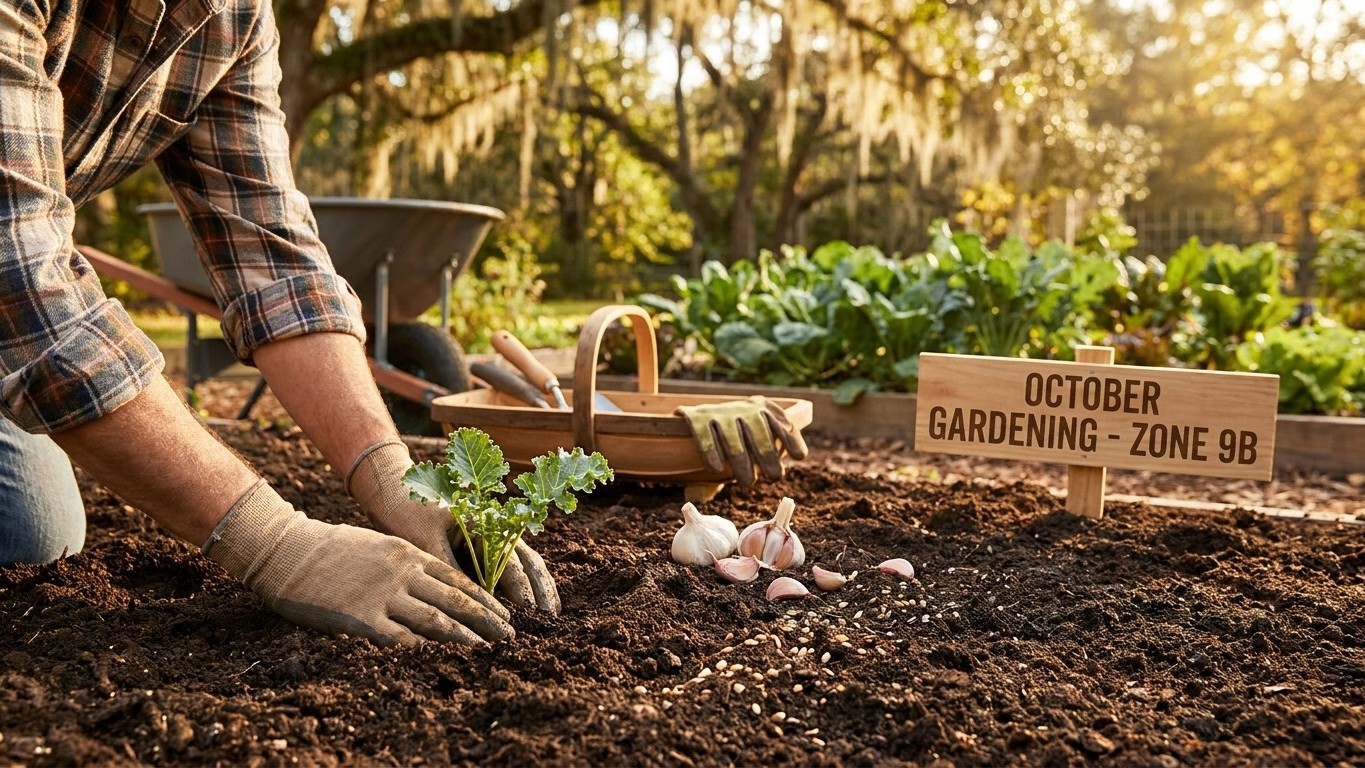

October in Louisiana is a planting month, not a waiting month. With the first fall frost still ten to twelve weeks out across most of the state, gardeners can put in root vegetables, leafy greens, brassicas, garlic and shallots with real confidence that they’ll mature before any cold snap arrives.
What goes in the ground in October

Here’s what makes Louisiana different from almost anywhere else in the country: the calendar says fall, but the ground still remembers summer. Soil temperatures stay warm well into the month, and the first fall frost doesn’t show up until somewhere between December 17 and January 8, according to NOAA’s 1991-2020 climate normals for the region. That’s a wide window, and it means October gardeners aren’t racing a clock the way a Midwest or New England grower would be. The limiting factor down here has never really been cold. It’s heat, and by October, the worst of it has usually broken.
Direct-sow candidates this month include carrots, beets, turnips, radishes, mustard greens, collards, kale, spinach and leaf lettuce. Peas, both English and snap types, go in well now too, since they prefer the cooler nights October brings without demanding the deep chill that stalls them in true winter climates. Garlic and shallots belong in the ground this month as well. Both need a stretch of cool weather to bulb properly, and Louisiana’s mild winter still delivers enough of that chill if the cloves go in early rather than late.
For transplants, broccoli, cabbage, cauliflower and Brussels sprouts started indoors in September are ready to move outside now, giving them time to size up before any real cold arrives. Onion transplants can go in toward the tail end of the month in most parishes.
One caution worth repeating: Louisiana spans USDA hardiness zones 8a through 10a, according to the USDA Plant Hardiness Zone Map, and that range matters more here than in most states. A gardener near the Arkansas line is working with a meaningfully cooler winter than one near the Gulf coast. South Louisiana barely freezes at all in some years, so treat these windows as generous, not rigid.
What to start under cover
Counting backward from the first fall frost, which NOAA’s data places between December 17 and January 8 for this region, gives a gardener roughly ten to fourteen weeks from early October before any freeze risk shows up. That’s enough time to start a second or third round of brassicas indoors or under shade cloth, since heat, not cold, is still the bigger threat to young seedlings early in the month.
Lettuce, spinach and other tender greens benefit from starting under cover if daytime temperatures are still climbing into the 80s, which happens more often than gardeners expect this time of year in the Gulf South. A few weeks of protection from direct afternoon sun lets seedlings establish roots without bolting or scorching before they ever reach the garden bed.
The two ways this goes wrong are familiar to anyone who’s gardened here more than a season. Start too early, while soil and air temperatures are still summer-hot, and seedlings stretch, wilt, or bolt before they’re big enough to transplant. Start too late, especially for slower crops like cabbage or cauliflower, and they won’t size up before the short days of December slow their growth to a crawl. The safer approach is to stagger starts every ten days to two weeks rather than sowing everything at once, which spreads the risk and keeps a steady supply of transplants ready to go outside as space opens up.
Onion seed, if starting from scratch rather than transplants, should go in under cover early in the month to give bulbs enough runway before Louisiana’s long, humid spring pushes them toward bolting.
What is ready to pick
October harvests in Louisiana carry a distinct signature: it’s the month sweet potatoes come out of the ground. Vines that have sprawled across garden beds since spring get cut back and dug, usually before the first light frost threatens the tubers sitting near the soil surface. A sweet potato is ready when the skin has toughened and no longer scrapes off with a fingernail.
Late-season peppers and eggplant, planted back in spring, often keep producing into October as long as nights haven’t dropped into the 40s yet. Keep picking peppers regularly, since a plant that’s allowed to hold ripe fruit slows its own production.
Greens planted in September are usually ready for a first cutting by mid-to-late October. Collards, mustard and turnip greens can be harvested leaf by leaf rather than all at once, which keeps the plant producing for weeks longer than a single cut-and-done harvest.
This is also pecan season across much of the state, with nuts dropping from mid-October through November depending on variety and location. Anyone with a producing tree should be checking daily once shells start splitting, since nuts left on the ground too long draw squirrels and take on moisture that shortens storage life. Stored summer squash, onions and any lingering potatoes from spring should get a check for soft spots or sprouting; anything showing damage should be used first rather than left to spoil the rest of the batch.
The jobs that matter this month
Soil preparation done now pays off for the entire fall and winter growing season. Working compost into beds before the bulk of transplanting begins gives cool-season crops a nutrient base they’ll draw on for months, since Louisiana’s sandy and clay soils both lose fertility fast under repeated cropping.
Mulching matters more in October than gardeners often assume. A two-to-three-inch layer around newly planted greens and brassicas holds soil moisture as temperatures fluctuate and suppresses the winter weeds that germinate readily in Louisiana’s mild climate. Skipping this step means more hand-weeding through December and January, when nobody wants to be out in the garden bed pulling henbit and chickweed.
Watering rhythm needs adjusting as heat breaks. Established fall crops need less frequent watering than they did in September, but young transplants still need consistent moisture to establish roots before any cooler snap slows their growth. Succession sowing every two to three weeks, particularly for lettuce, radishes and greens, keeps a steady harvest coming rather than one big flush followed by a gap.
Pest scouting shouldn’t slide just because summer’s worst insects have faded. Armyworms and cabbage loopers remain active on fall brassicas well into October, and aphids find new brassica and pea plantings quickly. Checking the undersides of leaves once a week catches infestations before they spread.
Citrus trees, common across south Louisiana, benefit from a final light feeding early in the month before growth slows for winter. Beyond that, this is a good stretch to sharpen and clean tools, patch fencing before winter storms, and get seed orders in for spring, since popular varieties sell out earlier than most gardeners expect.
What not to do in October
The most common mistake this month is treating cooling air temperatures as a signal to plant warm-season crops again. A pleasant 75-degree afternoon doesn’t mean tomatoes or peppers started now will produce before the eventual frost; the days are shortening too fast for fruit to set and mature in most parishes. Stick to the cool-season list.
The opposite mistake also happens: assuming frost is close when it isn’t. With the first fall frost not arriving until somewhere between December 17 and January 8 in most of the state, covering tender plants in early October or rushing to harvest everything at once is unnecessary and can actually stress plants that would otherwise keep producing for weeks.
Feeding nitrogen heavily to garlic and onions this early is another frequent misstep. Both crops need a period of root establishment before pushing top growth, and too much nitrogen too soon encourages leafy growth at the expense of the bulb that will actually get eaten later.
Overwatering also creeps in this month, since gardeners hold onto summer habits even as evapotranspiration drops with the cooler nights. Check soil moisture with a finger rather than a schedule; October soil holds water longer than August soil did, and root rot in dense clay soils shows up fast when watering doesn’t adjust.
Checking this against your own county
A statewide October guide is a starting point, not an instruction sheet. Louisiana’s frost dates and growing conditions shift by weeks between the Arkansas border and the Gulf coast, and elevation, soil type and local microclimates move things further still. A gardener in Shreveport is working with a meaningfully different frost timeline than one in Houma or Lake Charles.
Louisiana’s hardiness zones span 8a to 10a, according to the USDA Plant Hardiness Zone Map, and that spread alone should tell any gardener to treat those zones as a framework rather than a rulebook. For dates and variety recommendations tuned to a specific parish, the LSU AgCenter maintains detailed planting guides and can answer questions specific to local soil and climate conditions.
Common questions
Is October too late to plant tomatoes in Louisiana?
Yes, for most of the state. Tomatoes started in October won’t have enough warm daylight left to set and mature fruit before growth slows. Save tomato planting for late winter and spring instead.
Can garlic really be planted this early in Louisiana?
Yes. Garlic needs a stretch of cool weather to form bulbs properly, and planting in October gives cloves time to establish roots before the coolest part of winter arrives.
Why do sweet potatoes come out of the ground in October specifically?
Sweet potatoes need a long, warm growing season and are typically dug before the first frost damages tubers sitting near the soil surface, which lines up with October across most of Louisiana.
Does south Louisiana really not freeze some years?
Based on NOAA’s 1991-2020 climate normals, a 32-degree freeze occurs in roughly 86.8 percent of years at stations in the region, meaning close to one year in seven sees no freeze at all in that area.
Gardeners who plant by the Moon can check the October 2026 moon planting calendar, a tradition rather than a proven method.
Related guides
Elsewhere? See what to plant in October in every state and province.