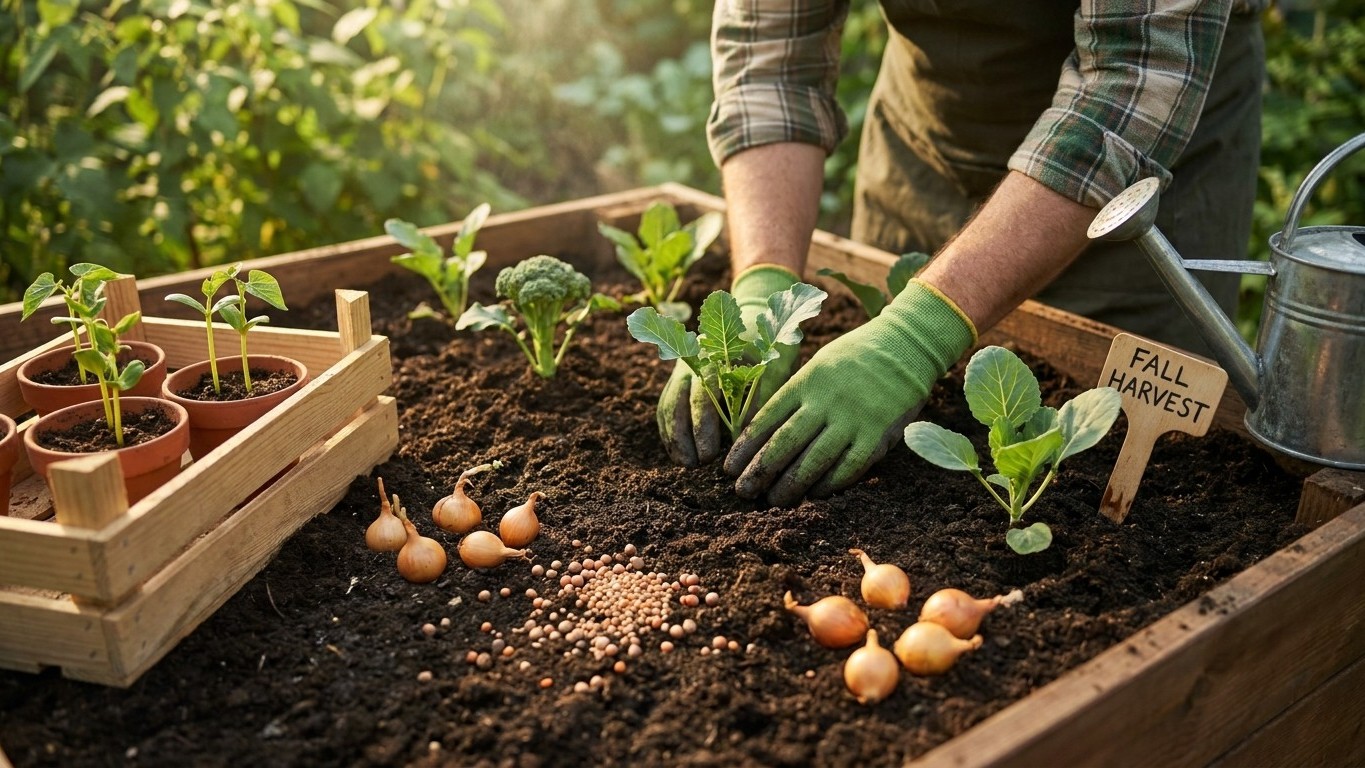

September is when Louisiana’s garden turns over. The blistering heat that shuts down spring plantings starts to ease, and the long gap before the first fall frost, December 17 to January 8, gives cool-season crops nearly four months to mature. This is a planting month, not a waiting month.
What goes in the ground in September

Soil temperature decides more than the calendar does here. Early in the month, ground temps in much of Louisiana are still sitting in the 80s, which is too warm for lettuce or spinach seed to germinate reliably but perfectly fine for beans, southern peas, and the tail end of okra plantings. As the month wears on and soil cools toward the 70s, the window opens for root crops and the first brassica transplants.
Direct-sown root vegetables are a solid bet through the month: carrots, beets, turnips, and radishes all handle the warm start and finish strong as temperatures drop. Bush beans and southern peas sown early in September still have time to produce before any real cold arrives. Green onions and bunching onion sets go in without much drama.
Transplants worth the risk
Broccoli, cabbage, cauliflower, and collard transplants can go into the ground starting in the back half of the month, once the worst of the afternoon heat has broken. Set them out too early and they sulk or bolt; wait until the soil has cooled a notch and they take off. Because the first frost doesn’t arrive until mid-December at the earliest, and often not until early January, there’s real room for error. This isn’t a month where a gardener has to gamble against a fast-approaching freeze, the way a September planting decision might play out farther north. The pressure here is heat, not cold.
North Louisiana, closer to hardiness zone 8a, tends to cool off a little sooner than the coastal south, which drifts toward 9b and 10a. That difference doesn’t change what goes in this month so much as how forgiving the back end of the season will be.
What to start under cover
Seeds started indoors or under light shade cloth in September are aimed at beating the heat long enough to get a head start on the fall brassica and lettuce crop. Broccoli and cabbage seed typically needs four to six weeks under cover before the seedlings are sturdy enough to transplant. Started in early September, that puts transplant-ready plants in the ground by mid-to-late October, still leaving well over two months of growing time before the first frost window opens in mid-December.
Lettuce and other tender greens are easier to start under cover than in open soil this month, since a shaded seed tray stays cooler than bare garden soil baking in full sun. Count backward from the frost window rather than forward from a fixed date: if a lettuce variety needs 45 to 60 days to reach harvest size, starting under cover in September and setting it out in October still leaves comfortable margin before December.
The two ways this goes wrong are predictable. Start too early, say, in the first days of September while daytime highs are still punishing, and seedlings stretch into leggy, rootbound plants sitting in trays far longer than they should, waiting for the soil to cool enough to receive them. Start too late, past the middle of the month, and transplants may not size up before the cooler, shorter days of November slow their growth, pushing harvest dangerously close to the frost window rather than well ahead of it.
What is ready to pick
September harvest in Louisiana is mostly the last stretch of the summer garden. Okra kept picked every couple of days should still be producing, and the rule holds all season: pods over three or four inches turn tough and fibrous fast, so pick small and pick often. Peppers and eggplant that survived the worst of the summer heat and any early disease pressure often put on a second flush as nights start to cool slightly.
Sweet potatoes planted back in spring are frequently ready to dig in September, and the visual cue is the vine itself: leaves starting to yellow and die back signal it’s time, rather than any date on a calendar. Southern peas planted earlier in the summer should be filling out pods now, ready whenever the pods dry and rattle slightly, or picked green for immediate cooking.
Tomatoes that made it through summer’s heat and humidity may still be setting fruit, though production usually slows once nighttime temperatures stay above the mid-70s. Herbs like basil are often bolting to seed by this point, a sign to harvest heavily for drying or freezing rather than waiting for a fresh flush that likely isn’t coming until fall growth resumes.
The jobs that matter this month
September in Louisiana overlaps with the peak of Atlantic hurricane season, and that reality should shape garden work as much as any planting schedule. Staking tall plants like tomatoes and okra, clearing drainage paths so beds don’t sit in standing water, and harvesting anything close to ripe before a storm rolls through are not optional chores this month, they’re insurance.
Soil preparation for the fall garden pays off directly. Beds that finished producing squash, corn, or spring beans need old roots pulled, compost turned in, and a few weeks to settle before fall transplants go in. Skipping this step and jamming brassica transplants into depleted, compacted soil is a common way to lose half the fall crop to poor root establishment.
Mulching matters differently now than in July. As rain patterns shift with the changing season, a two- to three-inch layer around new transplants evens out soil moisture and keeps competing weed seed, which germinates readily in freshly cooled soil, from getting a foothold. Watering rhythm needs adjusting too: young fall transplants need consistent moisture to establish roots before any dry spell, but overwatering into compacted, poorly draining beds invites root rot fast.
Succession sowing keeps the harvest window open. Planting a short row of carrots, beets, or turnips every two weeks through September means a staggered harvest instead of one glut. Pest scouting deserves attention too. Fall armyworms and cabbage loopers show up readily on tender new brassica transplants, and catching an infestation in its first week is far easier than fighting it once it’s established across a whole bed.
What not to do in September
The most common mistake is sowing lettuce or spinach seed directly into soil that’s still hot from summer. Both germinate poorly, or not at all, above roughly 80 degrees, and a gardener who blames “bad seed” is often really fighting soil temperature. The fix is patience: wait for a cooler stretch later in the month, or start the seed under cover where shade brings the temperature down.
Transplanting brassicas the moment they’re purchased, without hardening them off against Louisiana’s still-intense midday sun, is another frequent error. Seedlings raised in a shaded nursery setting can scorch badly in a single afternoon of direct September sun. A few days of partial shade before full exposure prevents the setback.
It’s also easy to overreact to the first mild morning of the month and assume frost season is close behind. It isn’t. With the first frost window not opening until mid-December at the earliest, there’s no need to rush cold-hardy crops in a panic or throw covers over tender plants on a cool September night. Finally, resist the urge to load new fall transplants with heavy nitrogen right out of the gate; a soil test-guided feeding once plants are established supports steady leaf growth without pushing soft, disease-prone growth too fast.
Checking this against your own county
A statewide September guide is a starting point, not a fixed instruction. Louisiana’s hardiness zones run from 8a in parts of the north to 10a along the coast, based on the USDA Plant Hardiness Zone Map’s average extreme minimum temperature, and that spread alone shifts how much margin a gardener has before the season’s first real cold snap. Local drainage, tree cover, and even a low-lying yard versus a slightly elevated one can move things further still. For a planting calendar tuned to a specific parish, the LSU AgCenter is the reliable next stop.
Common questions
Is it too hot to plant a fall garden in Louisiana in September?
Early in the month, yes, for heat-sensitive seed like lettuce and spinach. But warm-tolerant crops like beans, southern peas, and root vegetables handle the transition fine, and by late September, cooling soil opens the door to brassica transplants.
When does Louisiana actually get its first frost?
The first fall frost typically falls between December 17 and January 8, according to NOAA’s 1991-2020 climate normals. That’s a wide window, and in parts of south Louisiana, freezing temperatures don’t arrive at all in roughly one year out of seven.
Can tomatoes still produce in September in Louisiana?
Plants that survived summer’s heat and disease pressure often keep setting fruit into September, though production commonly slows once nighttime lows stay above the mid-70s, since tomato flowers pollinate poorly in persistent heat.
Should I worry about hurricanes affecting fall planting?
September sits at the peak of Atlantic hurricane season, so it’s worth timing new transplants and harvests around storm forecasts, staking tall plants, and making sure garden beds drain well before a system approaches.
Gardeners who plant by the Moon can check the September 2027 moon planting calendar, a tradition rather than a proven method.