
Cut spinach while the leaves are young and the weather is still cool, then eat it or chill it fast. Manitoba gives you two short windows, one in late spring and one in early autumn, with heat and very long days in between. Cut leaves are fragile. The best case is about two weeks, and only at a temperature just above freezing. Most home kitchens run warmer than that, so small, frequent cuttings beat one big harvest.
When spinach is ready in Manitoba
Spinach is ready when the outer leaves are big enough for a plate and the center of the plant is still a low, flat cluster. A spring sowing made around the mean last spring frost, May 23, tends to reach that stage in June. A fall crop should be sown in mid to late summer, counting back from the date you want to harvest. Both windows depend on staying ahead of heat and long days.
How do you know spinach is ready to cut?
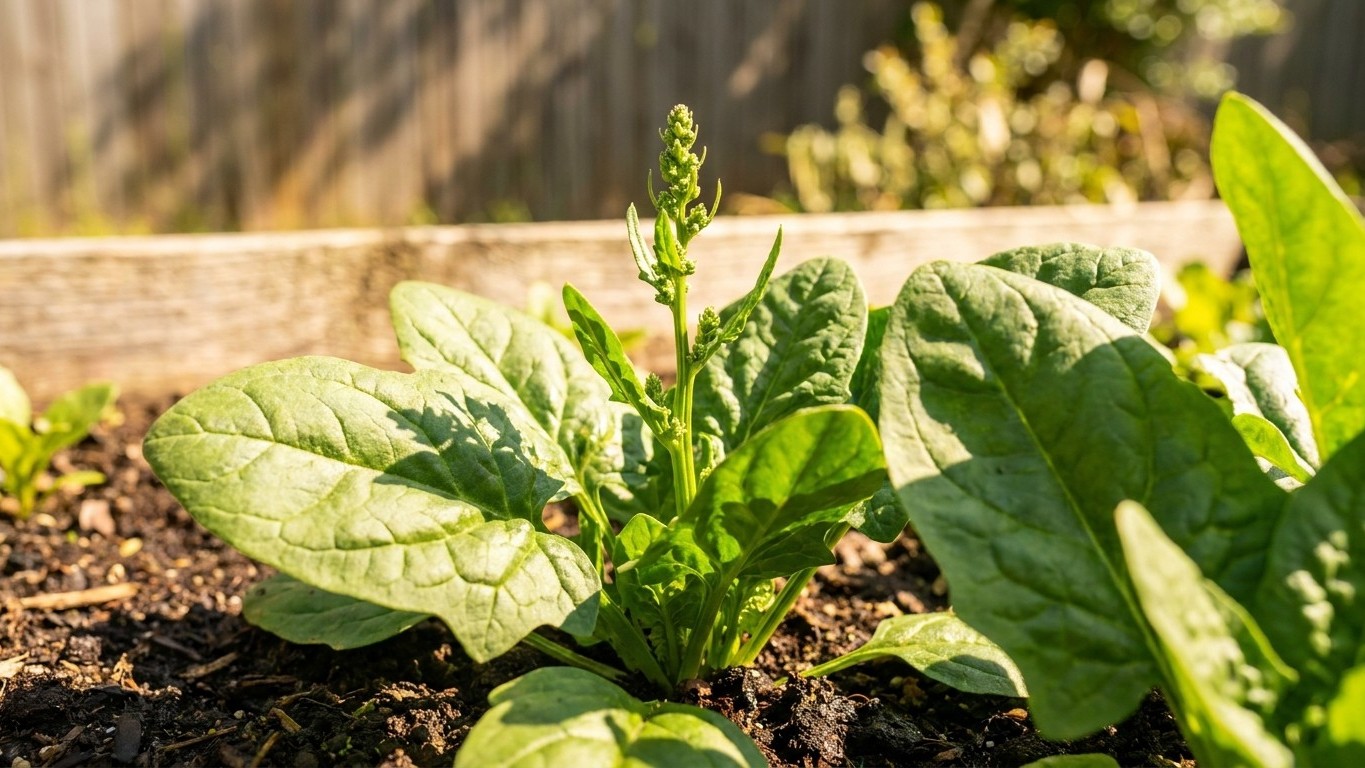
Look at the middle of the plant. A healthy rosette has broad, rounded leaves that lie close to the ground. When the center starts to lift and the new leaves turn narrow and pointed, a flower stalk is on its way. Cut the whole plant at that point, because the leaves turn bitter fast. Before that, take the outer leaves first and leave the center to keep producing. A quick look for chewed edges and tunnels while you’re out there also pays off. What Eats Spinach in Manitoba, and When covers what to expect and when.
Timing is tight in Manitoba because of daylight. At Winnipeg’s latitude, the longest day of the year brings 16 h 08 of daylight. Utah State University Extension says spinach bolts during long days and warm temperatures, and that it grows best where temperatures stay at or below 75 F (about 24 °C). That 75 F figure marks both where growth slows and where leaves turn bitter. A cool summer does not rescue the crop, because long days alone can trigger flowering. Heat makes it worse. Winnipeg Richardson Int’l A, the Environment and Climate Change Canada reference station, averages 13.3 days a year above 30 °C and 4.54 days above 32 °C. Those are rare days, but the 75 F ceiling sits well below them, so an ordinary July afternoon can already be past it. For more on what sets off flowering, see Will Spinach Bolt Early in Manitoba?
When should you sow a fall crop in Manitoba?
Count back from the first fall frost. The mean date at the reference station is September 22, and in one year out of two the first frost arrives earlier. If you want to be cutting around that date, count back from your harvest date to set your sowing. The station has about 122 frost-free days between the mean last spring frost and the mean first fall frost, though northern and upland districts run weeks behind Winnipeg, so check with your county extension office for your own frost dates.
Cold is not what holds back a summer sowing. Warm soil is. Utah State notes that seed germination drops once the soil is above 80 F, and mid-July ground can easily be there. Water the bed before sowing, water it again after, and shade it with a board or row cover until the seedlings show. Waiting a week or two for a cooler spell can work better than sowing into hot ground. The full seasonal picture is in Growing Spinach in Manitoba.
Keeping it, and for how long
Spinach is one of the shortest-lived vegetables in the garden. Once cut, it respires quickly, loses water and starts to yellow. UC Davis Postharvest Technology Center, in its produce fact sheet on spinach, calls it highly perishable and says it will not maintain good quality for more than 2 weeks. That is a ceiling reached only under ideal conditions.
How cold and how damp does spinach want to be?
The same UC Davis sheet gives the optimum as 0°C (32°F) with a relative humidity of 95 to 98 percent. Those two numbers work together. Cold slows the leaf’s metabolism, and near-saturated air keeps it from drying out. At 32°F with that much moisture around it, cut spinach can stay usable up to the limit of about two weeks. Take away either condition and the clock speeds up.
Garden spinach has one edge over store spinach. A bunch that was cut in the morning and chilled within the hour starts its countdown fresher than leaves that have traveled for days. That head start helps, but it doesn’t lift the ceiling.
How long does cut spinach really last?
The sheet says wilting, yellowing and decay are likely to increase after 10 to 14 days of storage, and faster at common distribution conditions of 5 to 10°C (41 to 50°F). So 32°F is the number to remember, and two weeks is the most you can hope for at that temperature. At 41 to 50°F, you are looking at days. Plan to use garden spinach within a few days, and treat anything older as a bonus.
Three signs tell you a bunch is past it. Leaves go limp and stay limp after a cold-water soak. Edges and veins turn yellow. The bag smells sour or the leaves feel slimy. Slimy leaves go in the compost, not the pan. A few yellow leaves in an otherwise crisp bunch can simply be picked off.
Because the keeping time is so short, the cutting schedule matters more than the storage trick. Harvest what you will eat in the next day or two. Cut-and-come-again picking of outer leaves is a better fit than clearing a whole row at once, at least until the center starts to rise and the plant has to come out anyway.
Where in the house that actually is
A home refrigerator is not a 32°F box. It runs warmer than the UC Davis optimum, and the door is warmer still, because every opening lets in room air. That is why the door shelf is the worst place for spinach, and why the range where UC Davis says spinach degrades faster, 41 to 50°F, is within reach of a busy door.
Which shelf in the fridge is closest to the ideal?
The back of the bottom shelf is the coldest, steadiest spot in most fridges, since cold air settles there and it sits farthest from the door. A crisper drawer can work too, if it holds humidity and isn’t crammed against a vent that blows dry air. Avoid the spot right against the back wall if your fridge has a cooling plate or vent there, because leaves pressed against it can freeze and turn dark and mushy. Put the bag at the back of the bottom shelf, and the leaves will last days longer than if they sit in the door.
What does 95 to 98 percent humidity mean in a home fridge?
Your fridge air is far drier than that, so you create the moisture yourself. A bag does most of the work. A loosely closed plastic bag, or a container with a lid, traps the moisture the leaves give off and holds the air around them near saturation. A damp paper towel tucked inside adds a little more. Keep the towel damp, not dripping, and swap it out if it starts to smell.
For bunches with stems or roots attached, a third method suits them. Stand the cut ends in an inch or so of cold water, like cut flowers, and slip a bag loosely over the top. Water under the cut ends keeps the stems drinking, and the bag keeps the leaves from drying out. Change the water every day or two. A wet wrap against the leaves does more harm than good if the leaves sit in standing water, so keep the leaves themselves out of it.
Whether you wash spinach before storing matters less than how dry the leaves are when they go into the bag. Free water sitting on the leaves invites decay. If you rinse, spin or pat the leaves dry first. Otherwise, wash them just before you cook.
Common questions
When should I stop waiting and cut the whole plant?
Cut it all when the center begins to rise or the new leaves turn narrow and pointed. That is the start of bolting, and the longer you wait, the more bitter the leaves get. Summer in Manitoba brings long days of its own: 16 h 08 of daylight on the longest one at the Winnipeg station. A spring crop that is still standing as the days stretch toward that peak is likely to bolt even in a cool year.
Can I sow spinach in July for a fall crop?
Yes, but the soil decides it. Germination drops once the soil is above 80 F, so July sowings need a watered, shaded seedbed or a short wait for cooler weather. Counting back from a harvest date near the mean first fall frost of September 22 gives a sowing window in mid to late summer. The first frost comes earlier than that average in about half of all years.
Which spinach variety should I grow?
Your local county or provincial extension office can suggest spinach varieties for your area. Your county extension office or a local garden center that stocks seed for the Prairies can tell you which suits your district.
How long will cut spinach keep in my fridge?
Two weeks is the ceiling, and only at 32°F and 95 to 98 percent humidity. In a home fridge, count on a few days, and less if the bag sits in the door where the temperature can reach the 41 to 50°F range that speeds up yellowing and decay. Plan to eat it early in that window, and leave any extra in the garden until you are ready to cut it.