
Will Sweet Corn Ripen in Manitoba? Yes, but only if you play the calendar correctly. Soil here warms to the 60°F mark corn needs well after the last spring frost, and the window that’s left before the first fall frost is tight enough that variety choice matters more than almost anywhere else in this cocoon. A 60-day type has real margin. A 90-day type does not.
The short answer
Start with the frost dates, because they set the outer edges of everything else. When to Sow Sweet Corn in Manitoba ultimately comes down to reading those dates correctly: at the Winnipeg Richardson International Airport station, Environment and Climate Change Canada’s 1981-2010 normals put the average last spring frost at May 23 and the average first fall frost at September 22. That’s a season of roughly four months on paper. But those are averages, not guarantees, and in one year out of two the frost arrives later than May 23 in spring, or earlier than September 22 in fall. Treat both dates as the midpoint of a window, not a line you can plant or harvest right up against.
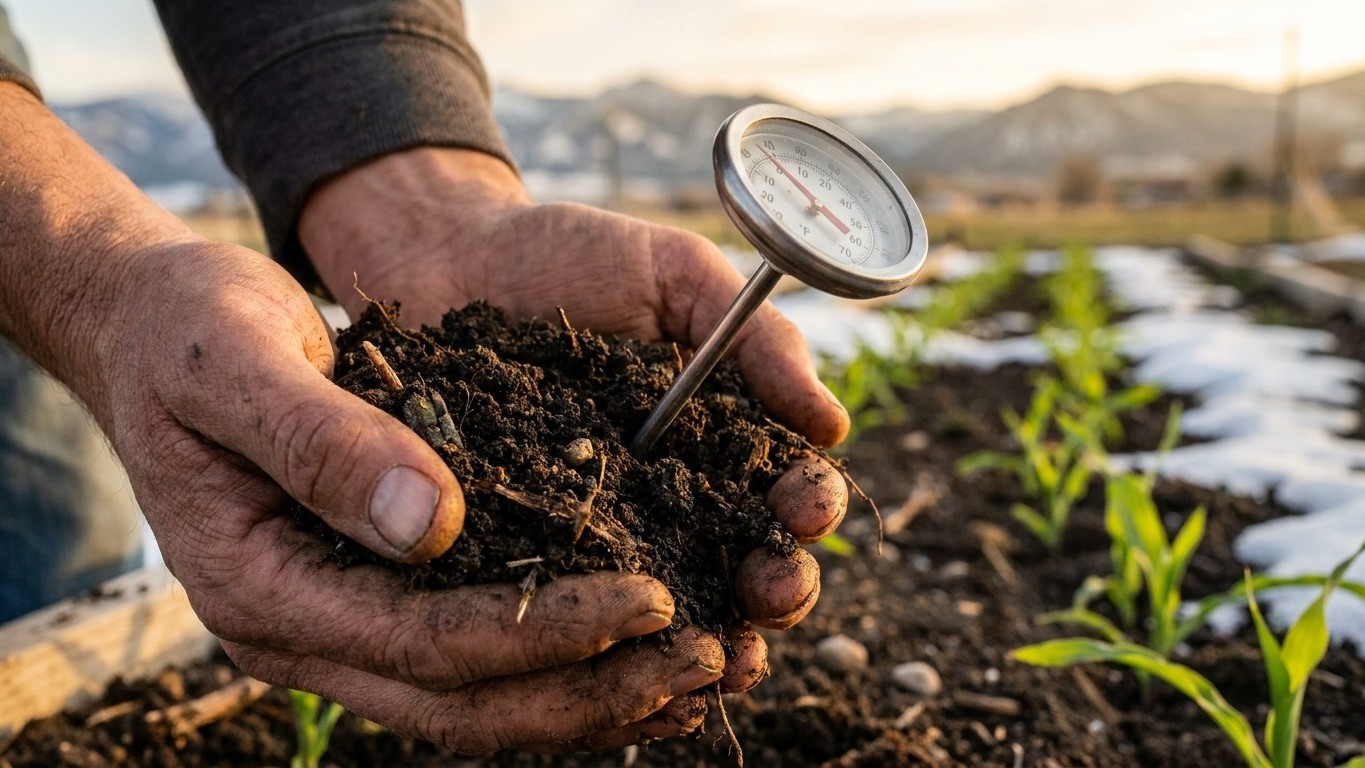
The number that actually starts the sweet corn clock isn’t the frost date at all. It’s soil temperature. Utah State University Extension is clear that corn seed needs soil above 60°F to germinate reliably, and that the crop then needs 60 to 90 days from planting to maturity depending on variety. Soil doesn’t track air temperature closely. It lags behind, sometimes by a wide margin, and in a climate where the last frost itself doesn’t arrive until late May, waiting for genuinely warm ground can push planting well into June. There’s no published date here for exactly when Manitoba soil crosses 60°F, so the honest move is to check it yourself with a soil thermometer rather than plant on faith the week after the frost date passes.
Run the arithmetic from there. If soil hits 60°F sometime in early-to-mid June, and the average first fall frost lands September 22, the usable window runs somewhere around 100 to 110 days in an average year. That’s enough for a 60-day variety with real room to spare. It’s tight for a 90-day variety, and it leaves almost nothing in a year where the first fall frost decides to arrive early, which by definition happens about half the time.
One more figure worth sitting with: the same climate normals put the average number of days per year reaching 90°F at 0.0 at the reference station. That’s the measure of summer heat load, and it tells you Manitoba isn’t handing corn any bonus warmth to speed things along. Heat-loving crops like sweet corn don’t get a summer boost here the way they might further south. The season length is what it is, and there’s no extra heat banking days back for you.
Does a late variety fit here?
A 60-day variety
Run a 60-day type from a soil-warm start in early-to-mid June and you’re looking at maturity somewhere in the first half of August, a full six weeks or more before the average first fall frost of September 22. That’s a comfortable margin, the kind that absorbs a cool stretch in July or a slow start from a wet spring without pushing harvest past the frost line. If the growing season here has one forgiving corner, it’s the fast end of the maturity scale.
A 90-day variety
Run the same math on a 90-day type and the picture changes. Ninety days from a June planting lands maturity in mid-September, right up against that average first fall frost of September 22, with no cushion left for a cool summer, a late soil warm-up, or a frost that arrives ahead of schedule (which happens in half of all years by the very definition of an average). Add in the fact that Manitoba’s summers deliver essentially zero days above 90°F, so there’s no heat surplus to speed maturity along and buy back lost time. Plainly: a 90-day variety does not fit this territory with any real safety margin. It might mature in a warm, early year. It’s a gamble in an average or late one, and this brief can’t tell you which variety names carry which day count, since no supplier or cultivar is specified here. Read the days-to-maturity number on the seed packet against this window before you commit a row to it.
What goes wrong here
- Soil sown too cold. Planting the week after the average last frost, on the assumption the ground is ready, is the single most common mistake. Utah State University Extension’s 60°F threshold is about the soil, not the air, and soil in this climate lags behind. The fix is simple: check ground temperature with a thermometer before you plant, rather than trusting the calendar date alone.
- A variety too late for the season. A 90-day type asks for nearly the entire frost-free window with zero room for error, in a climate that hands out no extra summer heat to compensate. The remedy is choosing shorter-season seed and treating maturity day-counts as a hard constraint here, not a suggestion.
- Sweetness lost through cross-pollination. This one has nothing to do with climate. Utah State University Extension notes that su, se and sh2 types lose their characteristic sweetness if they tassel at the same time, since sweet corn is wind-pollinated and different sugar types cross freely. No isolation distance is published by that source, so don’t plant on the assumption that a certain number of feet solves it. What matters is timing: stagger plantings, or choose varieties from the same sugar type, so different types aren’t shedding pollen in the same week. Plant in blocks of three or more rows rather than a single thin row, since that shape improves pollination regardless of which type you grow.
Checking this against your own county
Averages from one weather station don’t describe every corner of a province this size. Manitoba’s growing conditions shift with latitude, elevation, and distance from Lake Winnipeg’s moderating effect, so a farm in the Interlake or the Parkland region can run measurably behind the Winnipeg-area dates used above. Before locking in a planting date, check current conditions and local frost expectations with Manitoba Agriculture, the provincial service best placed to speak to soil and season timing in your specific district. A quick call or visit to their site can confirm whether your local ground typically warms earlier or later than the Winnipeg reference point this article is built on.
Common questions
Can I plant sweet corn right after the last frost in Manitoba?
Not reliably. The last frost date only tells you the air is safe from freezing. Soil needs to reach 60°F separately, and that typically happens later, so planting immediately after frost often means seed sitting in ground that’s still too cold to germinate well.
How do I know when my kernels are actually ripe?
Look for three signs together: dry, browned silks, husks that are still moist and green, and milky (not clear, not thick) juice from a punctured kernel. One sign alone isn’t enough to call it.
Is there a difference between the days-to-maturity number and picking time?
Yes, and they’re separate clocks. The 60-to-90-day figure counts from planting and tells you whether the variety fits the season at all. A second window, roughly 17 to 24 days from when silks first emerge, is what actually tells you which week to pick. Don’t merge the two.
Do I need to keep sweet corn varieties far apart to protect the flavor?
The published guidance doesn’t give a distance in feet or rows. What it says is that su, se and sh2 types lose sweetness if they tassel at the same time. Stagger planting dates or stick to one sugar type per garden instead of relying on spacing alone.